PHILIPS HUE WHITE & COLOR AMBIANCE STARTER KIT: THE THING NOBODY TELLS YOU BEFORE YOU BUY IT
You’ve lived with this feeling longer than you’ve named it.
The room looks fine. The bulb is on. The brightness is where you set it last week. But something is off — a low-grade wrong that you can’t locate. You’re tense when you should be winding down. You’re drowsy when you needed to focus. You adjusted the furniture. You changed the curtains. The feeling stayed.
It wasn’t your furniture. It was your light — and it’s been running the same temperature at 7 AM that it runs at 11 PM.
That’s the problem most people are actually solving when they search for smart lighting, even when they don’t know it yet.
The Result Looks Fine. The Failure Isn’t Visible.
A standard LED bulb looks fine. It lights the room. It doesn’t flicker. Nothing appears broken.
But “looks fine” is doing a lot of silent damage. A fixed-temperature bulb — even a good one — broadcasts the same signal to your nervous system all day: the same color, the same intensity, regardless of whether your body needs alertness or sleep preparation.
The failure isn’t a malfunction. It’s a mismatch. And mismatches don’t announce themselves — they accumulate.
Lighting that mimics the sun’s natural cycle can improve sleep quality, mood, and productivity — but a bulb locked to a single kelvin setting can’t do that. It just sits there, confident and indifferent, undermining your biology while you wonder why the room doesn’t feel right.
What You’re Actually Feeling but Not Naming
Most people describe the problem in the wrong units. They say the room feels “cold.” Or “flat.” Or “harsh after a long day.” These aren’t aesthetic complaints — they’re physiological signals with a precise cause.
Residential users strongly prefer warmer light (2700K–3000K) for relaxation, while commercial settings favor cooler temperatures (4000K–5000K+) for alertness and productivity. The issue is that most homes use one or the other, fixed, for everything — and neither setting is right for the full range of what a home actually does in a day.
That friction — the room that won’t let you relax at night, the morning light that can’t wake you up — is a color temperature problem. Not a decor problem. Not a mood problem. A Kelvin problem.
And it’s exactly what tunable smart lighting is designed to correct.
| Time of Day | What Your Biology Needs | Ideal Color Temp | Fixed Bulb’s Default |
|---|---|---|---|
| 6–9 AM | Alertness, cortisol cue | 5000–6500K cool white | 2700K warm (wrong) |
| 10 AM–3 PM | Sustained focus | 4000–5000K neutral | 2700K warm (wrong) |
| 6–9 PM | Wind-down, melatonin cue | 2200–2700K warm | 2700K warm (right by accident) |
| 9 PM–sleep | Deep relaxation | 1800–2200K amber | 2700K warm (still too bright) |
A standard LED is correct for approximately one quarter of your waking hours. The other three quarters, it’s working against you.
The Hidden Mechanism Behind the Miss
The Philips Hue White & Color Ambiance Starter Kit spans 2000K to 6500K — the full human-visible range from candlelight amber to clear daylight blue. That range isn’t cosmetic. It’s functional architecture.
Human-centric lighting aligns artificial light with your body’s natural rhythms to support better sleep, focus, and overall well-being — adjusting color temperature and brightness throughout the day: cool and energizing in the morning, warmer and softer in the evening to mimic natural sunlight patterns.
But here’s the mechanism most buyers miss: the Hue system doesn’t just let you change the color. It lets you automate that change — invisibly, on a schedule, tied to your routines — without you touching anything.
That’s the actual product. Not the bulb. The scheduled intelligence behind the bulb.
The Hue Bridge — included in the starter kit — is what makes this possible. It’s a dedicated Zigbee controller that talks directly to the bulbs via a mesh protocol that doesn’t depend on your Wi-Fi signal quality, your router’s mood, or your internet connection. Philips Hue has never experienced dropouts in real-world testing, and consistently produces vibrant, accurate colors at a consistent brightness — making it the best investment for a hassle-free smart lighting experience in 2025.
The Bridge is not a convenience feature. It’s the reliability layer. Without it, you have a Bluetooth bulb with a range ceiling and no automation depth.
The Threshold Where the Outcome Quietly Breaks
There is a specific point at which smart lighting stops being interesting and starts being genuinely useful. That threshold is not “when you try the color effects.” It’s when you stop manually adjusting anything.
Most buyers who say smart lighting “didn’t change much” bought bulbs and managed them manually. They opened an app to change the color. The novelty faded. The app felt like extra work. They left the bulbs in one setting and never looked back.
A common real-world pattern: users set their favorite color once (usually natural warm white) and then only adjust brightness from there. This isn’t the product’s failure. It’s a setup failure. The value of the Hue system is not color novelty — it’s automated behavioral alignment.
| Setup Type | Daily Interaction Required | Long-Term Behavior | Outcome |
|---|---|---|---|
| Manual app control | High — open app every time | User abandons system | Expensive fixed bulb |
| Voice control only | Medium — say command | Used inconsistently | Slight convenience gain |
| Scheduled automation via Bridge | Zero after initial setup | Lights behave intelligently | Full circadian benefit |
The threshold is automation. Below it, you have a premium bulb. Above it, you have a system.
Why Most Buyers Misread This Too Early
The most common wrong decision in smart lighting is comparing bulbs on color range while ignoring connectivity architecture.
WiZ bulbs actually score higher on Color Rendering Index than Hue’s quoted figure of approximately 70 CRI, meaning room colors appear more natural under WiZ light in direct use — but Hue’s Zigbee mesh is more reliable than per-bulb Wi-Fi in complex home environments, the product range is broader and more varied, and the ecosystem has a consistency and maturity that WiZ has not yet reached.
This is the architecture trap. You compare specs on a product page — lumens, CRI, color range — and the cheaper Wi-Fi bulb wins most of those columns. Then you install it, and three months later you’re troubleshooting dropped connections, inconsistent response times, and an app that’s fighting your router.
Budget Zigbee bulbs from unknown brands often stop receiving firmware updates after 18 months, creating security vulnerabilities and compatibility issues with newer hubs. LIFX bulbs — once a strong no-hub alternative — saw 80% failure rates in some real-world installations due to burned wireless transmitters, while Philips Hue systems with hubs have been running reliably for 12+ years in comparable setups.
The comparison that actually matters is not bulb vs. bulb. It’s system stability at 3 years versus system stability at 3 months.
| Comparison Factor | Philips Hue (Zigbee + Bridge) | Wi-Fi Bulbs (no hub) |
|---|---|---|
| Connection protocol | Zigbee mesh — devices boost each other | Per-bulb Wi-Fi — each fights independently |
| Reliability in large setups (10+ bulbs) | High — mesh strengthens with scale | Degrades — more devices = more congestion |
| Automation depth | Full — schedules, geofencing, scenes, sync | Basic — limited by app quality |
| Smart home compatibility | Alexa, Google, Apple HomeKit, Matter | Varies — often limited |
| Long-term firmware support | Consistent — Signify-backed | Unpredictable — many brands go dark |
| Price per bulb (A19 Color) | ~$25–$35 | $8–$18 |
The price gap is real. So is what you lose to close it.
Who Is Actually Inside This Problem
The Philips Hue White & Color Ambiance Starter Kit is not for everyone who wants a smart bulb. It’s for a specific type of person in a specific type of situation.
You are that person if:
Your sleep is disrupted and you haven’t changed your evening lighting. Your home office productivity fluctuates and you’ve blamed everything except your light temperature. You’ve tried one or two cheaper smart bulbs and found yourself managing them manually until you stopped bothering. You’re building a home you plan to stay in — not a temporary setup. You want one app, one system, one decision, and then lights that behave intelligently without your attention.
41.3% of U.S. households are expected to adopt smart lighting systems by 2025, and 72% of renovators who upgraded bedroom lighting did so specifically for mood improvement and better sleep.
The majority of those buyers are not chasing color effects. They’re chasing a room that feels different at night than it does at noon — automatically.
Where Wrong-Fit Begins
This product will underdeliver for you if:
You want maximum raw brightness. LIFX A19 Color outputs 1,100 lumens versus Hue’s 800 lumens — a 37% brightness advantage — which matters in living rooms or home offices where brightness is the primary concern. If you’re lighting a large open space and brightness is the deciding factor, Hue is not your ceiling.
You need only one or two bulbs, with no expansion plans. The Bridge costs ~$50 and serves no purpose on a single bulb. The economics don’t close until you’re covering at least three to five fixtures.
You want plug-and-play without any setup. The Bridge requires an Ethernet connection to your router, an app setup, and bulb pairing. It takes roughly 20 minutes once, and then you never think about it again — but if that 20 minutes is a dealbreaker, this system is designed for someone else.
You primarily want entertainment color effects on a tight budget. Govee and similar brands produce vivid color effects at a fraction of the cost. The effects are less precise, the longevity less proven, but for pure visual novelty without automation ambitions, that gap is not worth ~$150 to close.
| Profile | Right Product |
|---|---|
| Building a whole-home smart lighting system | Philips Hue — start here |
| Single room, color novelty, tight budget | Govee or WiZ |
| Maximum brightness, 1–3 bulbs | LIFX A19 |
| One-room starter, mid range | Hue Essential (cheaper, less accurate) |
| Expert Home Assistant user | Any Zigbee, pair with your own hub |
The One Situation Where This Product Becomes Logical
You are in a home you’re staying in. You want at least three to five fixtures covered. You want those lights to change behavior based on time of day without manual input. You want that system to work with Alexa, Google Home, or Apple HomeKit without workarounds. And you want it to still be working — reliably, with updates — in five years.
That is precisely the situation the Philips Hue White & Color Ambiance Starter Kit was built for.
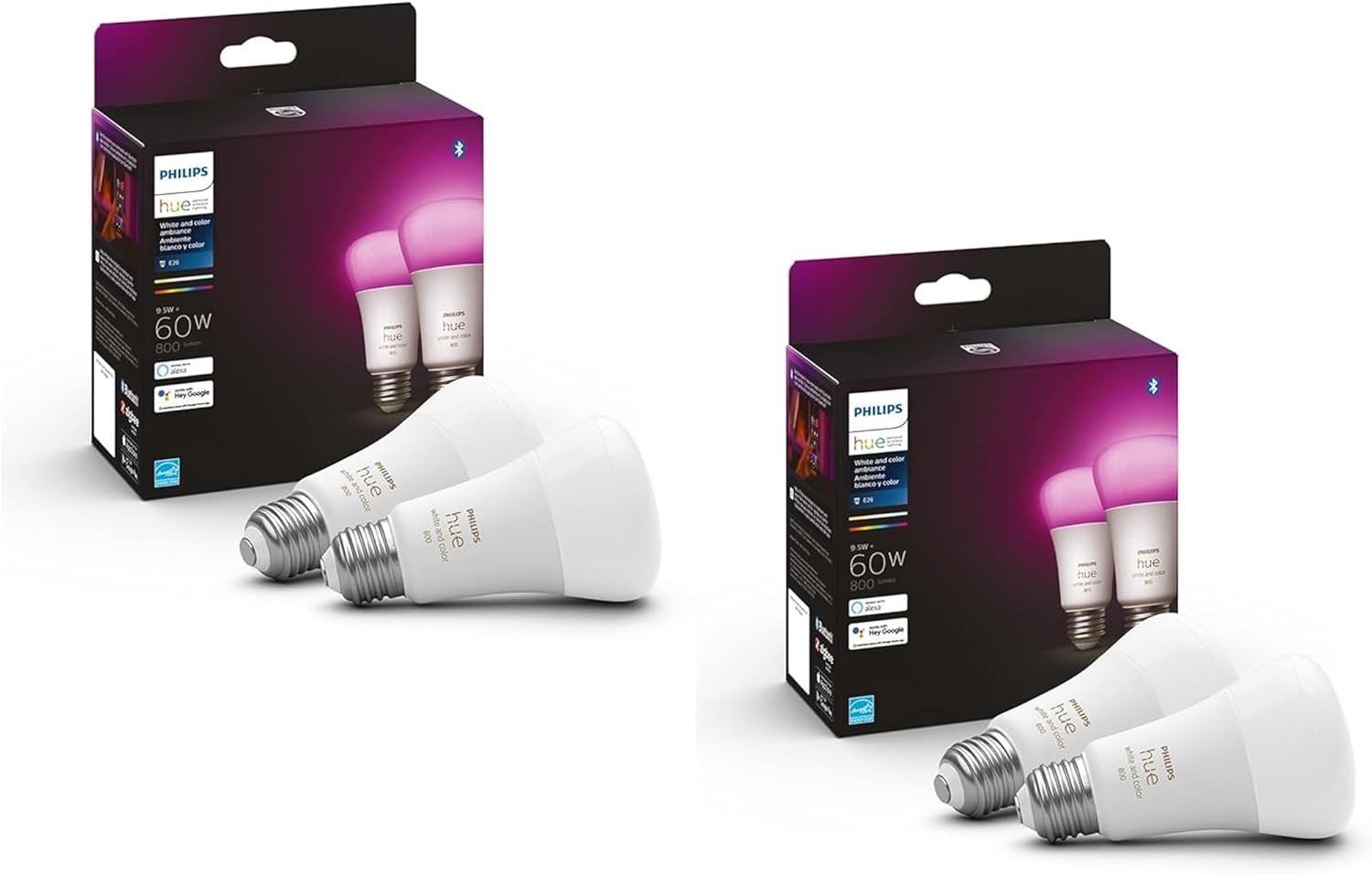
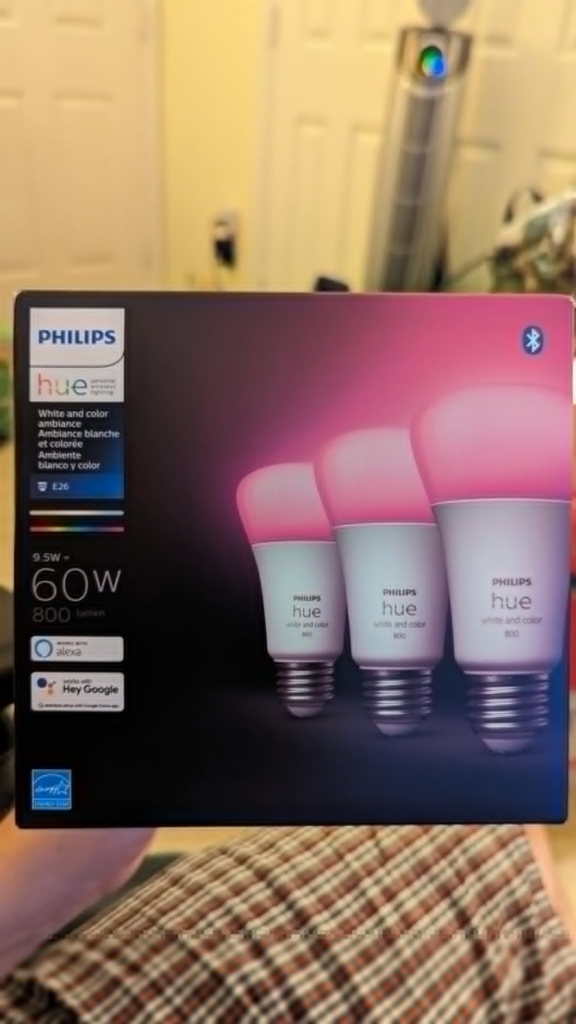
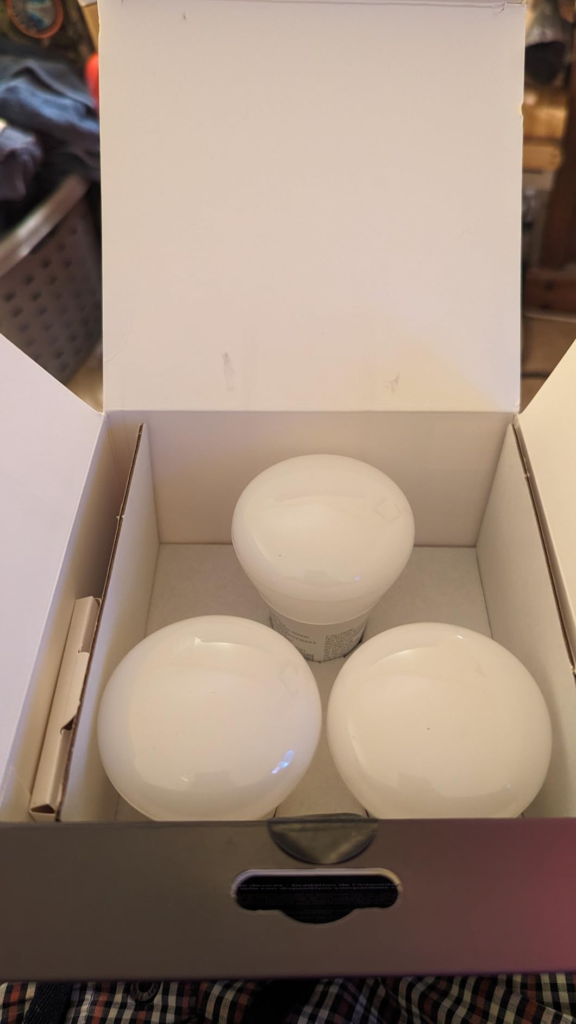
The kit includes three A19 bulbs (75W equivalent, ~800 lumens each), the Hue Bridge, and a Hue Smart Button. The Bridge supports up to 50 Hue lights on a single hub. The Matter bridge functionality added in 2024 reduces lock-in concerns, allowing control through any Matter-compatible controller — though advanced features like Entertainment zones, dynamic scenes, and color loops remain exclusive to the Hue ecosystem.
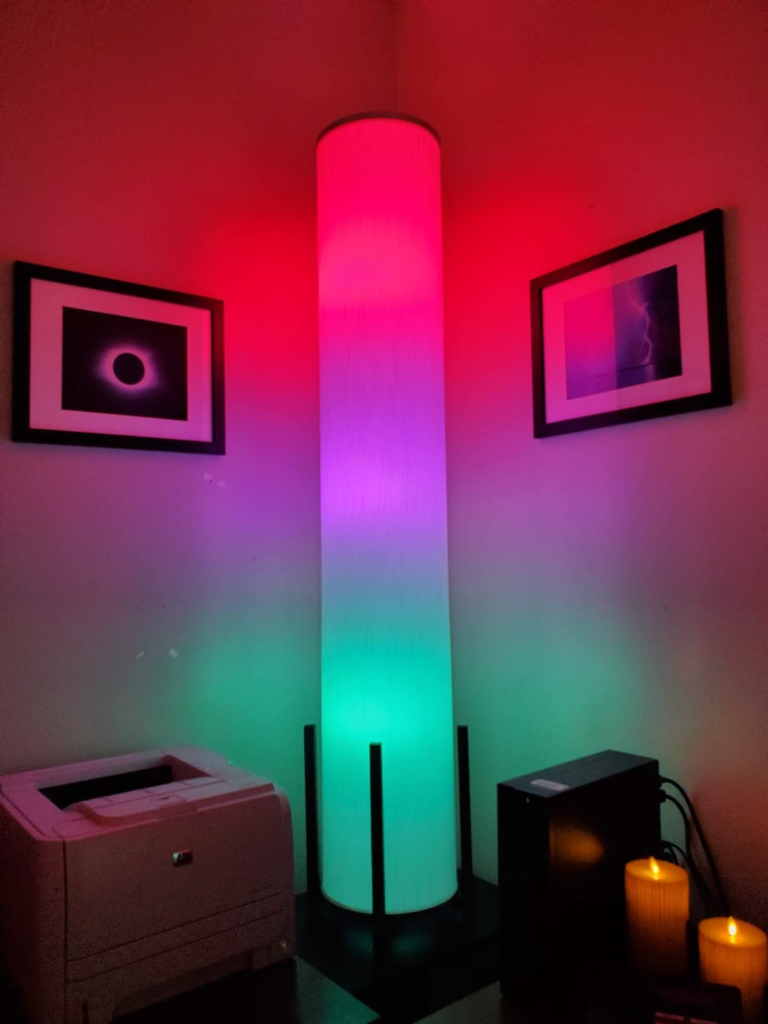
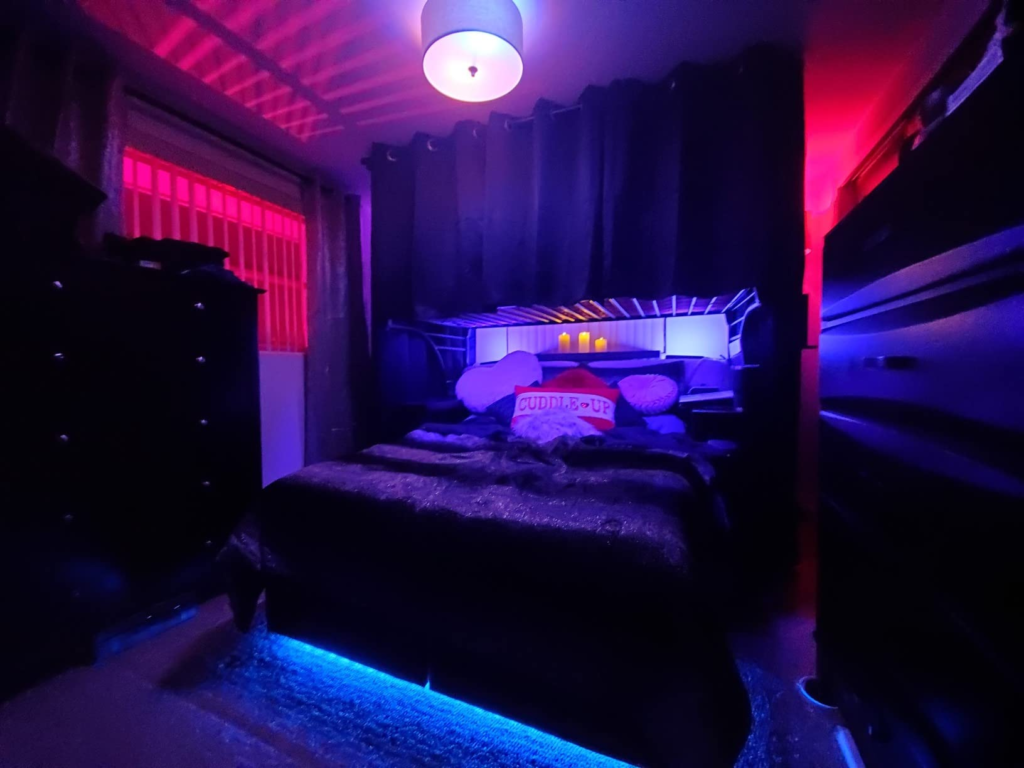
The three bulbs cover a bedroom, a living room corner, and a home office — the three rooms where lighting has the highest behavioral impact and the highest daily friction.
The smart LED lighting market is projected to grow from $27.3 billion in 2024 to $62.1 billion by 2030 — a 14.9% CAGR — reflecting the growing integration of LED lighting with IoT and the demand for automated, wellness-aligned home environments. The Hue ecosystem is not a niche product. It is the category benchmark against which all alternatives are measured.
What It Solves, What It Reduces, and What It Still Leaves to You
| Category | What Hue Does | What It Doesn’t Do |
|---|---|---|
| Sleep preparation | Automates warm light transition at evening | Can’t force you to put down the phone |
| Morning alertness | Schedules cool white to simulate dawn | Won’t replace blackout curtains or sleep debt |
| Focus sessions | Holds bright neutral white during work hours | CRI ~70 — not ideal for precise color work (art, textiles) |
| Consistency | Same behavior every day without input | Only works where you’ve installed bulbs |
| Smart home integration | Full Alexa, Google, HomeKit, Matter support | Requires Bridge — Bluetooth-only mode has no scheduling |
| Scale flexibility | Expand to 50 bulbs, one hub | Each additional bulb is a cost decision |
| Reliability | Zigbee mesh — proven 10+ year track record | Occasional app update friction |
The honest line: Hue fixes the room’s default behavior. It does not fix your habits. The lights can be warm and dim at 9 PM every night. You still have to walk into the room.
Final Compression
The Philips Hue White & Color Ambiance Starter Kit is not a set of colorful bulbs. It is the entry point to a system that makes your home’s light behave the way natural light does — contextually, progressively, without your attention.
The people who feel no difference after buying it bought the kit and left it in manual mode. The people who feel a consistent difference built one automation, let it run for two weeks, and stopped thinking about their lights.
That is a one-time 20-minute investment. The return runs every day at 7 AM and every night at 9 PM, without you.
If you live in a space you’re investing in, run at least three fixtures, and want your home’s baseline behavior to change without daily management — this is where that decision stops being vague.
Frequently Asked Questions
| Question | Answer |
|---|---|
| Do I really need the Hue Bridge, or can I use Bluetooth only? | Bluetooth mode works for basic on/off and color control within 30 feet. It doesn’t support scheduling, automations, remote access, or multi-room scenes. The Bridge is what makes the system useful rather than decorative — and it’s included in the starter kit. |
| How many bulbs can one Hue Bridge support? | One Bridge supports up to 50 Hue lights. For most homes, that’s the entire house on a single hub. |
| Is Philips Hue compatible with Alexa, Google Home, and Apple HomeKit? | Yes — natively, without workarounds. The 2024 Matter bridge update also added compatibility with any Matter-certified controller. |
| What’s the actual lifespan of a Hue bulb? | Rated at 25,000 hours — approximately 22 years at 3 hours per day. Firmware updates are delivered automatically and have been consistent across the entire product lifespan. |
| What’s the real cost of building a full-room setup? | The starter kit (3 bulbs + Bridge + Smart Button) runs approximately $130–$180 at list price, with frequent sales bringing it to $70–$100. Additional A19 color bulbs run $25–$35 each. A three-room setup (3 fixtures per room) lands around $200–$300 total after the initial kit. |
| Will Philips Hue still be supported in five years? | It has been the market leader since 2012 and is backed by Signify (formerly Philips Lighting), one of the world’s largest lighting manufacturers. No credible discontinuation signal exists, and the Matter protocol integration future-proofs the hardware further. |
| Can I mix Hue Color bulbs with cheaper smart bulbs in the same home? | You can, but the experience fragments. Multiple apps, inconsistent voice command behavior, and different automation systems create management overhead that defeats the purpose of smart lighting. If mixing, assign different brands to entirely separate rooms with no overlap. |
| Who should not buy this? | Anyone who needs maximum brightness (1,100+ lumens) per bulb, anyone covering fewer than three fixtures with no expansion intent, or anyone whose primary goal is vivid color effects rather than circadian automation. Those use cases have better-fit products at lower cost. |
Transparency Note:
This analysis is built on aggregated real-world experience. It extracts what repeatedly holds, what breaks, and what users uncover only after living with the system—then shapes it into a clear model you can use immediately.
Think of it as structured experience, refined and presented so you don’t have to learn it the hard way.
“A quick note: Don’t believe the star ratings, but trust personal experience. This article is a compilation of collected experiences”