The Result Looks Right. The Problem Is Everything Underneath It.
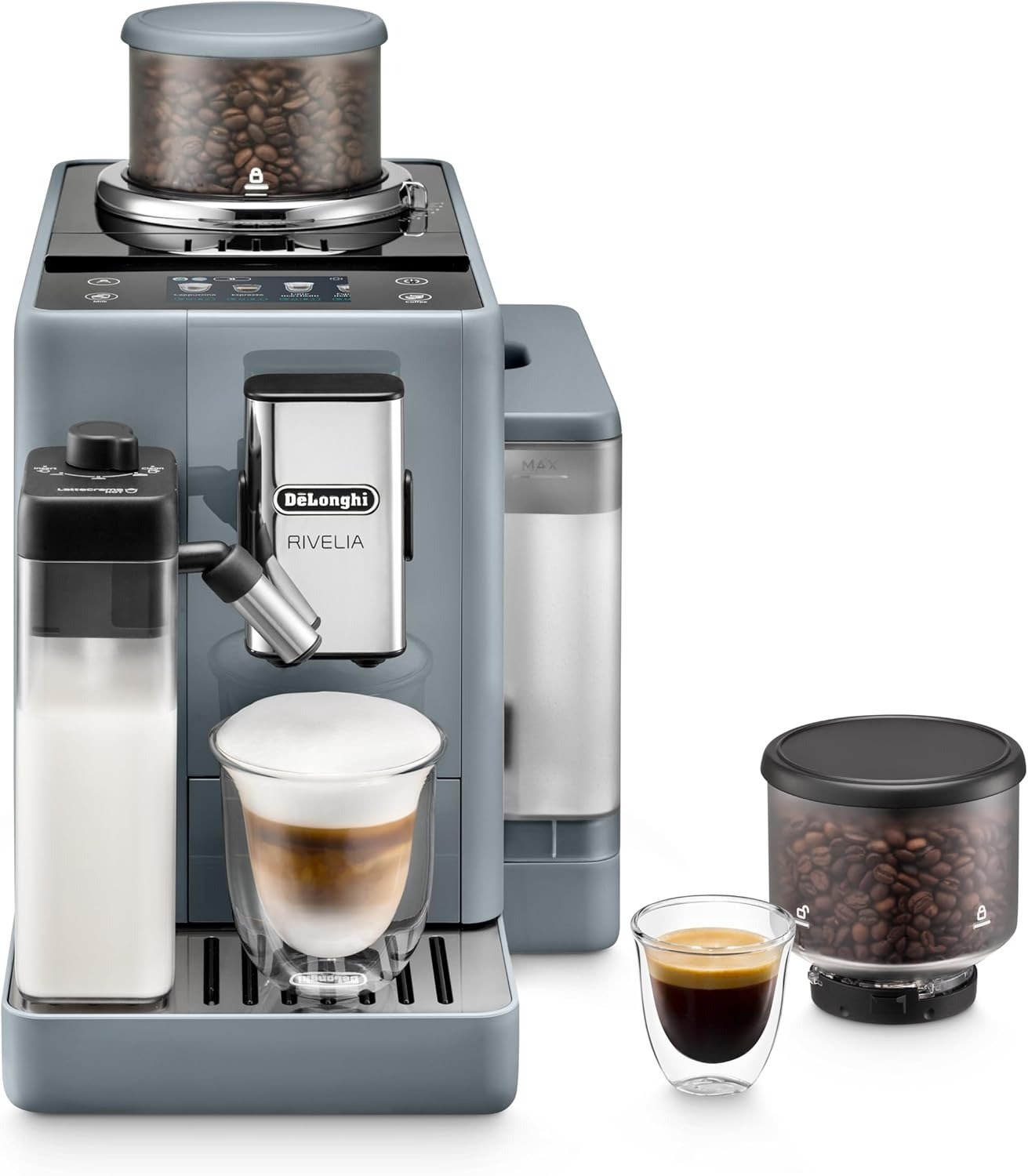
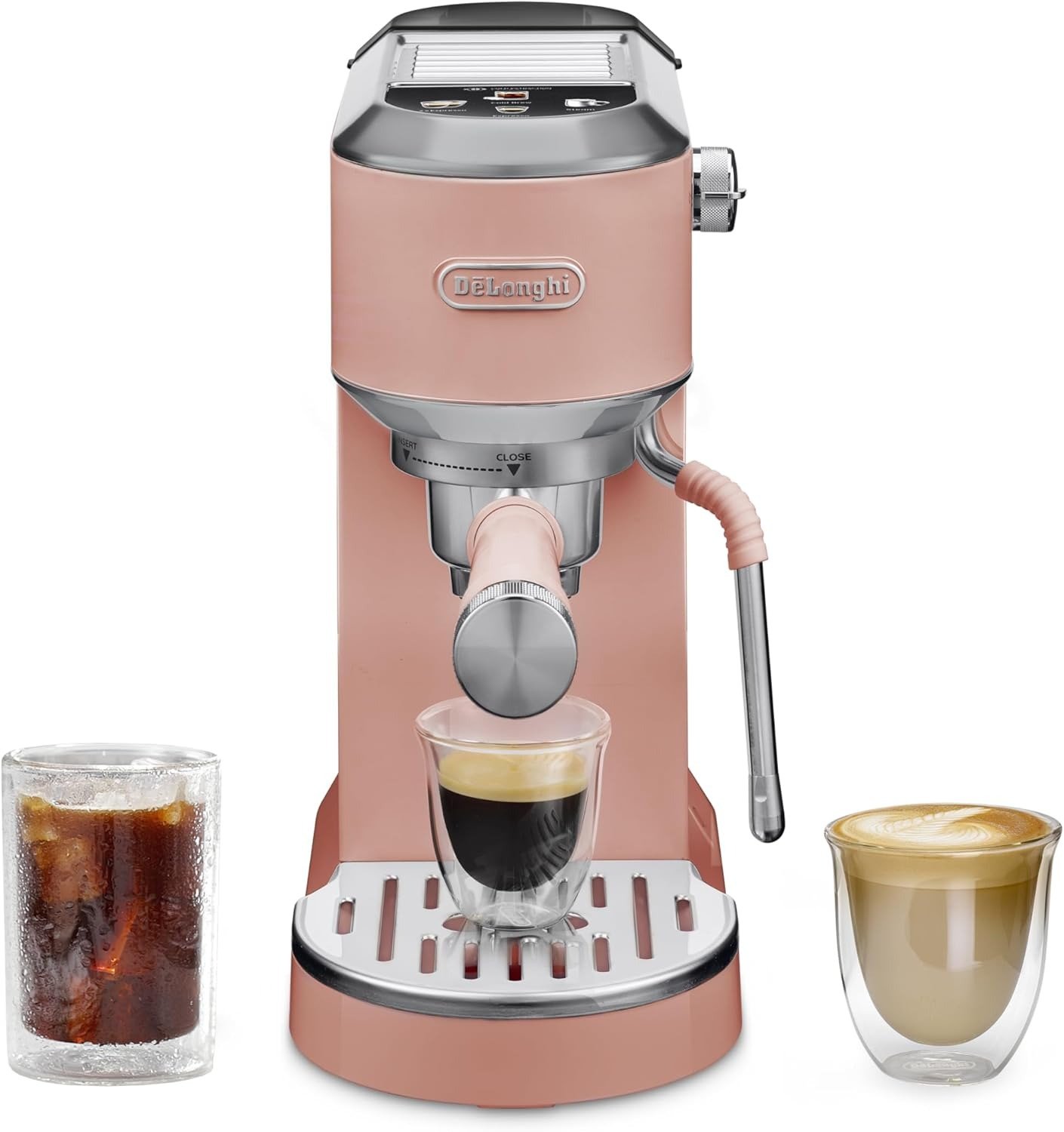
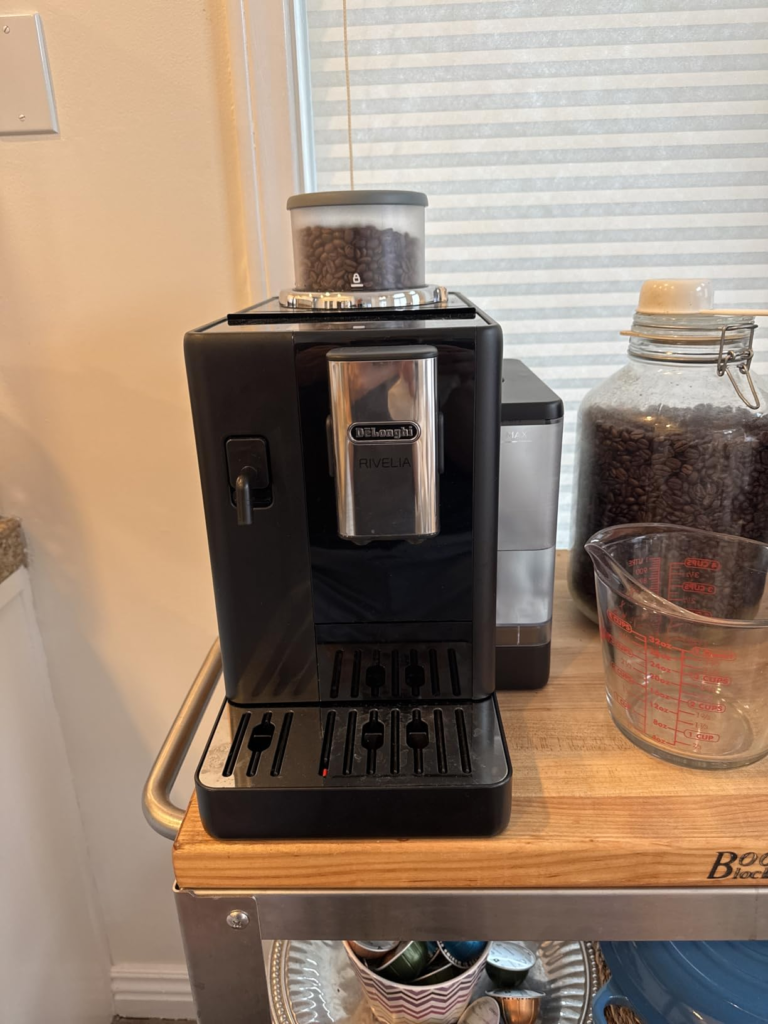
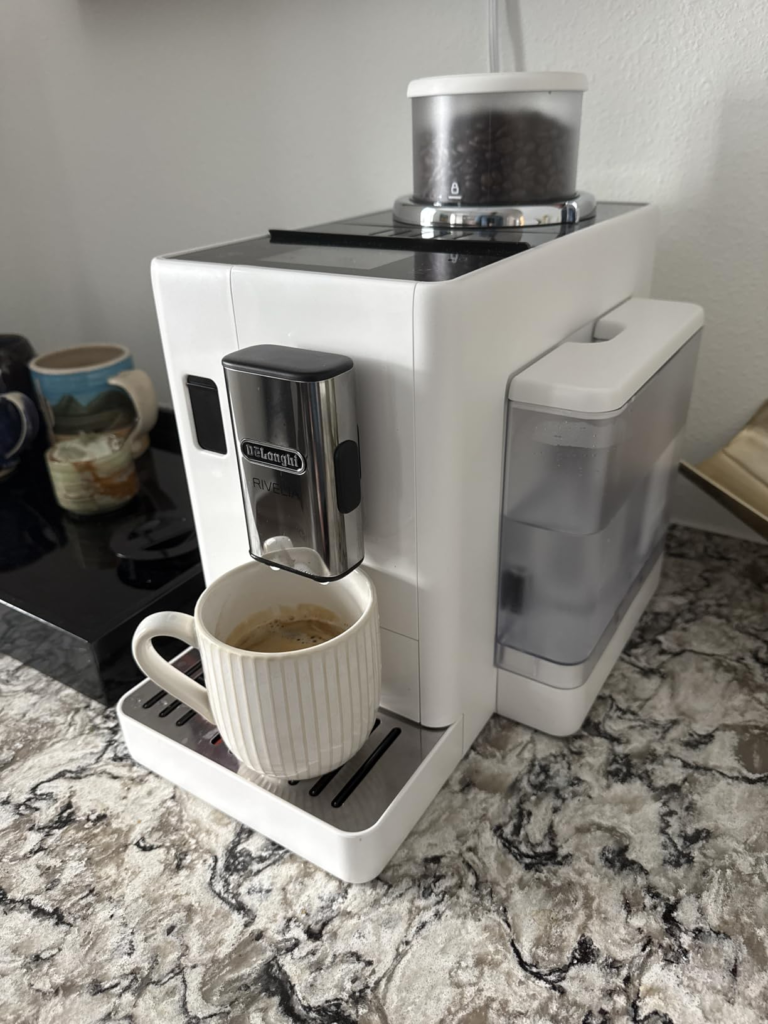
DE’LONGHI RIVELIA
You make your first cup. It’s hot, it’s fragrant, crema sits on top like it belongs in a photograph. The machine cleaned itself. You pressed exactly one button. And for a moment, you think: this is it.
But two weeks later, a pattern starts forming — and it isn’t what the spec sheet prepared you for.
The water tank runs dry after five drinks. The grinder hits 66 decibels and produces a sound that wakes people in adjacent rooms. The cold foam drinks you thought were included require an additional $129.95 purchase. Bean Adapt Technology — the flagship intelligence feature — only works for straight espresso. It doesn’t apply to milk-based drinks at all.
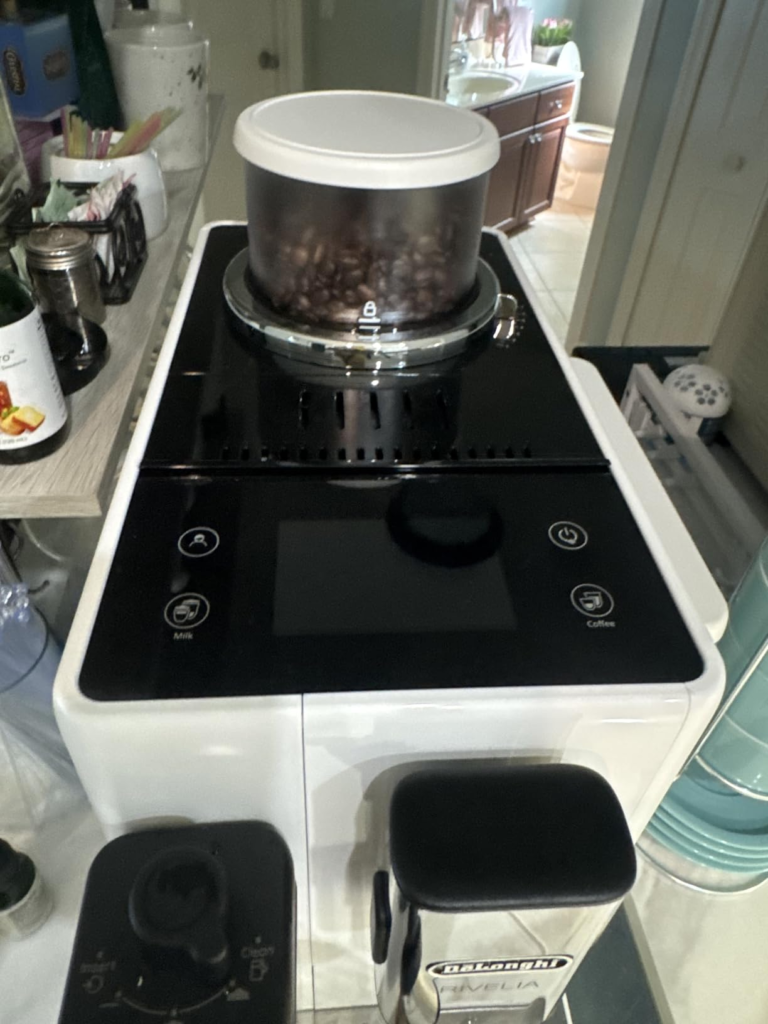
You’re grinding decaf on a separate hopper, but the machine is purging residual beans from the burr chamber every time you switch — either grinding and trashing the remaining beans, or preparing an “intermediate coffee” from them.
None of this means the machine is bad. It is, by most rigorous measures, excellent. But excellent for whom is the question the marketing never quite answers cleanly.
This review answers it.
What You’re Actually Feeling but Not Naming
There’s a specific frustration that follows a premium home appliance purchase — it doesn’t announce itself as frustration, it arrives as mild, repeated inconvenience. The tank refill you didn’t expect. The cold foam you can’t make yet. The grinder noise at 6:45 AM that feels, over time, slightly more hostile than the first day.
The Rivelia’s 1.4-liter reservoir fills from the top without removal — a genuine convenience — but it’s smaller than De’Longhi’s standard 1.8-liter capacity found on comparable machines. In practice, you’re refilling every few drinks rather than once a day.
The water tank empties after around five drinks — a pattern that reviewers found consistently frustrating over extended use.
That isn’t a dealbreaker for a solo household. For a family of four running seven drinks through the machine on a busy morning, it becomes a recurring interruption.
The second friction point is subtler: factory settings on the Rivelia are too long for espresso volume and strength. You need to cut off the brew mid-cycle the first time and allow the machine to save the adjustment. First-time users who don’t know this — and most don’t — spend their first week drinking coffee that’s slightly off, assuming the machine simply performs this way.
Neither issue is hidden. Both are in the fine print. But neither gets communicated with the weight that daily use eventually assigns to them.
The Hidden Mechanism Behind the Miss
Most people evaluating the Rivelia compare it on specs: 15-bar pump, 13 grind settings, 18 drink recipes, 3.5-inch TFT touchscreen, iF and Red Dot Design Awards. The machine earned recognition from prestigious design institutions before it even hit the market.
But specs don’t describe where performance actually breaks down. Mechanism does.
Here’s the mechanism that separates satisfied Rivelia owners from those who feel mild, quiet regret:
The Rivelia is an optimization machine, not a configuration machine. It is designed to take your preferences — your bean type, your roast level, your taste feedback — and converge toward a consistent output over time. Bean Adapt asks you to choose your roast level, then recommends grind settings, brew temperature, and infusion time. It guides you through test extractions to dial things in, a process that takes less than 15 minutes and results in a custom profile tuned to your specific beans.
This is remarkable. It’s also only the beginning of what must happen before the machine performs at its ceiling.
Users who go too fine on the grind setting — past setting 3 for most medium roasts — can choke the machine entirely. No coffee flows. The fix is straightforward: adjust coarser by one notch at a time while the grinder is running. But the machine doesn’t warn you about this directly.
The window between “under-extracted and watery” and “choked and stalled” is narrower than most super-automatics at this price. The Rivelia rewards patience in the first week. It punishes impatience with inconsistency.
The people who love this machine are, almost universally, people who gave it that week.
The Threshold Where the Outcome Quietly Breaks
The Rivelia has a performance threshold that isn’t marked on any spec sheet:
Optimal output requires approximately 5–7 days of profiling before the machine is actually calibrated to your beans.
After about a week of use, the Rivelia’s Coffee Routines begin learning habits — suggesting your usual drink at the expected time without prompting. TDS measurements during proper extraction run between 6 and 7.5%, indicating well-balanced, neither under-extracted nor bitter output.
Below that threshold — in the first three days, with default settings, using whatever beans you happened to load — the machine produces good coffee. Not its best coffee. Not the coffee that justifies $1,499 to a skeptic. Just good.
| Performance Stage | Time Required | Expected Output | User Action Needed |
|---|---|---|---|
| Out of Box (Day 1) | 15 min setup | Decent but default | Run Bean Adapt immediately |
| Early Calibration (Days 1–3) | 3–5 shots | Inconsistent crema | Adjust grind one notch at a time |
| Dialed In (Days 5–7) | Ongoing | Consistent, hot, rich | Save profile per bean type |
| Optimal (Week 2+) | Daily use | Full machine ceiling | Let routine learning activate |
The best espresso extraction from the Rivelia — using medium-roast beans — comes at grind setting 3, strength level 5 (approximately 16 grams of ground coffee), volume M (35ml), achieving a roughly 1:2 ratio with 22-second extraction.
That is genuinely excellent for a super-automatic at any price. But it requires knowing those numbers — or investing the time for the machine to find them.
Why Most Buyers Misread This Machine Too Early
The most common mistake people make when evaluating the Rivelia is comparing it to a semi-automatic espresso machine on espresso quality, or comparing it to cheaper super-automatics on convenience.
It is neither fully comparable to either.
Super-automatic espresso machines, by design, do not make technically perfect espresso. They can’t dose and tamp like a trained human. That is a feature, not a flaw — super-automatics are for people who want coffee quickly and easily. They are not for espresso purists.
The second comparison trap is assuming the Rivelia competes on price with the De’Longhi Magnifica Evo. It doesn’t — not because the Magnifica Evo is inferior, but because the two machines solve different problems.
| Feature | De’Longhi Rivelia ($1,499) | De’Longhi Magnifica Evo (~$800) | Jura J8 (~$2,799) |
|---|---|---|---|
| Bean Hoppers | 2 interchangeable (Bean Switch) | 1 fixed | 1 fixed |
| Grind Settings | 13 | 13 | 10 |
| User Profiles | 4 | None | 10 |
| Bean Adapt Technology | Yes (espresso only) | No | No |
| Cold Foam (built-in) | No ($130 add-on) | No | Yes (select models) |
| Water Tank | 1.4L | 1.8L | 2.4L |
| Drink Recipes | 18 (hot) + 9 cold (paid) | 7 | 25+ |
| iF/Red Dot Design Award | Yes | No | No |
| Extraction Quality | Excellent for category | Good | Superior |
The Rivelia is the flashier, smarter, more polished bean-to-cup aimed at people who want a nearly hands-off, highly customizable one-touch experience. The Magnifica Evo is the sensible, value-oriented super-automatic that delivers great espresso and milk drinks for less money, with fewer features.
Choosing between them based on price alone means choosing the wrong variable entirely.
Who Is Actually Inside This Problem
The Rivelia solves a very specific problem. Not “I want good espresso at home.” That problem has a dozen solutions at different price points.
The Rivelia solves: “Multiple people in my household want different beans, different drinks, or different strengths — and we want all of it without reconfiguring a machine every morning.”
No other mainstream super-automatic offers the dual-hopper flexibility with user profiles. For households where different family members prefer different beans, roast levels, or drink styles, this combination makes the Rivelia uniquely suited.
A second profile of buyer who genuinely benefits: people who currently own multiple coffee devices — an Aeropress, a separate grinder, a dedicated espresso machine, an iced coffee maker — and are suffocating under counter space and equipment overhead. The Rivelia can reasonably consolidate most of these into one footprint.
A third: people who have owned a capsule machine and are calculating long-term cost. Real users who transitioned from capsule systems noted that quality coffee beans represent dramatically lower per-cup cost at scale, with café-quality output that previously cost $6–$8 per drink.
Where Wrong-Fit Begins
There are buyers who will find this machine disappointing — not because it fails, but because it doesn’t match the problem they’re actually trying to solve.
Do not buy the Rivelia if:
| Wrong-Fit Condition | Why the Rivelia Fails It |
|---|---|
| You drink exclusively iced lattes or cold foam drinks | Cold LatteCrema requires a $129.95 add-on not included |
| You want maximum espresso quality and nothing else | A semi-automatic at the same price delivers more control and extraction quality |
| You’re a single user with one bean type | Dual hoppers and user profiles are features you’ll never use |
| You want minimal refilling interruption | 1.4L tank empties after ~5 drinks; larger households will find this disruptive |
| You’re sensitive to grinder noise in the morning | 66 decibels during grinding, with a grating quality of sound |
| You’re an espresso purist who wants barista-level dialing | The default espresso doses around 42g in 21 seconds, slightly outside the technical golden extraction window of 1:2 in 25–28 seconds |
Bean Adapt Technology is specific to espresso only — not milk-based drinks. If your daily routine is primarily cappuccinos and lattes, the calibration intelligence of the machine’s headline feature doesn’t apply to your most-used drink.
This is the boundary where regret lives: people who bought based on the feature set without mapping it to their actual daily pattern.
The One Situation Where the De’Longhi Rivelia Becomes Logical
After all of the above, a specific buyer profile comes into focus — and for that buyer, this machine is not merely good. It is the correct purchase.
You are in a household of two or more people. Each person has different taste. One drinks dark-roast espresso. One drinks medium-roast flat whites. You are tired of the overhead of managing multiple machines, or tired of reconfiguring one machine constantly, or tired of capsules.
You are willing to spend one week — seven days of adjustment — to get a machine that then runs for years on a largely automated routine. You are not trying to replicate a specialty café. You are trying to eliminate the gap between good coffee and the friction of making it.
The dual-hopper system with user profiles solves real problems that other machines ignore. For households where different people want different beans or drinks, this feature alone can justify the investment.
One long-term owner who had used high-end commercial machines described the Rivelia’s defining value not as espresso quality, but as consistency: every shot tastes the way you expect it to, with no surprises, no guesswork — and cleaning that makes the greatest espresso on the planet irrelevant if the machine takes an hour to tear apart afterward.
That is not marketing language. That is a real user describing the actual hierarchy of values the Rivelia is built around.
What It Solves, What It Reduces, and What It Still Leaves to You
| Category | What the Rivelia Delivers |
|---|---|
| Fully Solves | Bean switching without hopper cleaning, one-touch access to 18 hot drink recipes, user-profile personalization across 4 people, self-cleaning routine at startup and shutdown, consistent extraction once calibrated |
| Significantly Reduces | Daily configuration effort, equipment sprawl, per-cup cost vs. café or capsules, maintenance complexity |
| Reduces But Doesn’t Eliminate | Grinder noise, water refilling frequency, setup friction in the first week |
| Leaves Entirely to You | Cold foam capability (requires $129.95 purchase), bean freshness sourcing, dark roast management (burr cleaning more frequent), true barista-level espresso dialing |
| Will Not Replace | A dedicated semi-automatic for espresso purists, a cold brew machine for iced-drink-first households, a dual-grinder machine like the Jura J8 Twin for those who need simultaneous bean access without switching |
The machine performs a deep clean automatically if left unused for more than three days — a practical consideration for travelers — and communicates all maintenance needs through the touchscreen directly. Occasional full descaling requires more physical effort, and due to the machine’s weight and size, access to its sides and rear means planning where it lives on your counter before it gets there.
Frequently Asked Questions About the De’Longhi Rivelia
Does the De’Longhi Rivelia make true espresso?
Super-automatic machines are not designed to make technically perfect espresso — they cannot tamp like a human. The Rivelia produces a very good approximation, but it is designed for people who want great coffee quickly, not for espresso purists who want to dial in every extraction variable manually. If you want the closest result to a pulled shot, dial the grind to the finest setting, choose maximum strength, and select the smallest volume.
What is Bean Adapt Technology and does it actually work?
Bean Adapt asks you to select your roast level, then recommends grind settings, brew temperature, and infusion time. It guides you through test extractions to establish a profile, a process that takes under 15 minutes and results in calibration to your specific beans. It works well — but it only applies to espresso-based drinks. For milk drinks, many other variables affect the result, so Bean Adapt does not offer preset calibration for these recipes.
How loud is the De’Longhi Rivelia grinder?
The grinder produces 66–69 decibels during grinding, roughly equivalent to a normal conversation between two people. The espresso pump runs at approximately 55 decibels during the 25–30 second extraction cycle. For context, this means it is unlikely to wake someone sleeping in a nearby room during extraction — but the grinding phase itself is noticeable.
Does the De’Longhi Rivelia come with cold foam capability?
No. The LatteCrema Cool upgrade set — required to make cold foam drinks — costs $129.95 and is sold separately. The machine’s base configuration produces only hot milk drinks.
Can you use dark roast or decaf beans in the Rivelia?
Yes, with adjustment. Dark roast and oily beans require more frequent cleaning of the burrs. Grinder cleaning pellets help, but require the machine to be switched off at the socket just after grinding them to prevent them passing through the brew unit. For decaf, keeping the strength at level 4 consistently produces better results.
How many people can use the De’Longhi Rivelia with different preferences?
The machine supports up to four user profiles, each with its own saved preferences for drink favorites, strength, volume, milk settings, and Bean Adapt calibrations. In multi-user households, this eliminates the need to re-set everything when someone else used the machine before you.
Is the De’Longhi Rivelia worth it compared to the Magnifica Evo?
If you want a good daily cappuccino without complexity, the Magnifica Evo is sufficient. If you want technology, versatility, dual-bean flexibility, and a premium user experience, the Rivelia justifies the price difference. The two machines serve different use cases, not different quality tiers.
Final Compression
The De’Longhi Rivelia does not fail people. It mismatches with them.
It is built for a household where coffee preferences diverge — where the person who needs dark espresso at 7 AM and the person who wants a light-roast flat white at 9 AM should not have to coordinate, reconfigure, or compromise. It delivers that with a hardware system — the Bean Switch — that feels genuinely useful after the first week and genuinely routine by the third.
What it is not: a cold-foam machine out of the box. A semi-automatic replacement. An ideal setup for a single-drink household with one bean type. A machine that performs at its ceiling on day one.
If the dual-hopper system with user profiles solves a real problem you recognize in your household, the investment is logical. If it doesn’t — if your daily routine is simpler, or colder, or more technically demanding — a different machine at this price serves you more directly.
The question is not whether the Rivelia is good. It is whether the problem the Rivelia solves is the problem you actually have.
If it is, this is where the decision stops being vague.
Transparency Note:
This analysis is built on aggregated real-world experience.
It extracts what repeatedly holds, what breaks, and what users uncover only after living with the system—then shapes it into a clear model you can use immediately.
Think of it as structured experience, refined and presented so you don’t have to learn it the hard way.
“A quick note: Don’t believe the star ratings, but trust personal experience. This article is a compilation of collected experiences”