IROBOT ROOMBA COMBO J9+ KEEPS YOUR CARPETS DRY — BUT THERE’S A HIDDEN COST MOST BUYERS DON’T CALCULATE BEFORE SPENDING $1,400
The Floor Looks Clean. The Decision Isn’t.
You’ve watched the robot finish its run. The hardwood looks polished. The rug isn’t wet. The base emptied itself. Everything performed exactly as described.
And yet something feels slightly off — a low-grade friction you can’t fully name.
Maybe it’s that the mop pad was still sitting there, damp and waiting, needing you to pull it out and wash it by hand before the next cycle. Maybe it’s that the robot spent 40 minutes cleaning a room that should have taken 20. Maybe it’s that the app showed you a status update but not where the robot actually was. Maybe it’s none of those things individually — just all of them landing together in a single quiet realization: this machine is extraordinary at one very specific thing, and that one specific thing may or may not be the thing your home actually needs.
That’s the friction this article is built to name. Not whether the iRobot Roomba Combo j9+ works — it does. But whether the problem it solves is the problem you actually have.
What You’re Feeling But Not Naming
The purchase decision for a robot vacuum at this price level almost always starts with a surface-level irritation: floors that never feel fully clean, pet hair that reappears hours after vacuuming, the mental overhead of scheduling cleaning around furniture, rugs, and pets.
But the actual anxiety driving buyers toward the Roomba Combo j9+ specifically — not just any robot vacuum — is more precise than that.
It’s the wet carpet problem.
The core challenge that iRobot’s Combo j9+ addresses is one most robot vacuum users have thought about: how do you keep a mopping robot from creating a watery mess on rugs and carpets? Every other hybrid robot on the market has addressed this with imperfect workarounds — virtual barriers, millimeter lifts, carpet avoidance zones. None of them fully solve it.
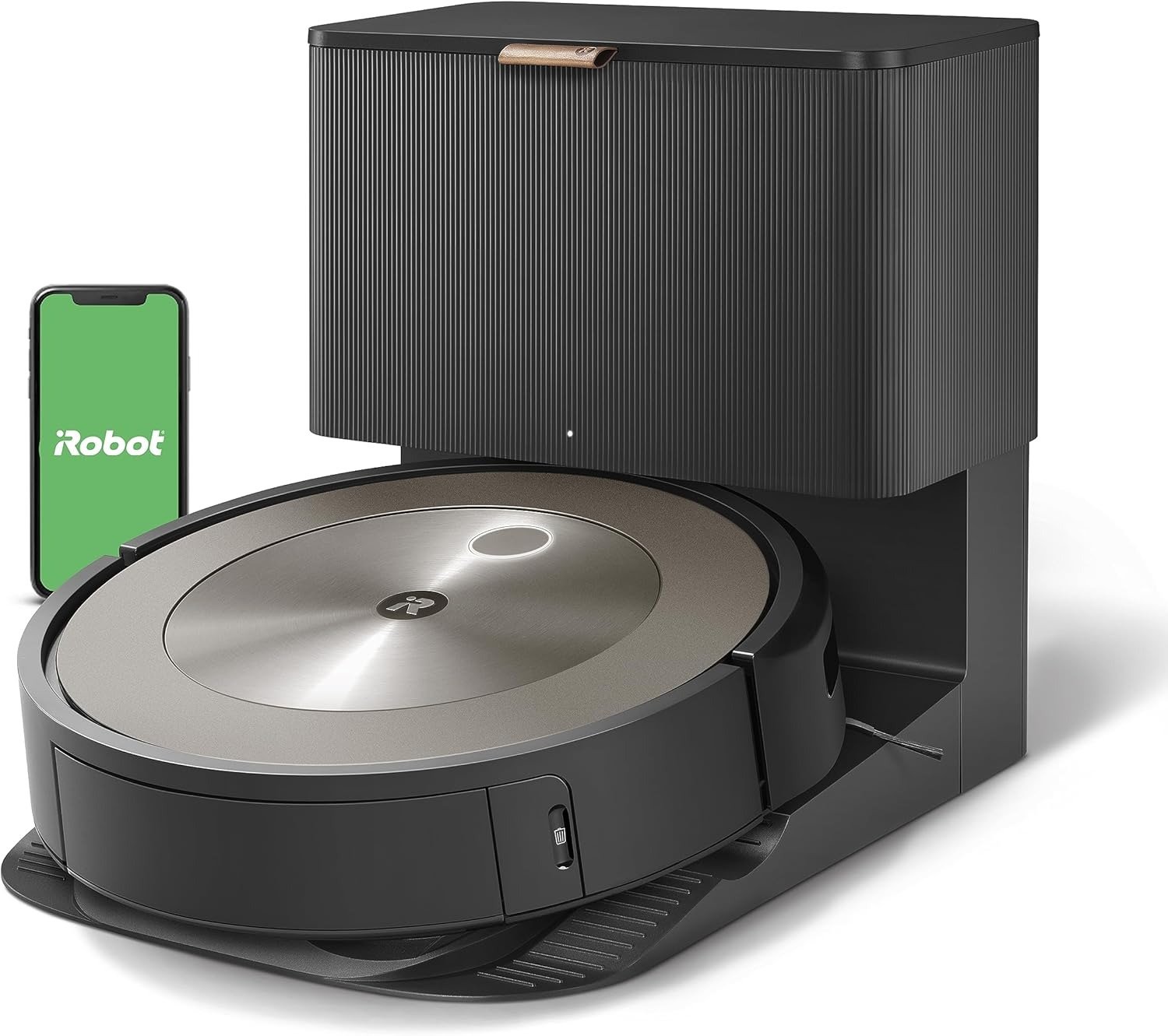
The j9+ offers something structurally different: a fully retractable mop arm that physically lifts and tucks away when it transitions from hard floors to carpet — so the mop pad stays completely dry until it reaches a designated mopping zone.
That’s a real mechanical solution to a real mechanical problem. And if your home has both carpet and hard floors that you want cleaned in a single uninterrupted run, that distinction matters more than almost anything else on the spec sheet.
The problem is that this one strength — genuine carpet-safe mopping — is where most buyers stop reading. And what comes after that moment of recognition is where the wrong decisions begin.
The Hidden Mechanism Behind the Miss
The Roomba Combo j9+ is not a universal automation device. It is a surface-type specialist with automation features layered on top.
Understanding what it actually does — mechanically — changes every judgment call that follows.
The cleaning system uses Dual Multi-Surface Rubber Brushes, an Edge-Sweeping Brush, and Power-Lifting Suction operating through a 3-stage cleaning sequence. On top of this, Dirt Detective — powered by iRobot OS — learns from cleaning history to automatically prioritize dirtier rooms, adjust suction levels, and increase cleaning passes in high-traffic areas.
The mop arm retracts fully upward — not a few millimeters like most competitors, but completely off the floor — when carpet is detected. This D.R.I. (Dry Rug Intelligence) system guarantees carpets stay completely dry during a combined vacuum-and-mop run, which is the single feature that no competitor at this price point replicates with the same reliability.
Here is the mechanism that most buyers miss: the j9+ achieves this carpet protection by making the mop a detachable arm rather than an integrated dock-cleaning system. The arm lifts. The arm protects the carpet. And then — when the run ends — the arm needs you.
The mop pad requires you to manually remove and wash it after each cleaning session.
That is not a footnote. That is a structural design choice with a daily operational cost. The dock auto-empties the dustbin. The dock auto-refills the water tank. But the dock does not wash or dry the mop. The Roborock S8 Pro Ultra’s dock can wash and dry its mopping pad after each run — a massive feature that’s missing on the iRobot Roomba Combo j9+.
This is the trade-off the spec sheet will not show you directly: you get fully dry carpets, and you give up fully automated mop maintenance.
The Threshold Where the Outcome Quietly Breaks
There is a threshold in every home — a ratio of carpet to hard floor — where the j9+’s engineering logic either becomes your most useful tool or its most expensive limitation.
The threshold is not about square footage. It’s about what you actually need the robot to do most.
| Home Profile | Carpet Coverage | Primary Need | j9+ Logic |
|---|---|---|---|
| Mostly hard floors (tile/hardwood) | Less than 20% | Aggressive mopping | Weak fit — pay for mop arm you rarely use |
| Mixed floors, area rugs | 30–60% | Vacuum + light mop | Strong fit — mop arm earns its cost daily |
| Mostly carpet, minimal hard floor | Over 70% | Deep carpet extraction | Partial fit — mop rarely deploys |
| All carpet, no hard floors | 100% | Pure vacuuming | Wrong product entirely |
If you have hardwood floors or tile throughout your home, the impressive carpet protection and retractable mop don’t carry nearly as much weight — and cheaper hybrid vacuum options may serve you better.
This robot suits those in small homes and apartments with mixed flooring — it does a largely great job on all floor types, but it’s very expensive, making it unsuitable for those on a smaller budget.
The threshold breaks quietly. You don’t notice it at purchase. You notice it three weeks later when you’re hand-washing the mop pad for the eighth time on a floor that’s 80% carpet anyway.
Why Most Buyers Misread This Too Early
The most common mistake at this price point is comparing robots by suction numbers.
iRobot doesn’t publish exact Pascal ratings for the j9+, preferring to say it has “100% more suction power” compared to the i-Series — with estimates placing it in the 5,000–5,500Pa range. Meanwhile, the Roborock S8 Pro Ultra is rated at 6,000Pa of suction — near the top of its class.
Buyers see that gap and conclude the j9+ is weaker. That’s the lazy comparison.
In actual cleaning tests, the Roomba s9+ — iRobot’s most powerful model — scored higher than the 6,000Pa Roborock S8 Pro Ultra on carpet, while the Roomba i4 EVO, with much lower suction than a midrange Roborock, regularly picked up more dirt judging by the amounts in their dustbins. Suction in Pascals and cleaning effectiveness are not the same measurement.
The second lazy comparison is mapping speed. iRobot uses a front camera and sensor system for navigation rather than LiDAR — which means initial home mapping takes significantly longer than LiDAR-based competitors, though the resulting map tends to be more detailed and accurate. Buyers who mistake slow mapping for poor navigation are making a category error.
The third lazy comparison is the app. The iRobot app doesn’t support live map tracking — you can’t see the robot’s current location in real time — and it devotes considerable space to the iRobot store and push notifications. This is a genuine limitation. But it’s a UI limitation, not a cleaning limitation. The robot doesn’t need you watching it to clean well.
The feature comparison table that actually matters:
| Feature | iRobot Roomba Combo j9+ | Roborock S8 Pro Ultra |
|---|---|---|
| Mop arm retraction | Full lift off floor | Millimeter lift only |
| Carpet protection reliability | Near-absolute | Partial (risk on plush) |
| Mop self-cleaning | Manual only | Dock washes and dries |
| Mapping speed | Slow (camera-based) | Fast (LiDAR) |
| Published suction (Pa) | Undisclosed (~5,000–5,500) | 6,000 |
| Dustbin auto-empty | Up to 60 days | Yes |
| Water auto-refill | Up to 30 days | Yes |
| Live map in app | No | Yes |
| Low-light navigation | Struggles | Handles well |
| Noise level | Louder on hard floors | Quieter overall |
| Price | ~$1,400 | ~$1,600 |
Who Is Actually Inside This Problem
The j9+ is built for a very specific household profile. When that profile matches, the machine operates exactly as promised and the price feels reasonable.
You are inside this product’s logic if:
Your home has a genuine mix of carpet and hard flooring — not mostly one or the other. You have pets that shed, children who track in debris, or high-traffic zones that accumulate dirt faster than the rest of the house. You want a robot that performs meticulous pass-throughs and ensures floors are spotless — and you’re willing to tolerate up to two months without emptying the vacuum bin.
You are not bothered by washing a mop pad after each cleaning session. You understand that “set it and forget it” means the vacuuming is automated, not the entire cleaning ecosystem.
You are prepared to play tech support for the first couple of days while the robot learns your space — but after that learning curve, you can essentially set it and forget it for daily maintenance.
You value the reliability of a company with over two decades of robot vacuum engineering history, including a P.O.O.P. (Pet Owner Official Promise) — meaning if the robot fails to avoid pet waste and contacts it, iRobot will replace the robot for free.
Where Wrong-Fit Begins
There is a version of this purchase that ends in genuine frustration. It doesn’t require the product to malfunction. It requires only that you bought it for the wrong reason.
You are outside this product’s logic if:
Your home is predominantly carpet with very little hard flooring. The retractable mop arm — the j9+’s defining feature — will spend most of its time stored upward and never justify its contribution to the price.
You want a fully hands-off cleaning system where the dock handles everything, including mop washing and drying. The j9+ docking station is missing the ability to rinse and dry its mop, which can lead to mildew buildup and unpleasant odors over time if the pad isn’t manually cleaned after each run.
You need the robot to operate reliably in low-light conditions. The robot doesn’t operate well in lowlight situations — running the vacuum at night isn’t ideal both because of noise and because the camera-based navigation struggles without adequate light.
You expect the app to show live position tracking. The iRobot app doesn’t display the robot’s position or cleaning progress on the map while it’s running — a feature that most competing apps offer at this price point.
You have deep-pile or plush carpet where embedded debris matters more than surface maintenance. On low-pile carpet, the j9+ didn’t pick up every single hair — an additional manual pass with a handheld vacuum was needed to catch what the Roomba left behind.
The regret profile in a single sentence: You bought it because it vacuums and mops together, without realizing that the mop still needs you after every single run.
The One Situation Where the iRobot Roomba Combo j9+ Becomes Logical
After understanding the threshold, the profile, and the exclusions, there is one household situation where this product stops being a premium option among many and becomes the most structurally logical choice available.
You have a home with a genuine mix of carpeted and hard-floor spaces. You have pets or children generating regular debris. You’ve already tried or considered a simpler robot and found it insufficient. And the specific failure you’ve experienced — or dread — is a wet mop pad dragging across your carpet during a combined cleaning cycle.
The Combo j9+ is for the user who prioritizes reliability and a truly hands-off vacuum experience, especially in homes with a mix of carpet and hard floors — its top-lifting mop and automatic solution refilling are designed for maximum cleaning autonomy on the vacuuming side.
Other premium robot vacuums will have a hard time beating the j9+’s versatility across surfaces and cleaning performance — but it could be smarter with a self-washing mop.
That sentence is the complete honest summary of this product. It is not a flaw-free machine. It is the most reliable solution to one very real problem — and the best overall performer in mixed-floor homes — that exists at this price tier.
Performance at a glance:
| Cleaning Surface | Performance Level | Notes |
|---|---|---|
| Hardwood / Tile | Excellent | Mops and vacuums in single pass |
| Low-pile carpet | Very good | Occasional missed hairs |
| Medium-pile carpet | Good | Carpet Boost mode activates automatically |
| Deep / plush carpet | Moderate | Suction strong, but embedded debris may remain |
| Carpet + hard floor combined | Best in class | Mop arm lift is the differentiator |
| Corners and edges | Good | Edge-sweeping brush, not perfect on corners |
| Pet hair (surface) | Excellent | Tangle-free rubber brushes |
| Pet hair (embedded in carpet) | Good | May need repeat passes on heavy shedding |
| Dried stains on hard floor | Good | SmartScrub back-and-forth mode helps |
| Heavy stains / grout | Limited | Not a substitute for manual deep scrubbing |
What It Solves, What It Reduces, and What It Still Leaves to You
Understanding this boundary is what separates buyers who feel satisfied 90 days in from those who feel quietly deceived.
What the iRobot Roomba Combo j9+ fully solves:
The wet-carpet problem during combined cleaning cycles. Because the mopping plate moves completely away from the floor, there is no risk of carpeted surfaces getting soaked — which is the most reliable carpet-protection mechanism available in this category.
Daily floor maintenance in mixed-floor homes. Having it perform regular runs means floors never really get that dirty — it shines particularly in mopping ability on hard floors.
The dustbin management burden. The Clean Base empties the vacuum bin into an advanced bag that holds up to 60 days of debris — two months without thinking about vacuuming.
What it meaningfully reduces:
Time spent scheduling cleaning around rugs and carpets. The robot handles the surface transition autonomously.
The frequency of intervention for pet hair and daily debris. The Dirt Detective feature remembers which areas get dirtiest and automatically prioritizes them — so high-traffic areas like kitchens and living rooms receive extra attention without manual instruction.
What it still leaves to you:
Mop pad maintenance after every mopping cycle — non-negotiable, non-automated.
Ongoing consumable costs: replacement bags run approximately $19.99 for three, and filters cost approximately $34.99 for three — not expensive, but an ongoing maintenance commitment most buyers don’t factor into the initial price.
Manual cleaning of the water reservoir. Deep scrubbing on stained grout or heavy soiling — the mopping is maintenance-grade, not remediation-grade.
Final Compression
The iRobot Roomba Combo j9+ is not the robot for everyone who wants automation. It is the robot for a specific home type with a specific floor problem.
If your home has carpet and hard floors in genuine proportion, and your real frustration is the combination of both surfaces requiring separate maintenance — or worse, a mop that drags moisture across rugs — then this is the machine
Frequently Asked Questions
Q: Does the iRobot Roomba Combo j9+ actually keep carpets dry during mopping?
Yes. The retractable mop arm physically lifts completely off the floor when carpet is detected — not a few millimeters, but entirely. This is the product’s defining structural advantage over most competitors.
Q: Do I have to clean the mop pad manually?
Yes, after every mopping cycle. The dock refills the water tank automatically and empties the dustbin, but it does not wash or dry the mop pad. This is a deliberate design trade-off for the retractable arm mechanism.
Q: How long does initial mapping take?
iRobot states it can take three to five runs to create a detailed, accurate map of your floors. This is slower than LiDAR-based competitors but the resulting map tends to be more precise.
Q: Is it worth the $1,400 price?
For homes with a genuine mix of carpet and hard flooring where combined vacuum-and-mop runs are the goal — yes. For homes that are predominantly carpet or predominantly hard floor, the value equation weakens significantly.
Q: Can it handle pet hair on carpet?
The j9+ is best suited to multi-pet, cluttered homes with high-traffic carpeted areas — its vision-based obstacle avoidance and tangle-resistant rubber brushes make it well-suited to heavy shedding. On deeply embedded pet hair in medium or high-pile carpet, repeat passes are sometimes necessary.
Q: Does it work in low-light or at night?
The robot doesn’t navigate well in low-light situations — its camera-based system requires adequate lighting for reliable obstacle avoidance and map building. Scheduling night runs is not recommended.
Q: What is the Dirt Detective feature?
Dirt Detective, powered by iRobot OS, learns from your home’s cleaning history and automatically prioritizes dirtier rooms, adjusts suction power, and increases cleaning passes in high-traffic areas — without any manual input required.
Q: Who should not buy the Roomba Combo j9+?
Anyone whose home is primarily one surface type (all carpet or all hard floor), anyone who wants fully automated mop washing and drying from the dock, and anyone who needs live position tracking in the app. These are real limitations, not minor nitpicks.
“A quick note: Don’t believe the star ratings, but trust personal experience. This article is a compilation of collected experiences”