BAD ESPRESSO RARELY ANNOUNCES ITSELF—IT HIDES BEHIND FOAM, HEAT, AND A MORNING YOU’RE TOO BUSY TO INSPECT
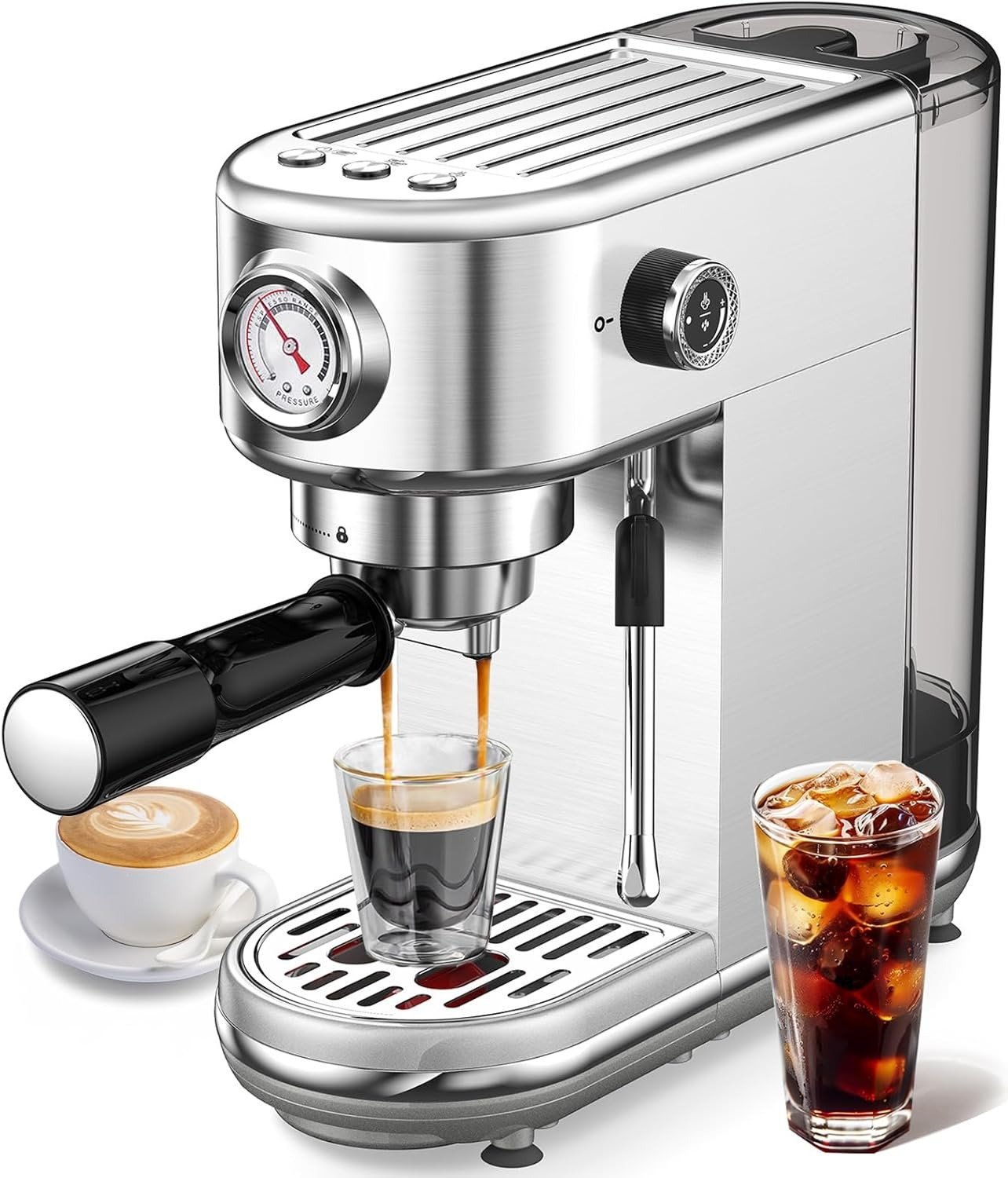
ATATIX COMPACT ESPRESSO MACHINE
I learned this the hard way, not from a glossy spec sheet, but from the pattern cheap machines keep repeating: the first cup looks convincing, the crema sits there like makeup, the milk blooms into a pale cloud, and for a minute you think you solved the café problem. Then the shot lands flat on the tongue. Not dead. Worse than dead. Vague.
That is the real trap.
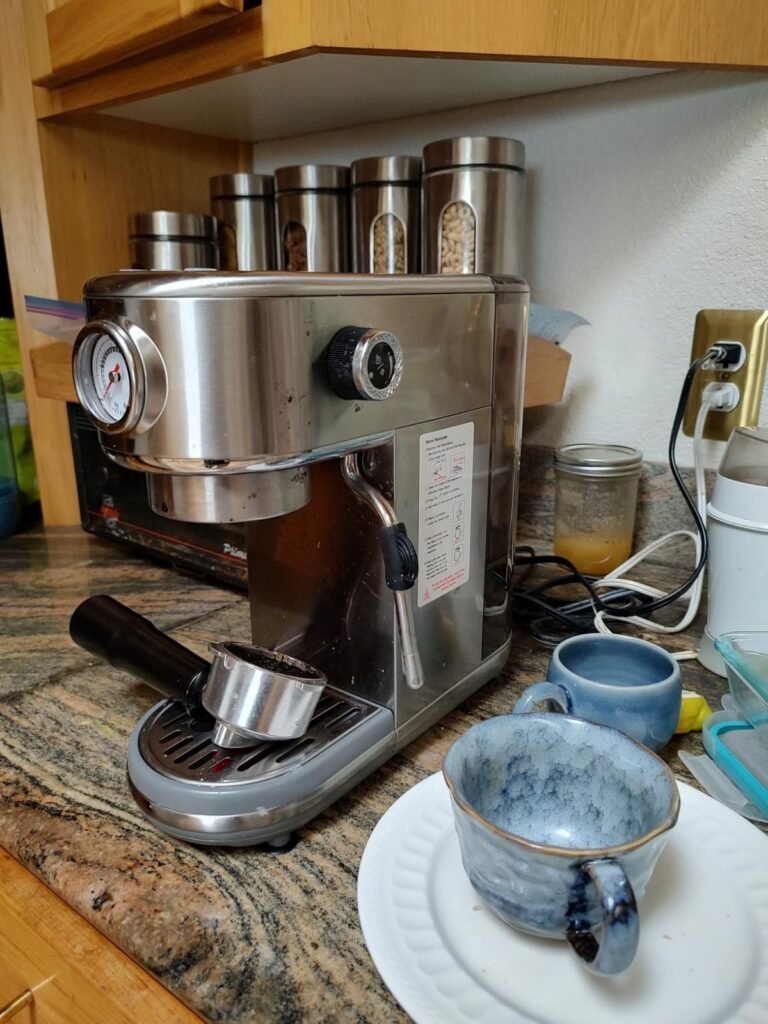
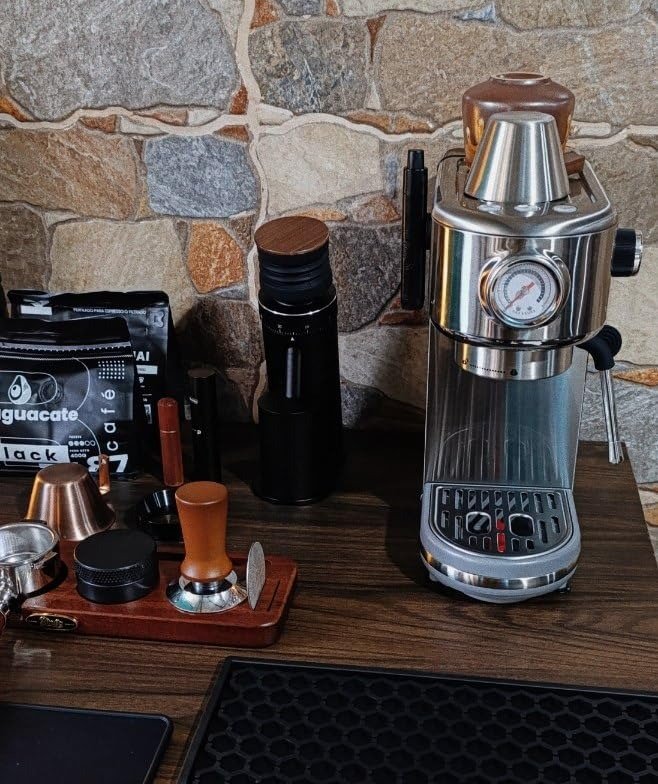
With the atatix compact espresso machine, the interesting question is not whether it can make espresso at all. It can. The question is where the machine stops being a toy, stops being a countertop prop, and crosses the line into something structurally useful for a very specific buyer. Its core promise is clear: compact body, 20-bar pump architecture, a claimed 9–10 bar at extraction, NTC temperature control in the 90–96°C range, roughly 30-second heat-up, a 44 oz removable tank, and a steam wand in a footprint around 12 x 5 x 11 inches. On Amazon, it sits in the manual espresso category with a large review base and a mid-4-star average, which tells me two things at once: people are actually buying it, and they are not judging it by the same standards they would use for a serious prosumer rig.
That difference matters. Everything hinges on it.
THE RESULT LOOKS FINE. THE PROBLEM ISN’T.
A weak home espresso setup rarely fails in a dramatic way. It fails politely.
The cup comes out dark enough. The surface has color. Milk can be steamed. The machine warms up fast enough that your sleepy brain does not rebel. A few reviewers even describe the experience in exactly those terms: compact, easy to set up, strong enough for beginner drinks, capable of lattes, cappuccinos, americanos, and a coffee-shop feeling at home. That response pattern shows up in Amazon-adjacent coverage and user discussions, especially around ease, slender size, and first-time usability.
But visual success is not extraction success.
Espresso can look respectable while still missing the center. It can be hot without being stable. It can produce foam without producing texture. It can feel “strong” while smearing bitterness and hollowness into the same sip. That is why better-reviewed reference machines in mainstream testing keep getting praised for something far less sexy than pump-bar marketing: temperature consistency, real usability, and milk performance that stays repeatable instead of theatrical. Serious Eats highlights temperature consistency and approachable shot quality as reasons the Bambino Plus keeps winning. WIRED points to PID-controlled temperature as one of the reasons entry-level buyers are steered toward it.
That contrast exposes the real issue: not whether the Atatix can impress on day one, but whether your palate and routine are demanding enough to punish its shortcuts.
WHAT YOU’RE ACTUALLY FEELING BUT NOT NAMING
Most people do not say, “My machine lacks repeatable thermal discipline.”
They say something softer. More human.
The latte tastes better some mornings than others. The second shot behaves differently from the first. The milk looks thick, but the mouthfeel breaks into airy fluff instead of that glossy, paint-like fold that turns sugarless milk naturally sweet.
That unnamed irritation is the friction.
I think of it as countertop false peace: the machine appears to have solved the ritual, but it has only shortened the distance between craving and caffeine. It has not truly stabilized the cup. That is why inexpensive machines can feel good for weeks and then start bothering you in a way you cannot describe at first. Not because they suddenly became bad, but because your senses finally caught up with what the machine was always doing.
And to be fair, the Atatix does try to address exactly the areas that usually collapse first at this price: it claims controlled brew temperature, fast preheat, and a steam wand designed to generate denser foam rather than big, wet bubbles. Those are the right pressure points to target. They are not random brochure decorations.
But “targets the right failure points” is not the same thing as “eliminates them.”
THE HIDDEN MECHANISM BEHIND THE MISS
The hidden variable is not the 20-bar headline.
It is how forgiving the machine is when your prep is imperfect and your expectations are milk-drink heavy.
That is the mechanism.
A budget compact espresso machine lives or dies by three invisible stabilizers:
| Hidden stabilizer | What it changes in the cup | Why buyers miss it early |
|---|---|---|
| Temperature discipline | Shot sweetness, balance, and repeatability | Heat feels like quality when you’re in a rush |
| Puck forgiveness | Whether minor grind/tamp mistakes still produce a decent shot | Beginners blame beans before workflow |
| Steam character | Whether milk becomes glossy microfoam or loose café-style froth | Foam volume looks better than texture at first glance |
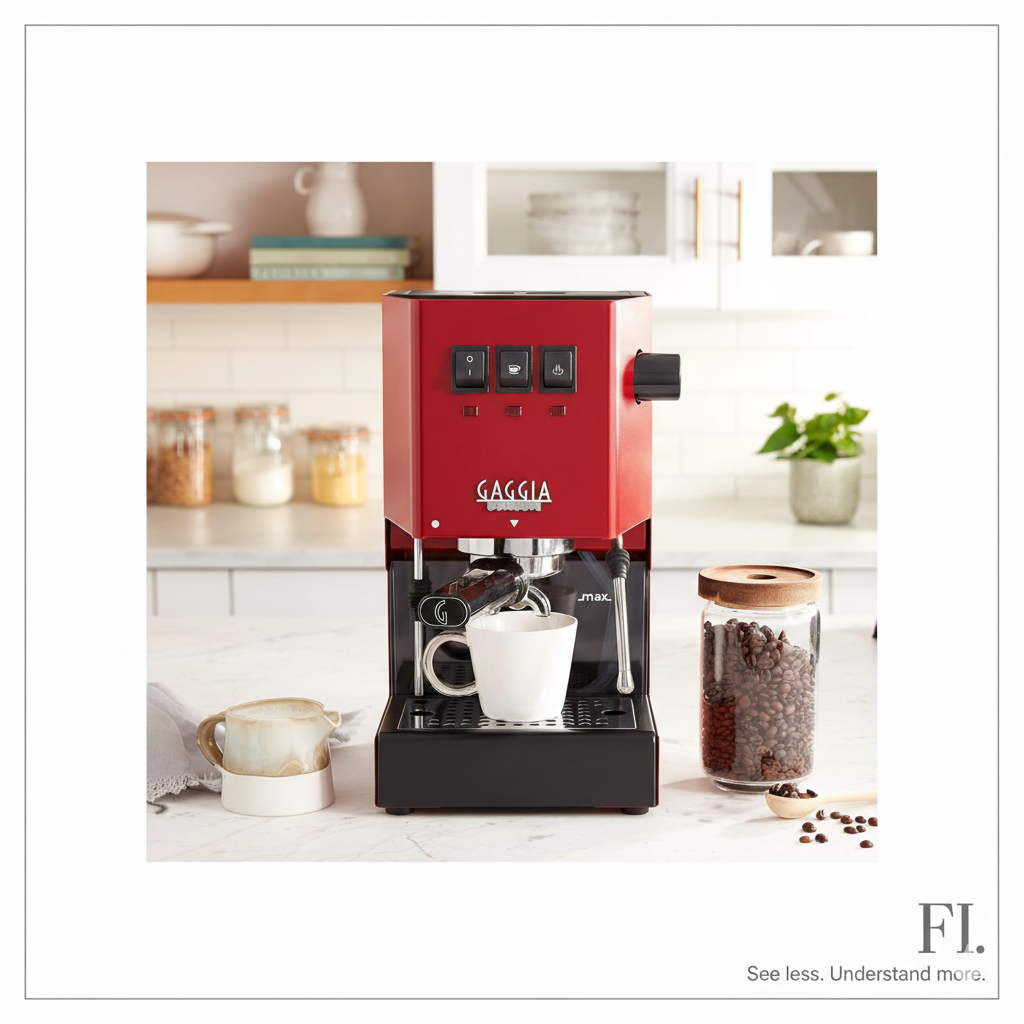
The Atatix spec profile suggests it is built to perform best when you are not asking it to behave like an enthusiast machine. The company language leans hard into a sweet-spot temperature band, quick preheat, and a focused steam wand. Review chatter around it leans toward convenience, compactness, easy setup, and “good enough to make enjoyable milk drinks at home.” That combination tells me the machine is not secretly competing with a Bambino, Gaggia Classic Pro, or anything in the real hobbyist lane. It is trying to compress the beginner ritual into a small, fast, visually satisfying workflow.
That is not a flaw. It is the category truth.
The miss happens when buyers read this category through the wrong lens. They see “20 bar,” “microfoam,” and stainless steel, then mentally promote the machine into a class it was never built to occupy.
THE THRESHOLD WHERE THE OUTCOME QUIETLY BREAKS
This article runs on one model only: Threshold.
Here is the threshold:
The Atatix makes sense below the precision threshold and begins to frustrate above it.
That threshold is crossed when one or more of these become important to you:
- You care about shot-to-shot consistency more than speed.
- You can actually taste sour-thin vs bitter-flat extraction.
- You want silky milk texture, not just hot foam.
- You already own, or plan to buy, a grinder good enough to expose machine limitations.
- You are the kind of person who starts adjusting dose, yield, timing, and puck prep instead of just pressing brew.
Below that threshold, the machine’s compact body, quick heat-up, simple controls, and manual-home-drinks appeal are strengths. Above it, those same strengths turn into a ceiling. Mainstream espresso testing keeps circling back to the same lesson: temperature stability, pre-infusion behavior, steam quality, and overall repeatability are what separate “good enough” from genuinely strong home espresso. That is exactly why the Bambino family keeps surfacing in expert roundups and why reviewers warn that cheap machines often cut corners in tamper quality, body stability, and overall workflow feel.
The threshold is not snobbery. It is sensory math.
WHY MOST BUYERS MISREAD THIS TOO EARLY
Because they compare the wrong things.
They compare machine to machine before they compare morning to morning. They compare bar count before they compare temperature behavior. They compare foam volume before they compare milk texture. And most of all, they compare price against dream, not price against use case.
That is how a compact beginner machine gets either unfairly worshipped or unfairly dismissed.
The people who love it tend to value three immediate wins: it fits on a small counter, it gets them into espresso drinks without a giant spend, and it removes the psychic drag of café runs. The people who outgrow it tend to collide with the same wall budget espresso always reveals: once you begin chasing cleaner extraction and better milk, every shortcut becomes audible. You hear it in the workflow. You taste it in the finish. You notice it in the second drink of the day.
That is the early-comparison trap.
A machine like this should not be judged against the fantasy of “barista-level forever.” It should be judged against a much tighter question:
Does it clear the home-latte threshold without turning your kitchen into a hobby bench?
For the right person, yes.
WHO IS ACTUALLY INSIDE THIS PROBLEM
You are inside this problem if your mornings look like this:
You want espresso-based drinks at home, but you do not want a hulking machine, a graduate course in shot dialing, or a four-figure setup. Your counter is narrow. Your patience is narrower. You want heat, crema, milk, speed, and enough repeatability to keep the ritual from feeling sloppy.
That buyer exists in huge numbers, which is why compact espresso machines under the premium tier keep moving so well. The Atatix’s current review volume and category placement reinforce that it is not a niche curiosity. It is being bought as a practical entry point.
More specifically, this machine fits three people especially well:
| Best-fit profile | Why the Atatix makes sense |
|---|---|
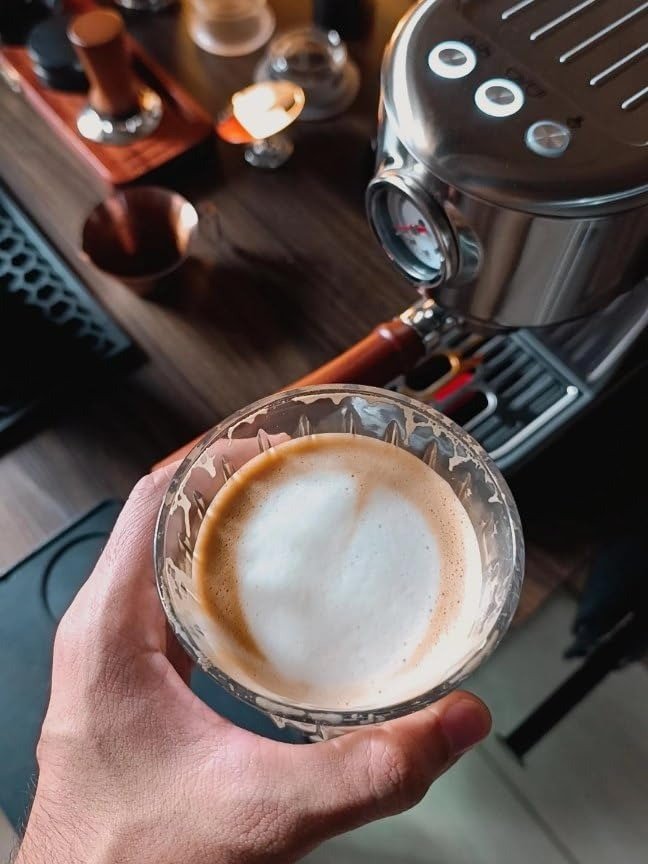
| The milk-drink-first buyer | Lattes and cappuccinos hide small extraction imperfections better than straight espresso |
| The small-kitchen buyer | The narrow footprint is a genuine advantage, not a cosmetic one |
| The ritual upgrader | Someone moving up from pods, instant, or café dependence without wanting full hobby complexity |
If your target drink is a cappuccino before work, not a God shot under forensic scrutiny, the machine’s value proposition tightens and becomes much more credible.
WHERE WRONG-FIT BEGINS
Wrong-fit starts the moment you expect this machine to reward obsession.
If you are already reading grind-size forums at midnight, this is not your machine. If you want café-level latte art texture every day, this is probably not your last stop. If you judge espresso by clarity, balance, and repeatability with straight shots, the machine may feel satisfying for a week, then strangely small.
This matters because the budget segment is full of spec inflation. One of the recurring issues with cheaper espresso gear, according to broader review coverage, is that components and workflow compromises show up quickly once you move from casual use to deliberate use. Even when the result is acceptable, the experience can feel lightweight, less stable, and less precise.
Here is the clean split:
| Fit zone | What happens |
|---|---|
| True fit | You get a fast, compact, satisfying home milk-drink machine |
| Near fit | You enjoy it now, but may outgrow it once you improve your grinder and palate |
| False fit | You expect enthusiast-level straight espresso or premium milk texture consistency |
| Wrong intent | You want a machine for experimentation, upgrade depth, or long-term espresso geekery |
The buyer who suffers most is the near-fit buyer who thinks they are a true fit buyer.
That person does not regret the purchase immediately. They regret it six weekends later, when the first excitement cools and the machine starts answering questions they did not know to ask.
THE ONE SITUATION WHERE THIS PRODUCT BECOMES LOGICAL
This is the situation:
You are not trying to enter espresso as a craft. You are trying to stop outsourcing milk drinks.
That is where the Atatix becomes logical.
Not magical. Logical.
Its appeal is strongest when the job is to deliver quick home cappuccinos and lattes from a compact machine with a removable 44 oz tank, beginner-friendly setup, and enough thermal and steam competence to clear the quality bar above pods, instant, or café dependence. The quick heat-up claim, the temperature-band positioning, the narrow footprint, and the review pattern all support that reading.
That is the one situation where I would not overthink it.
If your real problem is not “I need the best espresso machine,” but “I am tired of spending on drinks I could comfortably make at home if the machine were small, simple, and competent,” then this product stops looking like a compromise and starts looking like a clean answer.
At that threshold, the Atatix Espresso Machine is the logical next step.
WHAT IT SOLVES, WHAT IT REDUCES, AND WHAT IT STILL LEAVES TO YOU
What it solves:
- The friction of café dependence for basic milk drinks
- The space problem of bulkier machines
- The intimidation barrier that keeps many buyers stuck with pods or takeout coffee
- The delay problem that makes slow machines feel abandoned after the first week
What it reduces:
- Daily spending on lattes and cappuccinos
- Setup anxiety for first-time home espresso buyers
- The counter-space tax of larger espresso bodies
- The need for a “perfect” workflow just to get a decent drink
What it still leaves to you:
- Bean quality
- Grind quality
- Basic puck prep discipline
- The learning curve on milk texturing
- The honesty to admit whether you want convenience or control
That last one is the important one.
No machine undercuts reality. It only rearranges where reality charges you. Premium machines charge you in money. Budget machines charge you in forgiveness, consistency, and ceiling. The Atatix appears to make that trade in a relatively clean, beginner-friendly way, which is why the right buyer can feel very satisfied with it while a more demanding buyer starts eyeing the next rung almost immediately.
FINAL COMPRESSION
Most cheap espresso machines do not fail because they cannot make coffee.
They fail because they let you confuse activity with result.
The Atatix is interesting because it clears a real threshold. It is compact enough to live on a tight counter, fast enough to survive weekday use, and capable enough to make the home-latte upgrade feel real rather than performative. Its spec sheet points to the right fundamentals for this class, and the user response around it keeps repeating the same themes: easy, compact, satisfying, approachable.
But the machine only stays impressive if your expectations stay inside its natural boundary.
If what you really want is a compact, entry-level home espresso machine for milk drinks that reduces café spending and morning friction without dragging you into a full-barista identity, this is a rational buy.
If what you want is precision as a hobby, hold your fire.
That is the whole decision.
Not “Is it good?”
For whom does it stop being vague?
And that is where this machine finally becomes clear.
Transparency Note:
This analysis is built on aggregated real-world experience.
It extracts what repeatedly holds, what breaks, and what users uncover only after living with the system—then shapes it into a clear model you can use immediately.
Think of it as structured experience, refined and presented so you don’t have to learn it the hard way.
“A quick note: Don’t believe the star ratings, but trust personal experience. This article is a compilation of collected experiences”