ROomba J9+ REVIEW: THE FLOOR CAN LOOK CLEAN LONG BEFORE THE FRICTION IS GONE
The Result Looks Fine. The Problem Isn’t.
A robot vacuum can fool you in two ways.
First, it moves. Second, it leaves stripes on the rug. That is often enough for the brain to relax and call the room clean.
Then you walk barefoot across the same floor at night. There it is again. That faint grit near the baseboard. The pet hair tucked against a table leg. The fine dust in the corners that somehow survives every “smart” pass. The room looks handled. The friction is still alive.
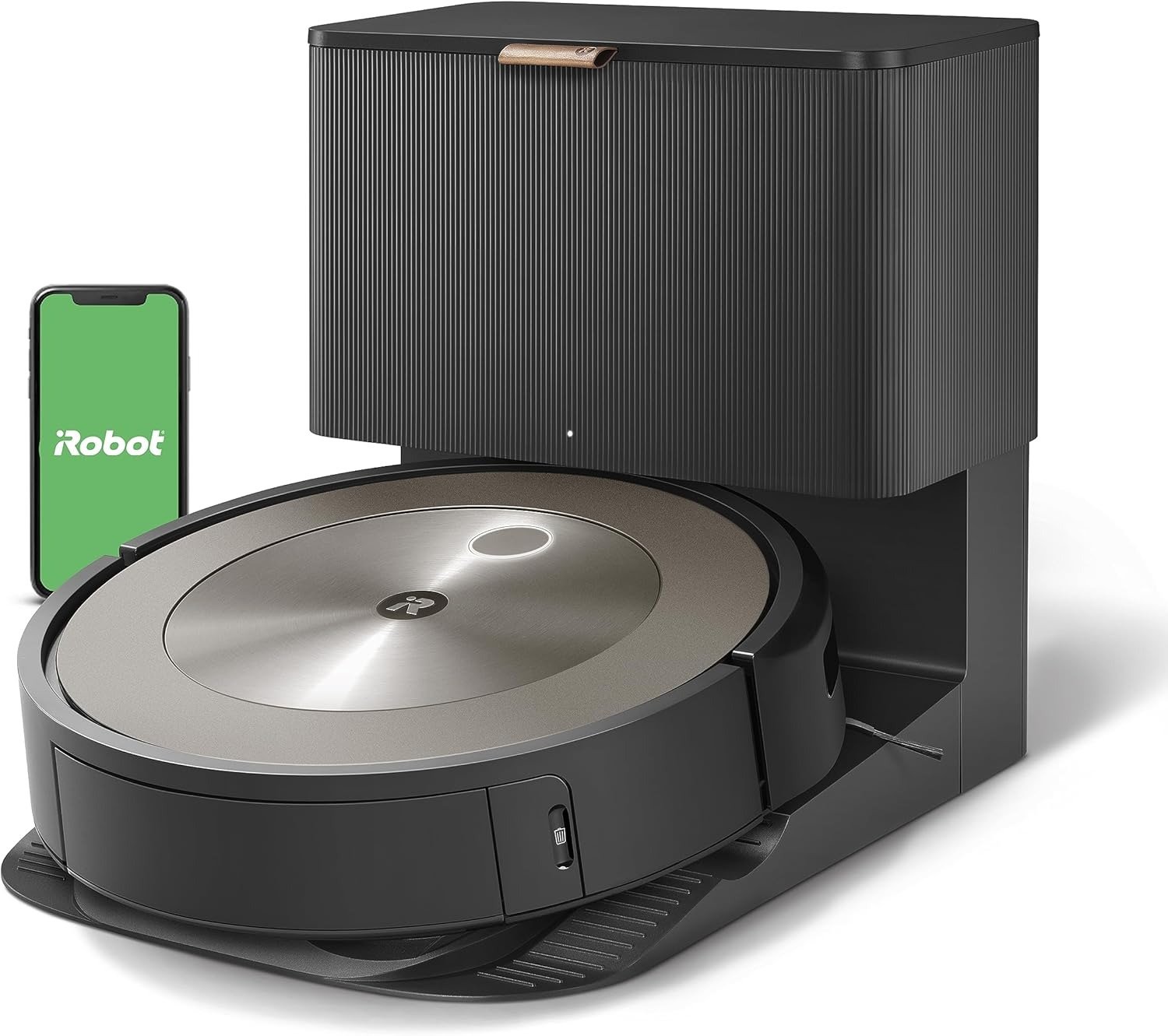
That is the first useful truth about the Roomba j9+. It is a strong cleaner, not a magical eraser. iRobot positions it as its best dirt-and-debris pickup vacuum with 100% stronger suction than the Roomba Combo i series, Dual Multi-Surface Rubber Brushes, PrecisionVision obstacle avoidance, and a Clean Base that can hold up to 60 days of debris. RTINGS also found that it delivers good overall debris pickup, good pet-hair results, and mostly effective hazard avoidance. But RTINGS also found that it can miss fine debris along walls and in corners, and that its pathing can be inconsistent.
That split matters. A lot.
Because the j9+ is not built for people who want the fantasy of total autonomy. It is built for people who are tired of the wrong kind of manual cleaning: the daily, repetitive, low-grade cleanup that keeps coming back in the same places. When it works for the right home, it removes repetition. When it lands in the wrong one, it simply relocates the annoyance.
What You’re Actually Feeling but Not Naming
Most people do not wake up thinking, I need better floor-maintenance architecture.
They think something simpler.
I vacuumed yesterday. Why does the floor already feel wrong again?
That feeling usually comes from one of three things:
| What you notice | What it feels like | What is actually bothering you |
|---|---|---|
| Clean-looking room, dirty edges | Mild irritation | Surface cleanliness is outrunning edge cleanliness |
| Less visible hair, same stale feel | Quiet disappointment | Open-area pickup improved, residue zones did not |
| “Smart” robot, still frequent intervention | Buyer’s remorse starting to form | Automation reduced labor, but not supervision |
That is exactly where the j9+ becomes interesting.
It is not a robot that wins by theatrical feature overload. Its value is narrower. It is strongest when the real burden is recurring pet fur, tracked debris, and obstacle clutter that would trip simpler bots. iRobot emphasizes pet-focused behavior, obstacle recognition for cords, shoes, socks, and pet waste, plus Dirt Detective room prioritization. RTINGS similarly found that the rubber brushrolls handle pet hair well and are easy to clean because hair does not get trapped in bristles the way it often does on older brush designs.
The psychological toll it reduces is not “cleaning,” in the abstract. It is interruption. The little domestic ambushes. The moment you spot fur tumbleweeds before guests arrive. The moment a cord gets dragged. The moment a machine becomes one more thing to rescue from the floor. That is the pain this product is trying to take out of the room.
The Hidden Mechanism Behind the Miss
People love to reduce robot vacuums to suction.
That is the wrong metric too early.
The real mechanism is a three-part system:
- pickup in open areas
- behavior near boundaries
- how much supervision the machine still demands
The Roomba j9+ is compelling because two of those three are fairly strong. Open-area cleaning is generally good. Pet-hair handling is solid. Obstacle avoidance is meaningfully better than what older “bump and hope” robots offered. iRobot says the j9+ uses PrecisionVision Navigation to identify and avoid hazards such as cords, shoes, socks, and pet waste, and RTINGS found that it does a good job moving around obstacles and labeling potential hazards in the app.
But the miss shows up in the third part: boundary fidelity plus intervention load.
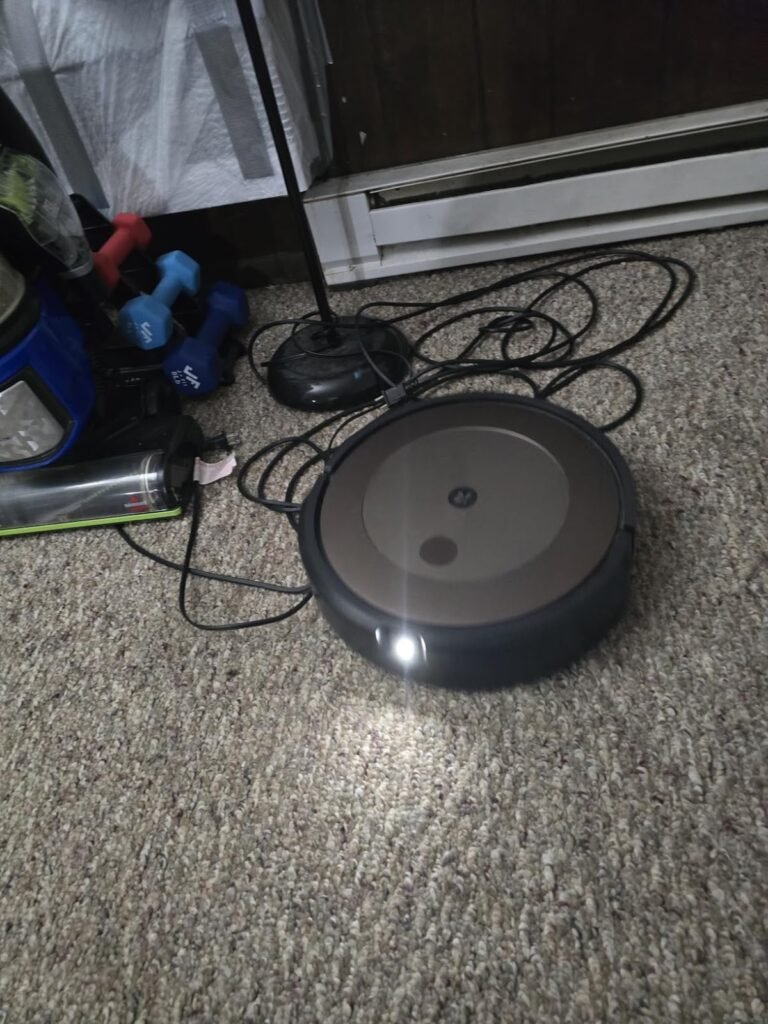
RTINGS found that the j9+ struggles more with fine debris pushed into corners and along walls, and that its pathing can feel erratic or inefficient. A mirrored Wirecutter excerpt reports that the j9+ cleaned well in general, but its self-empty dock did not consistently remove all debris from the robot’s bin in testing, and that testers also saw furniture bumps and mapping complaints across some owner feedback. Amazon’s page shows a 3.5/5 average from 1,239 global ratings, while iRobot’s own site shows 3.29/5 from 174 reviews; Best Buy is more favorable at 4.0/5 from 191 reviews, which suggests a very real split between satisfied-fit owners and disappointed-fit owners.
That is the hidden variable: not whether the j9+ cleans, but whether its remaining misses happen in places that you personally care about every day.
The Threshold Where the Outcome Quietly Breaks
Here is the threshold.
The j9+ feels like a smart, expensive relief machine until your home depends on edge precision and low-supervision consistency more than it depends on open-floor pickup and pet-safe navigation.
That is the break point.
Not “bad vacuum.” Not “overpriced gadget.” A threshold mismatch.
I would name it this way:
The Residue Threshold — the point where the debris that remains starts to matter more to you than the debris the robot already removed.
Once you cross that line, every surviving dust ribbon near a wall feels louder. Every imperfect self-empty cycle feels less like a quirk and more like betrayal. Every inefficient loop around furniture starts to sound like the machine is thinking out loud with your electricity bill.
Here is what that threshold looks like in practice:
| If your home is mostly this… | The j9+ usually feels like… | Why |
|---|---|---|
| Pet hair, daily tracked dirt, toys, cords, mixed flooring | Relief | Stronger pickup, solid pet-hair handling, meaningful hazard avoidance |
| Fine dust along edges, detail-sensitive hard-floor cleaning, expectation of near-zero intervention | A compromise | Corner and wall residue become too visible |
| Homes where mapping glitches or imperfect auto-empty behavior will drive you crazy | Risky | Owner feedback and testing both show that consistency is not the product’s strongest trait |
That threshold is more important than suction numbers, app polish, or brand history. Because regret almost never starts with “this product did nothing.” It starts with “it solved the wrong 80%.”
Why Most Buyers Misread This Too Early
They buy the j9+ for the headline promise.
What they should buy it for is the shape of their mess.
The early misread usually happens in one of three ways.
- they overvalue suction language.
- they undervalue edge behavior.
- they confuse “self-emptying” with “self-sufficient.”
That last one matters more than the marketing copy would like.
iRobot says the Clean Base can hold up to 60 days of debris, and that is a meaningful convenience when the dock is working as intended. But owner feedback across Amazon and Best Buy shows recurring friction around loud emptying, setup sensitivity, bag recognition, and cases where performance did not stay smooth over time. The mirrored Wirecutter excerpt also reported inconsistent dock emptying in tests. So the intelligent reading is not “the 60-day claim is false.” It is narrower: the convenience is real, but it is conditional.
And then there is the older Roomba halo effect. Buyers often assume iRobot’s long history equals automatic category dominance. The company does have scale and experience—its site cites over 50 million robots sold and 30+ years of expertise—but RTINGS also notes a significant features-and-usability gap versus some similarly priced alternatives. History helps. It does not erase category drift.
Who Is Actually Inside This Problem
The right buyer for the j9+ is not “anyone who wants a robot vacuum.”
It is someone closer to this:
- You have pets, and the floor keeps repopulating with hair faster than you want to think about.
- You have clutter that punishes dumb navigation: cables, bowls, shoes, table legs, the usual domestic landmines.
- You want less daily floor maintenance, not a sacred promise of perfection.
- You care more about repeatable relief than showroom-level edge detail.
- You want a vacuum-first robot, not a compromise machine trying to be everything at once.
That fit is grounded in the product’s actual profile. iRobot explicitly markets the j9+ as ideal for larger homes and as being built with more pet features than any other robot vacuum, while RTINGS found good pet-hair pickup and mostly effective hazard avoidance. Best Buy reviews also repeatedly praise pet-hair pickup, mapping, and the value of the self-empty base, even while some owners note loud emptying or setup quirks.
This is the kind of machine that makes sense when your floor gets dirty in broad, recurring strokes. Fur. Litter scatter. Hallway grit. Kitchen fallout. The kinds of messes that keep reappearing before you have the patience to care nobly about them. That is where the j9+ starts to feel less like a gadget and more like a pressure-release valve.
Where Wrong-Fit Begins
Wrong-fit starts earlier than most people think.
It begins the moment you need the robot to act like a meticulous edge tool instead of a strong maintenance machine.
You are probably outside the j9+ fit zone if:
- fine debris along walls bothers you more than open-floor debris bothers you
- your home has low-frustration tolerance for mapping oddities or path inefficiency
- you expect self-emptying to mean rare maintenance in a literal sense
- you want the quietest possible dock behavior
- your buying logic is based mostly on brand comfort rather than problem shape
The data behind that is not subtle. RTINGS flags inconsistent pathing and misses with fine debris near walls and corners. The mirrored Wirecutter excerpt reports inconsistent self-empty performance and mapping complaints in broader user analysis. Amazon’s review distribution also shows a significant one-star share at 25%, which is too large to dismiss as ordinary noise for a premium appliance.
Wrong-fit is not just technical. It is emotional.
Some products fail because they are weak. Others fail because they leave you doing the one thing you thought you had just paid to stop thinking about. That second failure hurts more. It feels personal. It feels like the machine signed the contract and then slid the fine print under the door after midnight.
The One Situation Where This Product Becomes Logical
The j9+ becomes logical in one specific situation:
When the real problem is not whether dirt exists, but whether you can keep recurring pet-heavy, obstacle-heavy floor mess under control without constantly intervening yourself.
That is the moment the product stops being a premium toy and starts making structural sense.
Because in that situation, its strongest traits line up:
| What the j9+ does well | Why it matters in this situation |
|---|---|
| Good everyday pickup on hard floors and carpets | It reduces recurring maintenance, not just one-off cleanup |
| Twin rubber brushrolls that handle pet hair well | It lowers brush-entanglement annoyance |
| Hazard recognition and avoidance | It reduces the odds of stupid stoppages around cords, shoes, and pet waste |
| Self-empty base | It removes the daily bin ritual when things are working properly |
| Dirt Detective room prioritization | It matches the reality that some rooms get dirty faster than others |
Those are not small wins. They are quality-of-life wins. iRobot’s product page and RTINGS’ testing both support that core identity, especially around pet-oriented use, hazard avoidance, self-emptying convenience, and generally good pickup. Reviewed also came away positive on cleaning performance, navigation, and app usability, while noting that the emptying function is loud.
So yes—there is a clean logic here.
Not universal. Not mystical. Clean.
What It Solves, What It Reduces, and What It Still Leaves to You
Here is the honest accounting.
| Category | What the Roomba j9+ solves | What it reduces | What it still leaves to you |
|---|---|---|---|
| Daily floor upkeep | Repetitive pickup of hair, crumbs, tracked debris | The need for frequent full-manual vacuum passes | Spot checks in corners, along walls, and around awkward boundaries |
| Pet-home friction | Fur accumulation and obstacle risk | Brush cleaning hassle and fear of obvious floor hazards | Occasional second pass for finer hair, plus routine maintenance |
| Mental load | Remembering to vacuum every day | Visible mess anxiety between deeper cleans | App oversight, occasional troubleshooting, and tolerance for quirks |
| Bin handling | Frequent manual emptying | Contact with dust and debris | Bag changes, dock noise, and possible emptying inconsistency |
That last column is the adult part of the decision.
The j9+ does not erase maintenance. It changes its texture.
Instead of constant floor work, you get periodic system management. Depending on your home, that is either a fantastic trade or a deeply annoying one. The product’s own support ecosystem and user feedback make clear that filters, bags, bins, sensors, and occasional troubleshooting are still part of ownership, even if the day-to-day vacuuming burden drops sharply.
Final Compression
The Roomba j9+ is not the robot vacuum for people chasing perfection.
It is the robot vacuum for people whose floors keep slipping out of acceptable condition because life keeps happening on top of them—pets, cords, bowls, crumbs, fur, repeated traffic, repeated neglect, repeated interruption. In that environment, the j9+ has a real case: stronger pickup than older iRobot lines, good pet-hair handling, smart hazard avoidance, mapped room cleaning, and the convenience of a self-empty dock. But the case holds only if you can live with its softer spots: corner residue, sometimes-erratic pathing, loud emptying, and mixed long-term owner satisfaction.
So this is the cleanest way to say it.
If your break point is daily pet-heavy floor maintenance in a cluttered real home, the Roomba j9+ becomes a rational buy.
If your break point is precision edge cleaning with near-zero tolerance for quirks, this is where the logic starts to crack.
Transparency Note:
This analysis is built on aggregated real-world experience.
It extracts what repeatedly holds, what breaks, and what users uncover only after living with the system—then shapes it into a clear model you can use immediately.
Think of it as structured experience, refined and presented so you don’t have to learn it the hard way.
“A quick note: Don’t believe the star ratings, but trust personal experience. This article is a compilation of collected experiences”