You Don’t Notice a Weak Projector When the Room Is Loud. You Notice It When the Scene Finally Goes Dark.
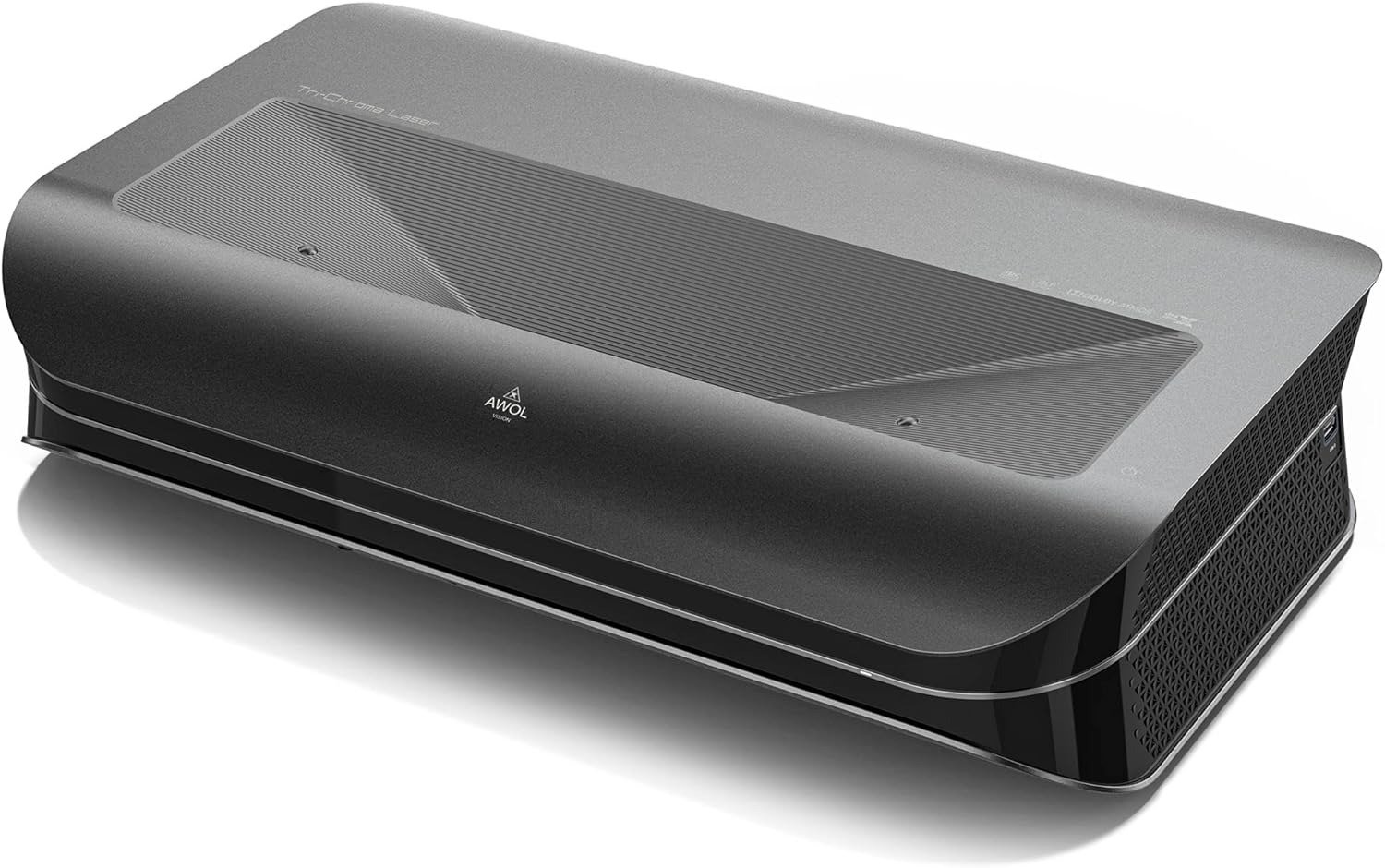
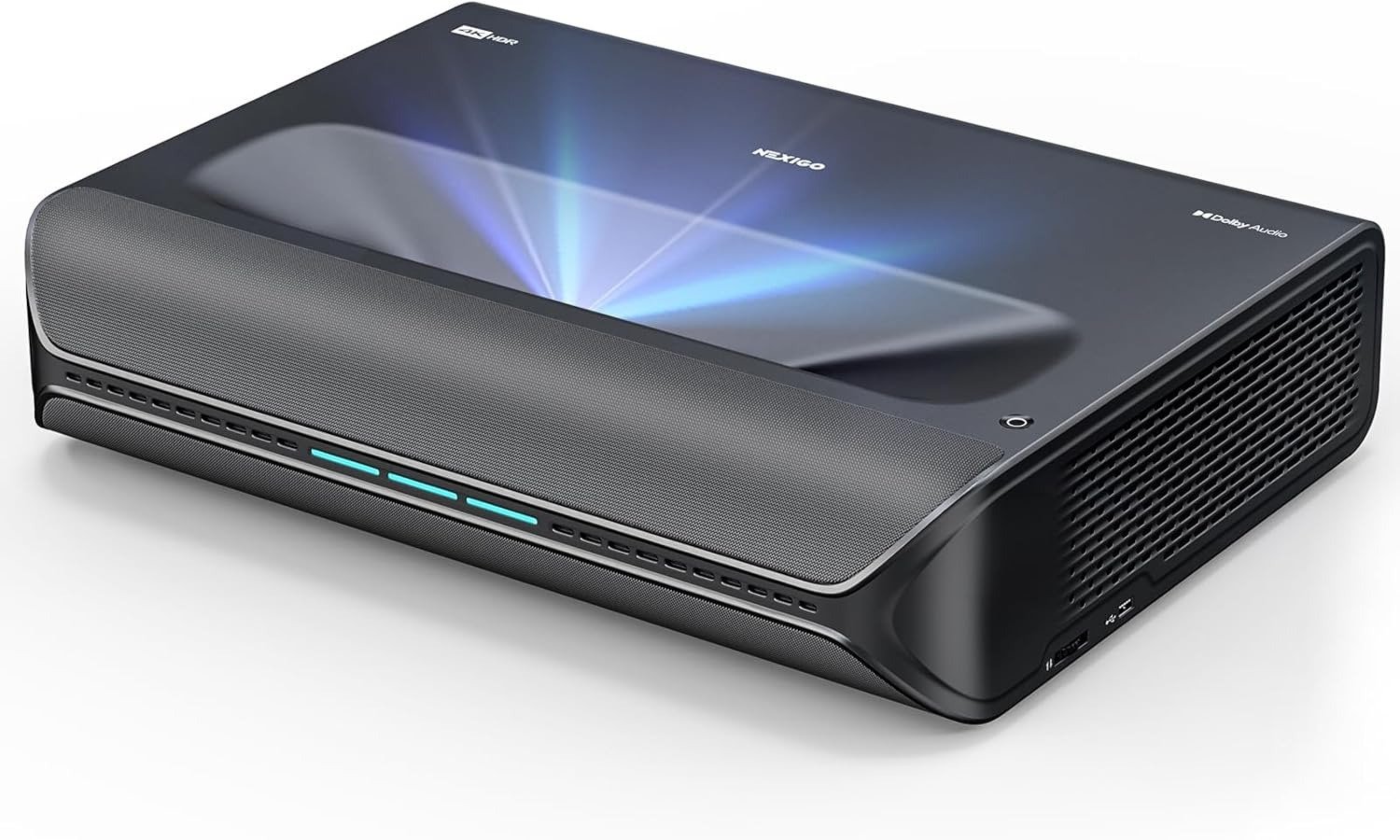
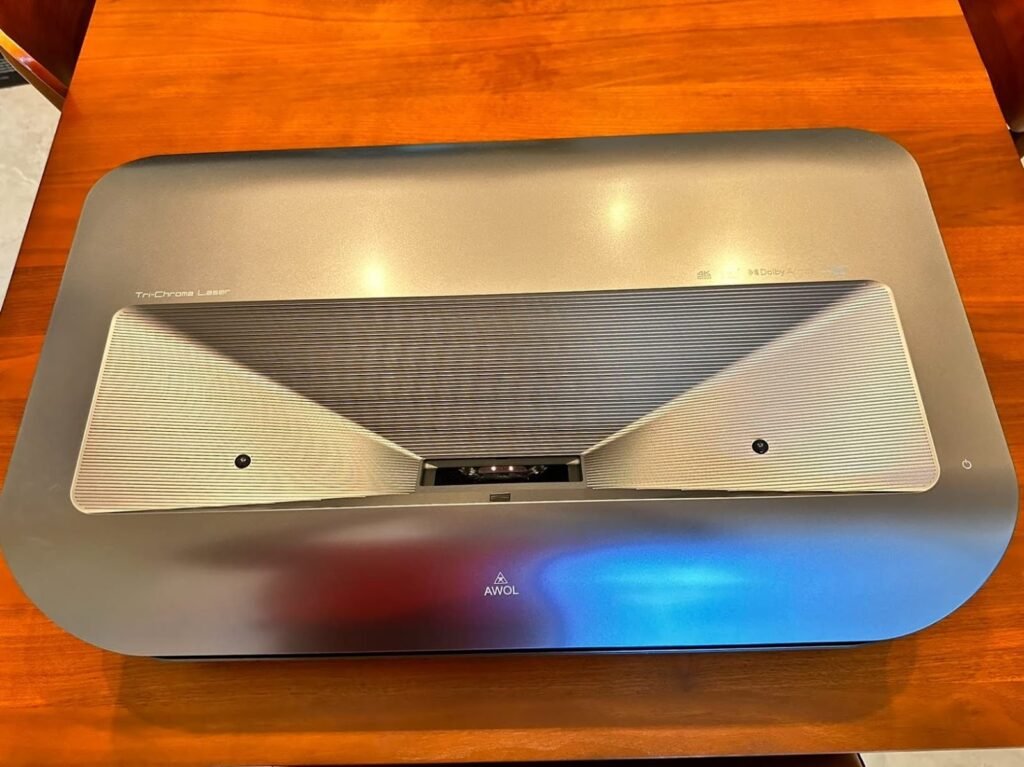
AWOL VISION LTV-2500
The sales pitch around a projector usually lands in the same place: bigger image, brighter laser, more cinematic nights.
That is not where the real decision lives.
The real decision shows up later, when the room goes quiet, the lights are down, and a scene that should feel dense and dimensional starts looking a little flatter than your imagination promised. Not bad. Not broken. Just slightly thinner than the price, the specs, and the excitement led you to expect.
That is the trap with the AWOL Vision LTV-2500. It is easy to judge too early, and even easier to judge by the wrong metric.
I came away from the data with a very specific conclusion: this projector becomes logical only after a threshold is crossed. Before that threshold, it can look like a premium shortcut. After it, it starts to make structural sense. Its official spec sheet gives you the raw shape of the machine—4K UHD, tri-color laser, 1700 ISO lumens, 107% BT.2020 coverage, Dolby Vision, HDR10+, Active 3D, 0.25:1 throw ratio, 15ms at 4K/60 and 8ms at 1080p/120 in Turbo Mode. But the review pattern is what matters: strong feature density, unusually wide color capability for the money, and enough caveats around accuracy, brightness interpretation, black-level expectations, and setup friction that you should not treat it like a universal fit.
The Result Looks Fine. The Problem Isn’t.
A projector can impress you in the first ten minutes and still miss the point of why you bought it.
That sounds unfair. It is not.
The AWOL LTV-2500 is one of those products that can produce an immediate “wow” reaction because it gives you scale fast. Up to 150 inches. Wide color. Dolby Vision support. Solid built-in sound. Low enough lag to feel responsive for casual and even fairly serious gaming. On paper, it is an unusually aggressive package for the price tier. More than one reviewer framed it as a strong value play under $3,000, and ProjectorCentral called it a solid budget UST with premium-format support and a good sound system, while also warning that some caveats follow you into real ownership.
But “looks impressive” and “solves the right problem” are not the same sentence.
The first reaction is driven by size. The second is driven by texture, shadow control, motion confidence, tonal discipline, and whether the projector still feels convincing after the novelty of a 100-inch-plus image stops doing all the work for it. That is where the LTV-2500 splits people. Owners and reviewers tend to like the immersion, the cinematic scale, the 3D capability, the gaming responsiveness, and the included Fire TV 4K Max approach. The friction shows up in places that are less sexy in a product listing: calibration dependence, shared picture settings behavior between SDR and HDR, laser speckle, dual-system awkwardness, non-backlit remote, and some owner complaints about quality-control or support interactions.
That is why the surface impression is too generous.
The image can look fine long before the decision is fine.
What You’re Actually Feeling but Not Naming
Most people do not say, “I am worried this projector will underdeliver in low-APL scenes after the brightness headline seduces me.”
They say something messier.
They say the wall looked amazing in the demo, but they are afraid the daily experience will feel less rich than a good television. They say they want a projector for movies, sports, and maybe gaming, but they do not want to become a calibration hobbyist just to make the picture stop feeling slightly off. They say they want cinema, but what they really fear is regret.
That fear has three layers.
First, maintenance dread. Not physical maintenance. Decision maintenance. The exhausting sense that you may spend weeks changing modes, nudging settings, and second-guessing whether the projector is showing its best face.
Second, expectation collapse. A tri-laser UST with Dolby Vision and huge color claims sounds like a dramatic leap. If the dark scenes then feel lifted, the blacks less dense, or the out-of-box color less settled than expected, the emotional drop is sharper than it would be on a more modest machine.
Third, intervention burden. You did not buy a living-room projector because you wanted a project. You bought it because you wanted the room itself to turn into an event.
That is the unnamed friction here. Not “is it good?” It often is. The better question is crueler and more useful:
When does the AWOL LTV-2500 stop being a big, fun image and start being a coherent home-cinema decision?
The Hidden Mechanism Behind the Miss
It is not really a brightness story.
That is the first misconception I would kill.
The hidden mechanism is the gap between spectacle performance and discipline performance.
Spectacle performance is what the projector does immediately: scale, saturation potential, format support, 3D novelty, gaming responsiveness, room-filling image, broad compatibility, and enough audio output to make setup feel self-contained. The LTV-2500 is structurally strong there. Its tri-color laser light source, wide claimed color space, 4K UHD output, Dolby Vision/HDR10+/HLG support, 36W stereo audio with Dolby Atmos and DTS Virtual:X, and very short throw ratio all push it toward the “living-room theater” use case.
Discipline performance is different. It asks whether the projector stays believable when the image needs restraint, not fireworks. Here the review language becomes more careful. ProjectorCentral praised the value and feature mix, but listed meaningful cons: the projector requires calibration for an accurate image, shares picture settings between SDR and HDR, can show visible laser speckle, and uses a “peak lumens” brightness spec that may mislead buyers if they read it as a standard brightness claim. Projector Reviews also flagged elevated black levels in dark viewing due to measured gamma behavior in Standard mode, along with menu limitations around picture adjustments.
That is the miss.
People shop this machine as if the core question were, “How big and how vivid?”
The real question is, “How tolerant am I of a projector that is generous with features and color ambition, but more conditional in accuracy and black-depth satisfaction than the spec card suggests?”
That is a different purchase.
And it produces a different buyer.
The Threshold Where the Outcome Quietly Breaks
Here is the threshold in plain English:
The AWOL LTV-2500 becomes logical when your priority is giant-screen color impact and feature density in a mixed-use room, not reference-grade black depth or polished out-of-box accuracy in dark-room movie watching.
That is the whole article, compressed into one sentence.
Before that threshold, the LTV-2500 is easy to over-romanticize. After it, the machine stops feeling contradictory.
I would define the break point like this:
| Decision Variable | Below the Threshold | Inside the Threshold |
|---|---|---|
| Room behavior | You expect a dark-room, OLED-like sense of depth | You watch in a living room or mixed-light space |
| Picture expectation | You want strong accuracy without extra tuning | You accept tuning or mode management |
| Emotional priority | You are chasing “best picture” in the abstract | You are chasing scale, immersion, and format flexibility |
| Content mix | Mostly film-first, shadow-heavy viewing | Movies, sports, streaming, gaming, occasional 3D |
| Regret trigger | Lifted blacks or image imbalance will irritate you | Those trade-offs are acceptable for the size/features |
This threshold is not theoretical. It is supported by the pattern in the sources. The LTV-2500 has enough brightness and a gamma profile that reviewers see as suitable for rooms with ambient light, while also showing elevated black-level behavior in darker viewing and requiring calibration for more accurate image rendering. Meanwhile, its gaming latency and wide feature support remain clear strengths.
That is why some people will call it a steal, and others will quietly feel that something never locked into place.
They are not seeing different projectors.
They are standing on opposite sides of the threshold.
Why Most Buyers Misread This Too Early
Because they shop from the outside in.
Feature first. Behavior later.
It happens the same way every time. A buyer sees tri-laser. Sees Dolby Vision. Sees Active 3D. Sees 150-inch capability. Sees low-lag gaming. Sees a price lower than many premium UST rivals. The brain does what brains do: it builds a fantasy from the strongest nouns in the room.
But the thing that decides satisfaction is usually not the headline feature. It is the mismatch between the product’s strengths and the buyer’s private standard.
A few common misreads show up again and again:
| Early Misread | What It Ignores |
|---|---|
| “Tri-laser means premium picture in every condition.” | Wide gamut and premium formats do not erase accuracy or black-level trade-offs. |
| “Brightness claims mean it will brute-force every room.” | Reviewers explicitly warned that AWOL’s peak-lumen framing can mislead shoppers about standardized brightness expectations. |
| “If it supports Dolby Vision, I’m done deciding.” | Format support matters, but image discipline still depends on implementation, room, screen, and calibration. |
| “Gaming-friendly means all-around excellence.” | Low lag is real here, but gaming strength does not automatically solve film-first shadow performance expectations. |
There is another reason buyers misread it: they compare vertically when they should compare behaviorally.
They ask, “How many features am I getting for the money?”
They should ask, “Which kind of disappointment would bother me more—the loss of scale and color drama, or the loss of image discipline in darker, more critical viewing?”
That question is harder. It is also the one that keeps you from buying the wrong projector for the right reasons.
Who Is Actually Inside This Problem
Not everyone shopping a projector is shopping the same future.
The right reader for the AWOL LTV-2500 usually looks like this: you want a very large image without the installation burden of a long-throw setup; your room is not a perfect black box; you care about streaming convenience, sports energy, gaming responsiveness, and movie nights more than laboratory purity; and you like the idea of 3D and premium HDR formats enough that they are not just decorative checkboxes to you. The included Fire TV 4K Max, the three HDMI inputs with eARC on HDMI 2, the Bluetooth speaker mode, and the built-in audio all reinforce that this projector is trying to be lived with, not merely admired in a spec sheet.
You are also inside the fit zone if the following sentence sounds sane rather than disappointing:
“I am willing to trade some black-depth and out-of-box polish for huge-screen immersion, broad feature support, very good gaming response, and unusually wide color potential at this price.”
That buyer exists. In fact, that is probably the core buyer.
Projector Reviews was clear that under $3,000, there are not many laser TVs that match the LTV-2500’s overall picture-quality/features equation. ProjectorCentral framed it similarly, but with more caution around its caveats. That combination matters. It tells you this is not a fraudulent product. It is a selective product.
And selective products are often the best ones—when they meet the right life.
Where Wrong-Fit Begins
Wrong fit does not begin when the projector is “bad.”
Wrong fit begins when your standard is built around a different machine.
You are outside the safe zone if you want the picture to arrive already disciplined, already accurate enough, already tonally convincing in a dark room, without you touching much of anything. You are also outside the safe zone if black depth is the emotional hinge of your movie experience—if shadow density, contrast subtlety, and that quiet sense of image weight matter more to you than size and color drama. The available review coverage repeatedly points toward the AWOL line delivering eye-catching breadth and features while asking more tolerance around calibration and image refinement than some stronger rivals in the class. RTINGS’ tests on the newer LTV-3000 Pro are not the same product, but they reinforce a brand-level pattern: broad gamut and brightness strengths, with weaker out-of-box accuracy and more limited overall performance than top alternatives like the Hisense PX3-Pro or XGIMI Aura 2. That is an inference, not a direct one-to-one transfer, but it is directionally useful.
You are also outside the fit if you are the kind of buyer who becomes disproportionately irritated by UI friction. The LTV-2500’s use of a separate streaming device path, plus reviewer notes about two operating-system layers and limited picture adjustments in certain presets, is minor for some people and maddening for others.
And then there is the ugly category nobody likes to discuss during the honeymoon phase: support tolerance.
If occasional owner reports of hardware issues or frustrating customer-service loops would poison the ownership experience for you, that belongs in the decision before the credit card comes out, not after. A Best Buy review described trim separation and an HDMI port with a strong red tint, followed by an unsatisfying support exchange. One complaint is not a verdict. It is still a signal.
Wrong fit begins the moment you treat that signal like noise just because the image is huge.
The One Situation Where This Product Becomes Logical
Here it is.
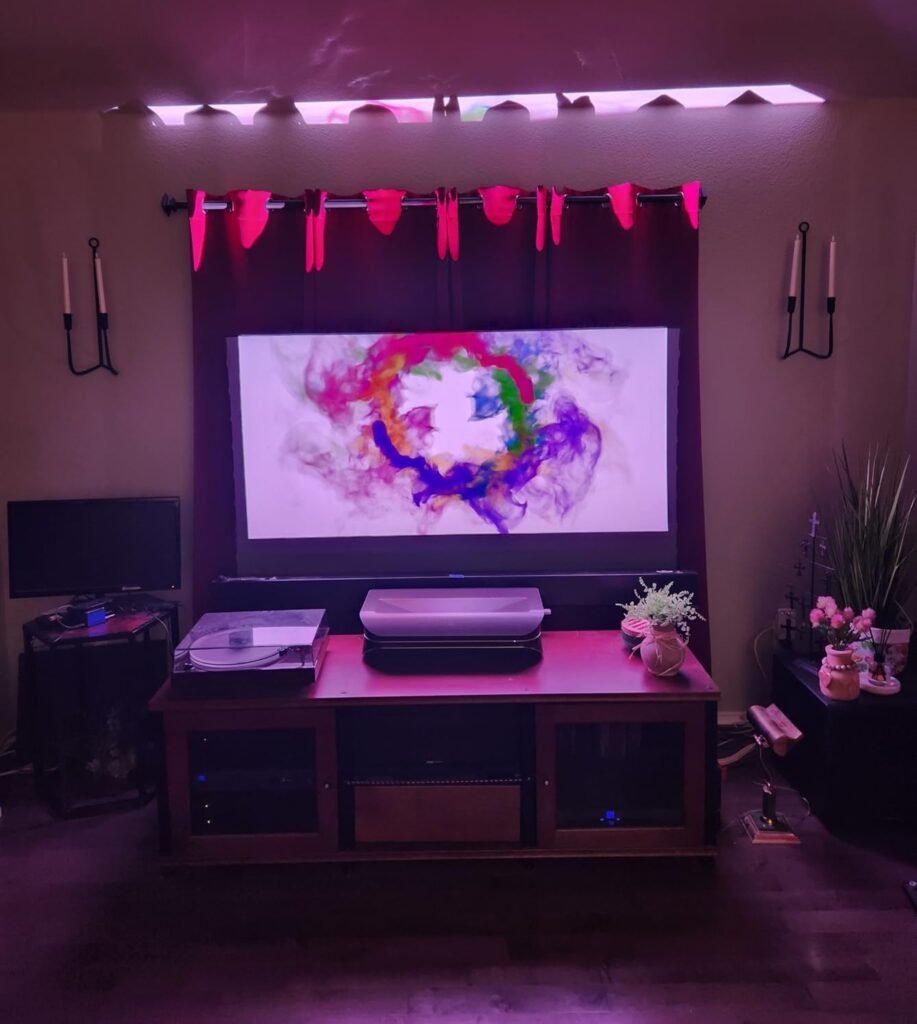
The AWOL Vision LTV-2500 becomes logical when you want a living-room-scale projector that feels dramatically larger and more format-rich than a television, while accepting that the real payoff is not reference perfection but a high-impact, mixed-use theater experience with fast gaming, wide color ambition, 3D support, and lower entry cost than many premium UST rivals.
That is the one situation.
Not every situation. Not “best for everyone.” Not the automatic answer to the word projector.
This one.
And in that one situation, the product starts to click. The 0.25:1 throw ratio makes room placement practical for UST use. The projector supports up to a 150-inch image. Turbo Mode brings input lag down to 15ms at 4K/60 and 8ms at 1080p/120. You get Dolby Vision, HDR10+, HLG, Active 3D, 36W built-in audio, and the convenience layer of the bundled Fire TV approach. That is not a random feature pile. For the right buyer, it is a compact system for turning a normal wall or UST screen into the biggest entertainment surface in the house.
That is when the projector stops being tempting and starts being justified.
[link] If this is the condition you are actually dealing with, the logical next step is to check the AWOL Vision LTV-2500 product page and compare your room, screen plan, and content mix against this threshold rather than against the marketing headline alone.
What It Solves, What It Reduces, and What It Still Leaves to You
What it solves is easy to feel.
It solves image scale in a way most televisions simply cannot touch without becoming financially absurd. It solves a certain kind of living-room compromise by letting you get an enormous picture from a very short distance. It reduces the need to choose between gaming responsiveness and cinema-oriented features. It also reduces the friction of building a system from scratch because so much is already here: HDR-format support, 3D, streaming pathway, multiple HDMI inputs, eARC, usable onboard audio.
What it reduces is not the same as what it eliminates.
It reduces the pain of small-screen limitation.
It reduces the need for a dedicated projection room.
It reduces the barrier to a large-format setup.
What it still leaves to you matters just as much.
It still leaves you with room management. Light control still matters. Screen choice still matters. Setup precision still matters. Calibration tolerance still matters. And if your eye is sensitive to black-level performance, laser speckle, or out-of-box color discipline, those are not imaginary concerns that disappear because the projector supports Dolby Vision. Review coverage says that plainly, even when positive overall.
So the cleanest expectation table looks like this:
| Category | What the LTV-2500 Gives You | What It Does Not Magically Remove |
|---|---|---|
| Size | 80–150 inch projection, true big-screen living-room appeal | The need to think about room layout and screen pairing |
| Formats | Dolby Vision, HDR10+, HLG, Active 3D | Automatic reference-grade tone and color behavior |
| Gaming | 15ms at 4K/60, 8ms at 1080p/120 in Turbo Mode | Top-tier competitive features beyond its limits |
| Convenience | Fire TV route, 3 HDMI with eARC, built-in audio | A perfectly unified, frictionless software experience |
| Value | Strong feature density for the price tier | Immunity from the trade-offs reviewers flagged |
That last line is the important one.
Value is real here. So are the conditions attached to it.
Final Compression
The lazy decision is to buy this projector because the spec sheet feels bigger than the price.
The smarter decision is narrower.
I would buy the AWOL Vision LTV-2500 only when the mission is clear: a huge, vivid, mixed-use living-room theater where scale, color breadth, HDR/3D feature support, and gaming responsiveness matter more than having the most disciplined dark-room image or the most polished out-of-box accuracy in the class. That is the threshold. Cross it, and the projector starts to make sense. Miss it, and the product can still impress you while quietly failing your actual standard.
That is the whole thing.
Not “Is it good?”
Not “Is it bright?”
Not “Does it have Dolby Vision?”
Those are entry questions.
The real one is simpler and harsher: when the room goes dark, do you want the biggest possible spectacle for the money—or do you want the image to hold its nerve when the spectacle wears off?
Transparency Note:
This analysis is built on aggregated real-world experience.
It extracts what repeatedly holds, what breaks, and what users uncover only after living with the system—then shapes it into a clear model you can use immediately.
Think of it as structured experience, refined and presented so you don’t have to learn it the hard way.
“A quick note: Don’t believe the star ratings, but trust personal experience. This article is a compilation of collected experiences”