SONY BRAVIA THEATER BAR 8
You do not notice the mistake at first.
The room gets louder. Dialogue sharpens. The TV finally stops sounding like a thin metal tray with actors trapped inside it. For a few evenings, that alone feels like victory. Then the scene changes. A helicopter crosses the screen. A low synth note should press into your chest. A door slams in a film mix that was built to bloom outward and upward. And instead of the room opening, it tightens.
That is the real Sony BRAVIA Theater Bar 8 question. Not whether it is good. It is. The sharper question is where its polish stops being enough.
I went through the specs, lab measurements, critical reviews, and owner feedback with one goal: find the exact point where the Bar 8 stops feeling like a premium one-bar solution and starts asking for either lower expectations or extra hardware.
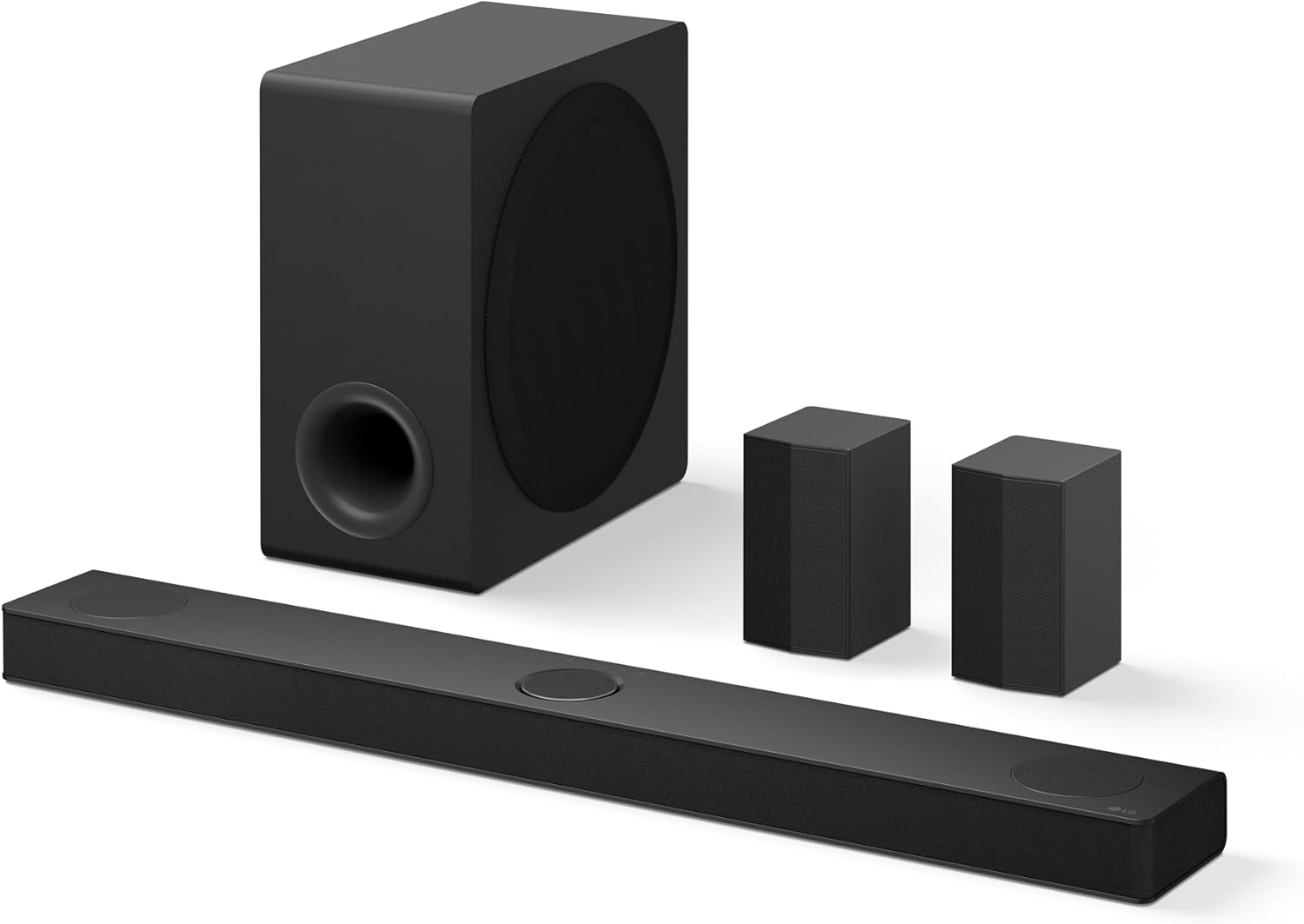
Sony gives you an 11-speaker, 5.0.2-channel bar with 360 Spatial Sound Mapping, Dolby Atmos, DTS:X, IMAX Enhanced support, room calibration, HDMI eARC plus HDMI in, 4K/120 passthrough, AirPlay, Spotify Connect, and BRAVIA-specific features like Acoustic Center Sync and Voice Zoom 3. On paper, it looks disciplined, modern, and unusually complete. In practice, the pattern is just as clear: crisp dialogue, easy setup, strong format support, respectable immersion—and repeated complaints or caveats around bass weight, ultimate width, and how convincing the height layer feels for the money.
The Result Looks Fine. The Problem Isn’t.
The Bar 8 is the kind of product that can fool a tired buyer.
Not because it lies. Because it solves the first pain so cleanly that it hides the second one.
If you are coming from TV speakers, the jump is immediate. Speech lands in the center instead of smearing across the room. Streaming shows sound less flat. Games gain more motion. Setup is easy enough that one reviewer had it running in under five minutes, and owners repeatedly praise sound quality, ease of use, design, and connectivity. RTINGS also found it especially solid for TV shows and dialogue-heavy content because of its discrete center channel.
That is the surface win.
The deeper issue shows up later, when “better than the TV” quietly gets confused with “worth this price without expansion.” That is where people split. The people who love it usually celebrate clarity, convenience, and the cleaner Sony ecosystem fit. The people who cool on it tend to hit the same wall: they expected more physical scale from a premium Atmos bar running without a subwoofer or rears. Amazon’s review mix reflects that tension—4.0/5 from 169 global ratings, with a healthy 61% at five stars, but also a visible slice of lower ratings and some blunt frustration from buyers who found the sound underwhelming relative to expectation.
What You’re Actually Feeling but Not Naming
Most people do not say, “I crossed the single-bar pressure threshold.”
They say something fuzzier.
They say the movie sounded clear but not huge.
They say the bass was there but did not grip.
They say Atmos worked, but the ceiling never quite disappeared.
That blur matters. Because once you name the friction correctly, the product becomes easier to judge.
What you are likely reacting to is not simple “bad sound.” It is a mismatch between three things:
| Friction you feel | What you probably call it | What it actually is |
|---|---|---|
| Action scenes do not hit hard enough | “Needs more bass” | Low-end weight is present, but not authoritative enough for premium cinematic expectation |
| Atmos effects do not fully lift off the bar | “Atmos is weak” | Height virtualization and upward projection are competent, not room-transforming |
| The sound feels clean but not massive | “It sounds good, but…” | The stage is organized and intelligible, but it does not always create the scale buyers imagine from the price |
That pattern is not invented. RTINGS explicitly calls out a soundstage that is not very wide, Atmos height that is not very tall, and limited sound-enhancement flexibility, while Homes & Gardens praised the detail and surround effect but repeatedly flagged bass as the weakest link. What Hi-Fi went further and argued that the Bar 8 falls short of the best soundbars at its price.
The Hidden Mechanism Behind the Miss
Here is the uncomfortable truth: the Bar 8 is trying to do an expensive illusion without becoming physically huge.
Sometimes it pulls it off. Sometimes physics walks in and turns the lights on.
Sony’s strategy is smart. The bar uses a 5.0.2-channel, 11-speaker layout, phantom-speaker processing through 360 Spatial Sound Mapping, room calibration, and up-firing drivers to build a larger bubble than the chassis itself should reasonably manage. It also supports an unusually broad set of formats and gaming-friendly passthrough features, which makes it more versatile than some cleaner-looking rivals.
But the mechanism has limits:
- Phantom scale is not the same as physical slam.
- A clean center channel is not the same as a huge front wall of sound.
- Atmos support is not the same as convincing overhead drama in every room.
That is why Sony’s own messaging leans heavily on mapping, calibration, and room optimization. Sony is not selling brute force first. It is selling spatial organization. And when that matches your room and your expectations, the Bar 8 can sound elegantly immersive. When you are chasing chest impact, taller Atmos, or wider cinematic spread from the bar alone, that same elegance starts to feel restrained.
The Threshold Where the Outcome Quietly Breaks
This is the threshold.
The Sony BRAVIA Theater Bar 8 stops being a clean premium answer the moment you need one-bar simplicity to also deliver big-room low-end authority and unmistakable overhead spectacle without help.
Below that threshold, it makes sense.
Above that threshold, it starts negotiating.
I would define the Bar 8 threshold like this:
| Threshold test | Below the threshold | Above the threshold |
|---|---|---|
| Your main frustration | Weak TV dialogue, flat streaming audio, messy speech | You want theater-scale impact from blockbuster mixes |
| Your room goal | Clean immersion in a normal living room | Big cinematic pressure in a larger or more demanding room |
| Your sound priority | Clarity, compatibility, neat integration | Bass mass, wall-to-wall width, obvious height effects |
| Your tolerance for add-ons | Fine with adding a sub later if needed | Want the bar alone to feel fully finished |
| Your ecosystem | Sony TV, gaming, format flexibility matter | Brand synergy matters less than raw sonic scale |
The evidence aligns around that break point. Sony’s own spec sheet shows a sophisticated 5.0.2 design with optional wireless surround and dual-sub support. RTINGS gives it credit for dialogue and feature support but flags width, height, and limited tuning. Homes & Gardens liked the realism and room-fill but kept circling back to bass limitations, especially in action-heavy or bass-led material.
That is not a flaw in marketing language. It is the product telling you what it is.
Why Most Buyers Misread This Too Early
Because they shop by feature badge.
Dolby Atmos. DTS:X. 11 speakers. 360 Spatial Sound Mapping. HDMI 2.1. IMAX Enhanced. It reads like a checklist built to kill doubt. And for a certain buyer, it should.
But feature-led judgment is where soundbars become traps.
You see Atmos and imagine a dome.
You see 11 speakers and imagine force.
You see premium pricing and imagine finality.
Not so fast.
RTINGS’ comparison notes are revealing here. Against the Sonos Arc, Sony is better suited for dialogue, adds DTS:X and HDMI input, and supports 4K/120 passthrough. Against Sony’s own Bar 9, the Bar 8 is not dramatically worse in features, but the Bar 9 is more immersive, with a wider stage and better-balanced side-firing speakers. That is the exact kind of clue buyers often miss: the Bar 8 is not weak on capability. It is selective in how it spends its strengths.
May you assume the issue is tuning alone? Possibly. But the sharper reading is structural. The Bar 8 is designed to be refined before it is feral. Clean before colossal. Controlled before excessive.
For some rooms, that is the correct hierarchy. For others, it is precisely why the product feels almost-right instead of undeniable.
Who Is Actually Inside This Problem
The Bar 8 becomes interesting for a very specific buyer.
You are probably inside its zone if most of the following sound like you:
- You watch a lot of dialogue-driven TV, streaming series, film, and console gaming.
- You care about speech clarity more than earthshaking bass.
- You want modern format support, including Dolby Atmos, DTS:X, eARC, HDMI input, and 4K/120 passthrough.
- You like a tidy setup and do not want a full AVR-and-speakers sprawl.
- You either own a compatible BRAVIA TV or value Sony’s ecosystem features.
- You are willing to expand later with a wireless sub or rears if the room asks for it.
This is where the product feels logical rather than seductive.
It is not a chaos machine. It is a control machine.
When people like it, they tend to describe the same trio: clarity, ease, immersion. Best Buy’s customer summary leans heavily on sound quality, setup, ease of use, connectivity, and design. Homes & Gardens praised how naturally it filled the room and how detailed it sounded. RTINGS highlighted the balanced center channel and broad format support.
Where Wrong-Fit Begins
Wrong fit starts the second you ask the Bar 8 to solve the wrong ache.
Do not buy it on soundbar prestige alone.
Do not buy it because the feature sheet looks expensive.
Do not buy it because “I can always add things later” feels emotionally easier than admitting what you already want now.
You are likely outside the Bar 8 fit if:
- You want the bar alone to hit with heavy cinematic bass.
- You are chasing the most dramatic Atmos height and wraparound sensation in the category.
- You listen to bass-led music and expect the low end to feel thick, physical, and effortless.
- You are shopping primarily on “most immersive at the price” rather than ecosystem, dialogue, and format flexibility.
- You dislike app dependence or limited sound customization.
This is where regret starts: not when the product fails, but when the buyer mislabels the job.
The saddest kind of premium purchase is not the one that is bad. It is the one that is elegant, capable, and still wrong for the itch you were really trying to scratch.
The One Situation Where This Product Becomes Logical
The Sony BRAVIA Theater Bar 8 becomes genuinely logical in one situation:
You want a single-bar system that prioritizes clean dialogue, modern format support, gaming-ready passthrough, and refined room-filling immersion—and you either do not need massive bass today or you accept that a subwoofer is the proper next step later.
That is the use case.
Not “best for everyone.”
Not “ultimate theater in a bar.”
Not “buy this and stop thinking forever.”
Just this: a disciplined premium bar for people who value signal clarity over brute-force spectacle.
And in that lane, the case is strong:
| What makes the Bar 8 logical here | Why it matters |
|---|---|
| Clear dialogue from a discrete center channel | TV, film, and everyday streaming improve immediately |
| 4K/120 passthrough plus HDMI in and eARC | Better fit for modern gaming and mixed-device setups |
| Dolby Atmos, DTS:X, IMAX Enhanced support | Broad compatibility, fewer format dead ends |
| Room calibration and Sound Field processing | Helps the bar behave more intelligently in real rooms |
| Sony TV features like Acoustic Center Sync / Voice Zoom 3 | Stronger value if you already live inside BRAVIA |
| Optional wireless sub and rears | Gives the system a sane upgrade path without replacing the core bar |
All of that is grounded in Sony’s official specification set and reinforced by third-party testing.
If this is your lane, the Bar 8 stops looking overpriced and starts looking properly targeted.
What It Solves, What It Reduces, and What It Still Leaves to You
The cleanest way to judge the Bar 8 is not by hype but by division of labor.
What it solves
- Thin, weak TV speech
- Flat everyday streaming sound
- Format anxiety around Dolby Atmos / DTS:X / gaming passthrough
- Ugly, cumbersome theater setups that you do not want in your living room
What it reduces
- Dialogue strain
- Setup friction
- Room mismatch, thanks to calibration and sound-field optimization
- The need to compromise on HDMI-era features if you game and watch movies on the same display
What it still leaves to you
- Deciding whether your room and taste need a subwoofer
- Accepting that “Atmos support” does not guarantee towering height in practice
- Accepting that premium price does not erase the physical limits of a single slim bar
- Being honest about whether your real priority is clarity—or impact
That last point is the one people dodge.
Because clarity sounds responsible.
Impact sounds indulgent.
But when you sit down for a film night, your body knows the difference faster than your brain does.
Final Compression
The Sony BRAVIA Theater Bar 8 is not a fake premium product. It is a selective one.
It gives you modern codec support, a strong center channel, easy setup, smart-room optimization, gaming-friendly HDMI features, and an elegant single-bar presentation that many buyers will find immediately satisfying. It also carries a visible ceiling: bass authority is limited for the class, the stage is not the widest, and the Atmos height effect does not always rise to the fantasy buyers attach to the badge.
So the decision is not vague anymore.
If your real problem is thin TV sound, weak dialogue, and the need for a clean one-bar upgrade with strong connectivity, the Bar 8 is a rational answer.
If your real problem is craving theater-scale pressure from the bar alone, this is where the decision starts to bend.
And that bend is expensive.
Transparency Note:
This analysis is not based on quick personal impressions.
It is derived from documented system behavior, verified user patterns, and the physical constraints of storage capacity.
The goal is to translate complex technical behavior into a realistic performance model that helps you make a clear decision.
“A quick note: Don’t believe the star ratings, but trust personal experience. This article is a compilation of collected experiences”