XGIMI HORIZON S MAX REVIEW: THE MOMENT A BIG PICTURE STOPS FEELING LIKE A REAL UPGRADE
The cruel part of projector shopping is this: the image can look stunning for ten minutes and still leave you irritated for the next three years.
That is usually where the mistake begins.
You see the size. You see the brightness number. You see “Dolby Vision,” “IMAX Enhanced,” “4K,” and your brain quietly files the decision as solved. Then real life arrives with its usual habits: a room that is not perfectly dark, a shelf that is not perfectly centered, subtitles in a night scene, one too many devices fighting for one input, and the small but persistent friction of living with a machine instead of admiring a spec sheet.
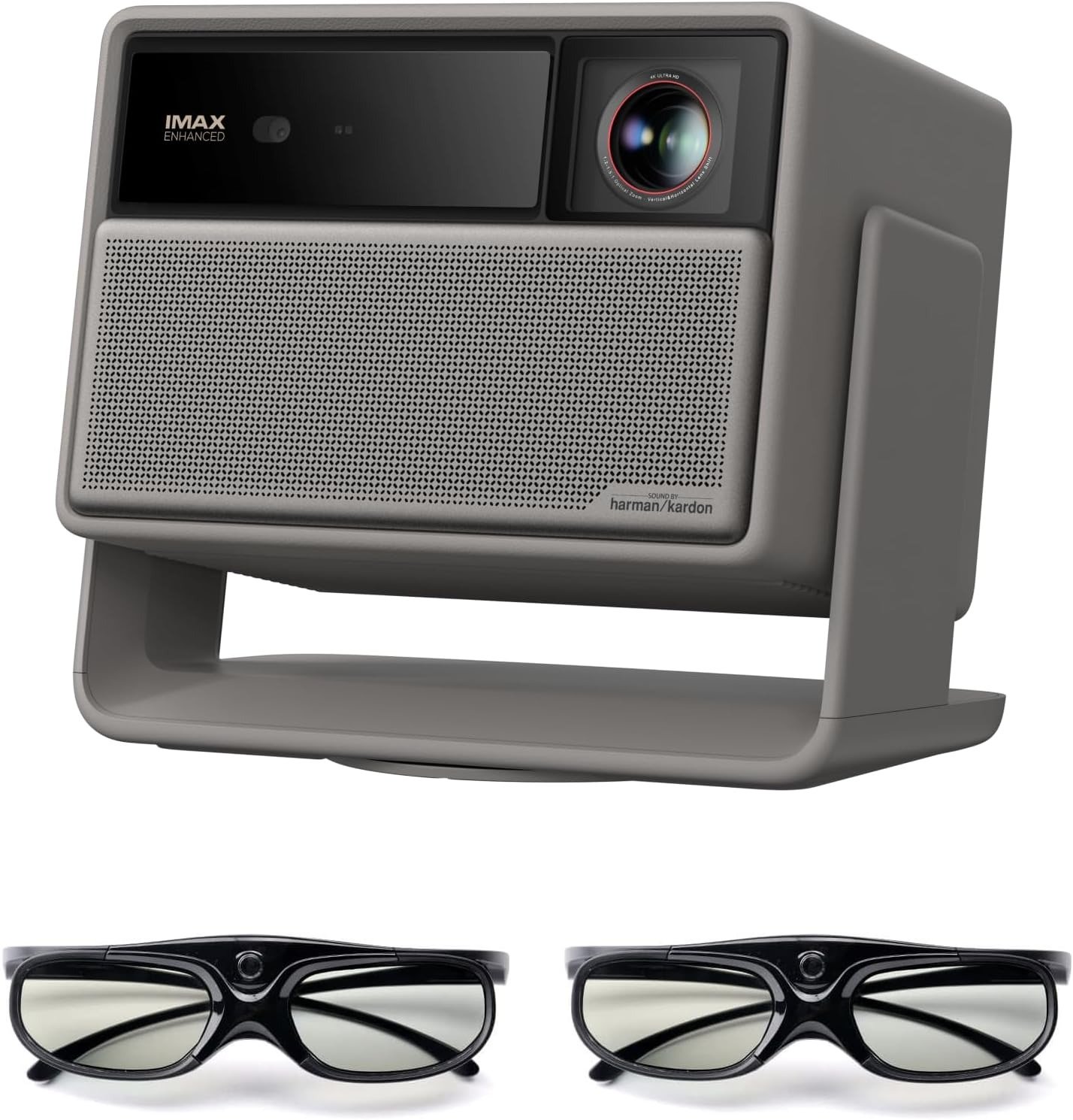
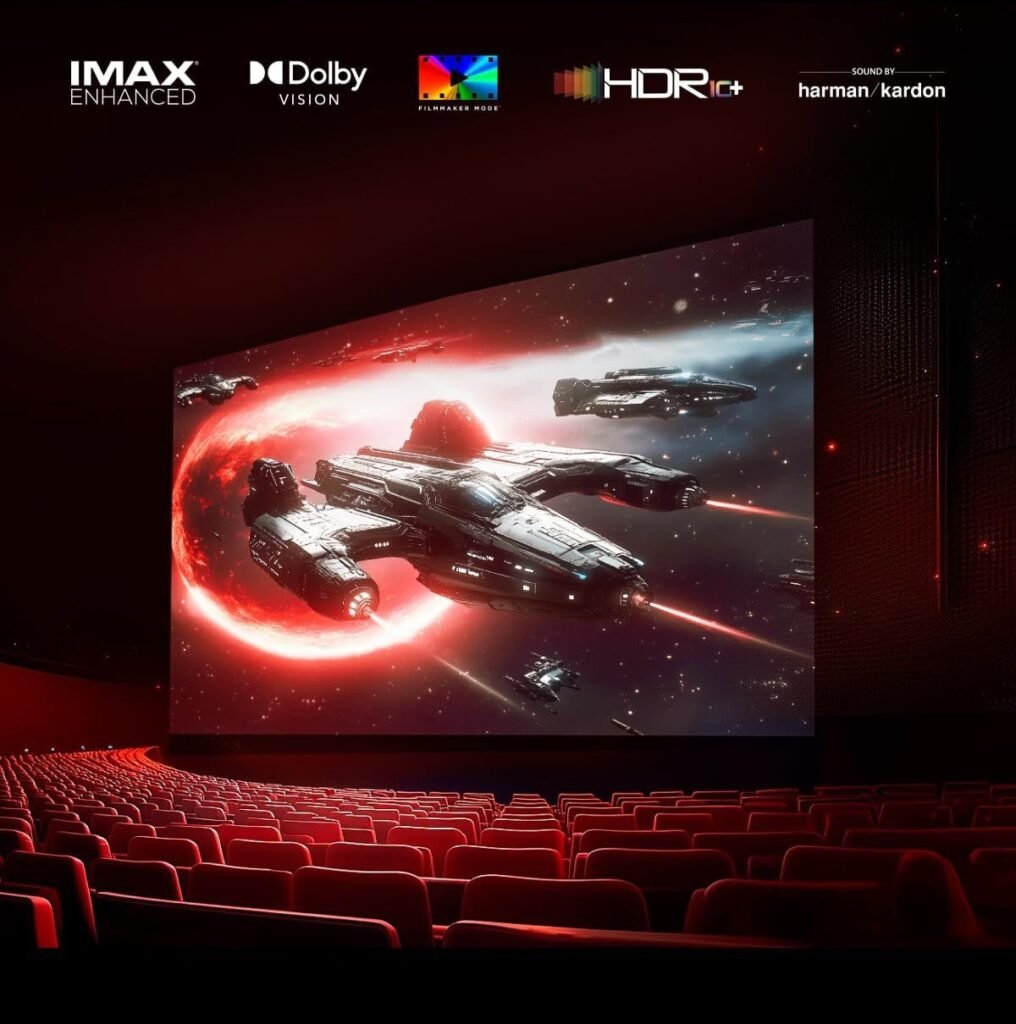
That is exactly why the XGIMI Horizon S Max is interesting. Not because it wins on every line item. It does not. It is interesting because it performs unusually well before the room is ideal, before the placement is perfect, and before the owner becomes a calibration hobbyist. It is a 4K XPR DLP projector with XGIMI’s Dual Light 2.0 light engine, rated at 3,100 ISO lumens, with Dolby Vision, IMAX Enhanced, a built-in rotating stand, ISA 5.0 auto setup tools, and dual 12W Harman Kardon speakers. Lab reviews consistently describe it as bright, accurate out of the box, easy to place, and unusually competent for movie watching in normal living conditions. They also point to clear limits: weaker performance in very dark scenes than top home-theater models, no 120Hz gaming path, a single HDMI input, and no official Netflix app support.
THE RESULT LOOKS FINE. THE PROBLEM ISN’T.
Most projector mistakes do not look like mistakes on day one.
They look exciting. Oversized, bright, cinematic. You put something colorful on screen, the room goes quiet, and the purchase feels justified before the hard questions even enter the room.
I kept seeing the same pattern in test data and owner reactions around the Horizon S Max: the first impression is rarely the problem. The problem comes later, when “good image” has to survive repetition. The room is slightly lit. The projector is off-axis. You want to switch between streamer, console, and sound system without building a workaround. You want the black bars in dark films to stop reminding you that bright projectors and deep black levels are not the same thing. That is where the Horizon S Max either feels elegantly solved or slightly compromised, depending on what kind of buyer you are. RTINGS calls it a great movie unit, bright enough for rooms with a few scattered lights, with solid contrast and very good out-of-box accuracy, while also warning that its contrast is less convincing in very dark scenes. ProjectorCentral lands in a similar place: strong color, strong brightness, easy setup, but compromises around connectivity, picture-mode behavior, and dark-room purism.
WHAT YOU’RE ACTUALLY FEELING BUT NOT NAMING
It is not “I need a brighter projector.”
Not exactly.
What many people are actually feeling is a three-part friction:
| What you think is wrong | What is usually happening | Why it matters |
|---|---|---|
| “My TV just feels easier.” | The display asks less from the room, the furniture, and your patience. | Convenience becomes part of picture quality over time. |
| “This projector looks great in demos but not always at home.” | Brightness, color mode, placement, and contrast are interacting with your room, not a showroom. | The room becomes part of the product. |
| “I want cinematic size without hobby-grade maintenance.” | You are not shopping for raw output alone; you are shopping for low-intervention cinema. | Setup burden is the hidden cost. |
That hidden cost matters more than people admit. The Horizon S Max is built around reducing it. Its integrated stand, autofocus, auto keystone, obstacle avoidance, screen alignment, wall-color adaptation, and electric lens cover are not decorative features. They are friction-removal features. They shorten the distance between “I want to watch something” and “the picture is ready.” That is why owners keep praising the gimbal design and the ease of setup. It is also why the projector feels more coherent as a living-room machine than a pure spec-comparison object.
THE HIDDEN MECHANISM BEHIND THE MISS
The hidden variable here is not brightness alone.
It is usable brightness under normal settings without breaking the image or the experience.
On paper, 3,100 ISO lumens looks like the headline. In practice, the more important detail is what happens when you stop chasing maximum output and start chasing a picture you would actually live with. ProjectorCentral measured the Horizon S Max at 3,166 ANSI lumens in High Power mode, which sounds excellent until you hit the attached cost: strong green bias and dramatically louder fan noise. In a more normal Custom mode with Brightness Boost enabled, it measured 2,061 ANSI lumens instead. That number tells the real story. The projector is still bright enough to be useful in less-than-ideal rooms, but the “headline mode” is not the mode most sane people will want to live in.
This matters because it separates honest brightness from brochure brightness. And to the Horizon S Max’s credit, even the honest version is still good. RTINGS says it is bright enough for rooms with a few lights and praises its uniformity. That is exactly the type of sentence I look for in a projector at this tier, because it speaks to lived use, not showroom theater.
The second hidden mechanism is the light engine itself. XGIMI’s Dual Light 2.0 combines RGB laser and LED behavior in a way that tries to balance brightness, color volume, and viewing comfort. ProjectorCentral found that using the tri-color laser mode alone expands gamut coverage significantly, while Dual Light 2.0 delivers a brighter image with less visible speckle and fewer trade-offs for everyday use. That balancing act is the real product here. Not “maximum color.” Not “maximum output.” Balance.
THE THRESHOLD WHERE THE OUTCOME QUIETLY BREAKS
Here is the threshold that matters:
The Horizon S Max becomes a strong buy when you want a projector that stays easy after the unboxing glow fades. It becomes a questionable buy when you expect it to behave like a purist dark-room projector, a serious multi-device hub, or a competitive gaming display at the same time.
That threshold is easy to miss because the projector is good in many directions at once. But not equally good.
Its movie case is strong: Dolby Vision, IMAX Enhanced, very good factory accuracy, wide color, solid brightness, and convincing contrast in most content. Its lifestyle case is even stronger: integrated stand, excellent setup automation, ceiling-friendly flexibility, compact form factor, and decent built-in sound. Its gaming case is narrower: fine for casual single-player use, not built for high-refresh or competitive players. Its connectivity case is narrower still: one HDMI input with eARC, two USB ports, Wi-Fi, Bluetooth, and not much else.
That is the break point.
Not brightness. Not 4K. Not Dolby Vision.
Expectation geometry.
WHY MOST BUYERS MISREAD THIS TOO EARLY
Because they compare the wrong thing first.
They compare projector to projector, not projector to habit.
They compare brightness to brightness, not hassle to hassle.
They compare feature counts, not failure points.
That is why the Horizon S Max gets misread. A buyer looking at raw ports, official Netflix support, or gaming refresh rates can dismiss it too quickly. A buyer looking only at big-screen excitement can overrate it just as quickly.
The better way to read it is this:
| Decision metric | If you judge by this alone | What you will miss |
|---|---|---|
| Claimed lumens | It looks like an easy winner. | Maximum output mode is not the same as best everyday mode. |
| “4K” and Dolby Vision | It feels premium enough to end the search. | Pixel-shifted 4K DLP still has DLP traits, including possible rainbow effect for sensitive viewers. |
| Smart TV platform | It seems self-contained. | No authorized Netflix app, and some platform quirks remain. |
| “Portable” design | It sounds casual. | It is portable in placement, but still best understood as a serious home projector with constraints. |
| Gaming support | Casual players may feel covered. | No 120Hz support in RTINGS’ evaluation, and ProjectorCentral treats it as decent, not elite, for gaming. |
This is where the superficial comparison trap usually snaps shut. The Horizon S Max is not a “best at everything” machine. It is a highly competent movie-first lifestyle projector whose value rises sharply when your problem is messy setup, light room contamination, and the fatigue of constant adjustment.
WHO IS ACTUALLY INSIDE THIS PROBLEM
You are inside this problem if three things are true.
First, your room is a living space, not a blacked-out cave. RTINGS’ verdict repeatedly points to brightness that can tolerate a few scattered lights, which is exactly the sentence apartment buyers, family-room buyers, and mixed-use-room buyers need to hear.
Second, you hate fiddling. You do not want brackets, measuring tape, endless manual geometry correction, or a projector that punishes imperfect placement. The Horizon S Max’s integrated stand, auto focus, auto keystone, screen alignment, and obstacle avoidance are disproportionately valuable to this type of owner. Official specs list a 1.2:1 throw ratio, 40- to 200-inch image size support, and a built-in stand designed to aim even at the ceiling. ProjectorCentral describes 135 degrees of vertical and 360 degrees of horizontal movement. That is not a gimmick. It changes behavior. It makes casual use more likely.
Third, your content is movie-heavy. Not eSports-heavy. Not AVR-lab-heavy. Movie-heavy. The Horizon S Max’s strongest reputation across formal reviews and owner impressions is not “ultimate gamer’s projector.” It is “surprisingly polished all-around cinema machine that is easier to live with than most.”
WHERE WRONG-FIT BEGINS
Wrong-fit begins where the buyer’s hidden priorities move outside the projector’s real center of gravity.
If you are highly sensitive to rainbow artifacts, be careful. ProjectorCentral noticed mild rainbow effect in certain content, especially subtitles and high-contrast highlights. That will not bother everyone. For the people it does bother, it becomes impossible to unsee.
If you need deep black performance in very dark movie scenes above everything else, the Horizon S Max is good, not untouchable. RTINGS explicitly says contrast is great overall but disappointing in very dark scenes relative to the best home-theater projectors.
If you run multiple HDMI sources directly into the projector, the single-HDMI design is not a small inconvenience. It is a structural limit. RTINGS lists one HDMI with eARC; ProjectorCentral calls the I/O basic and points out the lack of additional convenience ports. Owners mention working around this with an AVR, but that only helps if you already planned to use one.
If you want a clean all-in-one streamer with official Netflix support built in, stop here. ProjectorCentral is blunt: no authorized Netflix app. One Reddit owner report says browser playback worked, but that is not the same thing as native convenience.
If you are a competitive gamer chasing high refresh and lowest latency, this is not your machine. RTINGS frames it as solid for casual gaming at 60Hz, not ideal for fast-paced play, and explicitly notes the absence of 120Hz support in its testing. ProjectorCentral’s numbers also land in “comfortable for casual sessions,” not “serious gaming display.”
THE ONE SITUATION WHERE THIS PRODUCT BECOMES LOGICAL
The Horizon S Max becomes logical in one very specific situation:
You want the jump from TV-scale to projector-scale without inheriting projector-level friction.
That is where this model stops looking like a compromise and starts looking like a solution.
I would narrow the fit like this:
| Buyer type | Horizon S Max fit |
|---|---|
| Movie-first living room user | Strong fit |
| Buyer replacing a TV with something larger and more cinematic | Strong fit |
| User who values fast setup and flexible placement | Strong fit |
| Dedicated dark-room purist chasing best black floor | Conditional fit |
| Multi-console / multi-source user without AVR | Weak fit |
| Competitive gamer | Weak fit |
| Viewer who needs official Netflix on board | Weak fit |
The reason this fit is so sharp is that the Horizon S Max stacks its strengths in the same direction. Bright enough for real rooms. Colorful enough to feel premium. Accurate enough not to demand immediate correction. Quiet enough in normal operation to disappear. Easy enough to reposition without resentment. Good enough speakers to start using it immediately. That is not a random collection of features. It is a lifestyle-cinema system built around reducing setup drag.
So yes, this is the point where the product becomes quietly persuasive.
Not because it is flawless.
Because the flaws sit mostly outside the problem it is best at solving.
WHAT IT SOLVES, WHAT IT REDUCES, AND WHAT IT STILL LEAVES TO YOU
What it solves is straightforward:
- It solves the “projectors are annoying to place” problem with unusual elegance.
- It solves the “I need usable brightness in a normal room” problem better than many lifestyle rivals.
- It solves the “I do not want ugly out-of-box color” problem unusually well. RTINGS specifically highlights very good factory accuracy and easy calibration.
- It solves the “I want one-box movie nights now, not after a month of upgrades” problem with built-in speakers that reviewers and owners describe as surprisingly capable.
What it reduces:
- Setup hesitation
- Room-placement rigidity
- Everyday visual compromise in moderate ambient light
- The sense that projector ownership is a hobby before it is entertainment
What it still leaves to you:
- Managing source switching if you use more than one HDMI device
- Deciding whether you can live without native authorized Netflix
- Deciding whether mild rainbow artifacts are a non-issue or a deal-breaker for your eyes
- Accepting that “great movie projector” and “best dark-room black level” are not the same sentence
- Accepting that “good gaming” here means casual, not competitive
FINAL COMPRESSION
The XGIMI Horizon S Max is not the projector you buy because you fell in love with a spec sheet.
It is the projector you buy when you finally get tired of products that look brilliant in isolation and feel inconvenient in daily life.
What impressed me most in the broader test data was not a single flashy number. It was the pattern. Reviewers kept returning to the same trio: bright enough, accurate enough, easy enough. Owners kept circling the same relief points: setup that does not fight back, picture that feels instantly satisfying, design that makes projector use feel more casual and less ceremonial. The limits are real and should be read coldly: one HDMI, no authorized Netflix, only casual-gaming credentials, and dark-scene performance that does not fully replace a true home-theater specialist. But once you name the actual threshold, the fog clears.
If your break point is not “I need the absolute best projector on paper,” but rather “I need a projector that makes a huge image feel easy, credible, and worth repeating,” this is where the decision stops being vague.
Transparency Note:
This analysis is not based on quick personal impressions.
It is derived from documented system behavior, verified user patterns, and the physical constraints of storage capacity.
The goal is to translate complex technical behavior into a realistic performance model that helps you make a clear decision.
“A quick note: Don’t believe the star ratings, but trust personal experience. This article is a compilation of collected experiences”