Your Coffee Didn’t Suddenly Get Better. Your Standards Finally Caught Up.
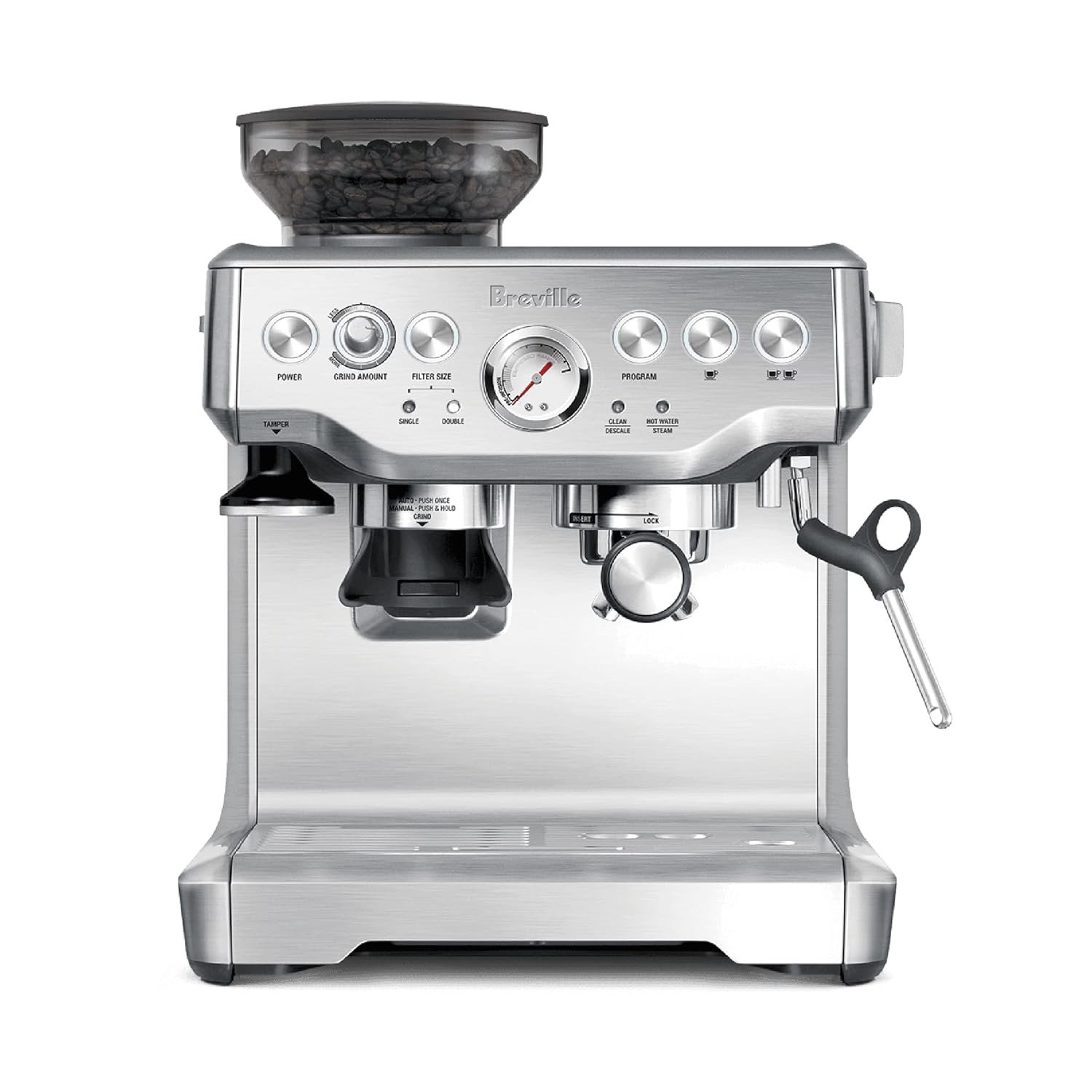
BREVILLE BARISTA EXPRESS
The Result Looks Fine. The Problem Isn’t.
The lie is small, which is why it survives so long.
You pull a shot. The crema looks respectable. Milk covers the rough edges. The cup feels “better than drip,” and for a while that is enough. Then one morning the drink lands flat, thin, oddly loud on the tongue, and you realize the problem was never whether the machine could make espresso. It was whether it could make repeatable espresso without turning your kitchen into a second job.
That is where the Breville Barista Express stopped looking like a shiny appliance to me and started looking like a threshold machine. Not a toy. Not a prosumer monument. A machine built for the moment when convenience alone is no longer satisfying, but a full grinder-plus-machine setup still feels like too much hardware, too much money, too much friction. Breville built it around an integrated conical burr grinder, a 54 mm portafilter, low-pressure pre-infusion, 9-bar extraction, PID-controlled heating, and manual milk texturing. That combination is not random. It is the whole thesis.
I noticed the same pattern in reviewer testing and owner sentiment: when the Barista Express works for someone, it is rarely because they wanted the absolute best espresso money can buy. It works because they were tired of café dependence, tired of flavor drift, tired of buying “easy” machines that hid the process so completely they could never correct the cup. TechGearLab found it capable of excellent shots and strong extraction results; Tom’s Guide called it one of the best espresso machines around but also noted that it is not cheap and does require some know-how. Amazon owners reinforce the same split: strong praise for espresso quality, ease of use, and value, with mixed reports on durability and occasional functional issues.
What You’re Actually Feeling but Not Naming
Most people do not say, “I have an extraction-consistency problem.”
They say:
“My latte is good one day and dull the next.”
“I’m using better beans, but the coffee still feels blunt.”
“I want café-level drinks, but I don’t want a hobby that eats my mornings.”
That last line matters most.
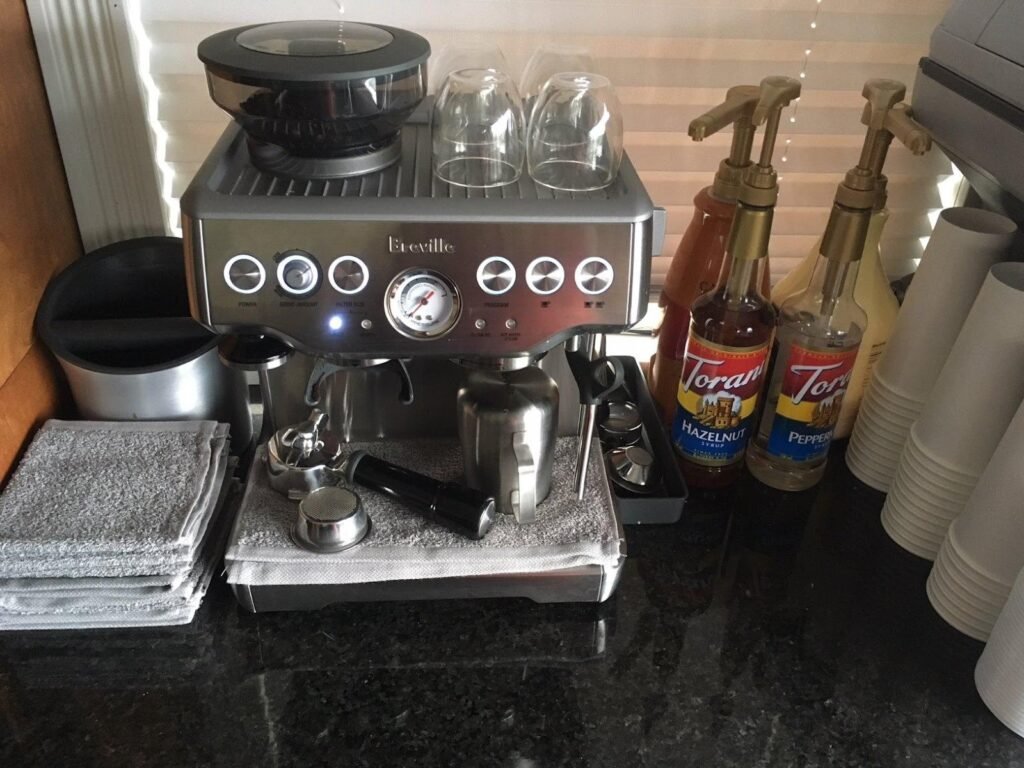
The psychological drag here is not just taste. It is interruption. Too many separate pieces. Too much cleanup. Too much guesswork before caffeine. The Barista Express has stayed popular for years because it compresses those moving parts into one footprint: grinder, brewer, steam wand, hot water, pressure gauge, and manual control in a single body. That lowers the barrier without flattening the ritual into a button-pressing gimmick.
Amazon’s current review profile tells the same story in crowd form: 4.4 out of 5 from 27,342 global ratings, with the strongest recurring praise around espresso quality, value for money, ease of use, and ease of cleaning. That is not just applause. It is behavioral evidence. People are rewarding the machine for reducing the mental tax of getting into real espresso without forcing an immediate jump into a separated grinder-and-machine ecosystem.
The Hidden Mechanism Behind the Miss
Bad home espresso usually gets blamed on the wrong villain.
People blame the machine. Or the beans. Or the pump pressure number stamped on the box. The real miss happens one step earlier: the grind and extraction relationship falls out of sync, and the user does not yet know how to read the warning signs.
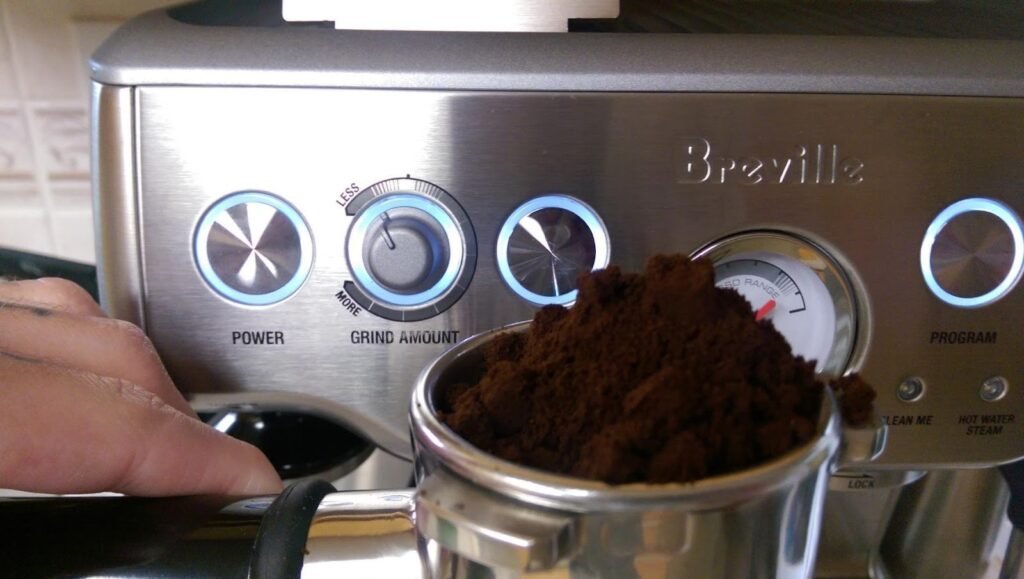
That is why the Barista Express is stronger than cheap espresso machines and weaker than truly enthusiast-grade modular setups at the exact same time. Its integrated grinder is not an afterthought; it is central to the machine’s value. Breville gives you 16 grind settings, dose control, single- and dual-wall baskets, volumetric shot control, and manual override. That lets you move from “I want espresso” to “I can actually adjust espresso.” But it also means the cup depends on your willingness to dial in. TechGearLab’s testing showed the machine could hit a 19-gram in, 30-gram out shot in 29 seconds and produce a 19.4% extraction yield—comfortably within accepted extraction targets—but they also stressed that manual mode and patience get the best results. Seattle Coffee Gear makes the same point more plainly: the grinder is capable, but dialing it in takes practice.
That is the hidden mechanism: this machine rewards correction. It does not fully hide your mistakes. For the right buyer, that is a feature. For the wrong buyer, that feels like work.
The Threshold Where the Outcome Quietly Breaks
This is the threshold:
You want control, but not a full espresso hobby stack.
Before that line, the Barista Express is expensive overkill. After that line, it becomes unusually logical.
If your current pain is just “I want something stronger than drip,” you are still below the threshold. If your pain is “I am buying decent beans and still getting inconsistent, underwhelming coffee because my setup gives me no usable control,” you are inside it. The machine’s core hardware exists for that exact middle ground: freshly ground dosing into a 54 mm portafilter, low-pressure pre-infusion, 9-bar extraction from a 15-bar pump, and PID-managed water temperature at around 200°F. Those details matter because they create a controlled brew path, not because they look impressive in a spec list.
A simpler way to say it:
| Threshold Signal | What It Usually Means |
|---|---|
| You keep buying café drinks because home coffee feels compromised | You need more control, not just more caffeine |
| You want espresso and milk drinks from one machine without buying a separate grinder | The integrated format starts making sense |
| You are willing to learn grind, dose, and shot timing | The machine’s learning curve becomes productive instead of annoying |
| You expect one-button perfection with no adjustment | You are outside the machine’s best-fit zone |
The Barista Express is not built to erase espresso’s demands. It is built to shrink them into a manageable shape.
Why Most Buyers Misread This Too Early
They shop the wrong metric.
They stare at bar claims, cosmetic finish, or whether the machine “looks premium” on the counter. Or they assume an all-in-one unit must be a compromise by definition. Both shortcuts miss the real question: how much correction can the machine absorb before your morning routine collapses?
Tom’s Guide praised the espresso quality and milk frothing, but also flagged the lack of a low-water warning and reminded readers that counter space and budget still matter. Seattle Coffee Gear was even more precise: the espresso side is solid but basic, steam power is good enough rather than luxurious, and higher-end machines offer better stability and speed. That is exactly the point. This is not a machine for chasing café hardware theater. It is a machine for compressing the path to a very good cup.
May you think at first glance that the built-in grinder is the weak link. The more accurate version is narrower: the grinder is strong enough for the buyer this machine is aimed at, and weaker only when you expect the upgrade headroom of a dedicated enthusiast grinder. The machine gets misread when shoppers either underestimate it as a glorified beginner appliance or overestimate it as a modular endgame replacement. It is neither. It lives in the gap between those identities, and that is why it keeps selling.
Who Is Actually Inside This Problem
You are probably inside this problem if three things are true at once.
First, you care what the shot tastes like—not just whether caffeine showed up.
Second, you want to steam milk, pull espresso, and adjust grind without buying a separate bench of equipment.
Third, you can tolerate a learning curve as long as it pays you back in repeatability.
That profile matches a lot of the real-world response around this machine. Reviewers repeatedly position it as a high-value entry point for people who want to learn real espresso without crossing into four-figure gear. Amazon’s review data shows heavy buyer satisfaction around espresso quality and usability, while Seattle Coffee Gear frames it as one of the better starter choices if you want a setup that can last for years and let you learn.
You are also a fit if your drinking pattern leans toward milk drinks. Older CoffeeGeek and Seattle Coffee Gear commentary both suggest the machine’s steam and overall format make especially good sense for cappuccino and latte drinkers, even if straight-shot purists may eventually want more from the grinder or brew platform. That is not a flaw in the machine. It is a boundary line.
Where Wrong-Fit Begins
Wrong-fit begins the second you expect one of these three fantasies:
- No learning curve
- Commercial-level stability
- A forever machine for obsessive upgrade-resistant tinkerers
This machine does not promise those things, and it should not be judged for failing promises it never made.
If you want absolute simplicity, the Barista Express is still too hands-on. You will grind, tamp, monitor, purge, steam, clean, and descale. If you want maximum espresso precision with room to endlessly refine burr geometry, pressure profiling, and thermal stability, you will eventually look past it. And if you hate maintenance, that will catch up with you. Recent espresso guidance from Seattle Coffee Gear emphasizes how neglecting cleaning, backflushing, and water quality shortens life and degrades results across home espresso machines; Amazon owner feedback also shows durability is the most mixed part of the long-term picture.
Here is the cleanest boundary I can draw:
| Buyer Type | Fit Level | Why |
|---|---|---|
| First serious home espresso buyer | High | One machine, real control, manageable learning curve |
| Milk-drink household wanting café replacement at home | High | Strong value in integrated grinder + steam wand setup |
| Casual coffee drinker wanting zero-effort convenience | Low | Too much manual involvement |
| Advanced espresso hobbyist planning rapid component upgrades | Low to medium | Built-in grinder and platform become the ceiling |
| Budget-limited shopper | Medium to low | Strong value, but still a meaningful upfront spend |
That is where regret starts: not when the machine is bad, but when the buyer is asking it to solve the wrong life.
The One Situation Where This Product Becomes Logical
The Barista Express becomes logical when you have crossed from coffee consumption into coffee correction, but you still want everything contained in one machine.
That is the exact moment this product stops being a splurge and starts behaving like infrastructure.
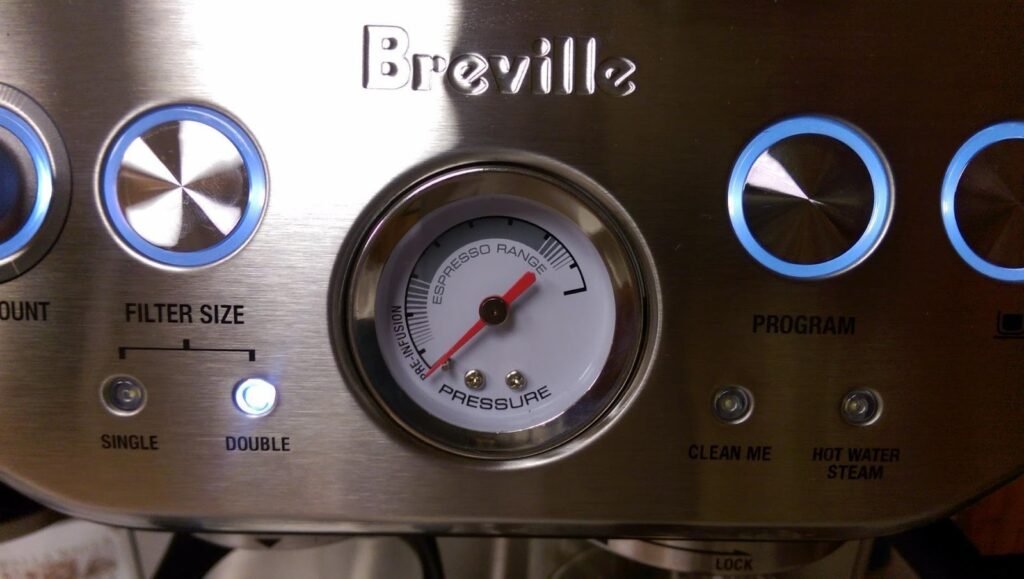
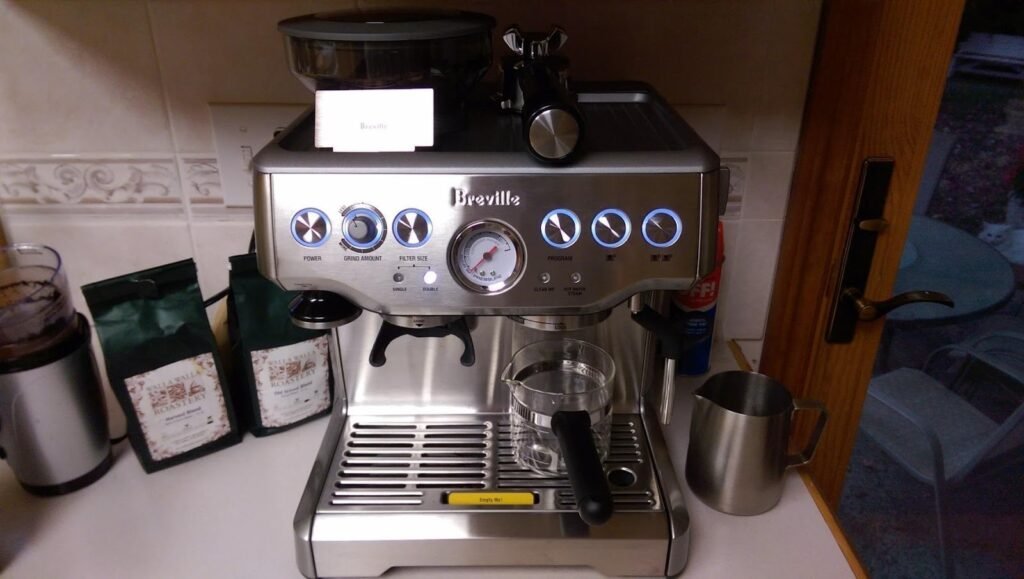
I can see why it keeps landing there. The footprint is still domestic. The interface is intuitive enough that TechGearLab and Tom’s Guide both call out how approachable it feels. The pressure gauge gives feedback without drowning you in jargon. The PID-controlled thermocoil reduces thermal chaos. The integrated grinder removes the cost and clutter of a separate purchase. The included accessories—dual and single wall baskets, milk jug, cleaning tools, water filter kit, dosing funnel—mean you are not unboxing a machine only to discover you bought an unfinished system.
That is the single logical situation:
You are done with “good enough” coffee, but not ready to build a café station from separate parts.
In that situation, the Breville Barista Express is not the only machine on earth. It is simply one of the clearest answers.
What It Solves, What It Reduces, and What It Still Leaves to You
What it solves is straightforward.
It solves the dead zone between entry-level convenience and enthusiast complexity. It solves the need for fresh grinding and real extraction control in one countertop footprint. It solves the frustration of buying better beans while your setup keeps flattening them into vague, muddy cups.
What it reduces is just as important.
It reduces shopping sprawl. It reduces the need to spec a separate grinder immediately. It reduces the odds that your espresso journey dies in the planning phase because the setup became too fragmented, too expensive, too technical, too easy to postpone.
What it still leaves to you:
- Bean choice
- Dial-in patience
- Cleaning discipline
- Water quality management
- An honest read on whether you actually enjoy the process
That last point matters more than people admit. The machine can shorten the road. It cannot walk it for you. And that is exactly why many buyers love it while some bounce off it. The same manual involvement that creates better coffee also creates responsibility.
A compact spec snapshot makes the trade-off easier to see:
| Core Detail | What It Means in Practice |
|---|---|
| Integrated conical burr grinder, 16 settings | Fresh grinding without separate grinder clutter |
| 54 mm portafilter, ~18 g dose target | Real espresso workflow, not capsule logic |
| Low-pressure pre-infusion + 9-bar extraction | More even extraction and better shot balance |
| PID-controlled thermocoil at ~200°F | Better temperature consistency than cheaper machines |
| Manual steam wand | Real microfoam potential, but no automation |
| Volumetric shot control + manual override | Repeatability with room to correct |
Final Compression
Here is the clean version.
The Breville Barista Express is not the machine for everyone. It is the machine for the buyer who has reached the point where bad home coffee no longer feels acceptable, but a full modular espresso setup still feels excessive. That is its real break point. Not beginner versus expert. Not cheap versus expensive. Threshold versus mismatch.
I would not frame it as a miracle. I would frame it as a disciplined compromise that gets unusually close to the right side of the line. Review labs have found genuinely strong in-cup performance. Large-scale buyer feedback confirms that many owners get excellent crema, enjoyable milk drinks, and strong daily value. The warnings are real too: some inconsistency in durability reports, some functional complaints, a real learning curve, and limits that appear once your standards become aggressively enthusiast-level.
So the decision compresses to one sentence:
If you are already living inside the frustration of café spending, inconsistent home results, and a setup that gives you no meaningful control, the Breville Barista Express is where the decision stops being vague and starts becoming practical.
Transparency Note:
This analysis is not based on quick personal impressions.
It is derived from documented system behavior, verified user patterns, and the physical constraints of storage capacity.
The goal is to translate complex technical behavior into a realistic performance model that helps you make a clear decision.
“A quick note: Don’t believe the star ratings, but trust personal experience. This article is a compilation of collected experiences”