Hoover ONEPWR EMERGE BH53605V REVIEW: IT PERFORMS WELL — UNTIL IT DOESN’T, AND NOBODY WARNS YOU WHEN THAT POINT ARRIVES
The Result Looks Fine. The Problem Isn’t.
You vacuum. The floor looks clean. The bin fills up with debris that actually existed. The 45-minute runtime covers your whole apartment. You think: this works.
And for weeks, maybe months, it does.
The Hoover ONEPWR Emerge BH53605V ships with a dual cyclonic separation system that claims to capture 99.4% of dust and fine particles with no loss of suction, powered by a 4Ah lithium-ion battery that runs up to 45 continuous minutes. On the surface, those are compelling numbers. And in practice, the vacuum does deliver on them — on hard floors, on low-pile carpet, on scattered pet hair, on the kind of daily maintenance messes that accumulate in ordinary homes.
The result looks fine.
But “the result looks fine” is not the same as “this product will hold.”
There is a structural weakness in this vacuum that no spec sheet mentions, that no brand representative will volunteer, and that thousands of users discover only after the return window has closed.
What You’re Actually Feeling but Not Naming
You’re not just shopping for suction numbers. You’re shopping for a tool that stays out of your way.
The specific friction this category creates isn’t “not powerful enough.” It’s subtler. It’s the moment you reach under the couch at an angle and the machine loses airflow. It’s the day you pull the vacuum out for a routine pass and something is different — quieter in the wrong way, less responsive, failing without drama.
The main claim from Hoover is that this handheld vacuum has powerful suction for quick pick-ups and is compact and easy to store. That claim is accurate as far as it goes. What it doesn’t tell you is that compactness and ease-of-use live at odds with the mechanical durability of the lower flex hose — the component that makes the vacuum’s multi-surface versatility possible in the first place.
The irritation users feel before they can name it: the vacuum works beautifully, and then it doesn’t, and the reason isn’t a dead battery or a clogged filter. The reason is a structural crack in a part that isn’t sold as a replacement.
The Hidden Mechanism Behind the Miss
Here is what is actually happening inside this machine.
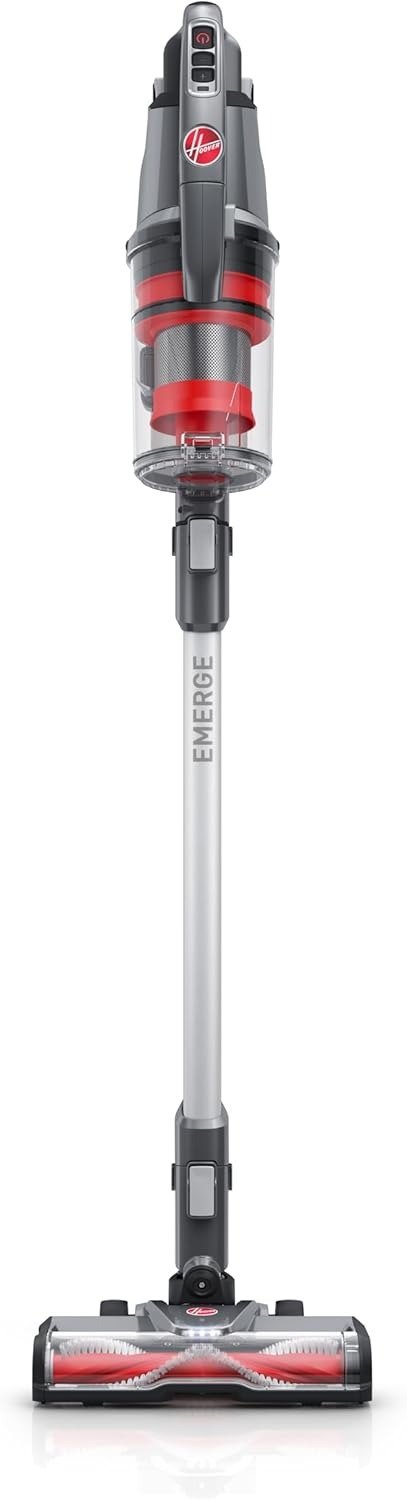
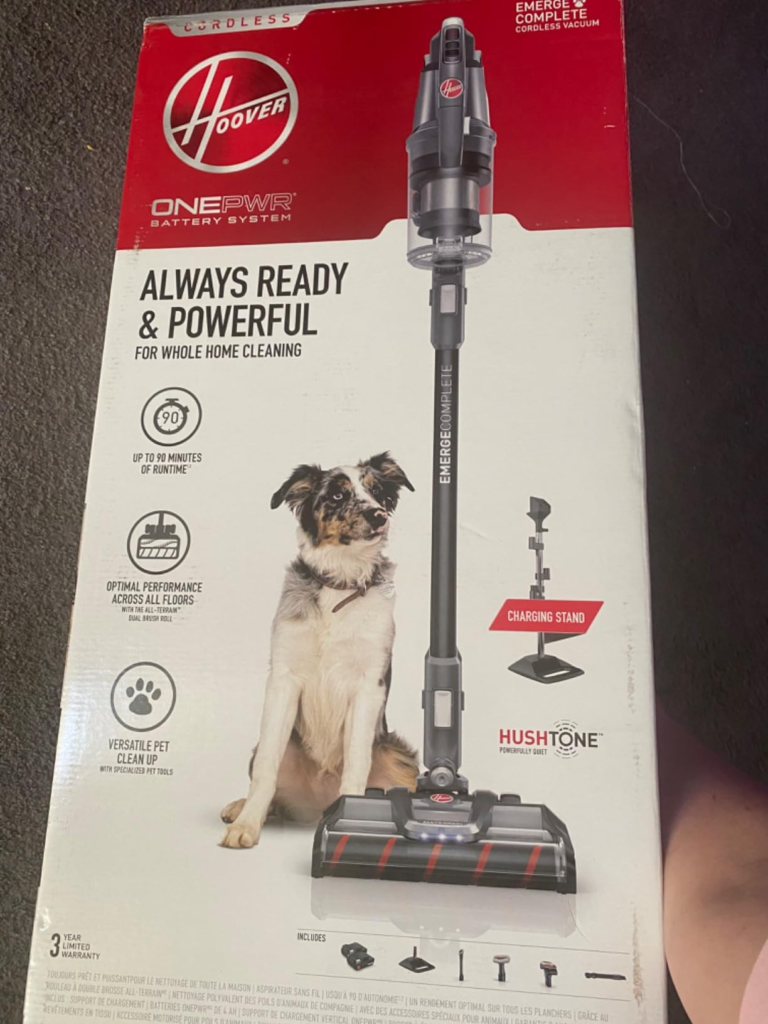
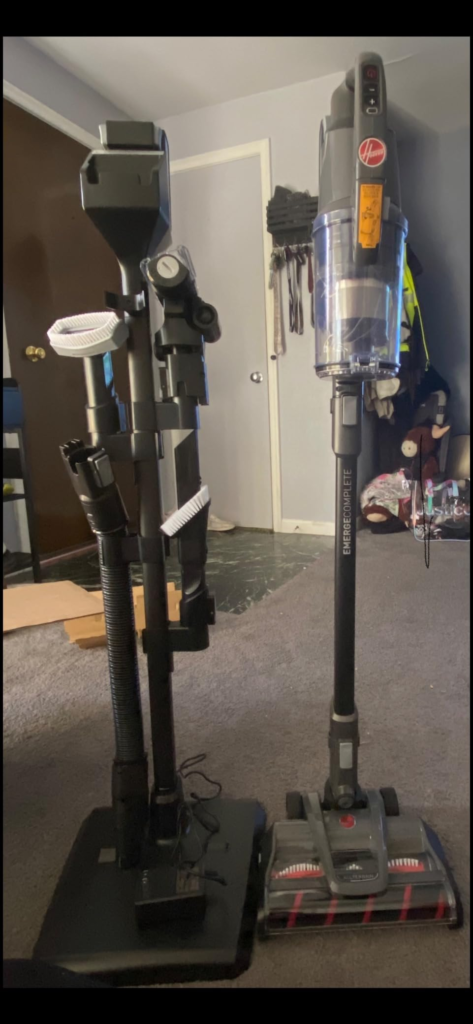
The BH53605V features a 4.0 Ah lithium-ion battery, self-standing functionality, Dusttracker LED headlights, and 3-speed power control settings, with a dirt cup that is easy to remove. These are the features that photograph well and read well on a spec comparison page.
What doesn’t appear on comparison pages: the lower flex hose — the flexible connector between the stick body and the motorized floor head — is the vacuum’s most structurally vulnerable point. It is made of a rigid-flex plastic composite. It bends to enable the vacuum’s multi-angle cleaning. And under repeated stress cycles, particularly when the machine is tilted beyond roughly 15–20 degrees from vertical, that hose cracks.
Multiple verified buyers report: “the hose in the power head has split. Now if I tip the stick vacuum back more than 15–20 degrees the hose opens up and voids all of the excellent suction this vacuum has.”
The mechanism of failure isn’t sudden. It’s a slow fatigue crack. The vacuum performs at full capacity until the crack propagates far enough to create a suction leak. Then, without warning, cleaning performance collapses — not because the motor died, not because the battery failed, but because a $4 piece of molded plastic gave out.
What compounds the problem: Hoover is out of stock for the correct replacement parts. This is not a minor inconvenience. It means the failure point, once reached, renders the machine permanently unusable for floor-level cleaning. You keep a functioning motor, a functioning battery, and a functioning filter system — and you cannot use the vacuum for its primary purpose.
This is the hidden variable most buyers never factor in.
The Threshold Where the Outcome Quietly Breaks
Call it the Flex Hose Fatigue Threshold: the point at which the vacuum’s multi-angle range of motion — the feature that makes it feel versatile — begins degrading the component that makes it functional.
The threshold is not immediately obvious because:
The vacuum doesn’t announce the crack. It doesn’t leak visibly. It doesn’t make noise. Suction simply becomes inconsistent in certain positions, then absent in those positions, then absent generally.
Independent lab testing confirms that the OnePWR Emerge’s airflow performance is below average compared to other brands in its class — though the all-terrain dual brush nozzle compensates for this deficit through high-end agitation. This means the vacuum is already working near the edge of its mechanical advantage. The dual brush system is doing real work. But when the hose introduces a leak, that mechanical advantage disappears faster than it would on a vacuum with stronger raw suction.
The threshold logic, precisely stated: the BH53605V is optimized for daily light-to-moderate cleaning across multiple surfaces. It holds that optimization stably — until the flex hose fails. After that failure, there is no functional recovery without a replacement part that is frequently unavailable.
| Parameter | Specification |
|---|---|
| Motor Type | Brushless high-performance |
| Battery | 20V, 4.0 Ah lithium-ion |
| Runtime (max) | Up to 45 minutes |
| Charge Time | ~2.5 hours |
| Filtration | Dual Cyclonic (DustVault), captures 99.4% of particles |
| Cleaning Path Width | 10.5 inches |
| Weight | ~7.3–8 lbs |
| Dustbin Capacity | 0.4 liters |
| Self-Standing | Yes |
| LED Headlights | Yes (DustTracker) |
| Handheld Conversion | Yes |
| Speed Settings | 3 |
| Warranty | 1 year |
| Critical Failure Point | Lower flex hose (no replacement part reliably available) |
Why Most Buyers Misread This Too Early
The comparison trap is predictable. You look at the BH53605V next to a Dyson V8 or a Shark Stratos. The Dyson costs 40–60% more. The Shark costs more and weighs roughly the same. On a spec page, the Hoover wins or ties on runtime, loses marginally on filtration sealing, and costs significantly less. The math appears straightforward.
It isn’t.
Based on airflow tests, the OnePWR Emerge is below average compared to other brands. However, the all-terrain dual brush nozzle compensates for this deficit with high-end agitation. This means the machine’s cleaning performance is disproportionately dependent on the mechanical function of that motorized floor head. Remove the floor head’s structural integrity — which the hose failure does — and you lose the machine’s primary competitive advantage.
The comparison buyers make at purchase time is valid. The comparison that matters is durability at 9–14 months of regular use. That comparison tells a different story.
Multiple buyers who reported loving the vacuum initially have returned to note that the front hose cracked within three months, and that Hoover doesn’t sell a replacement part for it. This is not a fringe complaint. It appears across Home Depot, Walmart, and Amazon reviews with consistent timing: first 3–12 months of use, always the same component.
Buying early based on spec comparison is exactly the decision these users made. The regret arrives later, quietly, in the form of a crack you can feel but can’t fix.
Who Is Actually Inside This Problem
Profile A — True Fit:
- Small-to-medium home, primarily hard floors with some area rugs
- No pets, or one low-shedding pet
- Uses the vacuum 3–5 times per week for quick maintenance passes
- Does not push the floor head into extreme angles consistently
- Plans to replace or upgrade within 1–2 years regardless
Profile B — Near Fit (proceed with awareness):
- Medium home, mixed surfaces
- One or two pets with moderate shedding
- Daily use, mostly upright, rarely at extreme tilt angles
- Accepts that the 1-year warranty is the functional coverage window
Profile C — Wrong Fit:
- Relies on the multi-angle tilt feature constantly (under furniture, staircases, vehicle interiors at steep angles)
- Expects the vacuum to last 3–5 years with minimal intervention
- Has allergies: the vacuum has no sealed system, with heavy leaking observed at the exhaust and around the dustbin seals during fog testing — making it unsuitable for allergy sufferers.
- Lives in a home above 1,500 sq ft that requires aggressive daily sessions at high power settings
Where Wrong-Fit Begins
Wrong-fit begins the moment you buy this vacuum expecting it to function like a sealed-system, high-durability tool designed for years of heavy use.
The BH53605V is not that machine. It was never designed to be.
The user manual specifies that the Hoover ONEPWR Cordless Handheld Vacuum is for “light-duty vacuuming of dry surfaces.” The marketing language around the BH53605V is bolder — dual cyclonic, brushless motor, 2x power — but the underlying engineering heritage of the ONEPWR line is consistent: these are maintenance tools, not deep-clean workhorses.
Wrong-fit also begins when the buyer values the ONEPWR battery ecosystem interoperability without factoring in that the battery outlives the hose. You will have a functioning battery, a functioning charger, and a broken vacuum.
| Use Case | Fit Level |
|---|---|
| Daily hard floor quick-pass | ✅ Strong fit |
| Pet hair on low-pile carpet | ✅ Strong fit |
| Kitchen crumbs, countertop debris | ✅ Strong fit |
| Car interior (moderate angles) | ⚠️ Acceptable, low-tilt only |
| Upholstery (with flexible hose) | ⚠️ Works, adds hose stress over time |
| Stairs (steep angle, repeated) | ❌ Accelerates hose fatigue |
| Deep carpet, embedded debris | ❌ Below-average airflow |
| Allergy sufferers | ❌ Non-sealed system, significant leakage |
| Households expecting 3–5 year lifespan | ❌ Documented hose failure at 3–14 months |
The One Situation Where This Product Becomes Logical
If your home is 800–1,200 square feet, primarily hard floors with occasional area rugs, you have light-to-moderate daily messes (one low-shedding pet or no pets), and you are looking for a cordless stick vacuum that integrates with the ONEPWR battery system you may already own — the BH53605V is a logically justified purchase.
The BH53605V measures 44.25 inches tall, 10.5 inches wide, and 7.5 inches deep, runs on a 4Ah 20V lithium-ion battery with up to 45 minutes of runtime, and charges in as little as 2.5 hours. For a home in the profile above, that runtime is genuinely sufficient. The self-standing design removes the wall-mount requirement. The 3-speed settings allow power calibration for different surfaces. The DustTracker LED illuminates floor-level debris that ambient lighting misses.
Users with small apartments, primarily wood floors and a few area rugs, consistently report getting 3–4 full cleaning passes on a single charge — and that suction picks up dog fur on both surfaces well.
The BH53605V becomes logical precisely when you are not asking it to be more than a precision maintenance tool for a defined, moderate-demand environment. It is not a whole-home deep-clean vacuum. Used within that boundary, it delivers consistently.
The decision is rational. The risk is manageable. But it must be entered with open eyes about the hose.
What It Solves, What It Reduces, and What It Still Leaves to You
What It Solves:
- The cord-management friction of daily floor maintenance
- Pet hair and surface debris on hard floors, done quickly and quietly
- The storage problem: self-standing, no wall mount, compact footprint
- Battery interoperability across the ONEPWR ecosystem
What It Reduces:
- Deep-carpet embedded-dirt extraction (below-average airflow limits this)
- Crevice performance: when the crevice tool is inserted, suction power is significantly diminished, creating difficulties in hard-to-reach spots.
- Filtration efficiency for fine allergen capture (not a sealed system)
What It Still Leaves to You:
- A separate deep-clean session with a more powerful vacuum, at least monthly
- Hose inspection at regular intervals — look for micro-cracking at the flex joint near the floor head
- Sourcing a replacement hose proactively, because Hoover does not reliably stock replacement parts for this component.
- Maintaining realistic tilt angles during use — avoid pushing the floor head past ~20 degrees from horizontal consistently
| What the BH53605V Handles | What You Still Own |
|---|---|
| Daily surface debris on hard floors | Monthly deep-clean on carpets |
| Pet hair pick-up (low-shedding) | Embedded allergen extraction |
| Quick multi-room passes | Hose durability monitoring |
| Cordless reach, no outlet dependency | Replacement part availability risk |
| Stair and upholstery touch-ups (moderate) | Steep-angle intensive cleaning |
Final Compression
The Hoover ONEPWR Emerge BH53605V is a capable, genuinely useful maintenance vacuum for a specific home profile. Its brushless motor, dual cyclonic filtration, 45-minute runtime, and ONEPWR battery compatibility give it real competitive standing in the sub-$200 cordless segment. For the right user, it earns its place.
But it carries one structural liability that the price point and marketing do not disclose: the lower flex hose is a known failure point, typically within the first year of regular use, and replacement parts are frequently unavailable. Multiple buyers who purchased in late 2025 report both units cracked at the hose by 2026, with Hoover out of stock on the correct replacement parts.
If you are inside this product’s true-fit profile — small-to-medium home, hard floors, light daily maintenance, one-pet household — and you understand the 12-month durability horizon as the realistic operational window: the BH53605V is the logical next step.
If you are not in that profile, or if you need a machine that survives 3–5 years of aggressive use without a structural single-point-of-failure, the decision should not happen here.
The regret, when it arrives, always arrives at the hose. Know that before you buy.
Frequently Asked Questions
| Question | Answer |
|---|---|
| What is the actual runtime of the Hoover ONEPWR Emerge BH53605V in real-world use? | Hoover claims up to 45 minutes on a full 4Ah charge in low-suction handheld mode. In normal floor cleaning mode (motorized head, medium suction), real-world runtime runs 25–35 minutes depending on surface type and suction setting. Users cleaning 800–1,200 sq ft report completing full passes with charge to spare on low-to-medium settings. |
| Is the Hoover ONEPWR Emerge BH53605V good for pet hair? | Yes, on hard floors and low-pile carpets. The motorized floor head with its dual brush system picks up surface pet hair efficiently. It is not effective for embedded pet hair in high-pile carpet or upholstery — airflow is below average for those tasks. Pet owners with heavy shedders on carpet will need a supplementary vacuum. |
| Does the BH53605V work for allergy sufferers? | Not reliably. Independent fog testing shows significant leakage at the exhaust port and around the dustbin seals. It is not a sealed filtration system. If airborne allergen capture is a priority, this is the wrong machine. |
| What is the most common failure mode reported by users? | The lower flex hose connecting the stick body to the motorized floor head. It cracks and splits under repeated use, particularly with aggressive tilt angles. The vacuum loses suction at any angle past the crack point. Hoover does not consistently stock replacement parts for this component. |
| Can I use ONEPWR batteries from other Hoover products with the BH53605V? | Yes. The ONEPWR 20V lithium-ion battery system is cross-compatible across the entire Hoover ONEPWR line — handheld, stick, and other formats. This is one of the system’s genuine advantages: you can purchase additional batteries and swap them to extend runtime, or use a battery from another ONEPWR tool. |
| Is the Hoover ONEPWR Emerge BH53605V worth the price compared to Dyson or Shark? | It depends entirely on your use case and durability expectation. At its price point, the BH53605V competes well on runtime, convenience features, and surface cleaning performance for light-to-moderate daily use. It falls short on deep-carpet performance, allergen filtration, and long-term durability versus premium options. If you need 3–5 years of reliable operation, the price differential of moving to Shark or Dyson is the more defensible decision. |
| How often does the dustbin need to be emptied? | The dustbin holds 0.4 liters, which is below average for its class. In a light-use household (one person, hard floors, minimal pet hair), emptying every 2–4 cleaning sessions is realistic. In high-debris or multi-pet environments, the bin will require emptying after every session or mid-session. |
| Is the BH53605V self-standing? | Yes. It locks into an upright position without a wall mount or charging dock required. This is one of its practical design advantages for users with limited closet or storage space. |
Transparency Note:
This analysis is built on aggregated real-world experience.
It extracts what repeatedly holds, what breaks, and what users uncover only after living with the system—then shapes it into a clear model you can use immediately.
Think of it as structured experience, refined and presented so you don’t have to learn it the hard way.
“A quick note: Don’t believe the star ratings, but trust personal experience. This article is a compilation of collected experiences”