Reolink RLK8-520D4-5MP: Stable Choice or Noisy Compromise?
DECISION ANALYSIS
After digging through the product page, official Reolink documentation, support notes, and owner discussions, my conclusion is fairly clear: the Reolink RLK8-520D4-5MP is strongest when it is treated as a local-first, wired, always-recording home security system—not as a fully open, premium-identification platform.
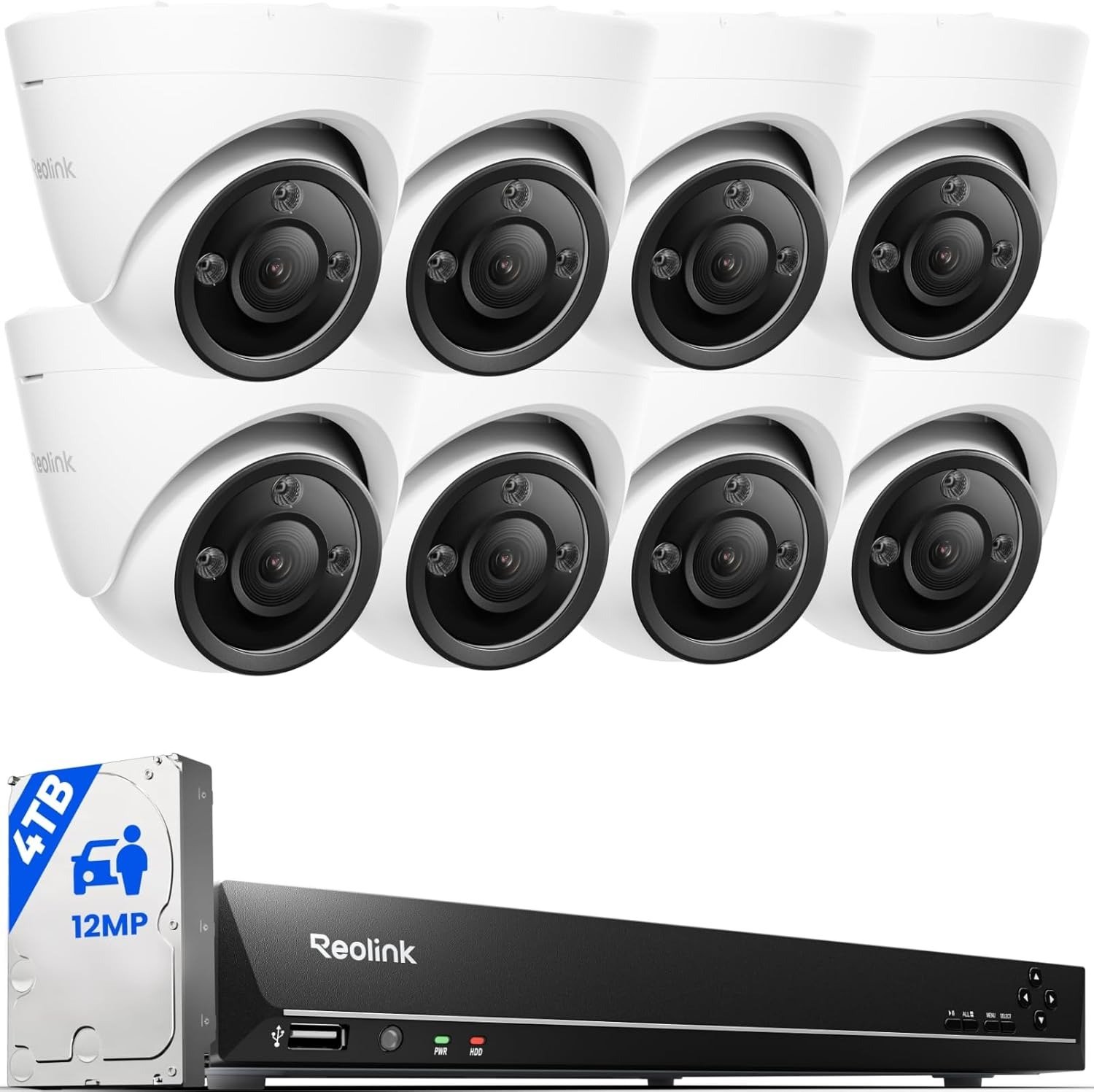
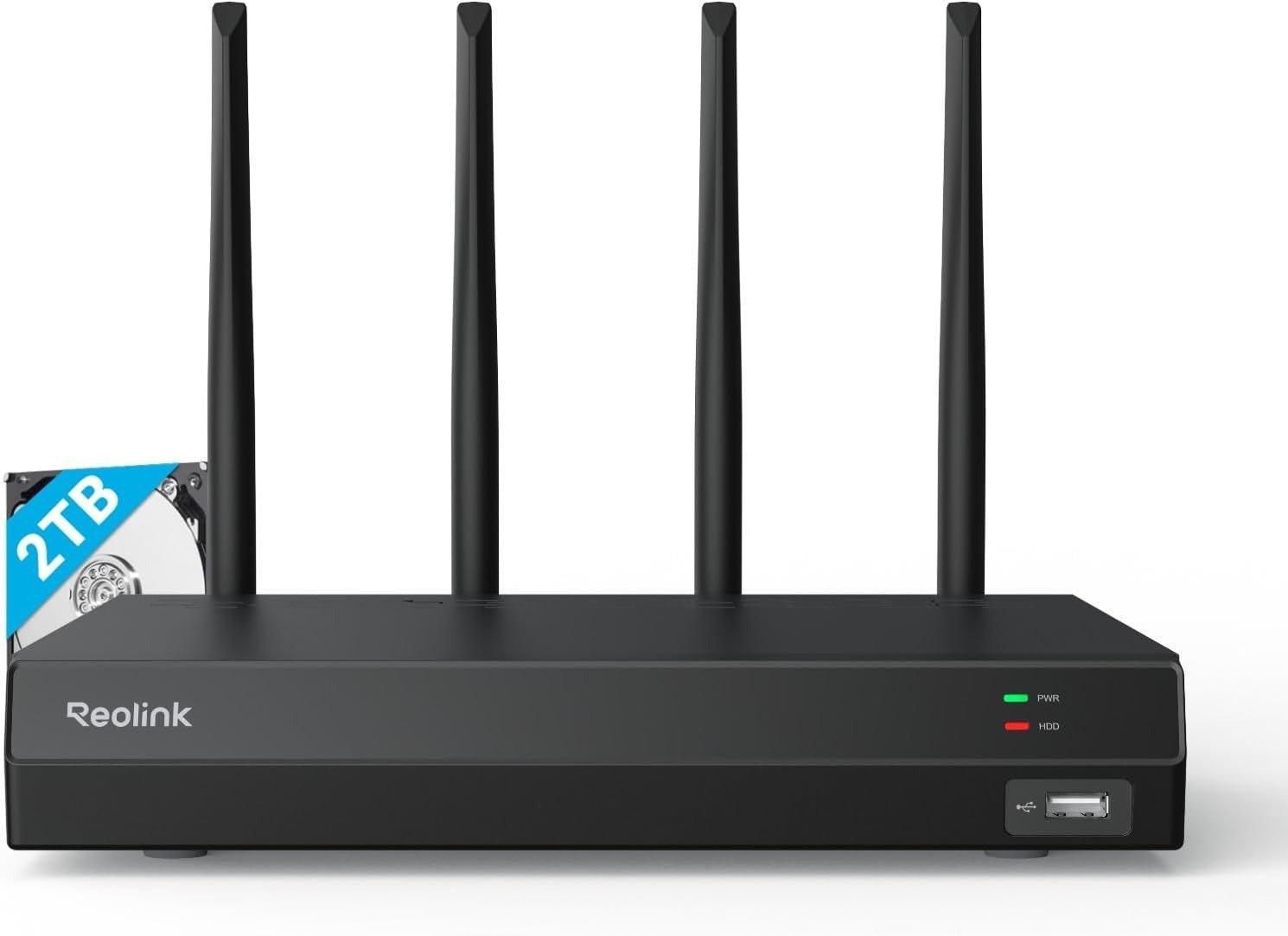
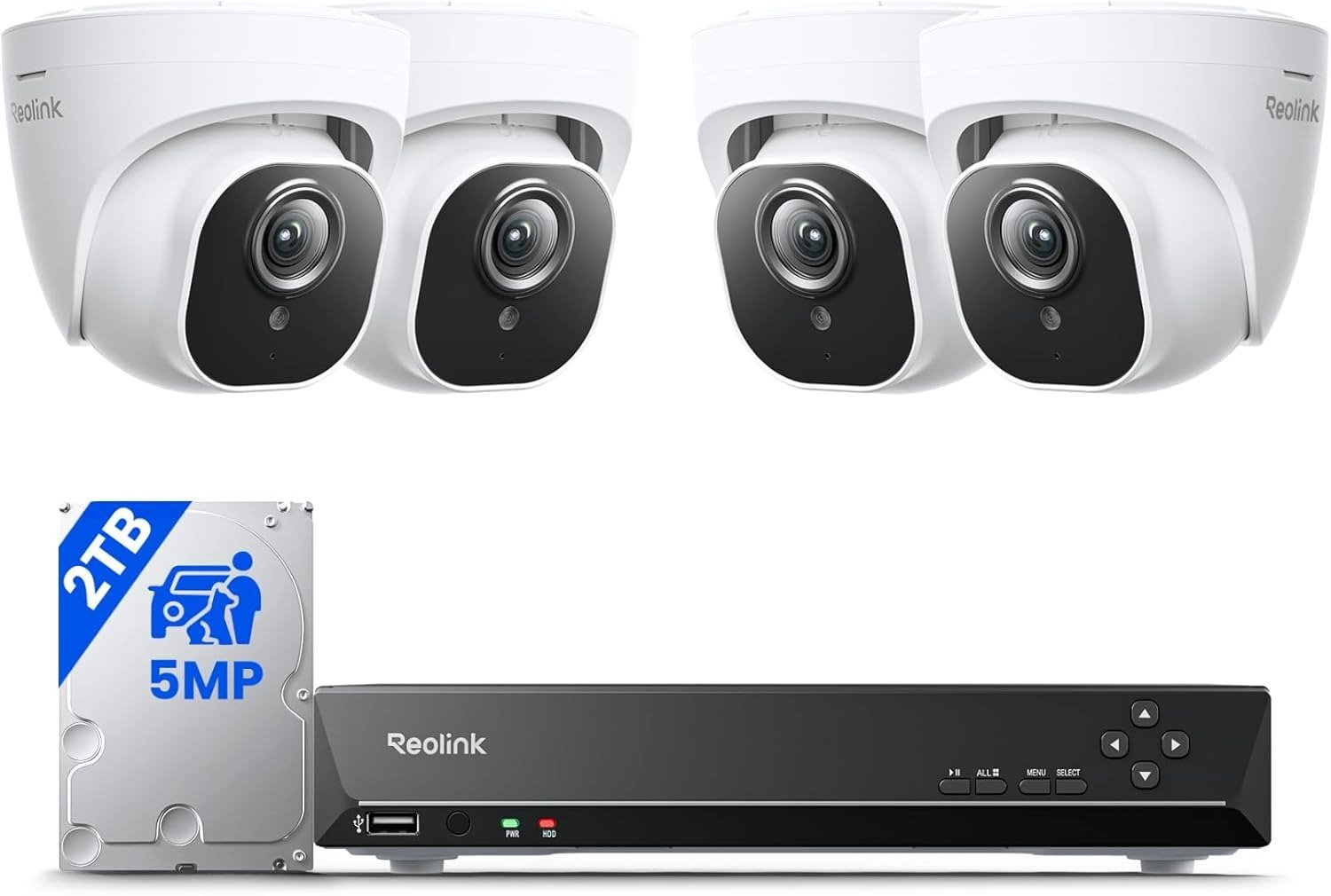
The kit on Amazon is listed as a 5MP, 8-channel set with four PoE cameras, a 2TB NVR, smart person/pet/vehicle detection, night vision up to 100 feet, and app/client access, while the underlying NVR architecture and broader Reolink ecosystem continue to emphasize continuous local recording and brand-specific integration.
In other words, the core value here is operational stability, not feature theater.
What I Trust Most About This System
What stands out most to me is the structure of the system itself.
PoE wiring simplifies installation because each camera uses one cable for power and data. The NVR gives you 24/7 local recording, playback, and direct multi-camera management.
The app/client layer adds remote viewing and event review rather than acting as the foundation of the whole system. That operating order matters.
It means the system is useful first as a recorder, then as a convenience layer. Reolink’s own material also shows that this family is built around motion alerts, playback, local backup, and expansion inside the Reolink ecosystem, which is exactly the kind of architecture that tends to age better in normal households than cloud-fragmented setups.
The Threshold Model I Would Use Here
The single model I would use for this kit is Threshold.
The product feels right until one of these thresholds is crossed:
| Threshold Area | Stable Zone | Failure Feeling |
|---|---|---|
| Alert Threshold | Smart detection tuned, motion zones controlled, owner checks useful alerts only | Too many irrelevant alerts, phone fatigue, trust drops |
| Detail Threshold | Clear enough to verify movement, routes, timing, and event sequence | User expects perfect facial or plate certainty in weak night scenes |
| Friction Threshold | Playback is quick, local recording is easy to review, app is “good enough” | Too much sensitivity tweaking or ecosystem expectation mismatch |
| Compatibility Threshold | Buyer accepts Reolink-centered ecosystem and NVR-led setup | Buyer expects universal mix-and-match freedom without caveats |
That is why this system can feel excellent in one home and merely tolerable in another without the hardware being “bad” in either case.
What the Specs Actually Mean in Real Life
On paper, the Amazon listing gives you 5MP resolution at 2560 × 1920, 100-foot night vision, an 8-channel NVR, 2TB of storage, 80-degree viewing angle, motion/schedule/24-7 recording modes, and smart person/animal/vehicle detection.
The broader Reolink NVR platform adds local storage logic, app/client playback, and expansion potential, though exact expansion behavior depends on hardware version and ecosystem rules.
In practical terms, this means the kit is not trying to be cinematic. It is trying to be consistently watchable, continuously available, and easy enough to review after the fact.
For home exteriors, driveways, entry points, and perimeter lanes, that is often the more important kind of competence.
What Owners Seem to Like Most
The most repeated positives are familiar for a reason: easy setup, stable recording, usable software, and strong value for the price tier.
Community comments from longer-term users describe Reolink NVR setups as reliable over years, with app performance that is good enough or genuinely solid for everyday use, and storage upgrades that are straightforward when expectations are realistic.
Even when people are not discussing this exact kit number, the language around Reolink’s wired NVR systems is surprisingly consistent: they are attractive because they simplify the path from installation to daily use without forcing a subscription-first workflow.
What Owners Complain About for Good Reason
The weak side is not mysterious either.
False alerts can become exhausting if the system is left in broad motion mode instead of being tuned around smart detection types, zones, and sensitivity.
Some users also expect richer notification behavior or more universal flexibility than PoE Reolink kits actually provide.
And at night, the system may remain very good for awareness without always satisfying buyers who are expecting premium forensic-level clarity in harder scenes.
Support articles and community advice both point to the same operational truth: a meaningful part of the experience depends on firmware version, hardware version, and proper configuration, not just the camera being mounted and powered on.
Compatibility Split 3.0
Here is the cleanest compatibility split I can make without forcing the decision.
| User Type | Fit Level | Why |
|---|---|---|
| Local-first homeowner who wants wired 24/7 recording | Strong Fit | This is exactly what the system is built to do: PoE cameras, NVR recording, app playback, low cloud dependence |
| Buyer who wants simple installation without paying monthly for core functionality | Strong Fit | Local recording and PoE architecture solve the main operating problem without needing a subscription-first model |
| Buyer who wants maximum flexibility across mixed brands and advanced open-platform tuning | Weak Fit | Reolink NVR kits are expandable, but they remain meaningfully Reolink-centered and version-dependent |
| Buyer who is highly sensitive to false alerts and unwilling to tune zones/sensitivity | Moderate to Weak Fit | Smart detection helps, but setup quality and threshold tuning matter |
| Buyer who mainly wants identity-grade night evidence in difficult scenes | Moderate Fit | Good night coverage and awareness, but expectations should stay realistic for this class |
This split is where the product becomes easy to read.
The more your goal is stable, local, always-on home coverage, the better it looks.
The more your goal is unrestricted ecosystem freedom or zero-tuning perfection, the more it softens.
My Decision
I would classify the Reolink RLK8-520D4-5MP as a quietly strong decision for the buyer who wants a real security system rather than a collection of convenience features.
Its strength is not glamour. Its strength is that the core chain is coherent: wired cameras, local NVR, continuous recording, workable app access, and smart detection that can materially reduce noise when set up properly.
Its weakness is just as clear: the moment you expect premium night forensics, rich notification polish across every scenario, or total ecosystem openness, the threshold starts moving against it.
For a local-first home setup that values consistency more than showmanship, this is where I land: approved, with expectations calibrated around stability—not fantasy.
Transparency Note:
This analysis is not based on quick personal impressions.
It is derived from documented system behavior, verified user patterns, and the physical constraints of storage capacity.
The goal is to translate complex technical behavior into a realistic performance model that helps you make a clear decision