DREAME H12 PRO FLEXREACH REVIEW: YOUR FLOOR LOOKS CLEAN. IT ISN’T.
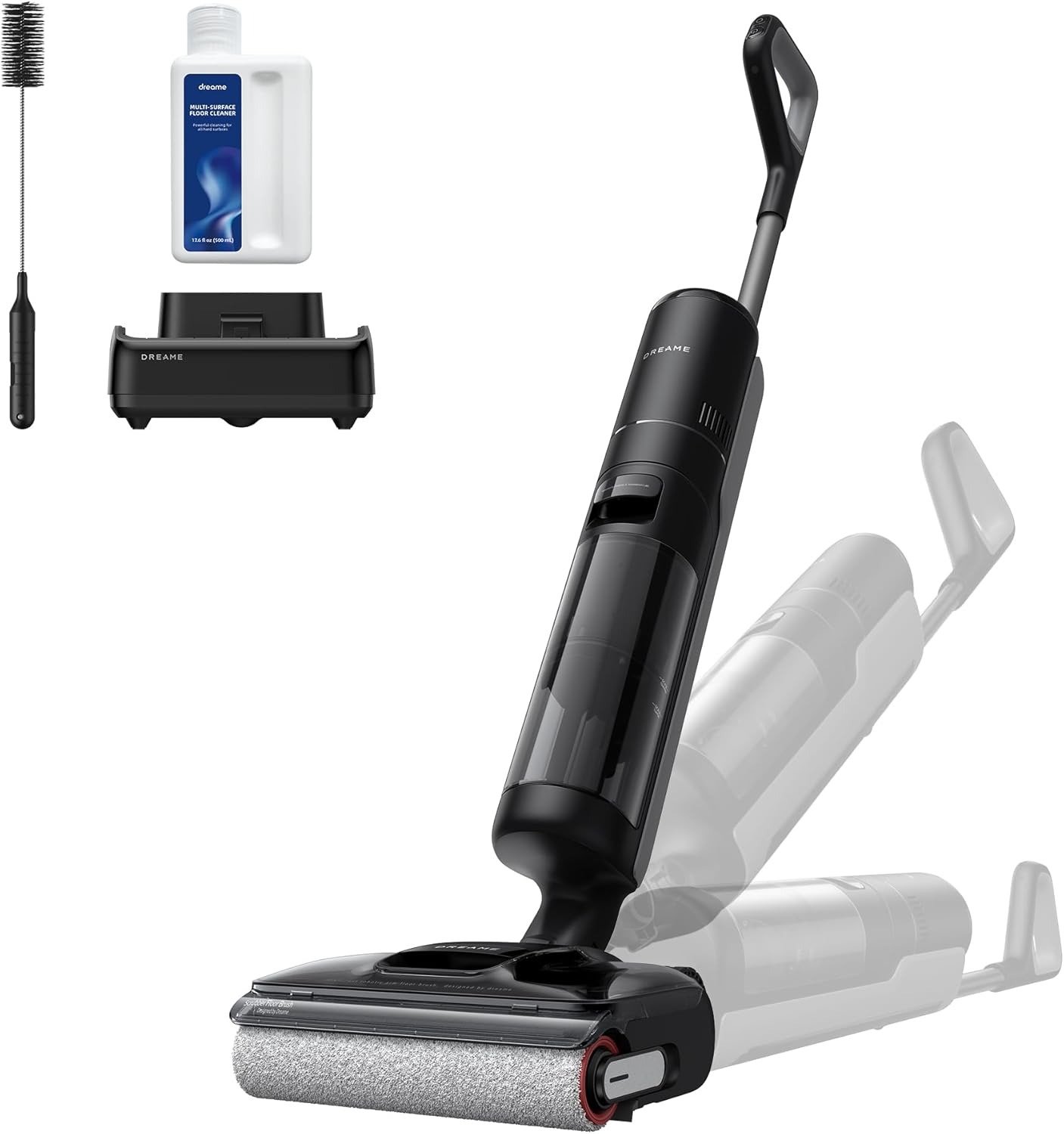
DREAME H12 PRO FLEXREACH
You run it once across the kitchen tile, the floor goes from dull to glossy in a single pass, and for a second you feel like you just bought back twenty minutes of your evening. That moment is where most reviews of this machine stop looking closely. The floor looks done. Whether it actually is depends on something almost nobody checks until the smell shows up three weeks later.
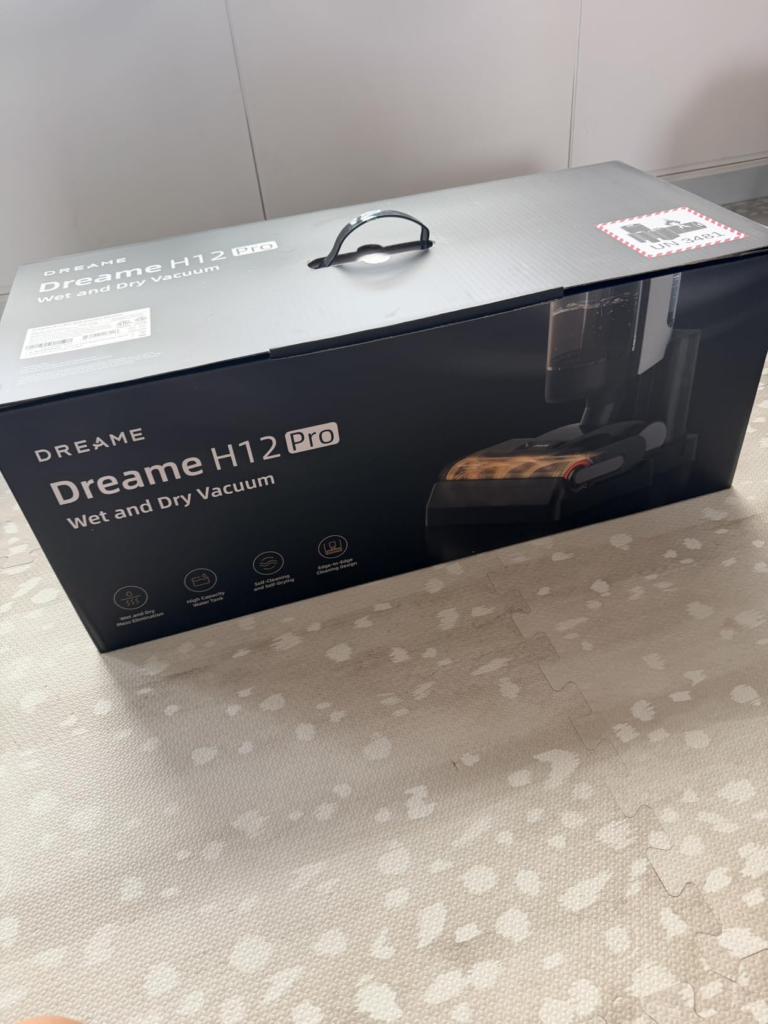
One thing before anything else, because it genuinely confuses people: if you searched for this machine and landed on a listing called the “Dreame H12 Pro Gen2,” you haven’t found a knockoff or an older leftover model. Dreame’s own listing says it plainly — you might receive the original H12 Pro FlexReach box or the newer Gen2 packaging, and the machine inside is identical either way. Same motor, same tanks, same everything. Only the label changed.
What follows isn’t a features tour. It’s what actually happens once the first two weeks of ownership are behind you — where the suction holds up, where the battery claim quietly stops being true, and which households this thing was genuinely built for versus which ones will feel let down by month three.
| Spec | Dreame H12 Pro FlexReach |
|---|---|
| Suction power | 18,000 Pa |
| Claimed runtime | Up to 50 min (Quiet Mode), ~300 m² / 3,200 sq ft |
| Real-world runtime | Roughly 25–30 min in normal Auto/Turbo use |
| Charging time | About 4.5 hours (includes self-dry cycle) |
| Clean / dirty water tanks | 900 mL / 700 mL |
| Self-clean temperature | Up to 194°F (90°C) hot wash + hot air dry |
| Weight, tanks filled | About 13 lb |
| Noise level | Roughly 69–78 dB depending on mode |
| Floor compatibility | Hardwood, tile, laminate, LVT — not carpet |
| Warranty | 2 years standard, 2.5 with registration |
| List price | $549.99 MSRP; commonly sold $300–$450 |
Dreame H12 Pro FlexReach Cleaning Performance: The Result Looks Fine. The Problem Isn’t.
On smooth hard flooring, the shine you see is trustworthy. Dreame’s own lab testing measured under 0.2 grams of water residue after four passes over a wooden floor, and that tracks with what shows up in real households — floors that dry fast, without the streaky film a spray mop leaves behind.
The catch is texture. Owners with heavily grooved or textured tile report the same thing independently of each other: the surface comes up clean, but deep grout lines don’t get scrubbed the way a stiff brush and elbow grease would get them. The machine was built to lift surface dirt fast, not to excavate a grout line that’s been collecting grime for years. If your floor looks clean, it almost always is. If your floor looks clean but you know the grout hasn’t been touched in months, this machine won’t be the thing that finally fixes that.
Vacuuming and Mopping Hard Floors by Hand: What You’re Actually Feeling but Not Naming
Here’s the part nobody quite says out loud: it’s not that mopping is hard, it’s that it never ends cleanly. You vacuum, then you fill a bucket, then you mop, then you’re on your knees getting the edge the mop pad missed, then the floor’s wet for twenty minutes while the dog tracks paw prints straight through the middle of it. None of that is one big problem. It’s six small ones stacked on top of each other, and the stacking is what makes people give up halfway through.
Structurally, a vacuum-mop combo like this one is doing the same basic job as a Swiffer WetJet — clean water in, dirty water out, one pass. The difference isn’t what happens while you’re cleaning. It’s what happens after you put it down.
Dreame H12 Pro FlexReach Battery Drain: The Hidden Mechanism Behind the Miss
The 50-minute runtime figure is real. It’s also measured under one specific condition: Quiet Mode, the lowest suction and water-flow setting, tested in Dreame’s own lab. That’s not a trick, it’s just the fine print most listings bury.
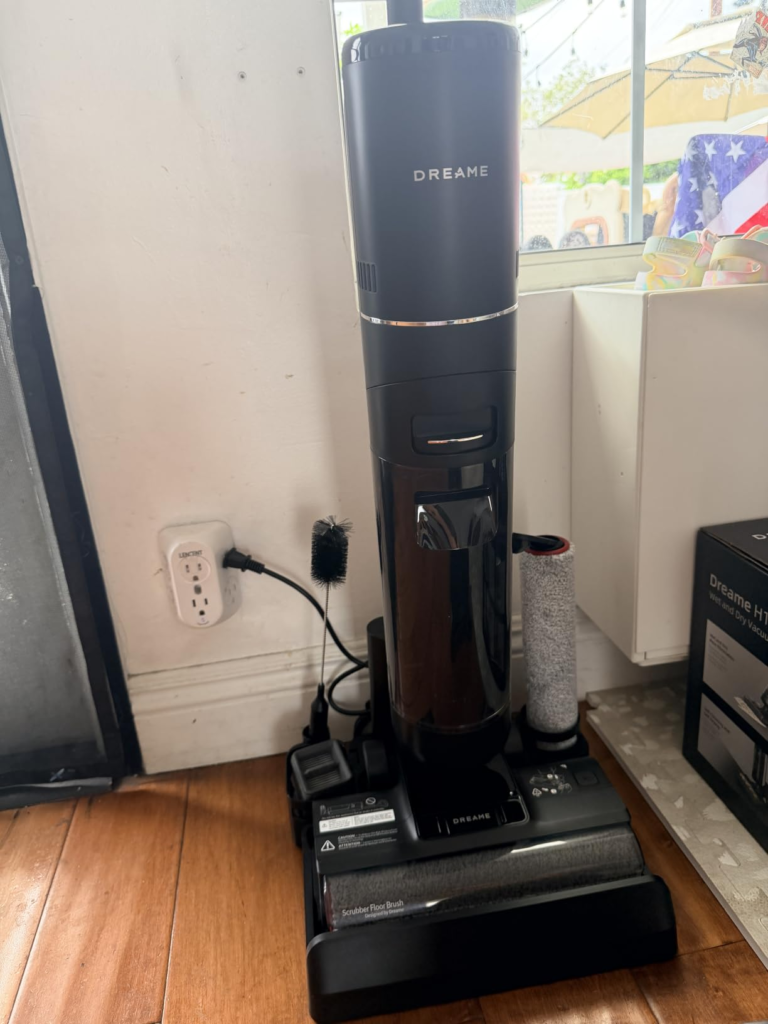
Here’s why the number moves once you’re actually cleaning. The same 6-cell, 4,000mAh battery pack powers the suction motor, the water pump, and the self-clean heating element, all pulling from one shared source. Auto Mode adjusts power based on how dirty the floor sensor reads, which means it’s rarely sitting at the lowest draw. Turbo pushes suction and water flow to their ceiling. Independent hands-on testing from tech reviewers who used the machine for full house cleans, rather than lab conditions, clocked real runtime closer to 30 minutes — enough for a genuine whole-home pass in a small-to-mid-size house, tight for anything larger.
Dreame H12 Pro FlexReach Runtime by Room Size: The Threshold Where the Outcome Quietly Breaks
There’s a real breakpoint here, and it’s worth naming instead of guessing at. Under roughly 700 square feet of hard flooring, running mostly in Quiet or Auto Mode, one charge comfortably covers the whole space. Cross into the 1,200+ square foot range, or add enough pet hair and dried mess to keep pushing you into Turbo, and the math stops working in your favor.
| Mode | Power draw | Approx. runtime | Best for |
|---|---|---|---|
| Quiet | Lowest | ~50 min (rated) | Large open layouts, light daily upkeep |
| Auto / Smart | Adaptive | ~30 min | Mixed mess, everyday default |
| Turbo / Max | Highest | ~20–25 min | Heavy pet hair, dried spills, small zones |
| Suction-only | No mopping | Similar to Auto | Quick dry-debris pass |
The practical fix is sequencing, not a workaround: clean your worst zone — usually the kitchen or entryway — first, while the battery’s freshest, and save the lighter rooms for the tail end of the charge.
Dreame H12 Pro FlexReach vs Bissell CrossWave and Tineco: Why Most Buyers Misread This Too Early
The instinct when comparing floor cleaners is to line up the suction numbers and pick the highest one. That instinct misreads the category. Pascal ratings across brands are tested under different lab protocols, on different surfaces, at different distances from the nozzle — an 18,000 Pa figure from one company and a 22,000 Pa figure from another aren’t measuring the same thing the way two cars’ horsepower numbers are.
The number that actually separates this tier of machine is what happens after you’re done cleaning. One long-time Bissell CrossWave owner who switched to this model described the CrossWave as more work to maintain than it was worth, and said this one was the opposite experience entirely — the self-wash-and-dry cycle is doing the job that used to mean disassembling a mop head over a sink. That’s the real dividing line between this machine and its closest competitors, not the suction figure printed on the box.
Best Cordless Vacuum Mop for Pet Hair and Hard Floors: Who’s Actually Inside This Problem
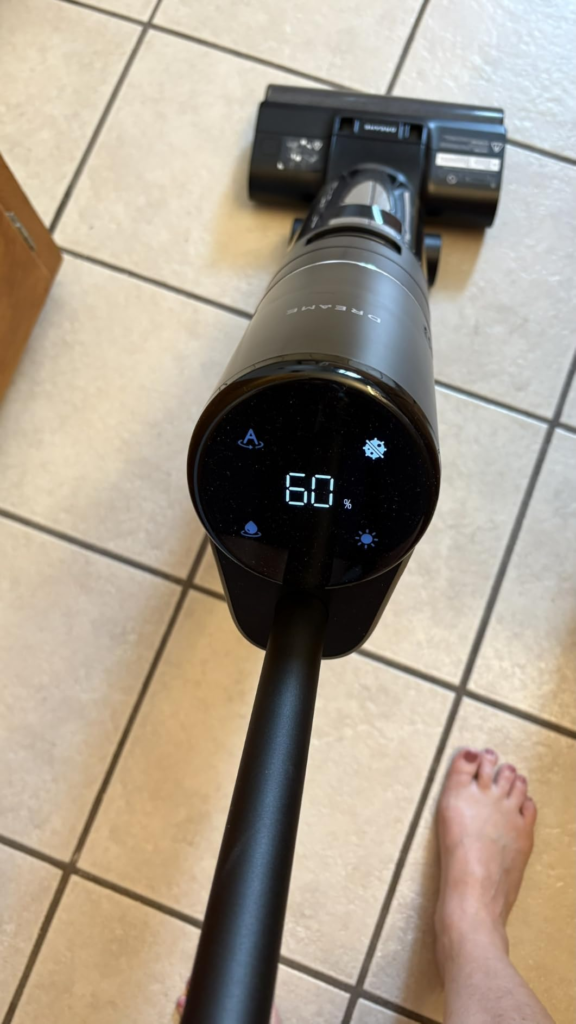
This machine earns its price with a specific household, not every household. Pet owners dealing with shedding — reviewers mention everything from short-haired dogs to a “German Shedder” — consistently report it clearing hair that used to wrap around a standard vacuum brush within days. The TangleCut scraper was independently lab-tested against 1,000 wet and 1,000 dry hair strands with zero tangles left behind, and that number holds up against what owners describe at home.
It also earns its keep with anyone who physically struggles with a mop bucket — bad backs, bad knees, tall people who hate bending over a low handle — and with parents managing the daily wreckage of toddler meals. One verified buyer described testing it against yogurt, oatmeal, and pasta residue specifically, expecting the brush to come out stained, and finding it dry and odor-free instead.
Dreame H12 Pro FlexReach Limitations: Where Wrong-Fit Begins
If your home is majority carpet or large area rugs, stop reading here — this machine is explicitly built for hard flooring only, and running it on carpet isn’t what it’s designed to do. If you’ve got heavily textured tile and you’re hoping something will finally dig into old grout stains without you scrubbing by hand, this isn’t that tool either.
It’s also not the right fit if you want something fully hands-off. You’re still pushing it, still refilling a clean water tank partway through a whole-house clean, still dumping a dirty tank afterward. And the internal battery isn’t user-replaceable, which matters if you’re the type who keeps appliances for a decade — eventually the pack will degrade, and there’s no simple swap for it.
| Good fit if you… | Skip it if you… |
|---|---|
| Have mostly or all hard flooring | Have wall-to-wall carpet or large rugs |
| Deal with pet or long hair clogging brushes | Need deep-scrub power on heavily textured grout |
| Want vacuum + mop in one pass | Want a fully hands-off robotic solution |
| Don’t mind 15–20 minutes hands-on plus tank refills | Won’t do light upkeep — rinsing filters, swapping rollers |
| Can catch it in the $300–$450 sale range | Only want to spend well under $200 |
Dreame H12 Pro FlexReach Review: The One Situation Where This Product Becomes Logical
If you already own hard flooring throughout most of your home, you’re tired of the vacuum-then-mop two-step, and you’ve got pets, kids, or just a floor that gets dirty faster than your schedule allows for — this is the point where buying it stops being an impulse and starts being the obvious next step. Not because it’s flashy. Because it removes the exact friction described above, and does it without asking you to hand off the whole job to an app and a robot you don’t fully trust yet.
That’s the actual use case. Not “everyone,” not “every floor.” Specifically the household that’s been doing this by hand and is done doing it that way.
Dreame H12 Pro FlexReach Pros and Cons: What It Solves, What It Reduces, and What It Still Leaves to You
| Solves | Reduces | Still leaves to you |
|---|---|---|
| Separate vacuum-then-mop routine | Kneeling and hand-scrubbing edges | Emptying and refilling tanks each session |
| Hair tangling in brush rollers | Mop-bucket water changes mid-clean | Replacing roller and filter roughly every 6 months |
| Musty mop-head smell — if self-clean is actually used | Streaking on hard floors | Deep carpet cleaning — not covered at all |
| Occasional hand-scrub on heavily grooved grout |
The gap between “solves” and “still leaves to you” is honest, not a hedge. Skip the self-clean cycle even once and the smell it’s designed to prevent shows up right on schedule.
Dreame H12 Pro FlexReach Review: Final Verdict
This isn’t a machine that does everything. It doesn’t touch carpet, it won’t excavate old grout, and the battery figure on the box needs a mental asterisk depending on which mode you actually run. What it does do — combine vacuuming and mopping into one pass, cut hair tangles down to close to zero, and genuinely stay odor-free if you let the self-clean cycle finish — it does at a level that’s hard to find below its price tier.
If the two-step vacuum-then-mop routine is the exact friction you opened this page to fix, this is where the decision stops being vague:
Dreame H12 Pro FlexReach FAQ: Fast Answers Before You Decide
Does it work on carpet or rugs?
No. It’s built for hard flooring only — hardwood, tile, laminate, LVT. Running it on carpet isn’t what the system is designed to do.
Is the H12 Pro Gen2 different from the H12 Pro FlexReach?
No. Same machine. Dreame updated the packaging and listing name; you may receive either box depending on when your unit ships.
How long does the battery actually last?
Up to 50 minutes rated in Quiet Mode. In everyday Auto or Turbo use, plan on closer to 25–30 minutes.
Why does it start smelling musty after a few weeks?
Almost always a skipped or interrupted self-clean cycle, or a dirty water tank left sitting too long. Running the full self-clean-and-dry cycle and emptying the dirty tank promptly clears it.
How often do parts need replacing?
Dreame recommends replacing the brush roller and filter roughly every six months. A replacement roller runs about $20.
Is it heavy to push around?
It weighs about 13 lb with both tanks filled, but the brush roller is self-propelled, and multiple owners report comfortable one-handed use.
Does it replace a regular vacuum entirely?
Not fully. It won’t touch carpet and won’t dig into heavily textured grout lines — think of it as replacing your mop-and-bucket routine, not your only vacuum.
Transparency Note:
This analysis is built on aggregated real-world experience.
It extracts what repeatedly holds, what breaks, and what users uncover only after living with the system—then shapes it into a clear model you can use immediately.
Think of it as structured experience, refined and presented so you don’t have to learn it the hard way.
“A quick note: Don’t believe the star ratings, but trust personal experience. This article is a compilation of collected experiences”