Ring Alarm 14-Piece System + Outdoor Cam Plus: A Stability-Based Decision
decision analysis
When evaluating a home security system, I rarely ask whether it works.
Most systems work.
The real question is different:
Will it still feel reliable after a month of real life?
The Ring Alarm 14-piece system paired with two Outdoor Cam Plus cameras is designed to answer that question through architecture rather than marketing.
What the System Includes
The bundle combines indoor monitoring coverage with exterior visibility.
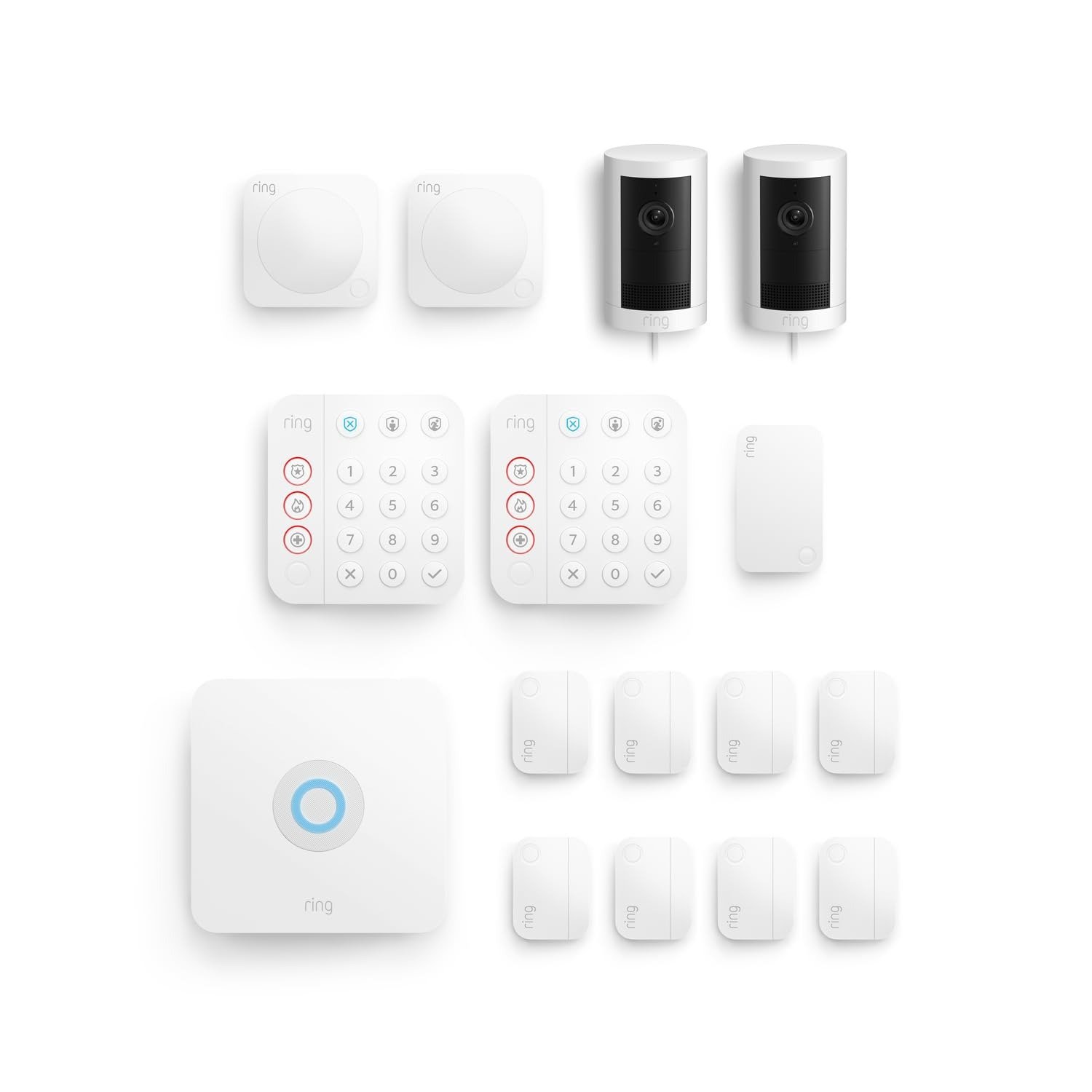
| Component | Function | Why It Matters |
|---|---|---|
| Base Station | Central system controller | Maintains sensor network stability |
| Keypads (2) | System control points | Allows convenient arming and disarming |
| Contact Sensors (8) | Door and window monitoring | Establishes entry coverage |
| Motion Detectors (2) | Interior movement detection | Detects unexpected activity |
| Range Extender | Signal reinforcement | Expands sensor network reliability |
| Outdoor Cam Plus (2) | Exterior monitoring | Provides visual confirmation |
The sensor network communicates using Z-Wave, a dedicated low-power protocol designed for home automation devices.
This separation from Wi-Fi traffic improves long-term predictability.
Where the System Gains Its Stability
Three mechanical design decisions influence the reliability threshold.
Dedicated Sensor Network
Because sensors communicate through Z-Wave rather than standard Wi-Fi, they avoid interference from streaming devices and household network traffic.
This dramatically reduces missed signals.
Battery Backup
The base station includes backup power capable of maintaining operation during short power interruptions.
Instead of rebooting during outages, the system continues operating silently.
Simple Sensor Roles
Each component performs one clear task:
- Door sensors monitor entry points.
- Motion sensors monitor movement zones.
- Keypads control system modes.
The simplicity prevents configuration drift.
Where Drift Can Still Appear
Even well-designed systems interact with unpredictable environments.
Three situations create most real-world reliability issues.
Motion Placement
Sensors facing windows or reflective surfaces can produce false alerts.
Adjusting sensitivity and placement solves most cases.
Wi-Fi Margin for Cameras
Outdoor cameras depend on consistent Wi-Fi signal strength.
Exterior walls and distance from routers can introduce intermittent drops.
Placement planning prevents most connectivity drift.
Coverage Gaps
If entry points remain unmonitored, users often compensate by manually checking doors and windows.
Psychologically this lowers trust in the system.
Completeness matters.
Feature Impact on Stability
| Feature | Stability Impact |
|---|---|
| Z-Wave sensor network | Predictable sensor communication |
| Range extender | Reinforces signal coverage |
| Battery backup | Maintains operation during outages |
| Outdoor cameras | Adds verification layer |
Each element contributes to the system remaining above the reliability threshold.
Compatibility Split
Best Fit
Apartments and medium-sized homes with typical entry layouts.
Shorter sensor distances keep communication stable.
Good Fit With Planning
Standard houses with multiple entry points.
Careful placement of sensors and cameras ensures coverage continuity.
Requires Attention
Properties with detached structures or large outdoor areas.
Signal margin and camera placement become more critical.
Final Stability Assessment
The Ring Alarm 14-piece system is engineered to remain stable when three environmental conditions are respected:
- Complete entry coverage
- Proper motion sensor placement
- Adequate Wi-Fi margin for cameras
When those conditions hold, the system crosses the stability threshold quickly and tends to remain quiet and predictable.
For readers who want to inspect the product configuration itself:
A reliable security system does not draw attention to itself.
It simply stays stable long enough that you stop thinking about it.
Transparency Note:
This analysis is not based on quick personal impressions.
It is derived from documented system behavior, verified user patterns, and the physical constraints of storage capacity.
The goal is to translate complex technical behavior into a realistic performance model that helps you make a clear decision