LOREX 1080P FLOODLIGHT CAMERA REVIEW: THE SPEC NOBODY MENTIONS BEFORE YOU BUY
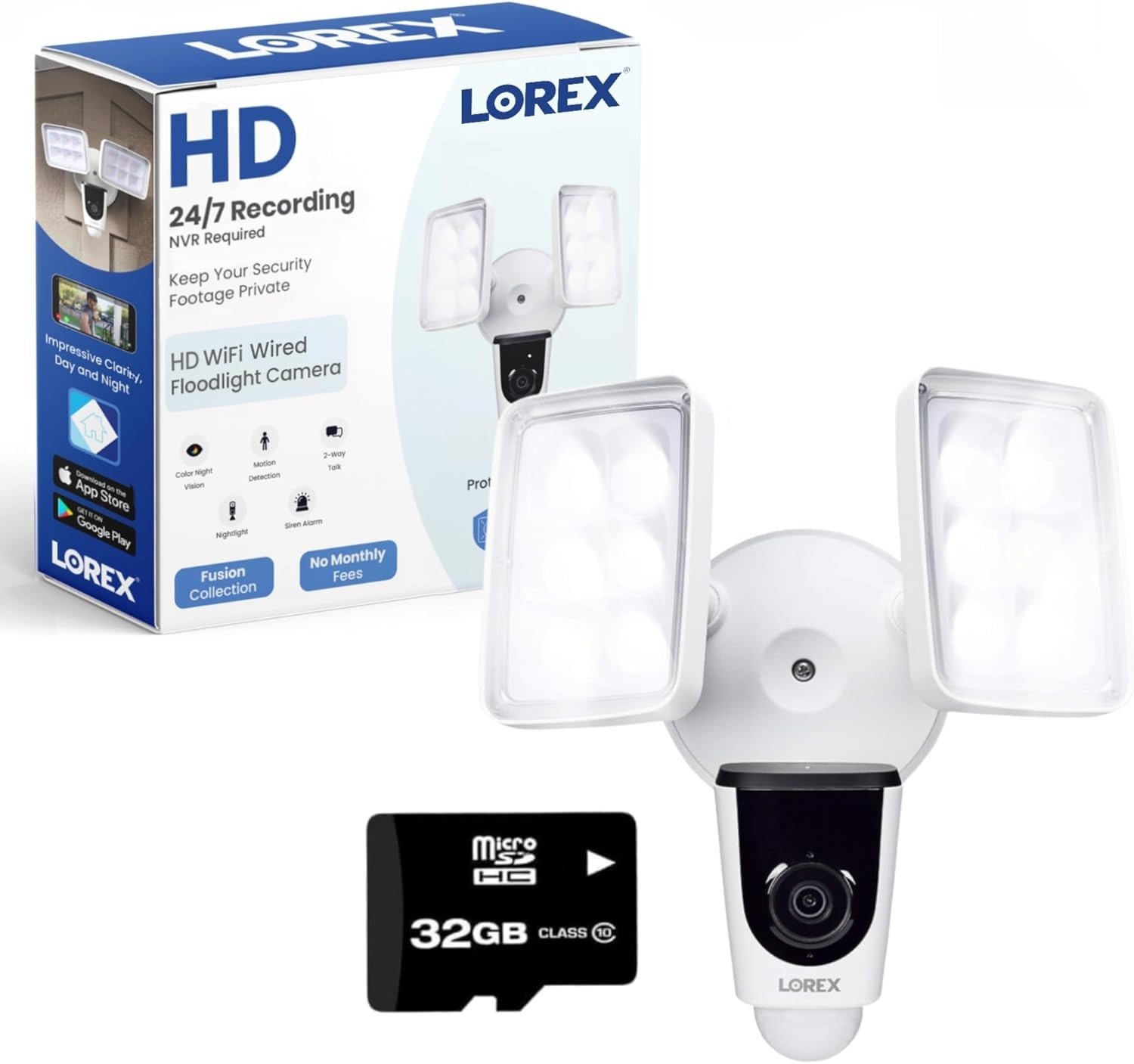
LOREX 1080P FLOODLIGHT CAMERA
You searched for the 2K version. You compared it, clicked, felt good about the decision. Then the box shows up, and the label doesn’t say 2K anywhere — it says 1080p, model V261LCD-E, no color night vision listed. I’ve pulled apart enough of these Lorex floodlight listings to know exactly what happened here, and it’s worth explaining before you either return this camera by mistake or keep it without understanding what you actually own. This is a full, honest teardown of the camera that’s actually inside that box — not the one the search term promised.
| Spec | Detail |
|---|---|
| Model | V261LCD-E, White |
| Resolution | 1920×1080 (1080p) @ 30fps |
| Field of view | 137° diagonal / 114° horizontal |
| Night vision | Infrared only, rated to 50 ft (ideal conditions); ~20 ft typical |
| Floodlight | Dual LED, 4,000 lumens combined |
| Motion detection | Basic PIR (heat/movement) — no AI subject recognition |
| Audio | Mic, speaker, 2-way talk, built-in siren |
| Power | Hardwired only — no battery option |
| Storage | 32GB microSD included, up to 256GB, local (paid cloud optional) |
| Smart home | Amazon Alexa, Google Assistant — no Apple HomeKit |
| App | Lorex Classic (legacy) — not the newer Lorex Connect |
| Weatherproofing | IP65 |
| Price | $199.99 direct from Lorex, often less via retailers |
Lorex Floodlight Camera Review: Why the Box Looks Right and the Footage Doesn’t
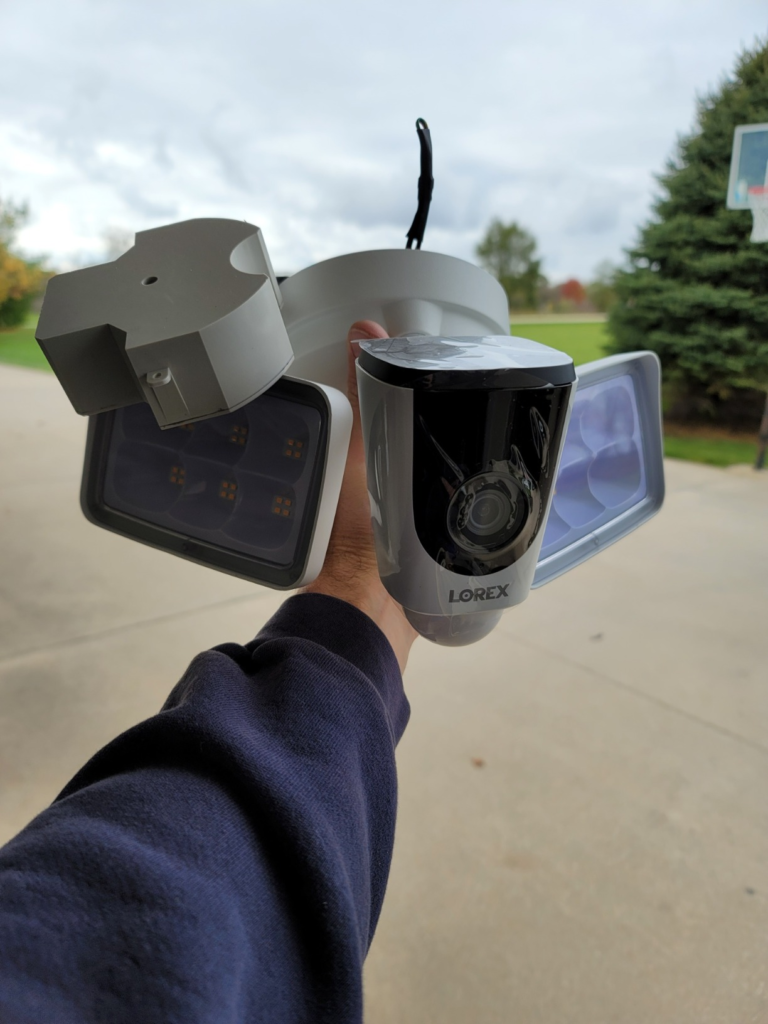
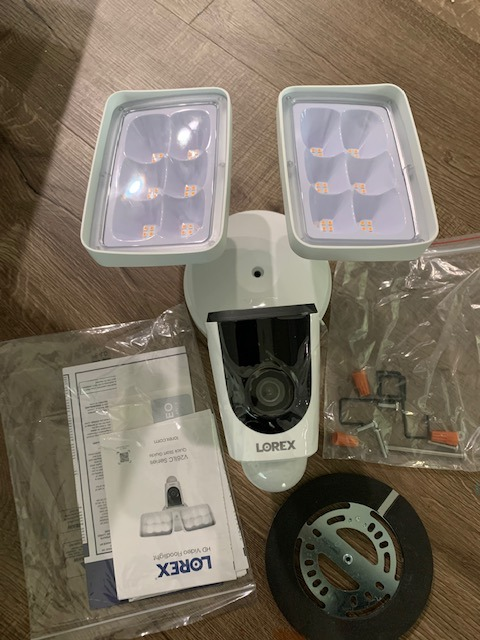
From the sidewalk, every smart floodlight camera looks like the same object — two square panels, a lens between them, a status light that blinks during setup and then goes quiet. Install one from any brand and your porch looks equally “smart” to a neighbor walking past. The differences that actually matter — how the footage looks at 11pm, whether the app can tell a person from a raccoon, whether the light fires because someone’s really there or because a moth drifted past the sensor — none of that shows up in a listing photo. It shows up the first time you need it.
Lorex Floodlight Camera False Alerts: What You’re Actually Reacting To
If you’ve owned any motion-activated floodlight before, you know this specific irritation: the phone buzzes at 1am, you check it half-asleep, and it’s a shadow, a cat, a branch in the wind. Do that enough times and you either mute notifications entirely — which defeats the point of owning a security camera — or start ignoring alerts on instinct, including the one that mattered. Why does the same sensor that’s supposed to protect your sleep end up wrecking it? Some V261LCD-E owners describe exactly this: even with sensitivity turned all the way down, the light and the alerts keep firing at nothing. That’s not really a defect. It’s a design limit worth naming before you buy, not after.
Lorex 1080p vs 2K Floodlight Camera: The Hidden Mechanism Behind the Mix-Up
Here’s the mechanism behind both the false alerts and the listing confusion. This 1080p camera detects motion the old-fashioned way — a PIR sensor reading heat and movement, not shapes. It genuinely can’t tell a person from a sun-warmed hedge swaying in the wind. Lorex’s pricier 2K sibling (model W452ASD-E, usually $250–$280) replaces that with real video-based classification that separates people, vehicles, and animals — which is exactly why it throws fewer nonsense alerts. It also adds color night vision and adjustable floodlight color temperature, neither of which exist on this unit.
| Feature | 1080p Floodlight (this camera) | 2K Floodlight (W452ASD-E) |
|---|---|---|
| Resolution | 1080p | 2K (2560×1440) |
| Night vision | Infrared only | Color + infrared |
| Motion detection | Basic PIR | AI: person/vehicle/animal |
| Floodlight | 4,000 lm, fixed white | 2,400 lm, adjustable color temp |
| Field of view | 137° diagonal | 122° diagonal |
| Typical price | ~$199.99 | ~$250–$280 |
If your search included “2K” and your confirmation email says “1080p,” this is why. The two share a family resemblance and half a name, but they aren’t the same product. Read the model number on the box, not the words in your search bar.
Lorex Floodlight Camera Night Vision Range: The Threshold Where the Picture Breaks
Lorex rates the infrared night vision at up to 50 feet, and to be fair, the fine print says that assumes ideal conditions — flat mounting height, nothing blocking the sensor, no reflective glare. Real backyards aren’t ideal. Owners consistently describe the useful range as closer to 20 feet before detail and detection both fade. Infrared light thins out with distance the same way a flashlight beam does — bright up close, weak at the edges — and the motion sensor triggering the recording has its own separate limit that doesn’t always match the lens. Twenty feet is the number to actually plan around, not fifty.
Lorex Floodlight Camera Comparisons: Why Most Buyers Check the Wrong Spec
Most shoppers compare star ratings and price, then treat every floodlight camera as interchangeable. Wrong axis. The question that predicts whether you’ll be happy in six months is narrower: do you need to make out a face or a plate in the dark, or do you just need to know something’s out there and get light on it fast? If it’s the first, this camera will let you down, and a color-night-vision model is worth the extra cost. If it’s the second, resolution barely matters — the real conversation is wiring, lumens, and whether you’re willing to spend an evening tuning motion zones.
Best Use Case for the Lorex 1080p Floodlight Camera: Who It’s Actually Built For
This camera makes the most sense for someone replacing a dead or dumb porch light who already has the electrical box and wiring from the old fixture. You want light when you walk to your car at night. You want a clip if a package goes missing, not a courtroom close-up. You don’t want a subscription bill for something you’re already recording locally. You’re fine spending twenty minutes narrowing the motion zones so it stops reacting to the street. If that’s an honest description of what you want, the gap between this and the 2K version stops being a downgrade and becomes a reasonable trade for the price.
Lorex Floodlight Camera Pros and Cons: Where the Wrong Buyer Starts Regretting It
The regret cases are specific and predictable. Want to identify a face or read a plate after dark? You need color night vision, and this doesn’t have it — that disappointment shows up exactly when you need the footage most. Renting, or no existing floodlight wiring, and don’t want an electrician? A hardwired camera is the wrong category; look at a battery model. Running an all-Apple smart home? There’s no HomeKit support here or anywhere in Lorex’s consumer line. Heavy tree cover, road traffic, or nighttime animal visitors? Budget real time for tuning sensitivity, because out of the box this camera runs eager.
| Choose this camera if | Choose something else if |
|---|---|
| You already have floodlight wiring | You have no wiring and won’t hire an electrician |
| You want light plus basic recorded activity | You need to see faces or plates clearly at night |
| You want zero monthly fees | You want AI person/vehicle alerts out of the box |
| You’ll tune motion zones yourself | You want set-it-and-forget-it accuracy on day one |
| Your smart home runs Alexa or Google | Your smart home runs entirely on Apple HomeKit |
Is the Lorex 1080p Floodlight Camera Worth It? The One Situation Where It’s the Right Call
Strip away the comparison shopping, and there’s one clean situation where this camera is simply the correct, unglamorous choice: you have existing floodlight wiring, you want dependable area lighting plus locally-stored video of everyday activity, and you have no interest in a monthly fee to watch your own porch. Lorex lists it directly at $199.99, with per-unit price dropping if you buy more than one, and it routinely shows up for less through Amazon and other retailers — check the live price on whatever listing you’re actually looking at rather than trusting a number printed in any review, including this one. At that price, for that specific job, it’s a logical pick, not because it beats the 2K version on paper, but because most of what the 2K adds would be wasted on someone who just wants a bright, recording porch light.
What the Lorex Floodlight Camera Solves, Reduces, and Still Leaves to You
| Solves | Reduces | Still on you |
|---|---|---|
| Replaces a dumb porch light with a recording one | Package-theft opportunism | Getting it wired safely if you’re not confident doing it yourself |
| Removes the monthly-fee requirement for local video | “Who was that” uncertainty on everyday activity | Tuning motion zones so alerts stay useful, not constant |
| Brighter, more reliable light than a typical dumb fixture | Guesswork about nighttime activity on your property | Keeping expectations realistic — this is a deterrent and activity log, not a forensic camera |
| Installing Lorex Classic, not Connect, and keeping firmware current |
LOREX 1080P FLOODLIGHT CAMERA FAQ: FAST ANSWERS BEFORE YOU BUY
| Question | Answer |
|---|---|
| Is the Lorex 1080p Wi-Fi Floodlight Camera the same as the 2K version? | No. They share a similar body and both use existing floodlight wiring, but the 1080p model (V261LCD-E) has lower resolution, no color night vision, and basic PIR motion sensing instead of the AI person/vehicle/animal detection on the 2K model (W452ASD-E). Check the model number on your box, since search results for one sometimes surface the other. |
| Does this camera need a monthly subscription? | No. It records locally to a microSD card (32GB included, up to 256GB), and every core feature works without a fee. Lorex offers optional paid cloud backup for off-site storage, but it’s never required. |
| Can it run on battery, or does it have to be hardwired? | Hardwired only. It installs using your existing floodlight wiring or a standard junction box and stays powered around the clock. If you don’t have existing wiring and don’t want an electrician, look at a battery-powered camera instead. |
| How far does the night vision actually reach? | Lorex rates it up to 50 feet under ideal conditions, but real-world reports put reliable clarity and motion pickup closer to 20 feet depending on mounting height and surroundings. Plan your placement around 20 feet. |
| Which app do I need — Lorex Connect or Lorex Classic? | This camera runs on Lorex Classic, the company’s legacy app (previously just “the Lorex App” or “Lorex Home”). Lorex Connect is built for the newest 2025–2026 camera and recorder lineup and won’t necessarily recognize this older model the same way. |
| Does it work with Apple HomeKit? | No. Like the rest of Lorex’s consumer lineup, it supports Alexa and Google Assistant, with no HomeKit integration. |
| How do I stop the false motion alerts? | Narrow the PIR detection zones to exclude the street, sidewalk, and anything that moves in the wind, then lower sensitivity a step at a time until alerts match what you actually want to know about. It takes trial and error since detection isn’t AI-based here. |
| Do I need the Lorex Smart Home Security Center to use this camera? | No, it’s optional. The camera works standalone through the Lorex Classic app. The Security Center only matters if you want to fold it into a larger multi-camera Lorex setup. |
Final Verdict: Lorex 1080p Floodlight Camera Review Wrap-Up
This isn’t the camera to buy if what you actually wanted was the 2K version, and it isn’t the camera for identifying a face in the dark. It’s a fair, honestly-built choice if you want a bright, always-on floodlight that records locally, skips the monthly bill, and covers a wide slice of your yard without much fuss. Before you check out, match the model number on the listing — V261LCD-E — against what’s in your cart, because that one line is where most of the disappointment in this camera’s reviews actually starts. If it matches, and that’s the job you need done, this is where the decision stops being vague.
Transparency Note:
This analysis is built on aggregated real-world experience.
It extracts what repeatedly holds, what breaks, and what users uncover only after living with the system—then shapes it into a clear model you can use immediately.
Think of it as structured experience, refined and presented so you don’t have to learn it the hard way.
“A quick note: Don’t believe the star ratings, but trust personal experience. This article is a compilation of collected experiences.”