WINIX 5510 Air Purifier Review: Why "Clean" on the App Doesn’t Always Mean Clean
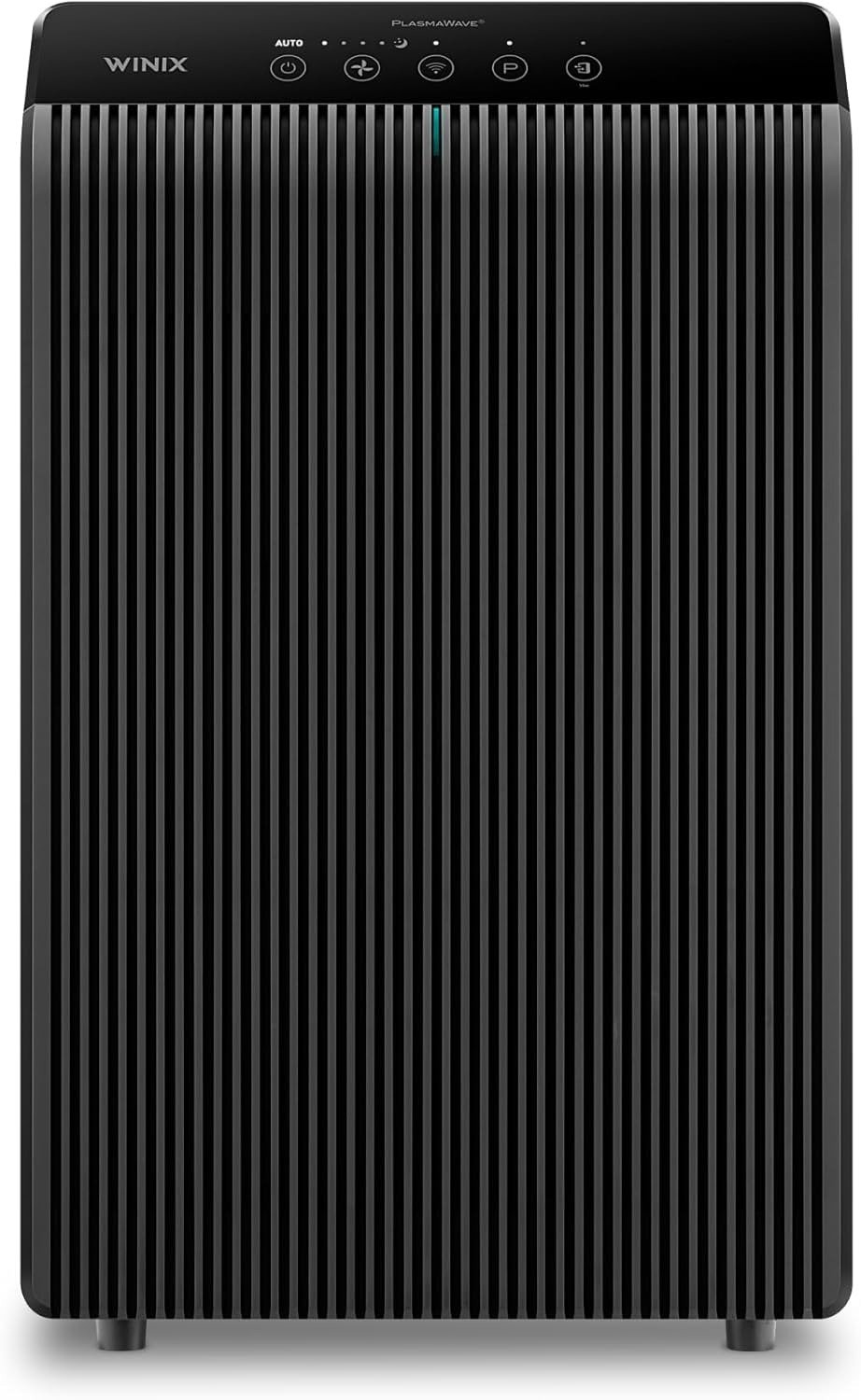
WINIX 5510 AIR PURIFIER
The light on the front of your air purifier is blue. The app on your phone says “Good.” And you’re still standing in your kitchen at nine at night, irritated, because you can still smell the salmon from two hours ago.
That gap — between what the indicator promises and what your nose is reporting — is where most air purifier disappointment actually starts. Not in a bad unit. Not in a scam. In a mismatch between the number printed on the box and the room you actually live in. The WINIX 5510 is a good test case for this, because it’s a genuinely capable machine wrapped in one of the more misleading headline numbers in the category.
WINIX 5510 Performance Review: The Result Looks Fine, the Problem Isn’t
The 5510 is one of the more capable mid-size purifiers you can buy for around $180. Independent lab testing backs that up: an estimated clean air delivery rate (CADR) of roughly 250 CFM, a four-stage filter stack, and an AHAM Verifide badge — a real, third-party-checked number, not just a brand’s own claim.
None of that is the problem. The problem is what happens after you plug it in. The light goes blue, you stop thinking about it, and you assume “blue” means your whole room turned over. It doesn’t always. Blue means the sensor near the unit currently reads clean air — not that every cubic foot of your 450 sq ft open floor plan cycled through the filter in the last ten minutes.
WINIX 5510 Daily Use: What You’re Actually Feeling but Not Naming
If you’ve owned one of these for a few weeks, a few specific things tend to nag at you, even before you’ve put a name to them.
You still catch garlic in the hallway by the time you get home from work. Your allergies improved, but not as much as the five-star reviews led you to expect. You ran it on a quiet setting overnight because turbo felt unreasonable for a bedroom, and you’re not entirely sure it was doing much at that speed.
None of that means the purifier is broken. It means three specific, traceable things are happening: a coverage mismatch, a sensor blind spot, and a noise-versus-power tradeoff nobody explained at checkout.
WINIX 5510 Filtration System: The Hidden Mechanism Behind the Miss
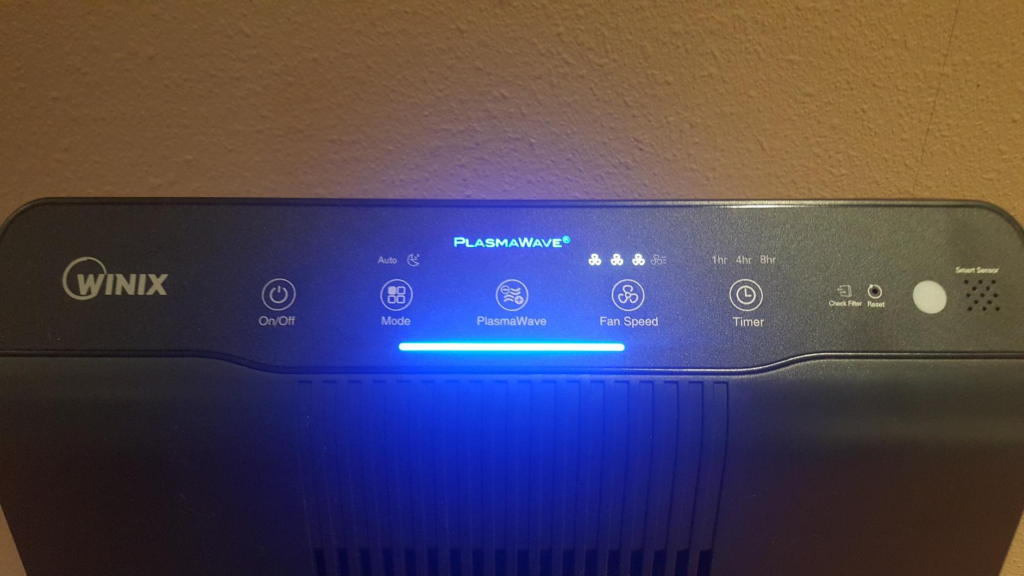
Here’s what’s actually happening inside the unit. Air passes through four stages: a washable fine-mesh pre-filter that catches hair and large debris, an AOC carbon filter that absorbs odors and VOCs from cooking, smoke, and pets, a True HEPA filter Winix rates at capturing 99.99%* of particles down to 0.01 microns, and PlasmaWave — a bipolar ionization stage, CARB-certified for ozone output below California’s safety threshold, that can be switched off entirely if you’d rather run mechanical filtration only.
That part is solid, proven engineering — the same DNA that made the now-discontinued 5500-2 a long-running Reddit favorite.
The part most people never see is the coverage math. “Up to 1,881 sq ft in 1 hour” reads like a room-size promise. It’s actually one air exchange, at maximum fan speed, in a far bigger volume than the unit is realistically suited for. The AHAM Verifide figure on the same box — the one independently tested, not just claimed — sits much lower.
| Spec | WINIX 5510 |
|---|---|
| List price | $179.99 (frequently discounted; recent sale prices have ranged roughly $135–$180) |
| Filtration | 4-stage: washable pre-filter, AOC carbon, True HEPA, PlasmaWave |
| HEPA claim | 99.99%* of particles down to 0.01 microns (Winix’s own rating) |
| CADR (independent labs) | ~250 CFM |
| AHAM Verifide coverage | ~330–392 sq ft, depending on listing |
| Marketing coverage claim | Up to 1,881 sq ft in 1 hour |
| Dimensions | 25.2″H x 15.9″W x 11″D |
| Weight | ~13 lbs |
| Connectivity | WiFi + Winix Smart App (iOS/Android) |
| Warranty | 2 years |
WINIX 5510 Coverage Area: The Threshold Where Performance Quietly Breaks
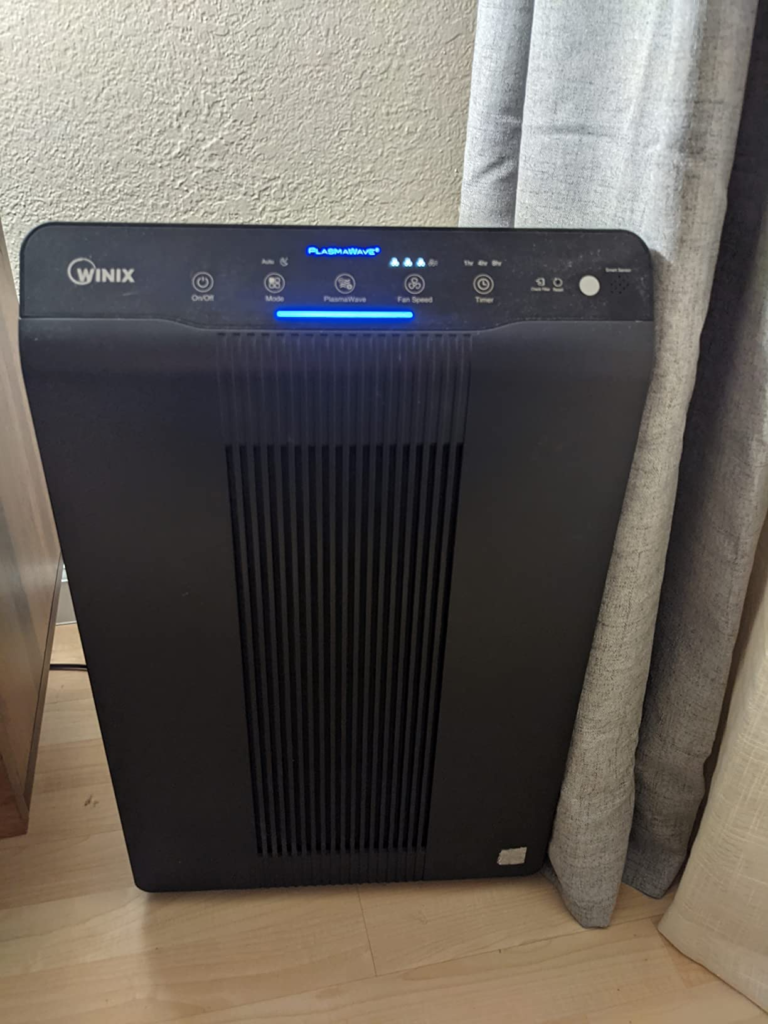
Here’s the threshold, named plainly: AHAM-verified coverage lands between roughly 330 and 392 sq ft, and independent labs measuring CADR directly put the real “five air changes per hour” zone at around 370 sq ft. That’s a large bedroom or a small-to-medium living room — not a 1,881 sq ft loft.
Inside that zone, the 5510 is genuinely fast. Outside it, the air still gets cleaner, just slower — and slower is where the disappointment lives.
Why does noise matter here? Because the speed that actually moves enough air to hit that threshold isn’t whisper-quiet.
| Speed | Noise (independent testing) | What it actually does |
|---|---|---|
| Sleep / Low | At or below quiet room background noise | Background-only; cleans very slowly |
| Speed 2 | ~41 dBA | Crosses into meaningful cleaning, still livable |
| Speed 3 | ~52 dBA | Noticeably audible, real air turnover |
| Turbo | ~67 dBA | Loud — louder at full power than several similarly priced rivals |
You don’t get fast and silent on the same setting. You pick one.
WINIX 5510 vs. the Competition: Why Most Buyers Misread This Too Early
A few specific misreadings show up over and over in owner discussions, and almost all of them trace back to the same root: reading the headline number instead of the certified one.
The first is the coverage figure — treating 1,881 sq ft as a working area instead of a one-hour, one-pass, max-speed ceiling.
The second is Auto Mode. It’s genuinely useful, but its sensor leans heavily on detected gas and odor rather than directly reading fine dust or pollen, and it carries a light sensor that drops the unit into sleep mode the moment a room goes dark — regardless of actual air quality. Owners have flagged this specifically: turn the lights off at bedtime expecting Auto Mode to keep adjusting, and it quietly stops trying.
The third is comparing it feature-for-feature against the old 5500-2 and calling the 5510 a downgrade. In raw lab tests, the 5500-2 did edge it out slightly. But the 5500-2 was discontinued in 2025 and isn’t sold new anymore — for a new buyer, that comparison is academic.
The fourth is expecting the carbon filter to be washable, the way it was on older Winix units. On the 5510, it’s a sealed, replaceable cartridge — a small recurring cost most people don’t budget for going in.
Who Needs the WINIX 5510: Inside the Real Problem
Picture the room this was actually built for: a bedroom or living room somewhere between 250 and 400 sq ft, a cat or dog shedding on the rug, a kitchen close enough that frying anything fills the hallway for an hour afterward. Picture spring arriving and a box of tissues migrating from the bathroom to the nightstand every April.
That’s the household this unit is engineered around — not a converted loft, not a 600 sq ft open-concept downstairs, and not someone chasing total silence above every other priority.
WINIX 5510 Limitations: Where Wrong-Fit Begins
Some rooms and routines simply aren’t what this unit was designed for, and it’s more useful to say so plainly than to let you find out after the return window closes.
| Good fit | Think twice |
|---|---|
| Bedrooms or living rooms, 250–400 sq ft | Open-concept spaces over ~450 sq ft, expecting one unit to cover it all |
| Pet owners (hair, dander, odor) | Light sleepers planning to run it above Speed 2 overnight |
| Seasonal allergy sufferers | Existing 5500-2 owners expecting a clear performance upgrade |
| Cooking-odor households | Heavy smokers or constant high-VOC rooms needing nonstop turbo |
| First-time buyers who want app + Auto Mode | Anyone counting on Auto Mode staying fully reactive after dark |
WINIX 5510 Air Purifier: The One Situation Where It Becomes the Logical Choice
Strip away the marketing number and look only at what’s independently verified: roughly 250 CFM CADR, AHAM-checked coverage in the 330–392 sq ft range, a proven four-stage stack, app and Auto Mode convenience, and a list price around $180 that regularly drops lower. It’s also worth noting Winix points to an independent comparison test by the YouTube channel Project Farm, in which the 5510 placed first among the units tested.
If your room falls inside that coverage window, and you’d rather buy on a certified number than a guess, the decision stops being complicated. It isn’t the quietest option on the market, and it isn’t the cheapest to run long-term. But for that specific room size, it’s a logical, evidenced pick — not a hopeful one.
WINIX 5510 Pros and Cons: What It Solves, What It Reduces, What’s Still on You
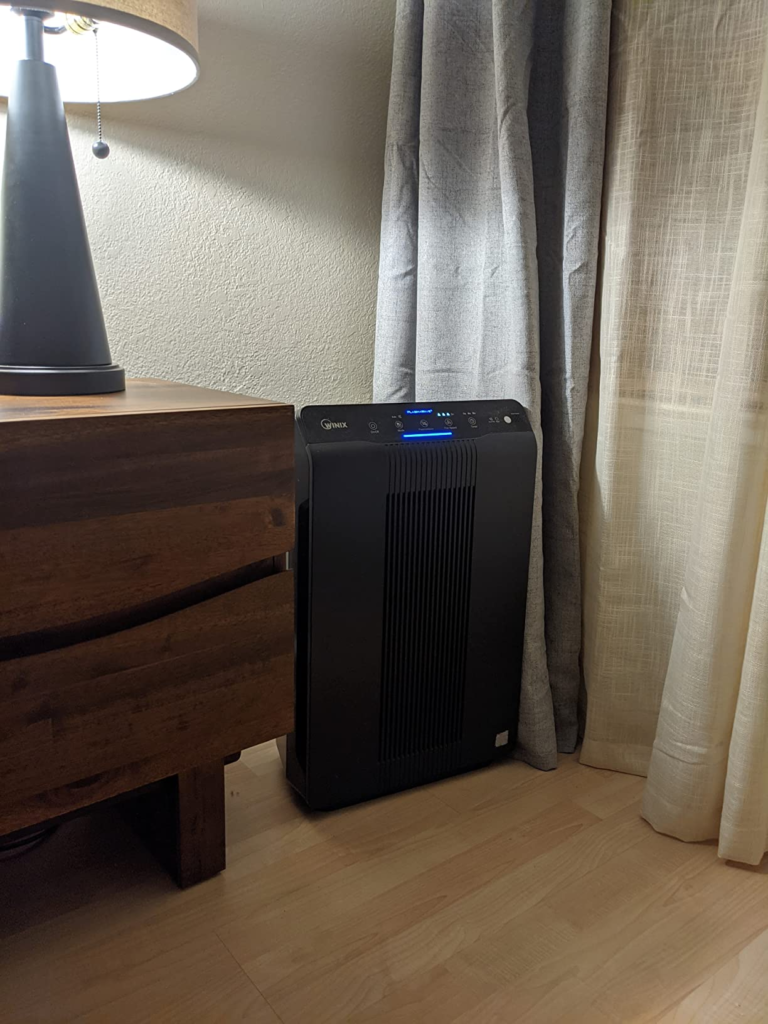
It solves the basics reliably inside its real coverage zone: dust, pet hair, pollen, and fine particulate all get pulled through True HEPA at a rate that’s been independently measured, not just claimed.
It reduces rather than eliminates. Lingering cooking and pet odor drop off faster than they would on their own, and many allergy sufferers report fewer flare days — but carbon filtration and PlasmaWave manage odor and VOCs; they don’t replace ventilation or cleaning.
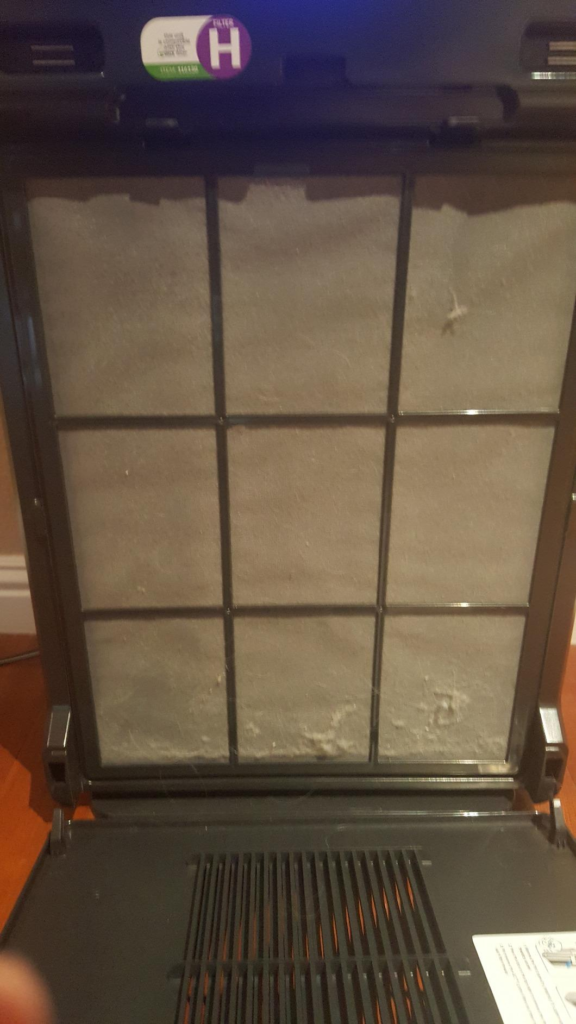
What’s still on you: picking a manual speed instead of trusting Auto Mode blindly overnight, replacing the filter set on schedule instead of waiting for performance to visibly drop, and rinsing the pre-filter every couple of weeks so the rest of the stack isn’t doing extra work.
| Part | Upkeep | Typical cost |
|---|---|---|
| Pre-filter | Rinse every ~2 weeks | Free (washable, reusable) |
| AOC carbon filter | Replace (not washable) | Included in filter set |
| True HEPA filter | Replace roughly every 12 months | Included in filter set |
| Full filter set (HEPA + carbon) | About once a year | ~$80 |
| Electricity | Ongoing | Typically well under $60/year unless run at top speed 24/7 |
WINIX 5510 FAQ: Quick Answers Before You Buy
| Question | Answer |
|---|---|
| Does the WINIX 5510 really clean 1,881 sq ft in an hour? | Only in the narrowest technical sense — one air exchange, at top fan speed, in close-to-ideal conditions. For genuinely fast, repeated turnover, plan around the AHAM Verifide figure instead: roughly 330–392 sq ft. |
| How loud is the WINIX 5510 on turbo versus sleep mode? | Independent testing put sleep and low at or below normal room background noise, climbing to about 41 dBA on Speed 2, around 52 dBA on Speed 3, and roughly 67 dBA on turbo — loud enough that most people won’t run it there overnight. |
| Is the WINIX 5510 better than the discontinued 5500-2? | Not in raw cleaning speed; the 5500-2 tested marginally faster. The 5510 adds WiFi, an app, and smart sensors, and since the 5500-2 is no longer sold new, the comparison mostly matters to existing 5500-2 owners — who generally don’t need to upgrade. |
| How much do WINIX 5510 filters cost, and how often do you replace them? | The pre-filter is washable and free to maintain. The HEPA and carbon filters typically need replacing about once a year, as a set, for around $80. |
| Is PlasmaWave safe, and can you turn it off? | Yes to both. It’s CARB-certified for ozone output below California’s safety limit, and there’s a dedicated button to disable it if you’d rather run mechanical filtration only. |
| Is the WINIX 5510 part of the Winix HEPA class-action lawsuit? | No. The 2025 lawsuit (Yant v. Winix Global) names 11 specific older models — including the 5500, 5300-2, AM90, and C535 — that use an older filter design. The 5510 uses a newer filter (Filter Q) and isn’t named in that case. It’s still a reasonable enough reason to lean on the independently verified AHAM number rather than the marketing claim, which is exactly what this review does throughout. |
Final Verdict on the WINIX 5510 Air Purifier
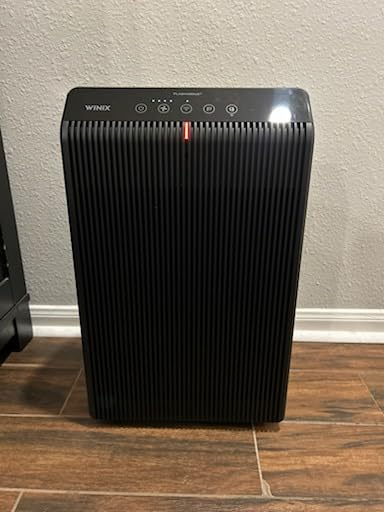
Ignore the 1,881 sq ft headline. Judge it on the number that’s actually been checked: a real, AHAM-verified mid-size purifier built for rooms in the 250–400 sq ft range, with proven four-stage filtration, useful if imperfect smart features, and running costs that are predictable once you know what they are.
If that’s the room you’re furnishing, this stops being a hard decision:
Transparency Note:
This analysis is built on aggregated real-world experience.
It extracts what repeatedly holds, what breaks, and what users uncover only after living with the system—then shapes it into a clear model you can use immediately.
Think of it as structured experience, refined and presented so you don’t have to learn it the hard way.
“A quick note: Don’t believe the star ratings, but trust personal experience. This article is a compilation of collected experiences.”