TIMEMORE CHESTNUT C2S REVIEW: WHY YOUR GRIND SETTING FEELS RIGHT AND STILL ISN’T
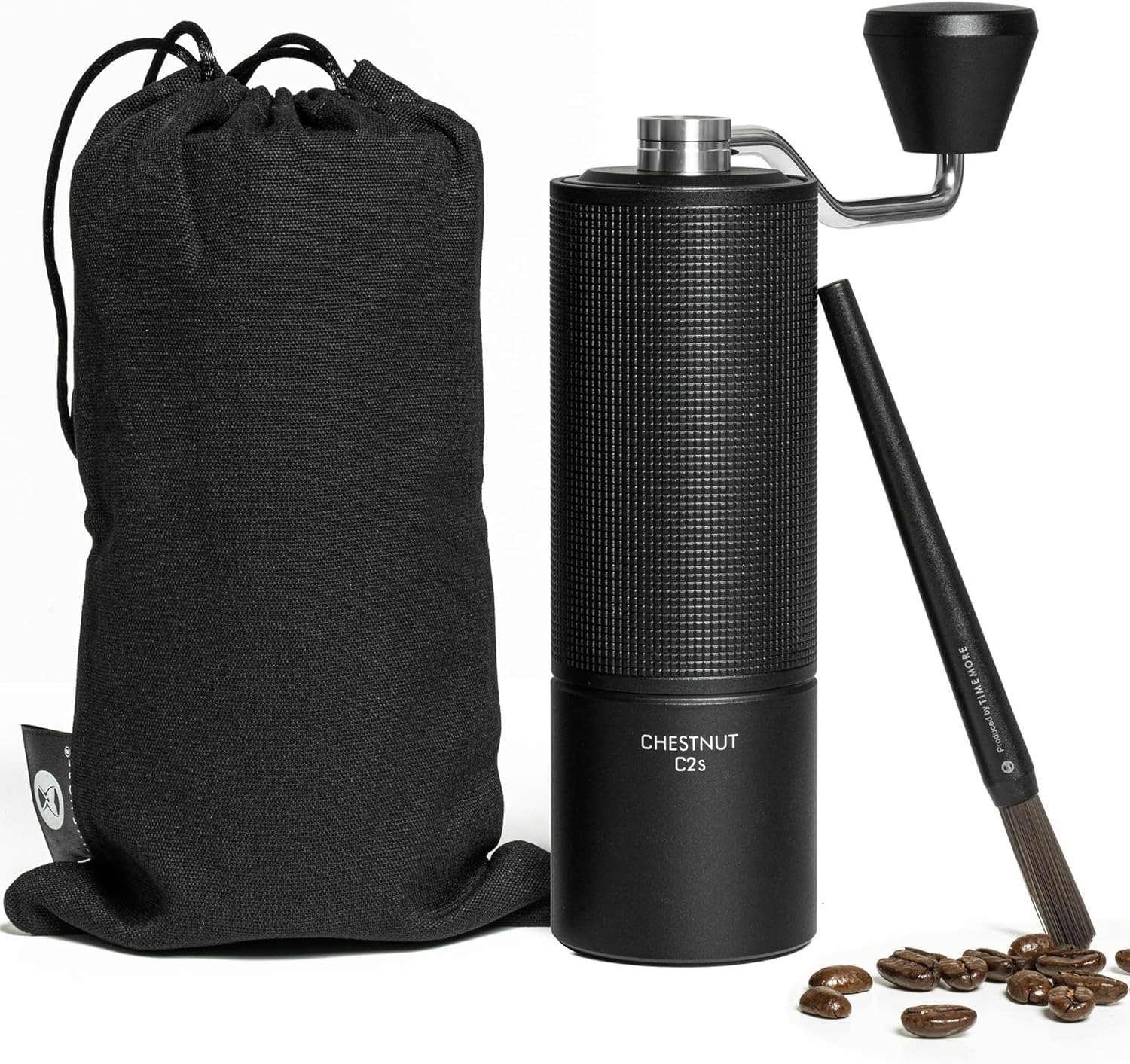
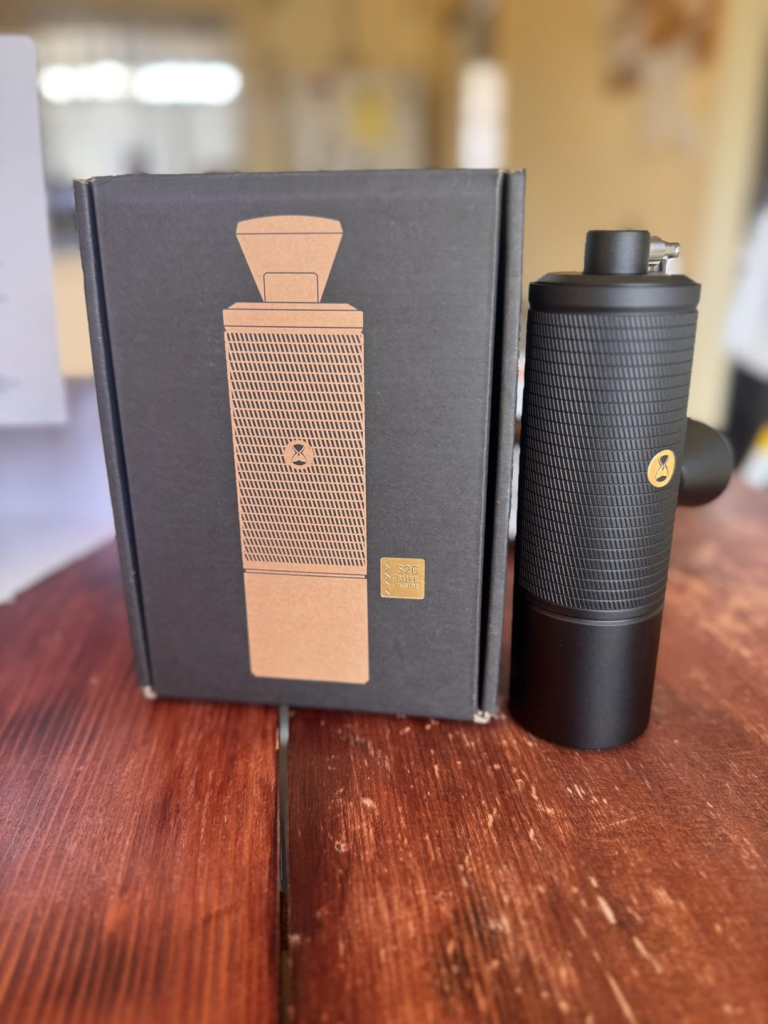
TIMEMORE CHESTNUT C2S
I remember the exact morning this stopped being abstract for me. It was a Tuesday, the kettle had just clicked off, and the V60 I’d made a hundred times before came out thin and faintly sour — same beans, same water temperature, same pour, same everything except three clicks I’d nudged on a grinder dial the night before without thinking twice. Three clicks. That’s the whole, slightly absurd truth of manual coffee grinding: the gap between a cup you remember and one you tip down the sink usually isn’t the bag of beans you bought. It’s a number almost nobody actually looks at.
This review exists because that number, and the grinder underneath it, keeps getting talked about in the same breath as products it doesn’t really compete with. The TIMEMORE Chestnut C2S turns up in searches next to grinders three times its price and grinders half its size, and most of what’s written about it either oversells the high end of what it can do or undersells the low end. What follows is what actually happens when you put beans in this thing every day — for pour-over, for AeroPress, and yes, for the espresso machine sitting four feet from where I’m typing this.
TIMEMORE C2S GRIND CONSISTENCY: THE RESULT LOOKS FINE. THE PROBLEM ISN’T.
Pour grounds from the C2S into your palm and nothing looks wrong. The powder is fine, dry, and free-flowing — no static cling, no clumps stuck to the catch chamber walls, none of the mess you brace for with a sub-$80 hand grinder. Independent testing that dosed twenty grams at an espresso-range setting and weighed what was left behind in the chamber afterward came back with a retention figure near 0.1 percent — low enough to undercut grinders costing three to four times as much, including some built specifically around the promise of minimal retention. This is basically zero retention. The C2s, though, is genuinely “zero retention.” This is the lowest-retention grinder I’ve ever tested.
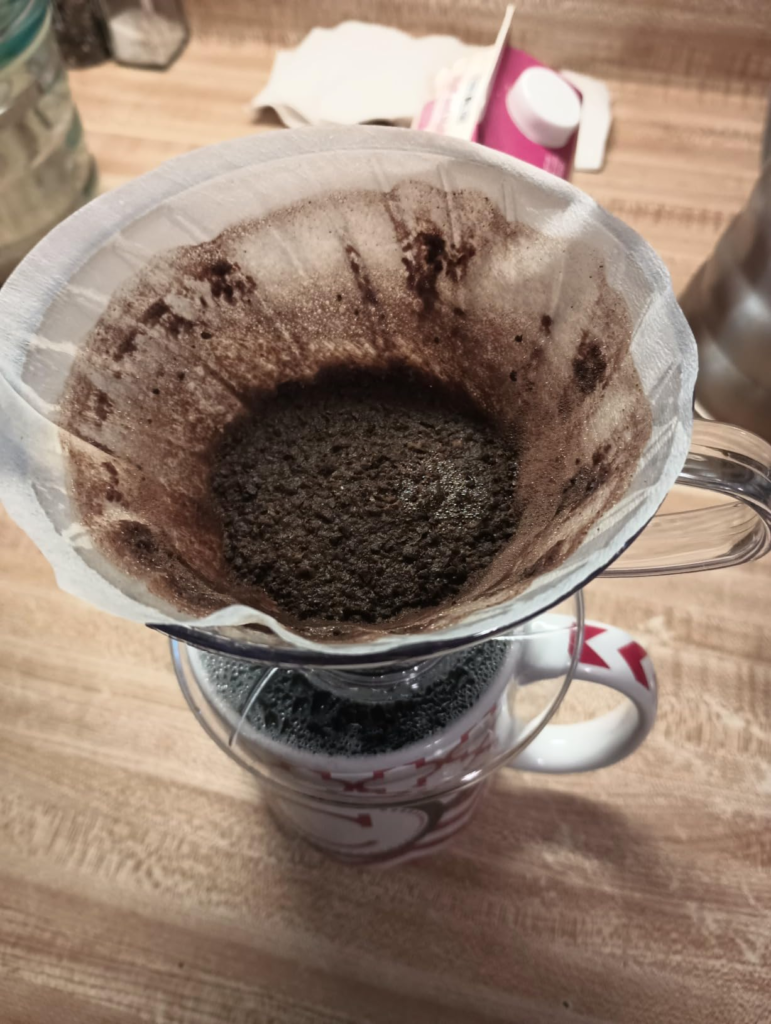
So the surface checks out. The problem lives one layer deeper, in something you can’t see by looking at a pile of grounds — particle size distribution. When the same grinder went through a sieve test, the picture got less flattering: a noticeable share of the brittle husk skin from lighter-roast beans slipped through without getting properly cut down, skewing the particle spread even though nothing about the grounds looked wrong by eye. This isn’t the most uniform grinder in the world. A lot of husk didn’t get ground.
This is the contradiction worth sitting with before you read another spec sheet: a grinder can be clean, fast, and nearly waste-free, and still not be the most consistent burr on the market. Both things are true about the C2S at the same time, and neither one cancels the other out.
TIMEMORE C2S HAND GRINDER FEEL: WHAT YOU’RE ACTUALLY FEELING BUT NOT NAMING
Here’s what nobody puts in the bullet points. The C2S doesn’t have numbers on its adjustment dial. There’s no window, no digital readout, nothing you glance at and confirm. Instead, you flip the grinder over, turn the knob clockwise until it physically stops — that’s “zero click,” the finest possible setting — then count clicks counterclockwise back out to whatever coarseness you need. Eighteen for a V60 yesterday. Twenty-two for a Chemex this morning. You’re trusting your own counting every single time, with no way to check it except finishing the grind and tasting the consequence.
I’ve handed this grinder to three different people, and every one of them did the exact same thing on first contact: their thumb searched the base for a marking that doesn’t exist. That half-second of confusion is the real, physical sensation underneath every “easy to use” claim you’ll read about this product. It is easy — once the habit is built. But why does that habit take a week or two to settle in when the mechanism itself is so simple? Because there’s nothing external to correct you when you’re wrong. Call it grind-setting amnesia: the specific, mundane fear that you’ve miscounted and your coffee is about to pay for it.
The other sensation worth naming is resistance. Coarse settings spin loose and quick. Drop toward the fine end and the crank tightens noticeably, asking for steadier pressure. That shift is actually useful information, once you learn to read it — an early, physical warning that you’re approaching the edge of what this burr handles efficiently. More on that edge shortly.
C2S BURR AND BEARING DESIGN: THE HIDDEN MECHANISM BEHIND THE MISS
Why does a grinder built around essentially the same 38mm conical burr as its predecessor suddenly feel sturdier and grind more evenly? The answer isn’t the burr. It’s everything holding the burr in place.
The original Chestnut C2 ground well but shipped with a known weak point — a partly plastic shell, including a top cover that could crack under pressure from a dense bean load or an unlucky drop. One reviewer who’d flagged the original’s heavy use of plastic as a real shortcoming came back to test the C2S months later and found the opposite experience waiting — a grinder that now felt sturdy enough that a dense bean load wouldn’t risk warping anything inside it. One of my main complaints reviewing the C2 years ago was the amount of plastic in the build. Back then, it felt like a dense light roast bean might warp something – no longer. This grinder feels burly and built to last.
Owners of that earlier model also documented something more specific on coffee forums: the inner burr’s centering could drift slightly out of true over time, especially at fine settings, producing a faint metallic scrape until it was manually corrected. One detailed forum post walked through the fix, explaining the underlying mechanics plainly — a conical burr setup only grinds evenly when the spinning inner cone sits dead-center inside the stationary outer ring, and any drift there shows up first as uneven grounds, then as the burrs rubbing against each other.
The C2S exists largely to engineer that problem out at the factory. The single bearing in the original axis became a double-bearing setup, holding the shaft steady from two points instead of one. The shaft housing itself moved from plastic to solid metal, which tightens how precisely centered the shaft stays during grinding compared to the part it replaced. The shaft housing on the Timemore C2S is made from solid metal, offering much more precise concentricity compared to the plastic assembly used in the previous version. The dial, the handle knob, and the outer shell all followed the same plastic-to-metal path.
None of this changed the core cutting geometry — you’re still working with a 38mm CNC-machined stainless steel conical burr hardened to roughly 55–58 HRC, sharp enough to bite into a dense bean almost instantly. What changed is how steady that burr stays while it’s cutting, which is exactly the kind of upgrade that never makes a headline but always shows up in the cup.
| Spec | What It Actually Means |
|---|---|
| Burr | 38mm CNC stainless steel, conical, ~55–58 HRC hardness |
| Adjustment range | ~36 click positions, ~0.083mm (83 microns) per click |
| Click system | Internal “zero click” reference point — no visible numbers |
| Hopper capacity | ~25g per load |
| Body | Full metal CNC aluminum unibody |
| Bearing | Double-bearing axis (upgraded from the C2’s single bearing) |
| Weight | Around a pound and a half (~700g) |
| Cleaning | Dry brush or bellows only — never water |
| Warranty | 1 year |
| Typical price | Roughly $75–80 USD |
TIMEMORE C2S ESPRESSO GRIND RANGE: THE THRESHOLD WHERE THE OUTCOME QUIETLY BREAKS
Somewhere around click 10 to 12, counted out from zero, this grinder crosses from doing its job well into doing a job it was never quite built for. That line deserves to be drawn precisely, because almost nobody selling this product draws it for you.
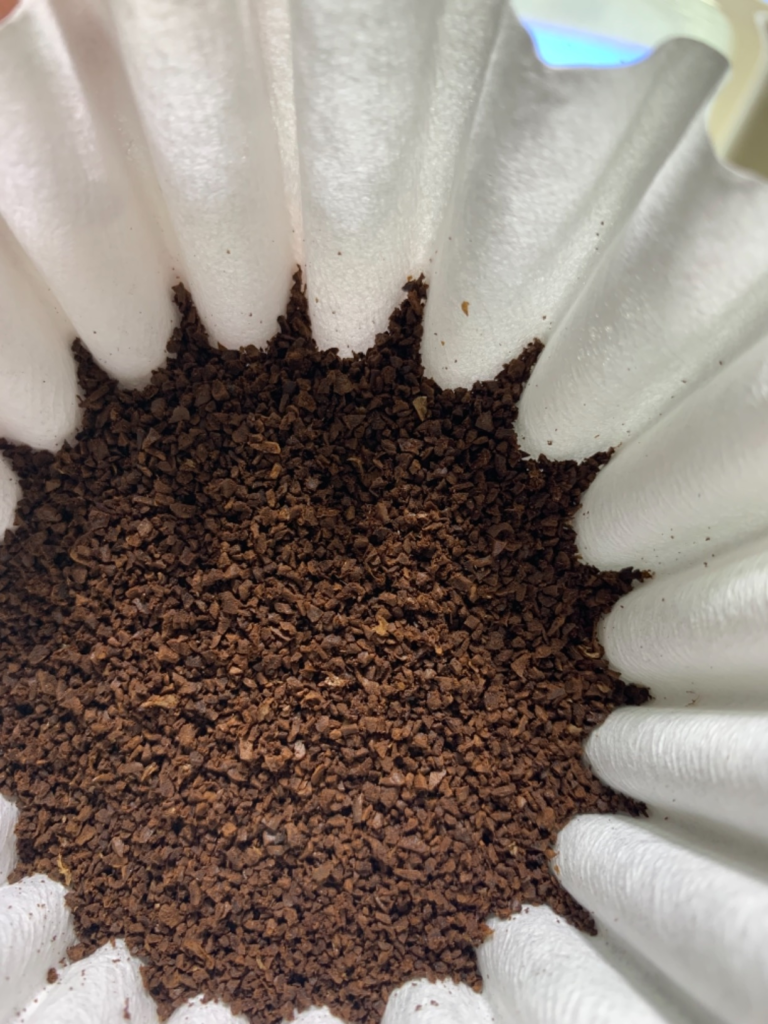
Below that range — coarser, toward 18 clicks and up — the C2S is genuinely good. A fifteen-gram dose for a V60 comes out the bottom in under thirty seconds, and the resulting grounds hold tight through the medium-fine to medium-coarse range, exactly where pour-over, AeroPress, and drip brewing live, loosening only slightly once you push toward coarse settings for French press. It took me less than 30 seconds to grind 15 grams of coffee for a V60. The coffee grounds are very uniform from medium-fine to medium-coarse, which puts it in the ideal range for brewing methods like pour-over, Aeropress, and drip machines. It drops off a little at the coarser settings. Thirty-six total click positions span that whole range, each one moving the burr roughly eighty-three microns — a resolution one long-term tester called far from the finest available, but plenty for genuinely dialing in a Chemex or V60.
Push past the threshold, into true espresso territory, and the mechanism starts working against itself. One detailed breakdown of compatible machines gets specific about where the line actually sits: for home machines running a pressurized, dual-layer basket — common in plenty of Breville and De’Longhi models — somewhere around ten to twelve clicks back from zero can produce a workable shot, but the grinder simply isn’t built to serve machines with a genuine single-layer portafilter basket, the kind serious espresso setups rely on. For some home espresso machines, such as Delonghi and Breville with a dual-layer filter basket, the Timemore C2S performs well. The ideal grind size for these machines is between 10-12 clicks. The Timemore C2S is not capable of grinding espresso for professional machines.
Why does a dial that can technically click down that far still fail at the job? Because “fine enough” and “fast enough” are two separate promises, and the burr’s geometry only keeps the first one near that edge. One reviewer who pushed an earlier Chestnut grinder sharing this same core burr design into full espresso range described a single dose taking well over three minutes of effortful cranking instead of the usual thirty seconds — the dial moved fine, the burr’s bite simply wasn’t built for that zone.
| Brew Method | Approx. Clicks from Zero | Verdict |
|---|---|---|
| French press / cold brew | ~28–34 | Comfortably inside range |
| Chemex | ~22–26 | Comfortably inside range |
| Pour-over (V60, Kalita) | ~18–22 | The sweet spot this burr is built for |
| AeroPress | ~15–20 | Comfortably inside range |
| Moka pot / Vietnamese phin | ~10–14 | Workable, needs a little patience |
| Home espresso, pressurized basket | ~10–12 | Functional ceiling — usable, not effortless |
| Single-basket espresso machines | below ~8–10 | Where it quietly breaks |
Treat these as a starting compass, not gospel. Roast level and bean density nudge every number by a click or two.
C2S VS 1ZPRESSO Q-AIR AND THE OLD C2: WHY MOST BUYERS MISREAD THIS TOO EARLY
Most people don’t actually compare grinders on the variable that matters. They compare on price, or on whichever name surfaced first in a search, or on whichever listing has more reviews stacked up — which is exactly how a shopper looking at a 1Zpresso Q-Air ends up staring at a TIMEMORE C2S page wondering if these are the same decision wearing two different labels. They aren’t, and the real difference has nothing to do with brand loyalty.
The Q-Air is smaller and lighter by a wide margin — under 365 grams, compact enough to nest inside an AeroPress for travel. The grinder itself weighs in under 365 g and measures 14.5 × 15 × 4.6 cm, roughly the size of a Red Bull soda can. It’s also a little cheaper. But the trade-off runs the other way on durability and range: testing that put both grinders through the same paces found the Timemore line ahead on espresso range and overall versatility, with the all-metal build feeling noticeably sturdier in hand and producing less static during grinding. The Timemore C2 basic offers excellent grind consistency, solid build quality, and outperforms the Q‑Air when it comes to espresso range and overall versatility. Less static issues too. A separate uniformity test from another outlet found the opposite on one specific measurement — the Q-Air came back more consistent, for about nineteen dollars less.
Neither finding is wrong. They’re measuring different things, which is exactly the point: the real question isn’t “which grinder wins,” it’s “which variable do you actually need more of” — pure portability and one specific lab uniformity score, or capacity, build durability, and a wider usable range. There’s a second, smaller misread worth flagging too: the gap between the C2S and the cheaper original Chestnut C2 it replaced. The burr is the same lineage. The plastic top cover, the single bearing, and the plastic dial are not, and that’s a structural upgrade, not a cosmetic refresh.
| Part | Chestnut C2 | Chestnut C2S |
|---|---|---|
| Top cover / body | Partial plastic — known to crack under pressure | Full metal unibody |
| Bearing | Single bearing | Double-bearing axis |
| Adjustment dial | Plastic | Metal, CNC-cut |
| Handle knob | Plastic | Aluminum |
| Approx. weight | ~465g | ~700g+ |
BEST MANUAL COFFEE GRINDER FOR POUR-OVER: WHO IS ACTUALLY INSIDE THIS PROBLEM
Strip away the spec sheet and there’s a fairly specific person this grinder was built for, and it isn’t “everyone who drinks coffee.” It’s someone standing roughly where I was a few years back — tired of pre-ground bags going stale in the cupboard, or tired of a blade grinder turning beans into a mix of dust and boulders, and not ready to spend three hundred dollars to fix it.
That person brews pour-over, AeroPress, Chemex, French press, or moka pot most mornings. They want a real, noticeable jump in cup clarity over whatever they were using before without learning a new vocabulary or buying a second appliance that needs an outlet. They don’t mind thirty seconds of arm work before coffee — plenty of them genuinely like the small ritual of it before the caffeine kicks in. They want low cleanup because nobody wants to be chasing static-clung grounds across a counter at six in the morning. And they want something that travels well and doesn’t need to be babied.
That’s the true fit. It’s narrower than “anyone who wants better coffee,” and it’s worth being honest about exactly where it stops.
TIMEMORE C2S ESPRESSO LIMITATIONS: WHERE WRONG-FIT BEGINS
The regret stories around this grinder almost all start the same way: someone reads “espresso to French press” on a listing, takes it at face value, and buys it as their one grinder for a single-basket espresso machine. Within a few weeks they’re standing at the counter for three or four minutes per dose, pulling shots that channel or run uneven, wondering what they did wrong. The honest answer is nothing — they bought a grinder one threshold away from the job they actually needed it to do.
The other regret pattern is quieter and shows up later: someone brewing for three or four people each morning, refilling the 25-gram hopper twice per pot, slowly noticing that a small daily inconvenience compounds across a year of mornings. Neither of these is a defect. It’s a mismatch between the tool and the job, and the fix is knowing about it before the order ships, not after.
| Who You Are | Fit |
|---|---|
| Upgrading from pre-ground or a blade grinder for pour-over, AeroPress, or French press | True fit |
| Daily moka pot or Vietnamese phin drinker | True fit |
| Occasional home espresso, pressurized/double-layer basket machine | Near fit — workable, not effortless |
| Daily single-basket espresso, puck-prep enthusiast | False fit — wrong tool for the job |
| Brewing for four or more people each session | Near fit — expect a reload |
| Wants zero hand-crank effort | False fit — this is a manual grinder, full stop |
WHEN THE TIMEMORE CHESTNUT C2S MAKES SENSE: THE ONE SITUATION WHERE THIS PRODUCT BECOMES LOGICAL
If you’ve read this far and you’re a pour-over, AeroPress, Chemex, French press, or moka pot drinker — not chasing single-basket espresso, not brewing for a houseful of people every morning — the TIMEMORE Chestnut C2S stops being one option among many and becomes the logical pick. Not because it wins every individual test. It doesn’t; the Q-Air beat it on one specific uniformity measurement, and a $300 grinder will out-resolve it in a side-by-side cupping. It’s logical because, at this price and within this brewing range, almost nothing else combines a near-zero retention rate, a full metal build that fixed a documented predecessor’s weak point, and a click range wide enough to cover moka pot and the occasional pressurized-basket espresso without owning a second grinder.
If portability is the only variable that matters to you — if this needs to disappear into a backpack pocket or nest inside an AeroPress — the Q-Air remains a fair, honest alternative for that narrower need, and I’d rather say that plainly than pretend one grinder is right for every situation. But for the daily, multi-method coffee drinker this article opened with, the C2S is the one that earns its place on the counter.
TIMEMORE C2S PROS AND CONS: WHAT IT SOLVES, WHAT IT REDUCES, AND WHAT IT STILL LEAVES TO YOU
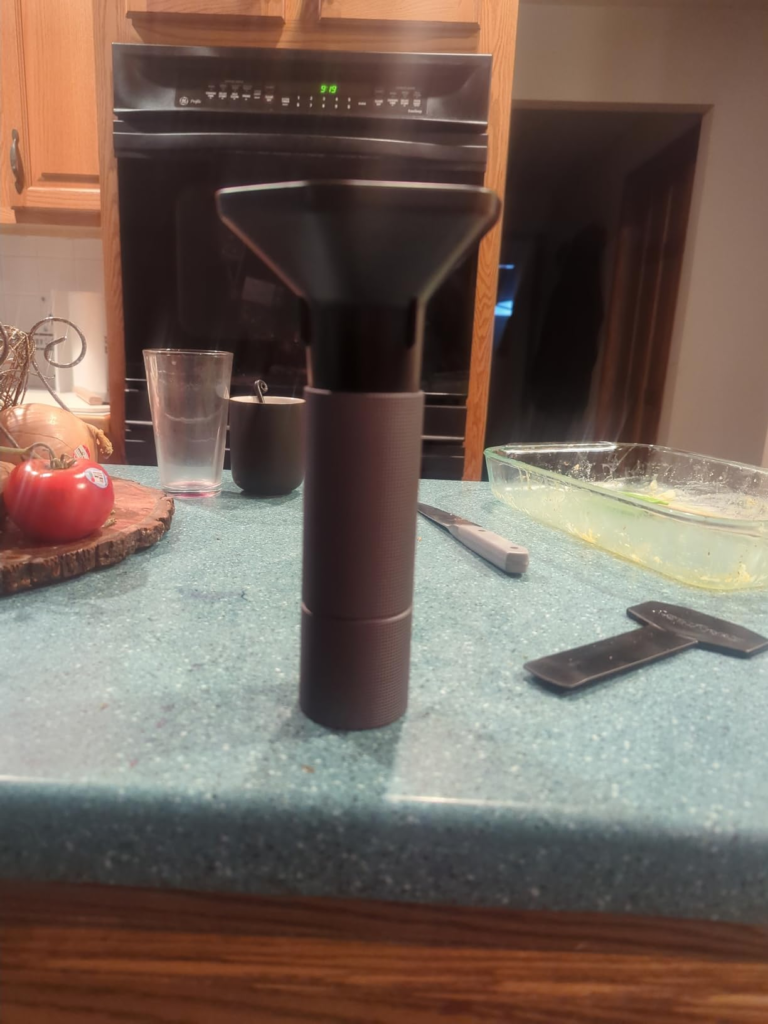
What it solves is staleness and guesswork. Buying whole beans and grinding fresh, right before brewing, is the single biggest upgrade most people can make to their coffee, and the C2S removes every excuse not to — no outlet, no loud motor, no counter space sacrificed to a machine that only does one thing.
What it reduces is waste and mess. Retention near zero means almost none of yesterday’s grounds carry over into today’s cup, and low static means you’re not chasing powder across the counter with a damp finger every morning.
What it still leaves to you is the labor and the discipline. Nobody else is turning the crank for you, and nobody else is remembering your click count if you don’t build the habit yourself. You’re also still the one drawing the line at espresso — the grinder will let you click past where it stops being efficient, and it’s on you to recognize that boundary instead of fighting it for three frustrating minutes every morning.
TIMEMORE Chestnut C2S Review FAQ: Quick Answers Before You Decide
| Question | Answer |
|---|---|
| Can the TIMEMORE Chestnut C2S actually grind fine enough for espresso? | Technically, yes — the dial clicks down far enough. Practically, it depends on your machine. For a pressurized, dual-layer basket, somewhere around 10 to 12 clicks from zero gets you a workable shot. For a true single-basket portafilter, the burr loses traction at that range, and a normal dose can take several minutes instead of thirty seconds. If espresso is your main brew method, this isn’t the grinder built for it. |
| How many clicks should I use for pour-over or V60? | Most owners land somewhere between 18 and 22 clicks from zero for a V60 or Kalita-style brewer, nudging toward 22 to 26 for Chemex. Bean density and roast level shift this slightly, so treat it as a starting point and adjust by taste. |
| Is the C2S actually worth it over the older Chestnut C2? | If you’re buying new, yes, and it isn’t close. The C2S replaces the C2’s plastic top cover — a documented failure point — with a full metal unibody, upgrades the single bearing to a double-bearing axis, and swaps the plastic dial and handle knob for metal ones. The parts most likely to wear out or crack are no longer plastic. |
| Does it create a lot of static or mess? | Less than you’d expect from a sub-$80 grinder. Independent testing measured retention at roughly 0.1 percent, and static clumping ran low enough that a separate distribution tool often isn’t necessary. It won’t beat a $300 grinder on raw particle uniformity, but mess isn’t where this one loses. |
| How long will the burrs actually last? | The conical burr is hardened stainless steel in the 55 to 58 HRC range — durable enough that daily grinding for a couple of years without a noticeable drop-off is the normal experience long-term owners report. It isn’t a part you should expect to replace early. |
| Can I clean it with water? | No. Timemore specifically warns against rinsing the chamber or burrs, since trapped moisture can rust the steel over time. Use the included brush or a small bellows blower between grinds, and keep any deeper teardown clean completely dry. |
| Is the 25-gram hopper enough for daily use? | For one or two cups, yes — it’s a normal size at this price point. If you’re regularly grinding for three or more people in one go, you’ll be reloading mid-session, which is worth knowing before you buy, though it’s an inconvenience rather than a dealbreaker. |
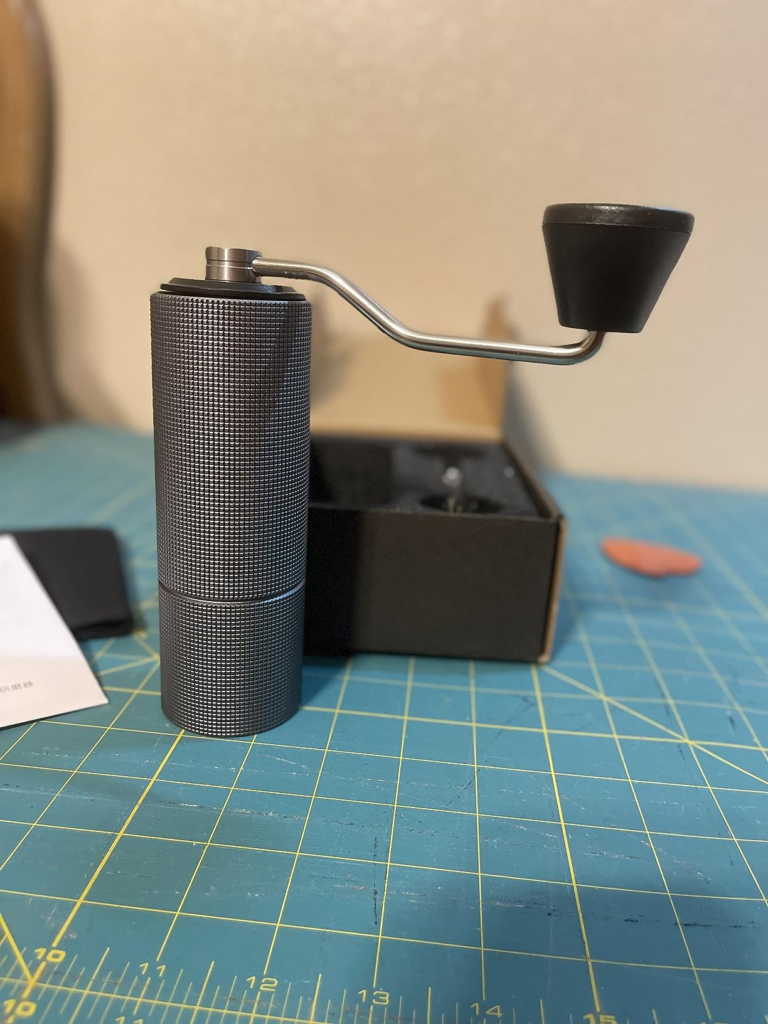
TIMEMORE Chestnut C2S Review Verdict: Final Compression
Here’s the whole review compressed into one line: this grinder does its best work somewhere between roughly 14 and 26 clicks, and it quietly stops being the right tool below that — not because it’s poorly made, but because that’s a different job entirely.
If pour-over, AeroPress, Chemex, French press, or moka pot is actually your daily brew, and single-basket espresso was never really the plan, the decision here is about as clear as these things get: [TIMEMORE Chestnut C2S Manual Coffee Grinder]
Transparency Note:
This analysis is built on aggregated real-world experience.
It extracts what repeatedly holds, what breaks, and what users uncover only after living with the system—then shapes it into a clear model you can use immediately.
Think of it as structured experience, refined and presented so you don’t have to learn it the hard way.
“A quick note: Don’t believe the star ratings, but trust personal experience. This article is a compilation of collected experiences”