The “Hands-Free” Robot Vacuum Myth (And Why Home Chaos Breaks Autonomy)
ANALYSIS FRAMEWORK
The most expensive mistake I see people make with robot vacuums is treating performance like a single number—suction, Pa, “strong” vs “weak.”
The real problem is variance: the daily mismatch between what the robot expects your home to be and what your home becomes after chairs move, rugs shift, pet hair spikes, and crumbs land in awkward places.
That mismatch is what turns “autonomous cleaning” into “management.”
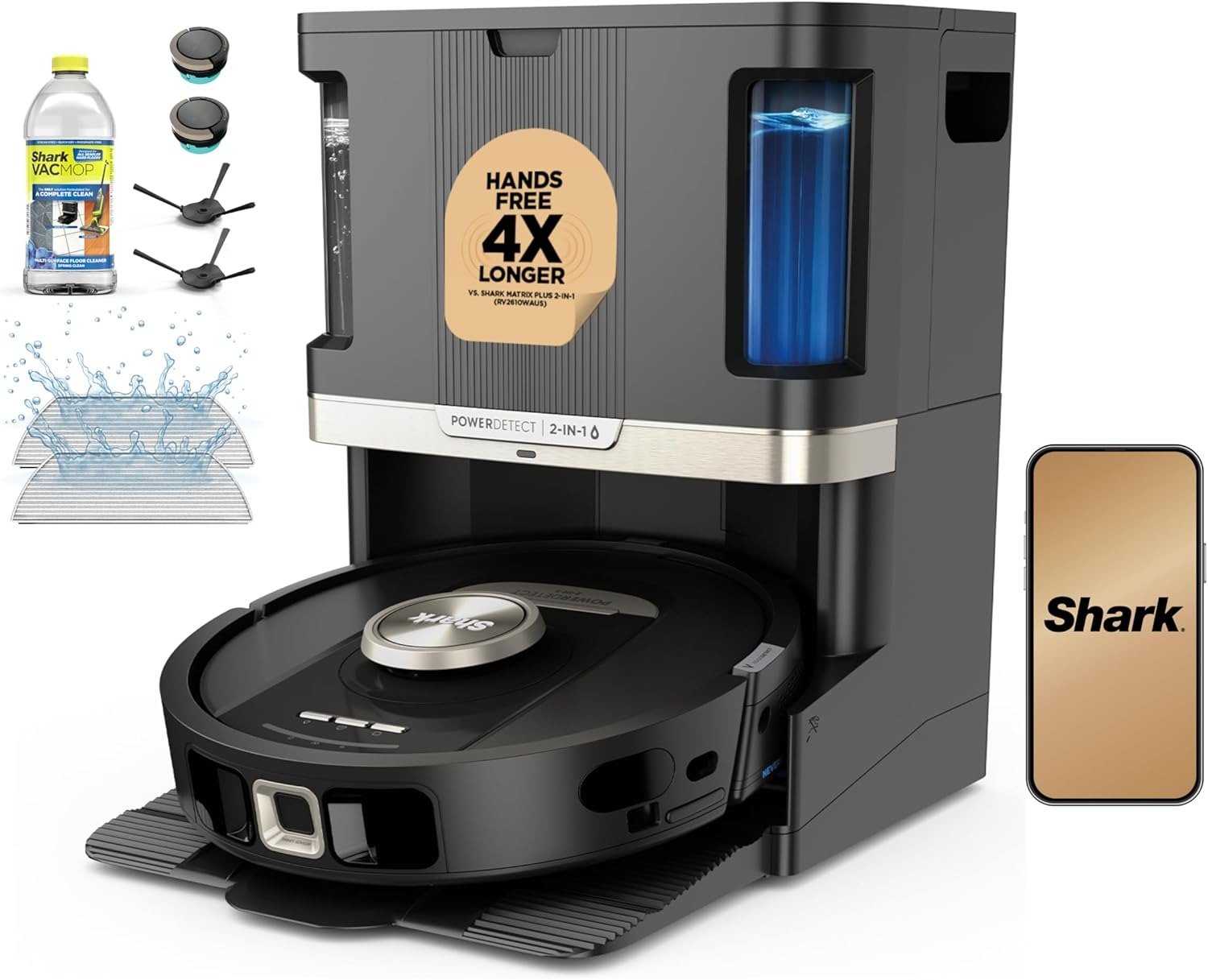
Shark’s PowerDetect NeverTouch Pro platform (AV2800ZEBK) is built around that reality: not just vacuuming and mopping, but detecting dirt/stains, reacting at edges, crossing thresholds, and offloading maintenance to a base that self-empties debris, refills water, and washes/dries the pad.
The Hidden Enemy Is Not Dirt. It’s Uneven Dirt + Daily Micro-Changes
In real homes, mess isn’t evenly spread. It clusters:
- Edges and baseboards (where grit “parks” and makes rooms feel dirty even when the center looks fine)
- Rug borders and thresholds (where pickup and navigation variance rise)
- Dining + entry zones (where particles bounce, scatter, and settle unpredictably)
This is why edge performance becomes a psychological trust test: when edges stay gritty, people stop believing schedules matter.
Shark explicitly targets edges with an air-blast behavior while vacuuming and a pad extension while mopping.
“No You Required” Depends on One Variable: Transition Chaos
From the patterns I see repeated, the deciding variable isn’t “how dirty your home is.”
It’s how often the floor plan changes between runs:
- chairs pulled out and pushed in
- clutter drift (cords, toys, pet bowls)
- mixed surfaces (rugs + thresholds + tight legs)
Shark’s stack tries to reduce this with mapping and obstacle/threshold behaviors, including lifting itself over obstacles/thresholds for broader coverage.
But owners still describe runs that feel inconsistent—cleaning a different area than requested, odd routing, and “it does what it likes” moments.
That’s not “bad suction.” That’s variance under transition load.
Why People Love It… and Why Others Get Irritated Fast
What tends to create strong satisfaction:
- hard-floor cleaning that looks “finished,” especially near edges
- reduced daily maintenance because the base handles the messy parts
- strong pickup for common irritants like pet hair / litter (a recurring theme in user talk)
What tends to trigger frustration:
- app/control limitations for people who want fine-grained behavior tuning
- maintenance side-effects like base/pad odors or weird post-run noises in some setups
The Only Next Step That’s Worth Your Time
If autonomy is your goal, you don’t need another “review.”
You need a decision filter that measures how autonomy compresses as your home gets more chaotic—and what “hands-free” realistically means under your usage.
Read the decision model here:
Transparency Note: This analysis is not a passing personal opinion; it is the result of synthesizing feedback from real buyers, documented reviews, and technical documentation. The objective is to present a clear, structured interpretation of the data, free from personal bias.