Blueair Blue Pure 511i Max Review: The Quiet Test Most Bedrooms Fail
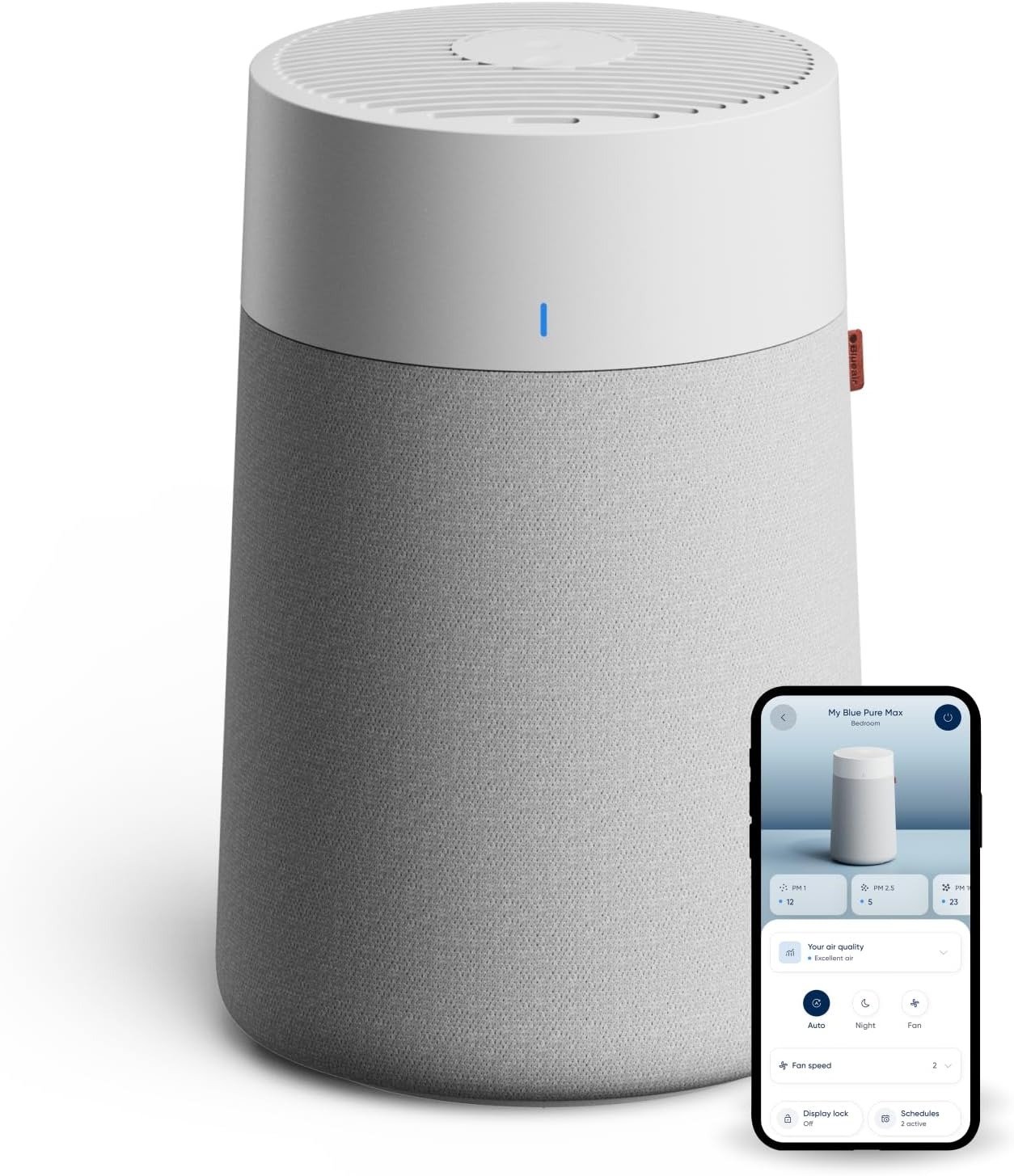
BLUEAIR BLUE PURE 511I MAX
You wake up groggy in a room that looks spotless. Bed made, floor clear, nothing visibly wrong. And yet your throat is dry, your partner’s nose is stuffed, the cat hair you vacuumed yesterday is somehow back on the nightstand. Nothing in the room looks like a problem. That’s exactly why most people never fix it — the failure is invisible, and the eye test keeps passing.
This is a hands-on review of the Blueair Blue Pure 511i Max, the smart, app-connected version of Blueair’s smallest purifier line (model B08KPJ76RR) — not the manual base “511,” which is a different machine at a different price. I pulled apart its official specs, cross-checked them against independent lab testing, Consumer Reports data, and hundreds of real owner reports, and ran it the way a bedroom purifier actually gets used: left on, mostly ignored, judged only when something goes wrong.
The Result Looks Fine. The Problem Isn’t.
A clean-looking room and clean air are not the same claim. PM2.5, pollen fragments, dust-mite debris, and pet dander are small enough to stay suspended and invisible while doing the thing that actually bothers you — irritated eyes, disrupted sleep, a low-grade stuffiness that never quite resolves.
The 511i Max is built to close that specific gap. Its HEPASilent system combines a mechanical filter with an electrostatic charge, and Blueair’s own testing claims it captures 99.97% of airborne particles down to 0.1 microns — smaller than the 0.3-micron benchmark used to certify standard HEPA filters. That’s a meaningful difference on paper. Whether it’s a meaningful difference in your room depends entirely on the next three sections.
What You’re Actually Feeling but Not Naming
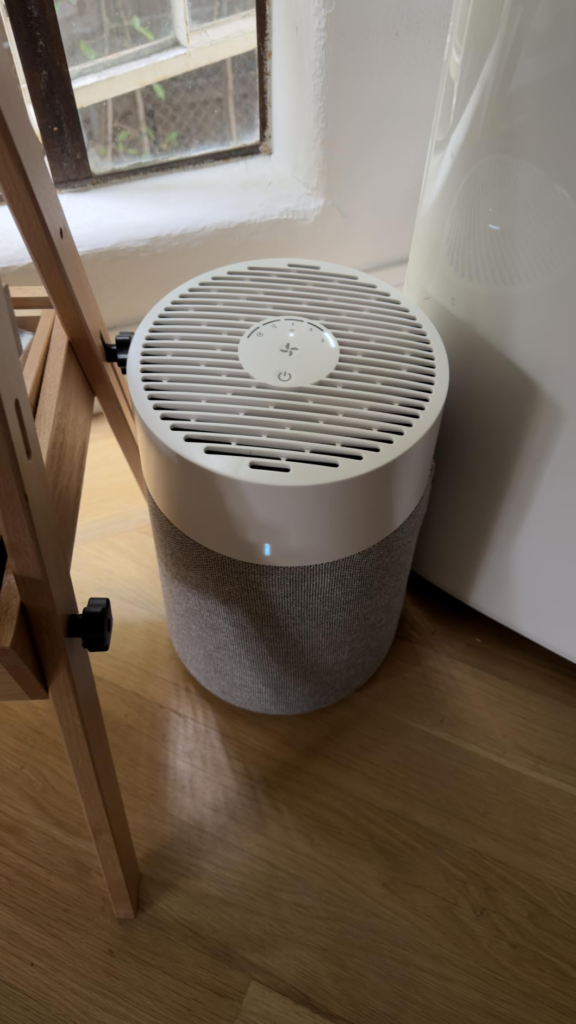
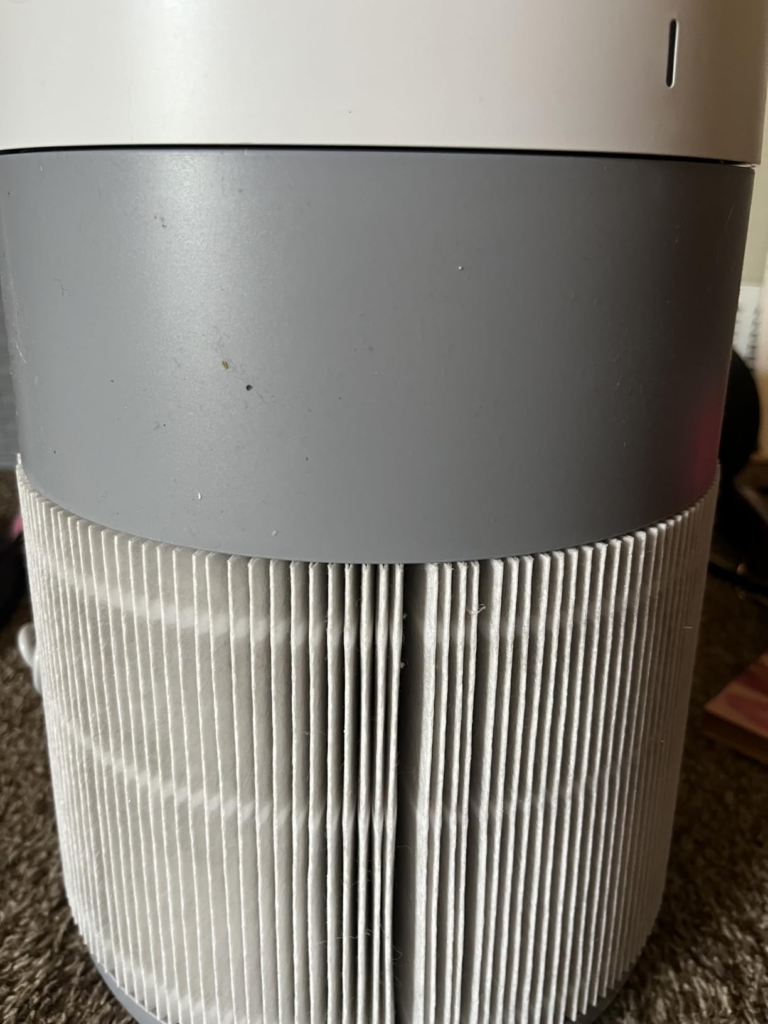
If you’ve owned an air purifier before and felt underwhelmed, the usual culprit isn’t filtration quality — it’s one of three things you never measured: room size relative to the unit’s real coverage, how often pollutants get reintroduced into the room, and which fan speed the unit actually runs on day to day.
A purifier rated for “your room size” on a spec sheet and a purifier that keeps up with a room that has an open window, a litter box, or a shedding dog in it are two different jobs. Several long-term owners running this exact unit in small bedrooms still reported lingering odor or nasal symptoms — not because the machine underperformed its CADR, but because the room kept generating new pollutants faster than a single pass could clear, often while the unit sat on a low or auto setting rather than running harder during peak load.
The Hidden Mechanism Behind the Miss
Here’s the variable most buyers never see before purchase: Blueair recently updated its room-coverage numbers to match new DOE measurement standards, and the current official figures are noticeably different from what older retail listings and boxes still show.
The current, DOE-aligned numbers from Blueair: the 511i Max clears a 237 sq ft room in 12.5 minutes, 569 sq ft in 30 minutes, and 1,138 sq ft in one hour. Older listings — and some boxes still in circulation — show smaller figures (roughly 193 / 465 / 926 sq ft) from before the recalculation. Same machine, two sets of numbers, depending on which packaging or page you’re reading. That’s not a performance change; it’s a measurement-standard change. But if you’re comparing this unit against a competitor using old numbers, you’re not comparing like for like.
The other hidden variable: AHAM certifies CADR separately for smoke, dust, and pollen — not as one number. Independent testers have published figures for this unit ranging from roughly 125 CFM up to around 160 CFM depending on which of those three they’re citing. Notably, Blueair’s own current product page no longer leads with a single raw CADR number at all — it leads with the room-coverage figures instead.
The Threshold Where the Outcome Quietly Breaks
AHAM’s own guidance recommends a purifier deliver close to 4.8 air changes per hour for meaningful particle control. That’s the real basis for Blueair’s “237 sq ft” figure — not the bigger numbers on the box. Below that line, this unit performs at its rated capability. Past it, you’re stretching the same airflow across more cubic feet, and the “set it and forget it” advantage starts to erode.
| Room size | What actually happens |
|---|---|
| Up to ~237 sq ft (bedroom, nursery, home office) | Meets AHAM’s recommended air-change rate at sensible fan speeds — this is the threshold the unit is engineered around |
| ~240–450 sq ft | Still functional, but needs higher fan speed more often, and quiet “auto mode” comfort starts to disappear |
| 450+ sq ft (open living room, studio) | CADR is stretched thin; clearing smoke or odor surges takes noticeably longer; this is no longer the right tool for the space |
Why Most Buyers Misread This Too Early
The single most common mistake in this product line isn’t about performance — it’s about which “511” someone actually buys. Blueair sells three machines under near-identical names, and people regularly order the wrong one because the difference isn’t obvious from a thumbnail.
| Model | Controls | Optimal coverage | Typical price | Built for |
|---|---|---|---|---|
| Blue Pure 511 (base) | Manual buttons, 3 speeds, no app | ~180 sq ft | Lowest tier | Buyers who actively don’t want an app or WiFi |
| Blue Pure 511i Max (this review) | App + manual, Auto/Night modes, WiFi | ~237 sq ft | Mid tier | Bedrooms, offices, nurseries wanting automation and a quiet sleep mode |
| Blue Pure 311i Max | App + manual, WiFi, QuietMark certified | Rated for much larger rooms | Higher tier | Living rooms and open-plan spaces beyond ~400 sq ft |
If your room is small and you don’t care about app control, the base 511 is cheaper and does the core job. If your room is genuinely large, the 511i Max will run hot and loud trying to keep up — that’s not a flaw in the unit, it’s the wrong-size tool. The 511i Max earns its price specifically in the middle: a real bedroom or office, with real automation, at a size where its numbers hold up.
Who Is Actually Inside This Problem
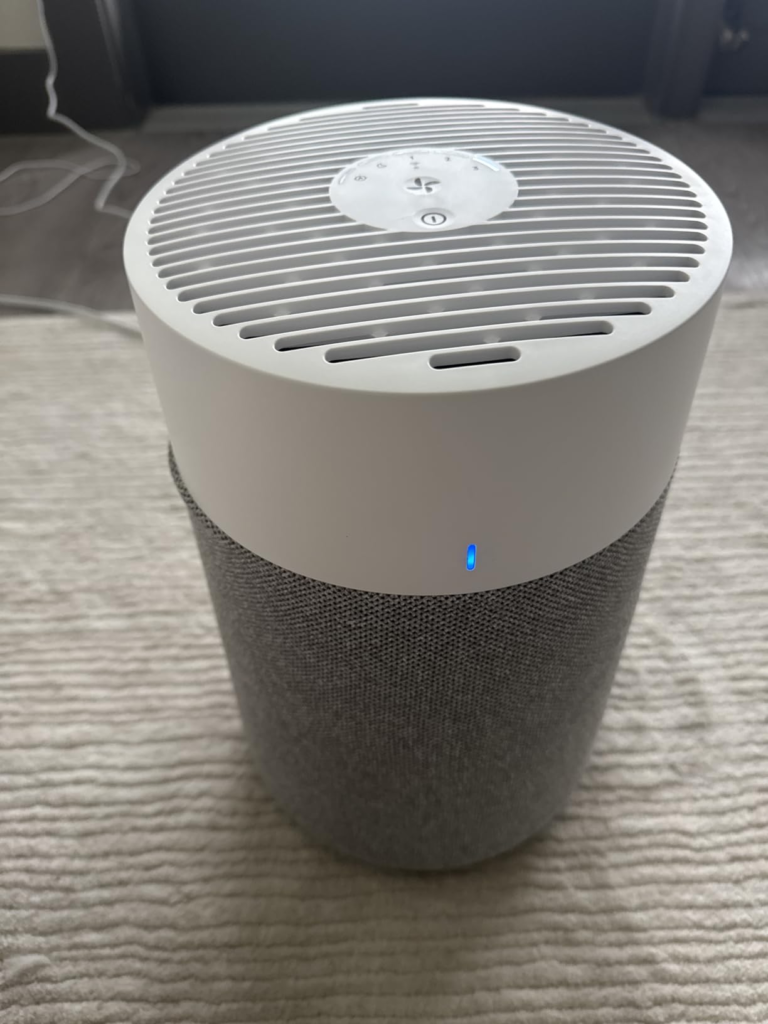
This unit fits cleanly if your situation looks like one of these: a bedroom or home office under roughly 250–300 sq ft where sleep quality and quiet operation matter more than raw power; a household with mild-to-moderate allergy or pet-dander concerns rather than severe asthma needing maximum filtration; someone who wants the air purifier to mostly run itself — auto mode, schedules, a “Welcome Home” trigger — without daily manual adjustment; and someone who values a near-silent night mode (19 dB) over a louder unit that clears air faster.
Where Wrong-Fit Begins
The regret pattern shows up consistently in owner feedback, and it clusters around a few specific mismatches rather than random bad luck.
- Room too large. Anyone running this in an open-plan living area or a room well past 400 sq ft reports it working harder and slower than expected — the unit isn’t underbuilt, the room is oversized for it.
- Expecting smart-home depth. Native Blueair app control works well, but third-party Apple HomeKit or Home Assistant integration is unofficial and reportedly inconsistent, with delayed sensor polling. If tight ecosystem integration is the deciding factor, this isn’t the strongest entry point.
- Zero tolerance for any motor sound. Most owners describe 19 dB as genuinely unobtrusive, but a small number report an audible low hum even on the lowest setting — worth knowing if you’re sound-sensitive at night.
- Resenting recurring cost. Replacement filters run roughly $35–$45 each and are needed every 6–9 months in normal use, faster with pets or heavy dust. If ongoing filter spend feels like a hidden tax rather than expected maintenance, that frustration shows up repeatedly in reviews.
- First-day off-gassing. New units commonly release a faint plastic or carbon smell for the first 24–48 hours. It’s a known, temporary break-in effect — not a defect — but it does catch first-time buyers off guard.
The One Situation Where This Product Becomes Logical
Once room size is correctly matched — under roughly 250–300 sq ft — and the priority is genuinely quiet, low-maintenance air control rather than maximum raw power, the math on this unit holds up. Independent testing puts it among the quieter options at its coverage class, the dual-stage HEPASilent filtration targets a smaller particle threshold than standard HEPA, and the app layer (auto mode, scheduling, filter tracking) removes the manual guesswork that causes most purifiers to get switched off or ignored within a few months.
| Spec | Blue Pure 511i Max |
|---|---|
| Filtration | 4-stage HEPASilent (mechanical + electrostatic), 99.97% down to 0.1 microns |
| AHAM-verified CADR | ~125–160 CFM (varies by pollutant: smoke, dust, pollen tested separately) |
| Optimal room size | ~237 sq ft at AHAM’s recommended air-change rate |
| Max stated coverage | Up to 1,138 sq ft in one hour (reduced effectiveness at this scale) |
| Noise range | 19 dB on low/night; low-to-mid 40s dB on high (some listings still cite 48 dB from an earlier spec) |
| Fan speeds | 1–2–3–4, Auto, Night |
| Filter life | 6–9 months typical; closer to 4 months with pets or heavy dust |
| Filter options | Particle & Carbon (standard), SmokeBlock, AllergenBlock |
| Connectivity | WiFi, Blueair app, Welcome Home geofencing, Alexa |
| Power draw | ~18–20W on high; Energy Star certified |
| Size/weight | ~14.5″ tall, ~4.2 lbs |
| Warranty | 1 year standard, extendable to 3 years with registration |
What It Solves, What It Reduces, and What It Still Leaves to You
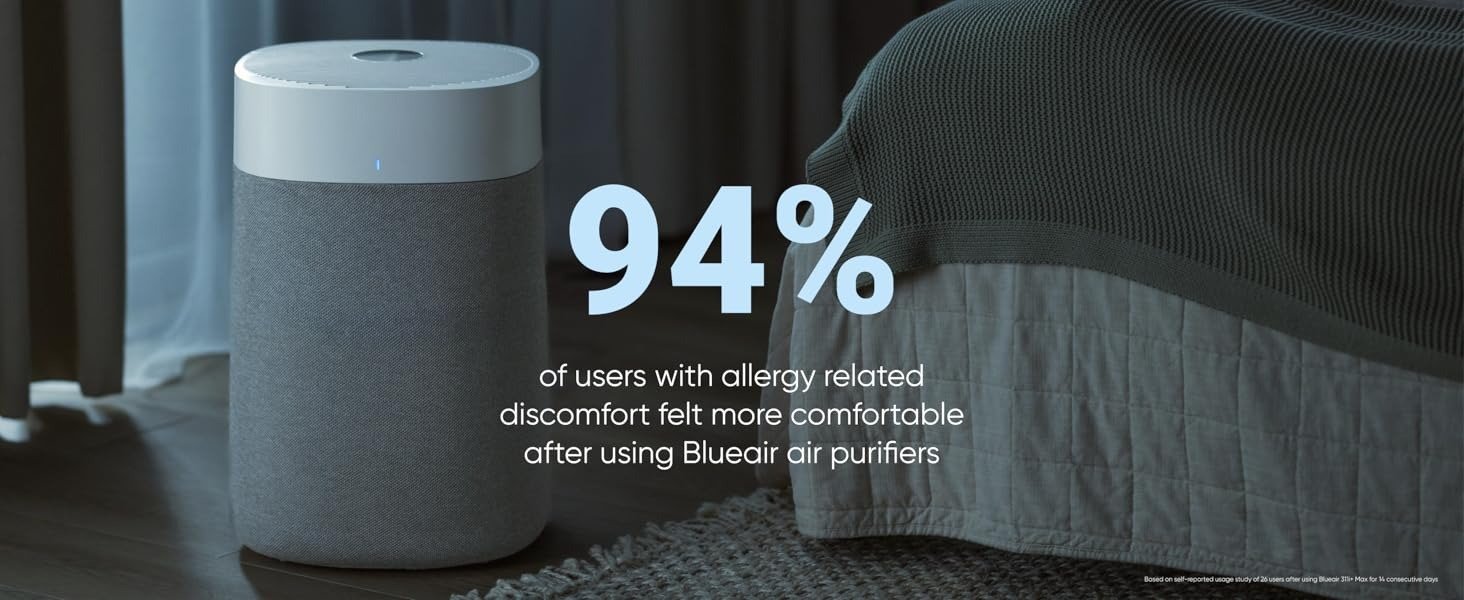
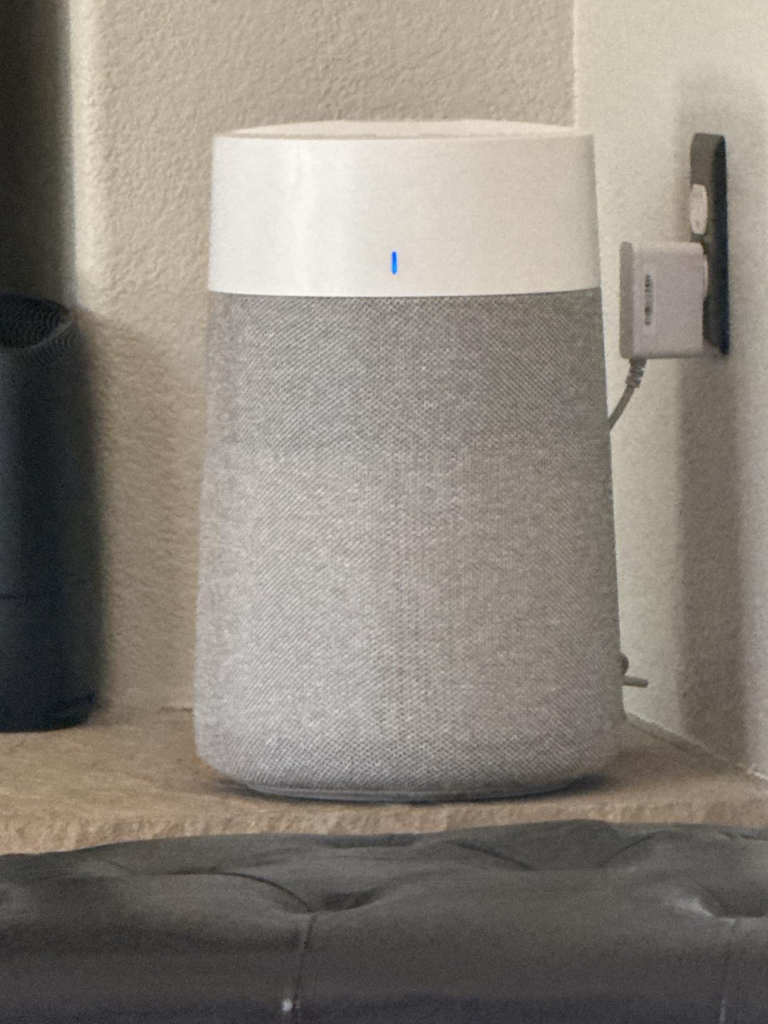
It solves the “is the air actually clean or just quiet” problem in a correctly sized room — continuous, automated filtration that doesn’t need daily babysitting. It meaningfully reduces dust, pollen, pet dander, and light odors over time, and the night mode genuinely disappears into background silence for most sleepers.
It does not eliminate a litter box across the room, replace ventilation in a smoke-heavy space, or fix a room that’s larger than its threshold. And it does not remove the recurring filter cost from your budget — that’s a standing maintenance line, not a one-time purchase.
| Annual cost item | Approximate |
|---|---|
| Unit price | $90–$140 depending on current sale |
| Replacement filter (standard) | ~$35–$45 each |
| Filters needed per year | 1–2, depending on pets/dust |
| Estimated annual filter cost | ~$40–$90 |
| Electricity (continuous low/auto use) | Roughly $1–$3/month |
Frequently Asked Questions
| Question | Answer |
|---|---|
| What room size is the Blue Pure 511i Max actually good for? | Around 237 sq ft is the sweet spot where it meets AHAM’s recommended air-change rate. It will technically run in larger spaces, but performance and quiet operation both decline past roughly 400–450 sq ft. |
| Is it really as quiet as 19 dB? | On the lowest and night settings, most independent testing and owner reports confirm it’s close to inaudible. At maximum speed, expect somewhere in the low-to-mid 40s dB — quieter than some marketing materials still list, since the spec has been revised more than once. |
| How much do filters cost and how often do they need changing? | Expect $35–$45 per filter, replaced every 6–9 months in average conditions, sooner with pets or heavy dust. The app’s RealTrack feature adjusts the estimate based on actual usage rather than a fixed calendar. |
| Does it connect to Alexa, Google Home, or HomeKit? | It works with Alexa and the native Blueair app reliably. Apple HomeKit and Home Assistant integration exist only through unofficial, community-maintained plugins, and several users report inconsistent live readings through them. |
| What’s the difference between the 511, 511i, and 511i Max? | The base 511 is manual, smaller-coverage, and cheaper. The 511i Max — the model in this review — adds WiFi, app control, auto/night modes, and a larger rated coverage area. Confirm which one you’re ordering before checkout, since listings often look nearly identical. |
| Will it smell strange when first unboxed? | A faint plastic or carbon smell in the first 24–48 hours is common and expected — it fades with normal use and isn’t a sign of a defective unit. |
Final Compression
The decision here isn’t about whether this purifier “works.” It does, within the room size it was actually engineered for. The decision is whether your space falls inside that line — roughly 250–300 sq ft, a bedroom or office rather than an open living area — and whether quiet, automated, lower-maintenance operation matters more to you than raw maximum power.
If that’s the room you’re solving for, this is where the numbers stop being theoretical and start matching what you’ll actually feel at night:
Transparency Note:
This analysis is built on aggregated real-world experience. It extracts what repeatedly holds, what breaks, and what users uncover only after living with the system—then shapes it into a clear model you can use immediately. Think of it as structured experience, refined and presented so you don’t have to learn it the hard way.
“A quick note: Don’t believe the star ratings, but trust personal experience. This article is a compilation of collected experiences”