GOOGLE NEST THERMOSTAT (RENEWED) REVIEW: IT LOOKS BRAND NEW, BUT THE SAVINGS PROMISE HAS A CATCH MOST BUYERS MISS
The Result Looks Fine. The Problem Isn’t.
You unbox it. The white casing is unmarked. The screen lights on the first try. The app finds it in seconds. Nothing about the experience says “used.”
That’s the trap. A renewed Nest Thermostat is built to look indistinguishable from a new one, and on the surface, it usually is. But the thing that decides whether this device is a smart buy or a regret was never the casing. It’s the wiring behind your wall and the support clock already running on the unit before you opened the box. Neither of those show up in the first five minutes. They show up three weeks in, when something either keeps working quietly or doesn’t.
What You’re Actually Feeling but Not Naming
If you’ve been hesitating on this purchase, it’s probably not the price. It’s a cluster of smaller doubts you haven’t put into words yet: whether “Renewed” on a thermostat means the same thing it means on a phone, whether this is even the model you think it is, and whether a $130 device that controls your heat is something you want to gamble on secondhand.
There’s also a naming problem feeding that doubt. A lot of buyers search for the “Nest Thermostat E” and land on a listing for a different, newer device — the standard Nest Thermostat. They’re not the same product, and that mismatch is worth resolving before anything else.
The Hidden Mechanism Behind the Miss
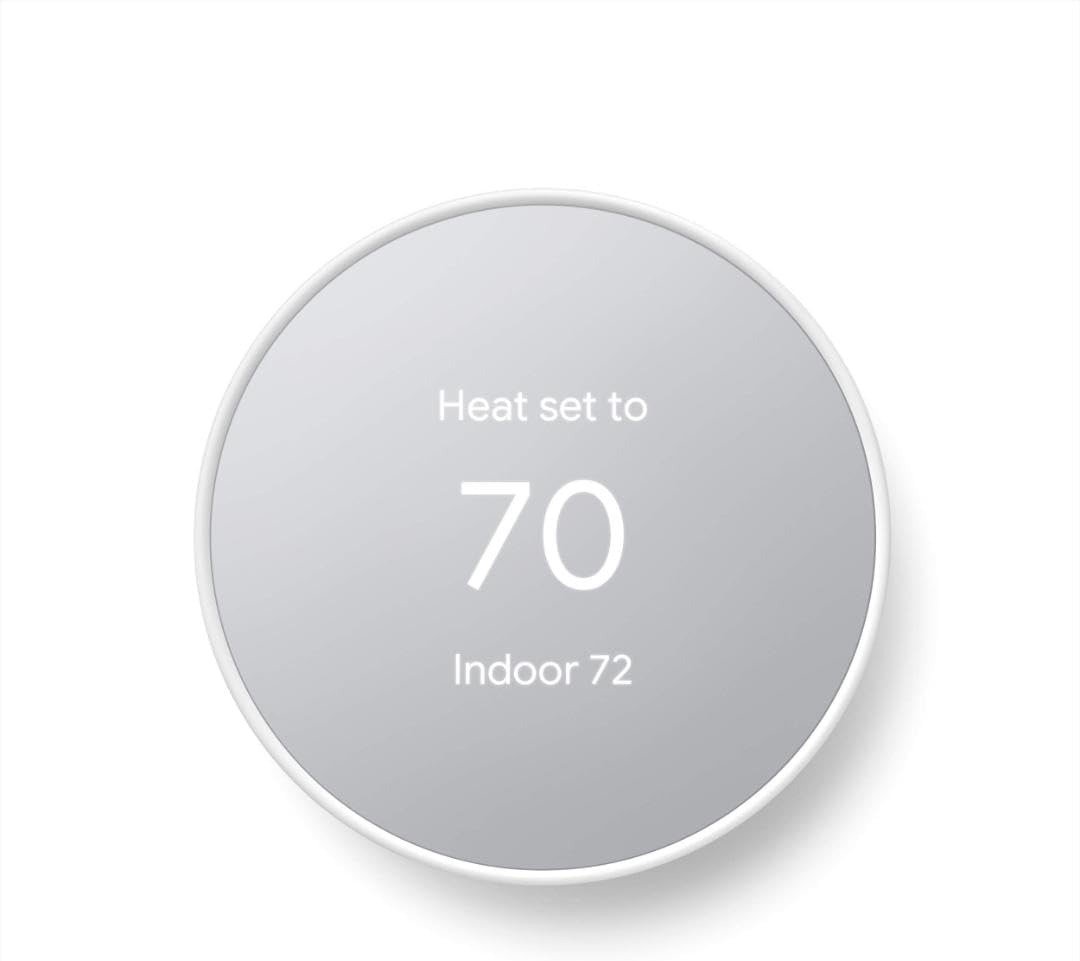
Here’s the mechanism: the unit sold under listings like this one is the Nest Thermostat, not the older Nest Thermostat E. They share a round shape and a similar price point, which is exactly why search results blur them together. The actual differences matter more than the resemblance suggests.
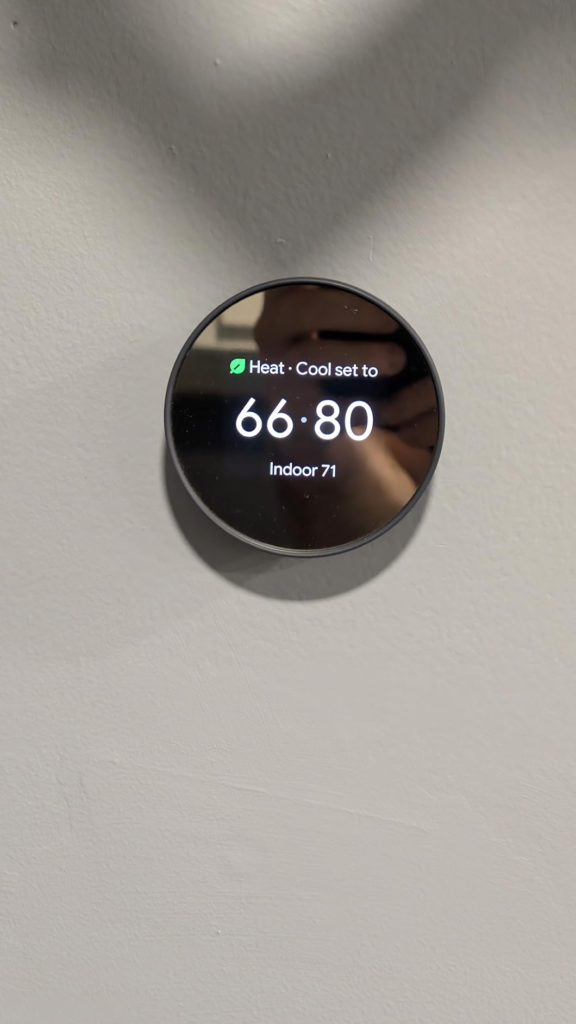
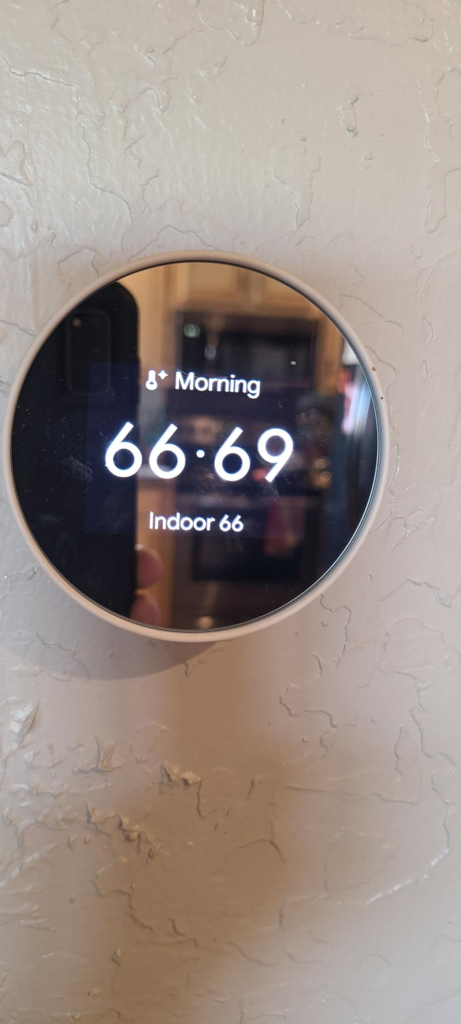
The older Thermostat E used a physical rotating ring, the way the original Nest did. This one doesn’t. Temperature changes happen through a touch-sensitive strip on the right edge of the casing, and reviewers who were used to the ring have described needing a deliberate mental adjustment to stop trying to spin it, since the touch zone isn’t visually marked and can be missed when you’re not lined up directly in front of the unit.
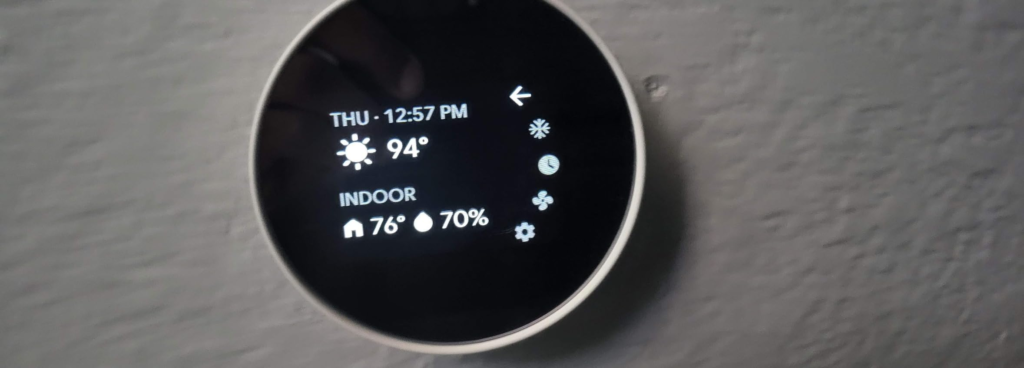
It also doesn’t carry a full schedule-editing menu on the device itself. Scheduling happens in the Google Home app, which means the thermostat needs Wi-Fi to receive changes you make remotely. And unlike older Nest hardware, it doesn’t ship with a trim plate to cover the wall marks left by your old thermostat — that’s a separate purchase if your old unit was larger. What it does include is “Quick Schedule,” a starter routine you customize, plus “Savings Finder,” which suggests schedule tweaks you accept with a tap — not the full machine-learning Auto-Schedule reserved for the pricier Learning Thermostat line.
The Threshold Where the Outcome Quietly Breaks
Every Nest thermostat without a dedicated C-wire pulls a small trickle of power from the other wires in your system to stay charged. On a simple single-stage forced-air system, that usually works fine. On heat-pump systems with auxiliary or emergency heat, on zoned multi-stage systems, and on heating-only or cooling-only setups, it frequently doesn’t, and Google’s own compatibility notes flag exactly these system types as the ones likely to need a C-wire or power accessory. When the power draw isn’t enough, the symptom isn’t a clean failure — it’s reboot loops, dropped Wi-Fi, and a thermostat that’s technically “working” but unreliable at the moment you need it most.
| HVAC System Type | C-Wire Usually Needed? | Risk on a Renewed Unit |
|---|---|---|
| Single-stage gas forced-air | Often not | Low |
| Central A/C only, single stage | Sometimes | Low–Medium |
| Heat pump with Aux/Emergency heat | Usually yes | Medium–High |
| Zoned, multi-stage system | Usually yes | High |
| Heating-only or cooling-only | Usually yes | High |
Layer the renewed condition on top of that, and the threshold gets sharper. Amazon’s Renewed Guarantee requires battery performance above 80% of original capacity, accessories equivalent to what shipped new, and a 90-day return window if something fails. That’s a real floor — but it’s a floor, not a promise of a fresh-from-factory power system. A unit that’s already done some charge cycling, installed on a wiring setup that’s already marginal, is where small problems compound instead of cancel out.

Why Most Buyers Misread This Too Early
The most common mistake isn’t picking the wrong color. It’s comparing price tags before checking wiring, then discovering the mismatch after installation — at which point a thermostat that’s “working” but rebooting every few hours doesn’t feel like a deal.
The second mistake is assuming “smart” and “Google” mean full auto-learning out of the box. This unit nudges you toward a good schedule; it doesn’t quietly rebuild your routine from scratch the way the Learning Thermostat does. The third is assuming the round shape means the rotating dial — it doesn’t, and that’s a real adjustment period, not a defect.
Who Is Actually Inside This Problem
This device fits someone with a standard 24V system — gas, electric, or a straightforward heat pump — who either has a C-wire already or can confirm a spare conductor is available in the wall. It fits someone comfortable scheduling from a phone rather than the thermostat face, who wants ENERGY STAR-rated efficiency reporting and Alexa or Google Assistant control without paying full price for deep learning features they may never use.
It does not fit someone who specifically wants the rotating-ring feel of the original Nest, someone whose system is zoned or heat-pump-only without a confirmed C-wire, or someone who assumed “Renewed” guarantees zero cosmetic wear.
Where Wrong-Fit Begins
Pull your old thermostat off the wall before you commit to anything. If you see only two wires and nothing spare tucked into the box, or if your system is a heat pump, zoned, or single-purpose heating/cooling unit, stop and check Google’s compatibility tool first. The math that makes a renewed unit a smart purchase — meaningful savings on identical core hardware — falls apart the moment you need to pay an HVAC tech to add a C-wire. At that point, the savings on the device itself stop mattering.
The One Situation Where This Product Becomes Logical
If your wiring is confirmed compatible, if you’re fine managing schedules through the Google Home app instead of the thermostat face, and if you don’t need the Learning Thermostat’s automatic learning, this renewed unit is a rational decision, not a compromise. The sensors and HVAC-control hardware inside are the same hardware running in a new unit at full price. Once it clears Amazon’s functional inspection and 90-day guarantee, the price gap against the roughly $130 list price of a new one is real money saved on a part that does the same job.
What It Solves, What It Reduces, and What It Still Leaves to You
It solves remote app control, automatic away-mode setback, voice control through Alexa, Google Assistant, or Matter, and ENERGY STAR-rated efficiency reporting. Independent EPA data on certified smart thermostats puts average savings around 8%, while Google’s own studies, measured against pre-installation bills, report 10–12% on heating and 15% on cooling — worth knowing both figures exist, since actual results vary by home.
| Factor | New Unit | This Renewed Unit |
|---|---|---|
| Core hardware and sensors | Identical | Identical |
| Price vs. ~$130 list | Full price | Meaningfully lower |
| Manufacturer warranty | 1 year, included | Not included |
| Buyer protection | Standard return window | 90-day Amazon Renewed Guarantee |
| Cosmetic condition | Sealed, unused | Light wear possible, inspected |
| Battery charge cycles | None | Some, verified above 80% capacity |
It still leaves the wiring check to you, before purchase, not after. It leaves a learning curve on the touch control. And it leaves the trim plate as a separate purchase if your old thermostat left visible marks behind.
Frequently Asked Questions
| Question | Answer |
|---|---|
| Is the renewed unit functionally the same as a new one? | Yes, in terms of core hardware. Amazon’s Renewed Guarantee requires the device to be professionally tested, with battery performance above 80% of original capacity and equivalent accessories, backed by a 90-day return window. |
| Is this the same thing as the Nest Thermostat E? | No. Despite frequent search overlap, the Nest Thermostat E used a rotating dial; this model uses touch controls and a different feature set. |
| Do I need a C-wire? | Not always. Many single-stage systems run without one. Heat pumps, zoned systems, and heating-only or cooling-only setups usually need one. |
| Will it still get app support going forward? | As of the most recent changes, only the 1st- and 2nd-generation Nest Learning Thermostats lost app support; the 3rd-generation and Thermostat E were unaffected for now. No connected device comes with a lifetime guarantee, but this model isn’t on the discontinued list. |
| What if it arrives faulty? | It’s covered by Amazon’s 90-day Renewed Guarantee — a free replacement or refund if it doesn’t work as described. |
Final Compression
Strip away the noise and the decision comes down to one check you can do in two minutes: pull off your old thermostat and look at the wires. If your system is straightforward and a C-wire is there or available, this renewed unit gives you the same control hardware as new, at a real discount, with a 90-day guarantee behind it. If your system is zoned, heat-pump-only, or missing a spare wire, no discount on the device fixes that gap.
If you’ve already checked your wiring and it fits, this is where the decision stops being vague:
Transparency Note:
This analysis is built on aggregated real-world experience.
It extracts what repeatedly holds, what breaks, and what users uncover only after living with the system—then shapes it into a clear model you can use immediately.
Think of it as structured experience, refined and presented so you don’t have to learn it the hard way.
“A quick note: Don’t believe the star ratings, but trust personal experience. This article is a compilation of collected experiences”