My Subminimal NanoFoamer Lithium Review: Your Morning Latte Looks Right. The Texture Still Isn’t.
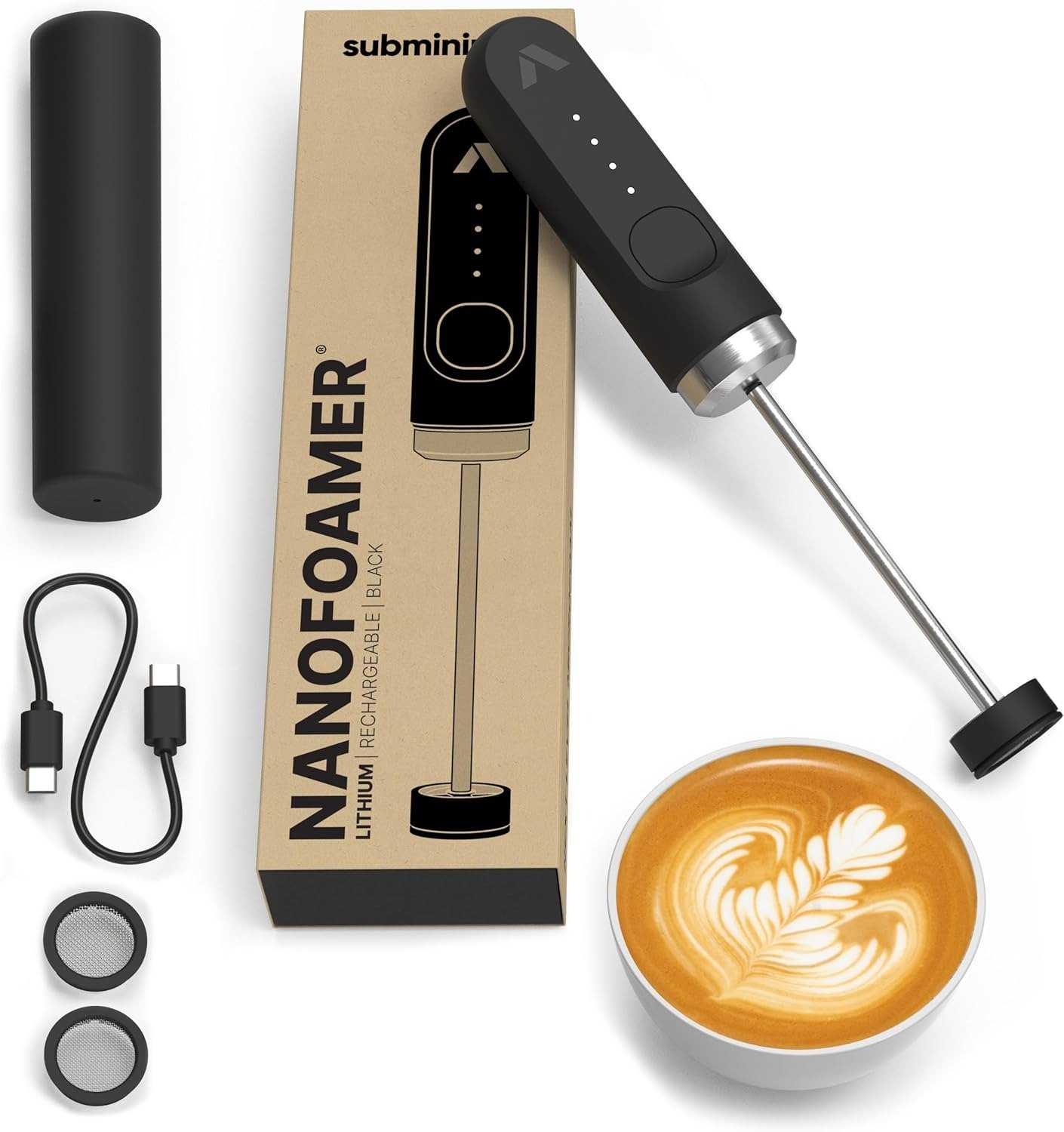
SUBMINIMAL NANOFOAMER LITHIUM
The Result Looks Fine. The Problem Isn’t.
You heat the milk. You run the foamer. You pour it into the espresso. It looks like a latte.
But it doesn’t drink like one.
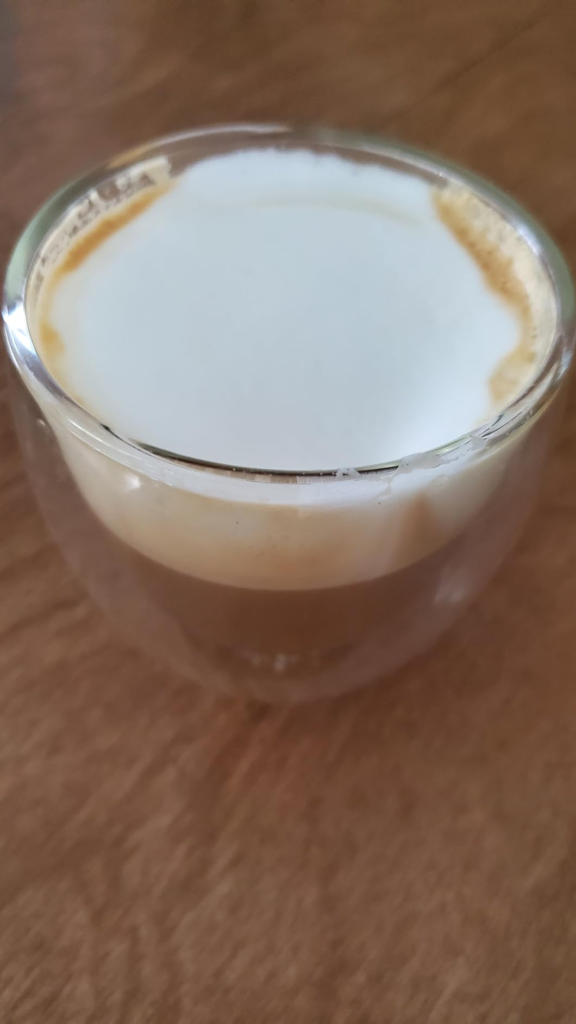
There’s a surface layer, yes. Something white and slightly elevated. If you photograph it, it passes. If you taste it — or more precisely, if you feel it — you notice the milk and coffee haven’t really integrated. The foam sits. It doesn’t flow. There’s a slight dryness at the top and a thinner, watery base underneath.
You used a milk frother. You got froth. But froth is not microfoam, and that difference is the entire reason this product exists — and the reason many buyers who already own it are still getting the wrong result.
This is not a flaw in the NanoFoamer Lithium. It is a flaw in how most people understand what they’re asking it to do.
What You’re Actually Feeling but Not Naming
The annoyance isn’t that the machine failed. The annoyance is more specific: you did everything the box describes, and the coffee still doesn’t taste the way you expected.
You watched someone make it on video and it looked effortless. You bought the same device. You warm the milk, you run it for thirty seconds, and you get something that resembles the video — roughly. But “roughly” is where all the disappointment lives.
The texture is inconsistent. Some mornings it’s closer. Some mornings it separates immediately. With oat milk, it barely holds at all. With almond milk, you get a foam that collapses before you finish pouring.
What you’re feeling isn’t dissatisfaction with a bad product. It’s dissatisfaction with an unmet expectation built on incomplete information. The gap between what you saw and what you got isn’t a gap in quality — it’s a gap in technique, and that gap was never clearly communicated before you purchased.
The Hidden Mechanism Behind the Miss
Standard milk frothers inject air into milk using a spinning whisk. The result is large, unstable bubbles — that stiff white foam that sits on top of a drink like insulation and collapses within seconds of contact with heat.
The NanoFoamer Lithium works on an entirely different principle.
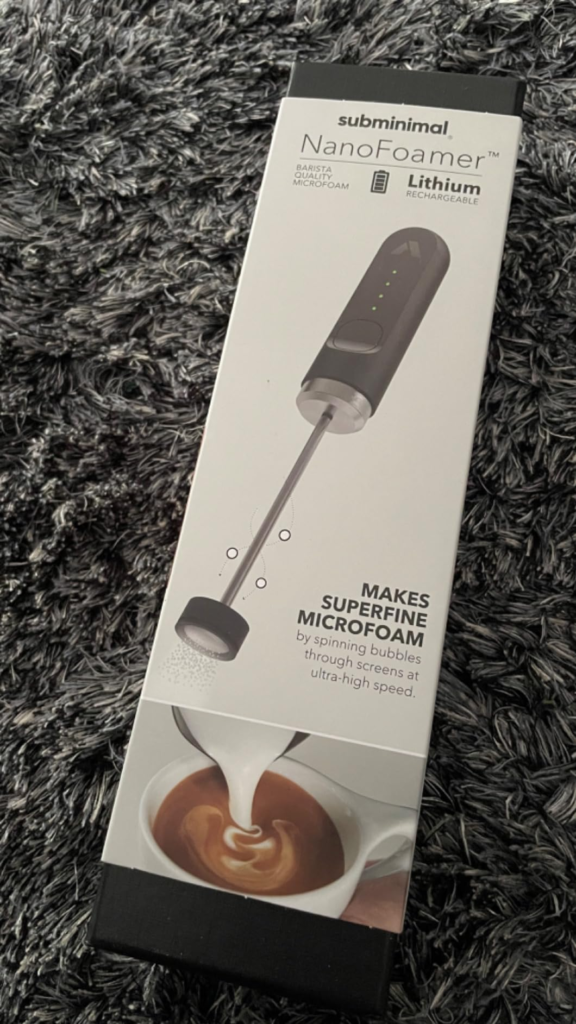
It uses a patented impeller paired with interchangeable NanoScreens — fine mesh discs — that force milk through at high speed, breaking bubbles down to a microscopic level rather than adding air volume. The goal is not foam. The goal is emulsification: milk proteins wrapping around tiny, stable air pockets until the mixture becomes glossy, dense, and pourable.
Unlike standard frothers that whip air into milk and produce stiff foam, the NanoFoamer focuses on emulsifying milk properly, breaking bubbles down to a microscopic level so the milk integrates smoothly with espresso.
That mechanism is real. It works. But it works only when the operator controls three variables that no button on the device manages for you: milk temperature, wand angle and depth, and the duration of the aeration phase versus the integration phase.
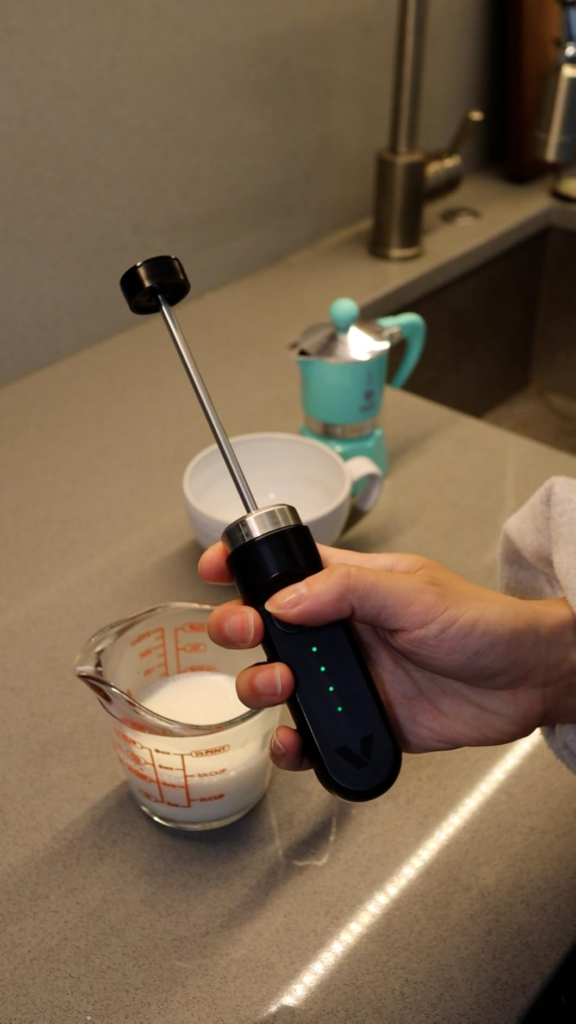
The first phase is the aeration phase — this is when you choose how much foam you want in your final result. You can aerate for as short as 3 seconds for a flat white or as long as 15–20 seconds for a foamy cappuccino. After aeration, the technique requires placing the impeller just below the surface in the middle of the jug to generate a vortex that integrates the foam into the milk.
Most buyers skip or shorten the integration phase entirely. They stop when the foam appears. The foam appears before the microfoam is actually formed. Stopping there gives you bubbles, not texture.
The Threshold Where the Outcome Quietly Breaks
There is a specific point in the process where what you’re making stops being microfoam and becomes ordinary froth. It happens silently, and you won’t notice it until you pour.
The threshold has three dimensions:
| Variable | Working Range | Below Threshold |
|---|---|---|
| Milk Temperature | 55–65°C (130–150°F) | Under 50°C produces unstable foam; over 70°C denatures proteins |
| Milk Depth in Jug | Minimum 40mm / 1.5 inches | Shallower = air injection, not emulsification |
| Aeration Phase Duration | 3–10 seconds before integration | Skipping or extending breaks the vortex balance |
The official guidance specifies warming milk slowly to 55–65°C for optimum sweetness and the best texture, using a narrow jug with at least 40mm of milk depth, and keeping a steady hand with tiny movements while observing the milk’s reaction.
Most people who report inconsistent results are operating outside at least one of these three dimensions — usually temperature, usually because they’re estimating by feel rather than measuring.
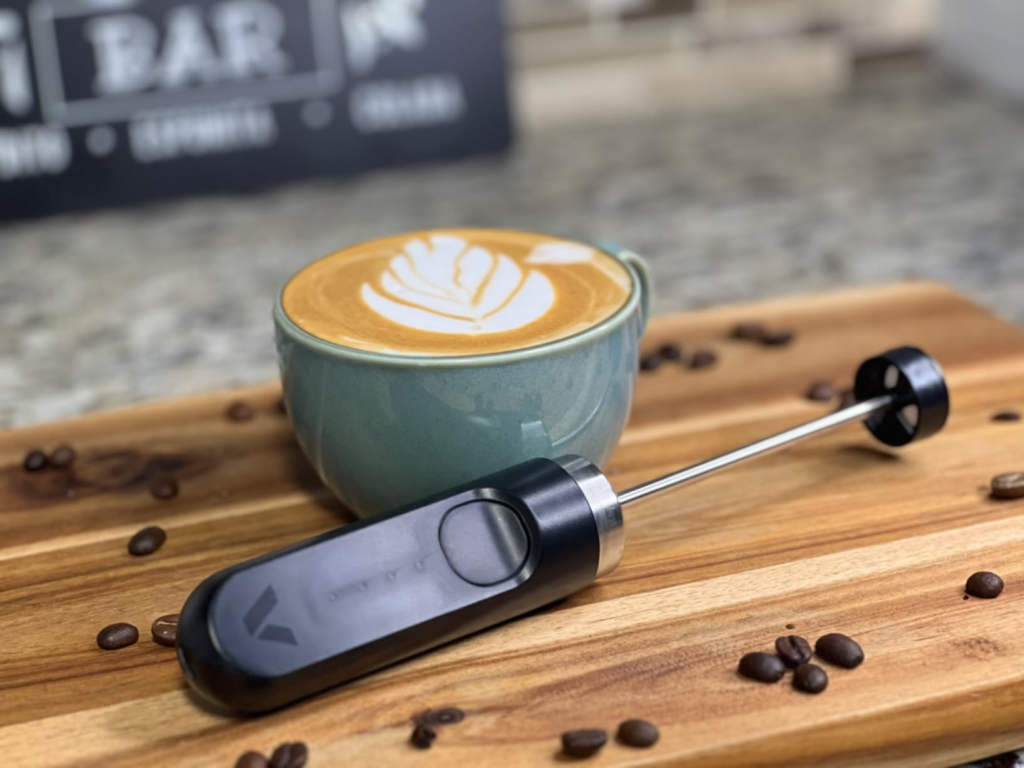
The device has 300% more motor power than a conventional handheld frother. That power advantage disappears completely if the milk temperature is wrong. Power does not compensate for protein structure. When milk is too cold, the proteins don’t bind the air. When it’s too hot, they’ve already broken down. The window is narrow and unforgiving.
Why Most Buyers Misread This Too Early
The comparison that kills this product for the wrong buyer is: “I already have a frother. How is this different?”
It’s the wrong question because it frames the NanoFoamer Lithium as a better version of something it isn’t trying to be. A standard frother is a volume machine. It increases foam quantity. The NanoFoamer Lithium is a texture machine. It changes foam quality at the structural level.
| Feature | Standard Handheld Frother | NanoFoamer Lithium |
|---|---|---|
| Foam Type | Large-bubble, stiff foam | True microfoam — small, glossy, stable |
| Integration with Espresso | Sits on top, separates quickly | Blends naturally, coats the espresso |
| Technique Required | None | Two-phase technique, angle-dependent |
| Milk Sensitivity | Works with almost any milk | Best with whole dairy; plant-based milks require barista versions |
| Latte Art Potential | None | Achievable after technique mastery |
| Learning Curve | Zero | 5–15 sessions to consistent results |
| Price Point | $10–$20 | $57 |
The NanoFoamer Lithium requires slightly more skill as you have to hold and position the foamer at the correct angle, whereas the Pro models remove the guesswork entirely through automation.
That skill requirement is not a flaw. It is the product’s design reality. If you buy this expecting the same zero-effort operation as a basic frother, you will be disappointed — not because the NanoFoamer Lithium underperformed, but because you measured it against the wrong benchmark.
Who Is Actually Inside This Problem
This device fits a specific person. Not every coffee drinker. Not even every espresso drinker.
You are inside this problem if:
- You have an espresso machine at home — manual, semi-automatic, or a Moka pot — and you want milk texture that matches the extraction quality you’re already achieving.
- You’ve used a standard frother and noticed the foam separates immediately or sits dry on the surface instead of flowing with the coffee.
- You’ve ordered a flat white or cortado at a good café and noticed the difference in mouthfeel and asked yourself why yours at home feels thinner.
- You’re willing to practice a two-phase technique over several sessions to reach a consistent result.
- You primarily use whole cow’s milk, or you’re using a barista-formulated plant-based milk that’s specifically engineered to foam.
Users who have invested time in mastering the technique consistently report that the NanoFoamer delivers textured milk that rivals properly steamed milk from an espresso machine’s steam wand.
That outcome is real. It is not marketing. But it requires the investment of understanding the mechanism, not just pressing a button.
Where Wrong-Fit Begins
There are buyers who should not purchase this device at this stage. Not because it’s a bad product, but because the conditions for it to work correctly are not in place.
| Buyer Profile | Outcome Risk |
|---|---|
| Uses only oat, almond, or soy milk (non-barista formulas) | Foam will be thin, unstable, or collapse immediately |
| Wants zero-technique operation | Will experience consistent frustration |
| Doesn’t own an espresso machine or Moka pot | Microfoam quality advantage is largely wasted on filter or pod coffee |
| Compares to steam wand results without practice | Will feel the gap and blame the device |
| Expects instant results, first session | Will likely return it within the week |
The NanoFoamer Lithium performs better with cow’s milk than with alternatives — plant-based milks can still produce usable results, but the margin for error is smaller and the outcome is less consistent.
Some milk alternatives simply won’t work well at all — for best results with plant-based milk, choosing a barista-style formulation is strongly recommended, as these are engineered to create more stable foams.
If your milk is oat, non-barista, and your baseline for comparison is a countertop automatic frother — this is a wrong-fit purchase. The regret point comes at session three, when the novelty is gone and the inconsistency hasn’t resolved.
The One Situation Where This Product Becomes Logical
You pull espresso at home. Or you use a Moka pot and you’ve accepted that the extraction is good. The only gap in your morning coffee is the milk. It’s either too bubbly, too dry, or too thin — and you’ve noticed this in a way that bothers you enough to be reading a review like this one.
You’re not looking for convenience. You’re looking for quality.
The NanoFoamer Lithium is, in that specific situation, the most economically rational answer available at this price point.
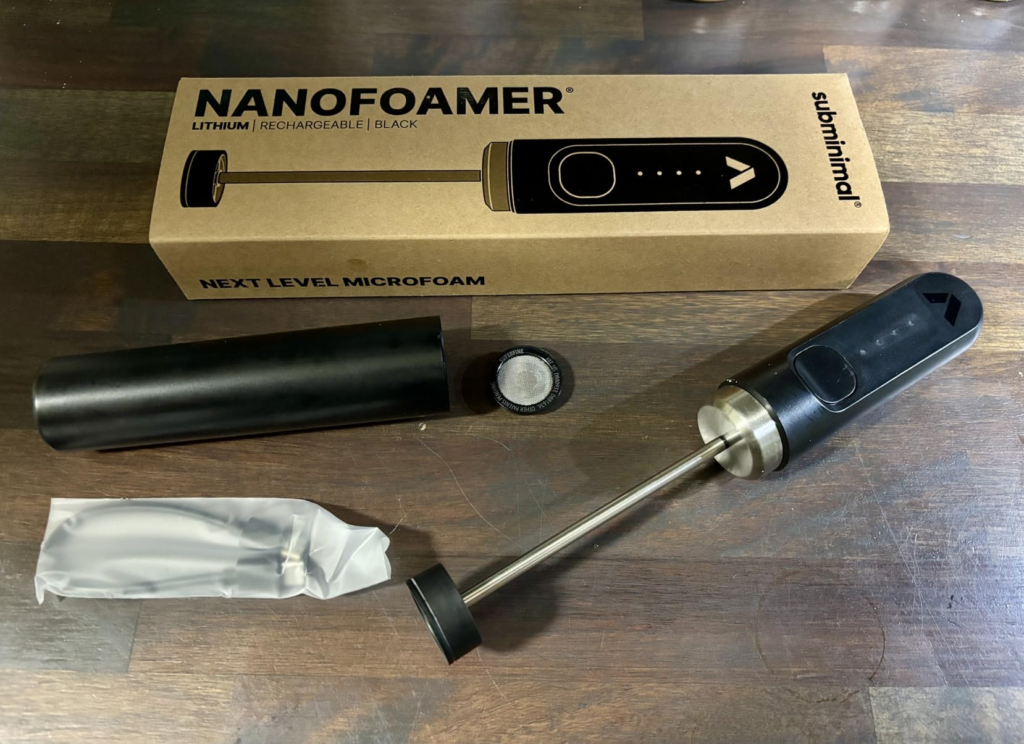
The NanoFoamer Lithium provides 300% more power than conventional handheld milk frothers, with IP4 waterproofing, a rechargeable lithium-ion battery via USB-C, dual-speed operation, and two interchangeable NanoScreens for different foam textures — fine and superfine.
The superfine screen produces the tightest, most latte-art-ready microfoam. The fine screen gives you a slightly more open texture suited to cappuccinos. Switching between them takes seconds. Cleaning is a rinse under running water.
Getting latte-art-quality microfoam at this price point was hard to imagine a few years ago — the NanoFoamer opened that possibility to home baristas who can’t or won’t invest in a full-size espresso machine with a steam wand.
At around $57, it occupies a category that didn’t exist before it: below the cost of an automatic milk heater-frother, and above the quality ceiling of any standard wand frother. That gap is where this product lives and where it wins — but only when the buyer is already inside the right conditions.
What It Solves, What It Reduces, and What It Still Leaves to You
| Category | What the NanoFoamer Lithium Delivers |
|---|---|
| Solves | True microfoam texture — glossy, stable, integrates with espresso |
| Solves | Cold foam for iced drinks — consistent, airy, holds structure |
| Solves | Matcha mixing and protein powder dissolution (screen removed) |
| Reduces | The quality gap between home and café milk texture |
| Reduces | Dependency on an espresso machine steam wand |
| Still Requires from You | Milk temperature monitoring |
| Still Requires from You | Two-phase technique (aeration + integration) |
| Still Requires from You | 5–15 practice sessions before consistency |
| Still Requires from You | Narrow jug with adequate milk depth |
| Doesn’t Solve | Automatic temperature control — you manage the heat |
| Doesn’t Solve | Plant-based milk instability with non-barista formulas |
The regret point for buyers who understood this before purchasing: essentially zero. The regret point for buyers who expected zero-technique operation: high, and it arrives quickly.
Final Compression
The Subminimal NanoFoamer Lithium is not a better frother. It is a different category of tool operating on a different principle, requiring a different level of engagement from the person using it.
If your espresso is already good and the milk is the remaining gap — and you’re willing to spend five to ten sessions learning where the vortex lives, how long the aeration phase needs to run, and what 60°C feels like in a narrow jug — this device will close that gap cleanly and permanently.
If you’re buying it hoping the foam will fix itself because the device is powerful: it won’t. The power is real. The outcome still depends on you.
Frequently Asked Questions
| Question | Answer |
|---|---|
| Is the Subminimal NanoFoamer Lithium worth the price compared to a cheap frother? | If you want volume and convenience, no — a $12 whisk frother does that. If you want true microfoam that integrates with espresso the way a steam wand does, the NanoFoamer Lithium is the only handheld device at this price point that structurally achieves it. The comparison only makes sense if you’ve already noticed the difference in texture and it bothers you. |
| How long does it take to get consistent results? | Realistically, 5 to 15 sessions. The official guide recommends practicing first with cold water and dish soap to understand the vortex before wasting milk. Most buyers who commit to this approach reach consistent microfoam within a week of daily use. |
| Does it work with oat milk or almond milk? | With standard oat or almond milk — poorly and inconsistently. With barista-formulated versions of those milks, results improve significantly because the protein and fat content is engineered for foaming stability. If you primarily use non-dairy milk, this is a critical variable to address before purchasing. |
| What’s the difference between the fine and superfine NanoScreens? | The fine screen produces a slightly more open foam texture — better for cappuccino-style drinks with more visible foam body. The superfine screen produces the tightest, most glossy microfoam — better for flat whites, lattes, and latte art. Both are included with the device. |
| Can I use it without heating the milk first? | For cold foam on iced drinks, yes — this is one of its strongest applications and requires no temperature management. For hot latte-style microfoam, pre-heating the milk to 55–65°C is non-negotiable. The device does not heat milk; temperature control is entirely your responsibility. |
| What happens if I stop at the aeration phase and don’t complete the integration phase? | You get standard froth — large, unstable bubbles that sit on top of the espresso and separate quickly. The integration phase, where you move the impeller to create a downward vortex that folds foam back into the milk, is what produces true microfoam. Skipping it is the single most common reason buyers report disappointing results. |
| Is the NanoFoamer Lithium better than the V2? | The Lithium has a built-in rechargeable battery (USB-C) instead of AA batteries, slightly higher power output, and a more stable design. For daily home use, the Lithium’s cordless convenience removes one friction point from the morning routine. The foam output quality is functionally equivalent when technique is consistent. |
Transparency Note:
This analysis is built on aggregated real-world experience. It extracts what repeatedly holds, what breaks, and what users uncover only after living with the system—then shapes it into a clear model you can use immediately.
Think of it as structured experience, refined and presented so you don’t have to learn it the hard way.
“A quick note: Don’t believe the star ratings, but trust personal experience. This article is a compilation of collected experiences”