My Hitron CODA56 Review: You’re Not Bottlenecked by the Modem — You’re Bottlenecked by What’s Next to It
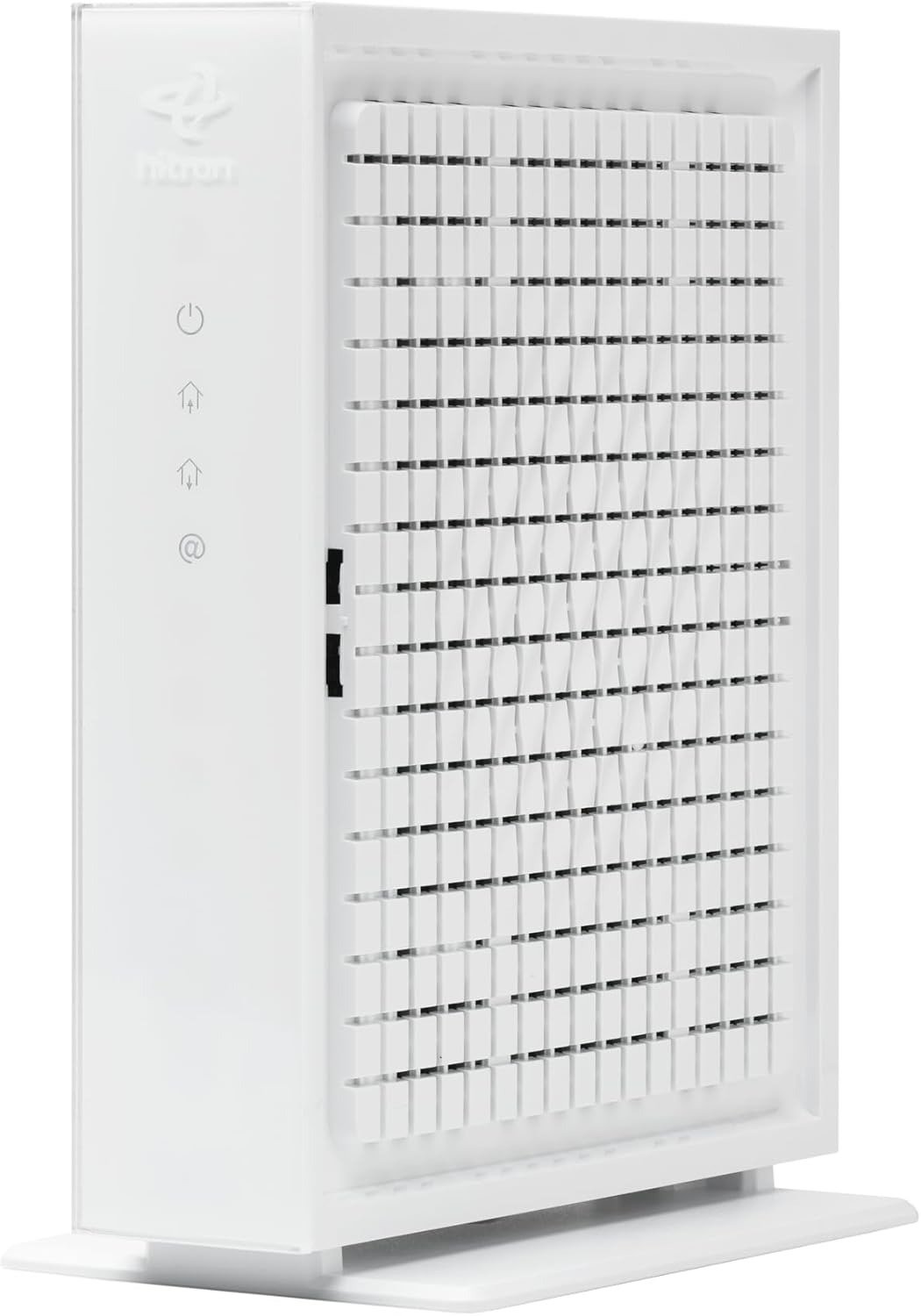
HITRON CODA56
The Speed Looks Fine. The Constraint Is Invisible.
You plug in the Hitron CODA56, your ISP activates it, and the speed test number goes up. Not slightly up — noticeably up. You take a screenshot. You feel the upgrade.
Then, three days later, you’re uploading a large file and it moves no faster than before. Your 4K stream still stutters on a congested Tuesday night. The modem is working. Something else isn’t.
That gap — between what the CODA56 is capable of delivering and what actually reaches your devices — is the real story of this modem. And almost nobody talks about it clearly before the purchase.
What You’re Actually Feeling but Not Naming
You bought a cable modem to stop paying the rental fee, which is a completely rational decision. You looked at the DOCSIS 3.1 spec, saw “2.5 Gbps,” compared it to your current plan, and concluded: this will work. And it will — to a point.
The unnamed annoyance that follows is this: the modem’s ceiling and your network’s ceiling are not the same number. The CODA56 hands off 2.5 Gbps to a single Ethernet port. What happens to that signal next — inside your router, across your LAN, through your mesh system — is entirely outside this device’s jurisdiction.
Most buyers enter this modem assuming the bottleneck was the ISP-rented hardware. Some of it was. But the rest of the bottleneck was never the modem at all.
The Hidden Mechanism Behind the Miss
DOCSIS 3.1 is a physical-layer protocol. The CODA56 implements it with 2×2 OFDM downstream and upstream channels, which produce more consistent throughput, better noise rejection, and measurably lower latency compared to DOCSIS 3.0 at identical plan speeds.
The 2.5 Gbps Ethernet port — the one connecting the modem to your router — is not a marketing number. It’s a physical interface rated to carry 2,500 Mbps of bidirectional traffic. On a DOCSIS 3.0 modem with a 1 Gbps port, your 1.2 Gbps Xfinity plan was always capped at around 940 Mbps real-world. The CODA56 removes that specific ceiling.
But here is the mechanism most buyers miss:
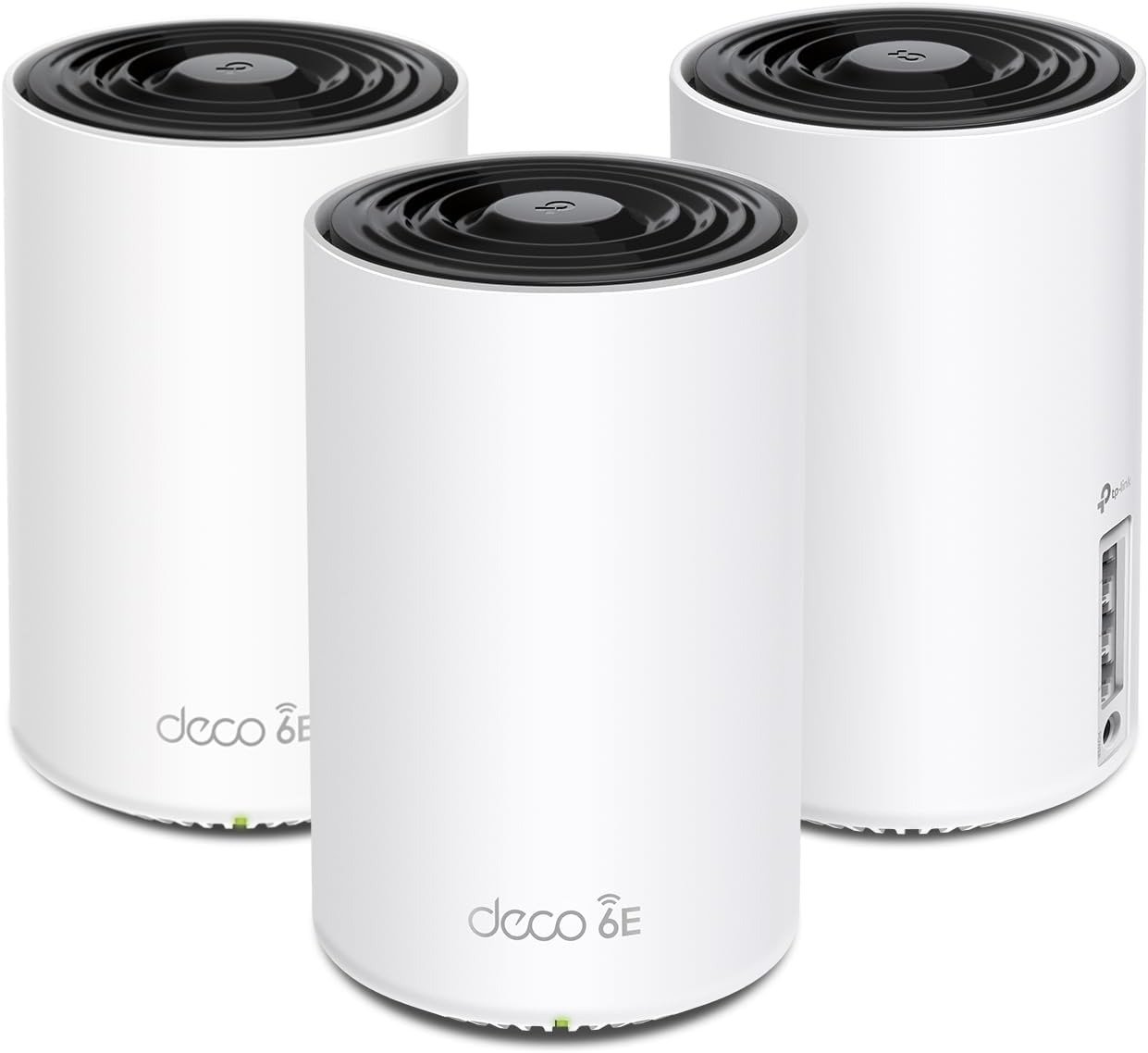
That 2.5 Gbps port connects to your router’s WAN port. If your router’s WAN port is rated at 1 Gbps — which describes the majority of routers sold in the last five years — the signal is throttled the moment it leaves the modem. The CODA56 is performing correctly. The router is performing correctly. The result is still 940 Mbps.
The modem didn’t fail you. Your gear stack wasn’t built for what you’re now trying to push through it.
The Threshold Where the Outcome Quietly Breaks
| Scenario | CODA56 Role | Real-World Result |
|---|---|---|
| Plan under 1 Gbps + any router | Overqualified but stable | Full plan speed delivered |
| Plan 1–1.2 Gbps + 1 Gbps WAN router | Ceiling hit at router | ~940 Mbps actual max |
| Plan 1.2–2.5 Gbps + 2.5 GbE router | Modem and router matched | Near-plan speeds achievable |
| Plan 1.2–2.5 Gbps + 1 Gbps WAN router | Modem ceiling exceeded router | Capped regardless of modem |
| Plan under 1 Gbps + basic router + no mid-split area | No benefit from CODA56 over CODA | Paying for capacity you cannot use |
The threshold is 1 Gbps. Below it, the CODA56 delivers everything your plan offers. Above it, the CODA56 is the only component in your home that’s ready. The rest of your gear decides whether you cross that threshold or not.
Why Most Buyers Misread This Too Early
The most common mistake is comparing this modem against the ISP-rented device and declaring victory at the speed test. That comparison is real — the CODA56 does outperform most rental hardware, particularly on upload when Xfinity’s mid-split rollout has reached your area.
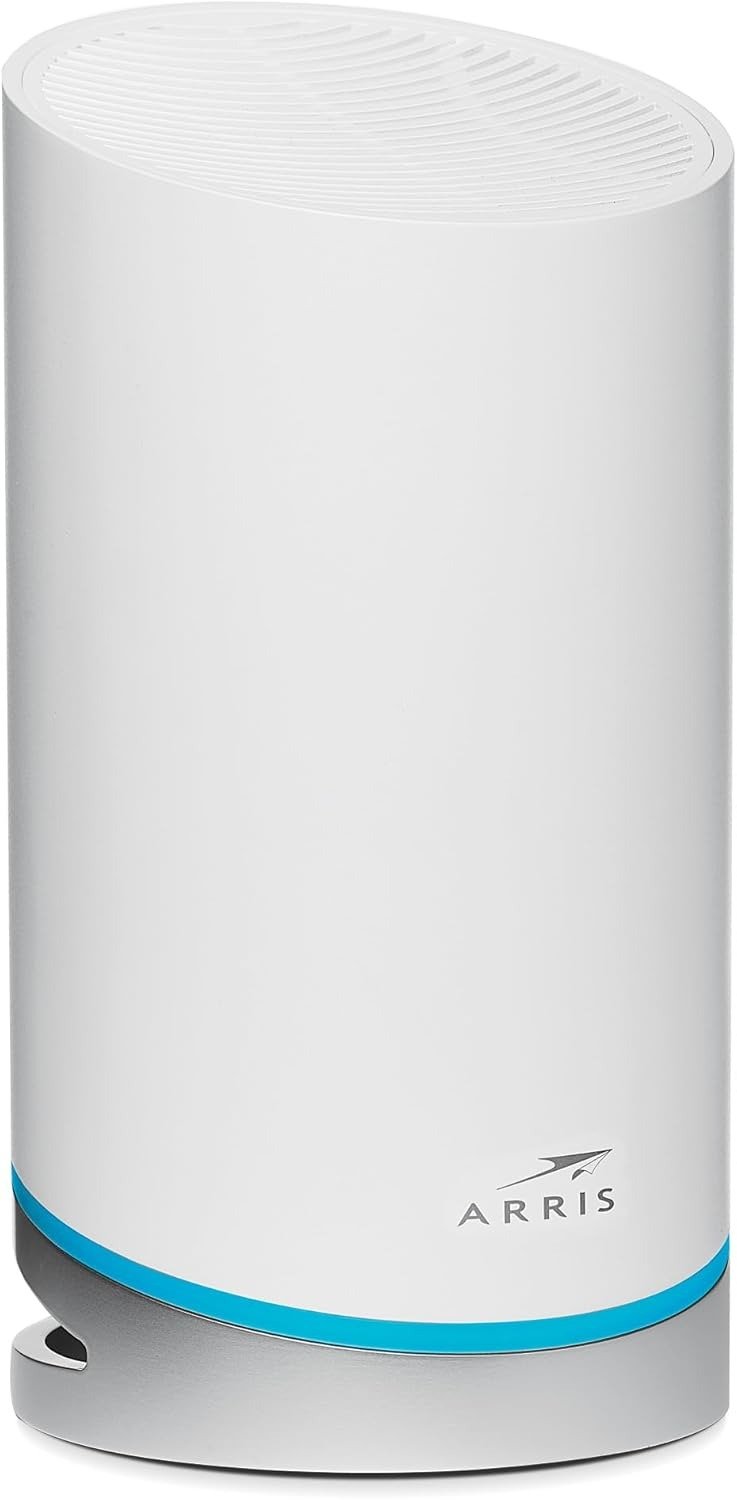
But the second mistake is comparing the CODA56 against the ARRIS SB8200 on spec sheets alone. The SB8200 carries two 1 Gbps Ethernet ports, which enables link aggregation — a meaningful advantage if you have a router that supports LAG and a plan above 1 Gbps. The CODA56 has one 2.5 Gbps port, which is simpler to set up and faster on a single connection, but requires a router with a 2.5 GbE WAN port to use that capacity fully.
| Feature | Hitron CODA56 | ARRIS SB8200 | Motorola MB8611 |
|---|---|---|---|
| DOCSIS Standard | 3.1 | 3.1 | 3.1 |
| Max WAN Speed | 2.5 Gbps | 2 Gbps | 2.5 Gbps |
| Ethernet Port(s) | 1 × 2.5 GbE | 2 × 1 GbE | 1 × 2.5 GbE |
| Link Aggregation | No | Yes (2 ports) | No |
| Mid-Split / NextGen Upload | Yes (Xfinity certified) | No | Yes |
| Wi-Fi Included | No | No | No |
| Typical Price | ~$160 | ~$130–150 | ~$150 |
| ISP Certification | Xfinity, Spectrum, Cox, more | Xfinity, Spectrum, Cox | Xfinity, Spectrum, Cox |
Neither modem is universally superior. The right one depends on your plan tier, your router’s WAN port, and whether your ISP has activated mid-split in your area.
Who Is Actually Inside This Problem
You belong in this modem’s orbit if:
- You are currently renting a modem from Xfinity, Spectrum, Cox, Sparklight, or Mediacom and paying $10–$16 per month for the privilege.
- Your cable internet plan is at or above 1 Gbps, or you intend to upgrade to one within the next two years.
- You already own — or are willing to purchase — a router with a 2.5 GbE WAN port.
- You live in an area where Xfinity’s mid-split upload technology has been deployed, and you want to unlock faster upload speeds without paying for the ISP’s modem.
This modem also works reliably on plans below 1 Gbps — the DOCSIS 3.1 stability and lower latency still apply — but you won’t recover the $40–$60 price premium over the standard Hitron CODA unless you’re on a plan that justifies it.
| Your Situation | CODA56 Makes Sense? |
|---|---|
| Plan under 500 Mbps | No — CODA (standard) is sufficient |
| Plan 500 Mbps–1 Gbps | Marginal — mainly for future-proofing |
| Plan 1–2.5 Gbps with 2.5 GbE router | Yes — full benefit realized |
| Plan 1–2.5 Gbps with 1 Gbps router | Partial — still saves rental fee |
| Currently renting ISP modem | Yes — rental savings justify the cost |
| Fiber or DSL subscriber | No — cable modem, incompatible |
| AT&T, Verizon, CenturyLink customer | No — not certified, not compatible |
Where Wrong-Fit Begins
There are three buyer profiles that consistently walk away from the CODA56 frustrated, and none of their frustration is the modem’s fault.
The fiber subscriber who didn’t check. The CODA56 is a DOCSIS cable modem. It terminates a coaxial cable signal. It has no function on fiber lines, DSL, or any provider that doesn’t use cable infrastructure. AT&T, Verizon Fios, CenturyLink, and satellite providers are not on the compatibility list. This is not a niche caveat. It ends the conversation entirely.
The buyer with a 1 Gbps router who expects 2.5 Gbps. The 2.5 GbE WAN port on the CODA56 requires a router with a 2.5 GbE WAN port to function above 1 Gbps. A standard router with a gigabit WAN port will cap the connection regardless of what the modem is rated for. The modem performs correctly in this setup — it’s simply delivering more than the router can accept.
The buyer expecting a plug-and-play upgrade with no ISP call. Some ISPs — Cox in particular — actively resist activating customer-owned modems and prefer to keep subscribers on rental hardware. Activation is possible, but it requires persistence. This is not a CODA56-specific issue; it applies to any third-party modem. Budget time for the activation call.
The One Situation Where This Modem Becomes the Logical Choice
You are on a cable internet plan at or above 1 Gbps. You are currently paying a monthly rental fee for an ISP-provided modem. You own or plan to purchase a router with a 2.5 GbE WAN port — or you’re on Xfinity and want to unlock mid-split upload speeds that the rental modem cannot access.
In that specific configuration, the CODA56 is not a speculative purchase. It is the mechanically correct answer.
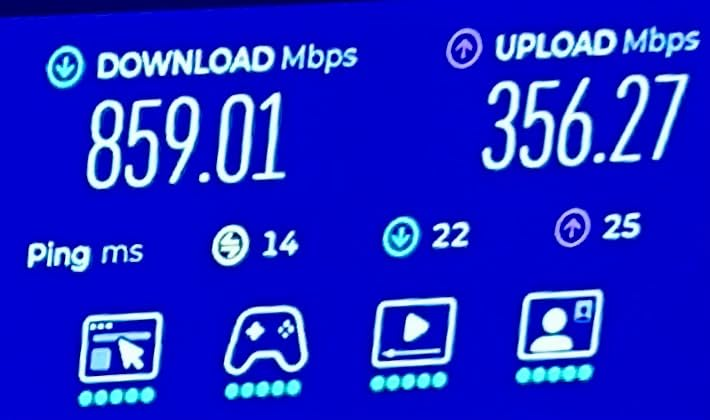
The rental fee alone — typically $10 to $16 per month depending on provider — returns the modem’s cost in 10 to 16 months. After that, the savings are pure. The DOCSIS 3.1 standard has a long runway; you are not buying technology that will be obsolete in two years. The 2.5 GbE port means you can upgrade your router and your ISP plan without replacing the modem. The mid-split upload certification means Xfinity subscribers in eligible areas can access significantly faster upload speeds — in some user reports, upload improved 8x compared to prior DOCSIS 3.0 hardware.
The modem does one thing. It does it without noise, without rental overhead, and without the ISP’s interest in keeping you on slow hardware.
What It Solves, What It Reduces, and What It Still Leaves to You
| Category | What the CODA56 Does |
|---|---|
| Eliminates | Monthly modem rental fee ($10–$16/mo) |
| Removes | 1 Gbps ceiling on cable plans above 1 Gbps |
| Unlocks | Mid-split upload speeds on Xfinity (eligible areas) |
| Reduces | Latency under load vs. DOCSIS 3.0 hardware |
| Stabilizes | Connection consistency via 2×2 OFDM channels |
| Does NOT include | Wi-Fi — requires a separate router |
| Does NOT affect | Your router’s speed, your mesh system’s LAN speed |
| Does NOT change | ISP plan pricing, plan tier, or network congestion |
| Still requires | ISP activation call, compatible router for full speed |
| Still leaves to you | Choosing a router with 2.5 GbE WAN port |
| Still leaves to you | Confirming mid-split availability in your specific area |
The modem will not fix a congested neighborhood node at 9 PM. It will not make a $40/month plan perform like a $90/month plan. It will not replace your router. What it will do is remove the modem as the weakest link in your chain — assuming your chain is ready for it.
Final Compression
The Hitron CODA56 is a correctly engineered modem for a specific problem: you are paying your ISP to rent hardware that restricts your plan’s ceiling, and you want to own the equipment instead.
If your plan is above 1 Gbps and your router supports 2.5 GbE, the decision is structurally clean. If your plan is below 1 Gbps or your router doesn’t support 2.5 GbE, the modem still works — but the premium over the standard CODA is harder to justify on speed alone.
The regret cases are not “I bought the CODA56 and it didn’t perform.” They are “I bought the CODA56 without checking my router’s WAN port, or without knowing I was on a fiber line, or without expecting an activation call.”
Check those three things before purchasing. If they clear, the CODA56 is not a gamble — it is the logical termination of a decision you have already made.
Frequently Asked Questions
| Question | Answer |
|---|---|
| Does the Hitron CODA56 include Wi-Fi? | No. The CODA56 is a modem only. It requires a separate Wi-Fi router or mesh system to provide wireless connectivity. If your router’s WAN port is 1 Gbps, your maximum throughput will be approximately 940 Mbps regardless of the modem’s 2.5 Gbps ceiling. |
| Is the Hitron CODA56 compatible with Xfinity, Spectrum, and Cox? | Yes — it is officially certified for Comcast Xfinity, Comcast Xfinity Business, Charter Spectrum, Cox Gigablast, Cable One Sparklight, and Zito Media. It also functions with Astound, Grande, RCN, and Wave. It is not compatible with AT&T, Verizon Fios, CenturyLink, DirecTV, DISH, or any fiber or DSL provider. |
| What does “mid-split” or “NextGen upload” mean for the CODA56? | Xfinity is upgrading portions of its network infrastructure to allow significantly higher upload speeds. The CODA56 is one of a small number of modems certified to access these faster upload speeds on eligible network segments. Users in mid-split areas have reported upload improvements of 4x to 8x versus older DOCSIS 3.0 hardware. |
| Will the CODA56 pay for itself? | At a typical ISP rental fee of $10–$16 per month, the modem’s cost is recovered in 10 to 16 months. After that, the cost differential is zero and ownership is permanent. |
| How does the CODA56 compare to the ARRIS SB8200? | The SB8200 offers two 1 Gbps ports with link aggregation support and a lower price. The CODA56 offers a single 2.5 GbE port and mid-split upload certification. If your router supports LAG, the SB8200 is a viable alternative. If your router has a 2.5 GbE WAN port and you’re on Xfinity with mid-split coverage, the CODA56 is the stronger choice. |
| Does the CODA56 work on plans below 1 Gbps? | Yes. DOCSIS 3.1 is backward compatible and the modem delivers stable performance at any plan tier. However, the speed advantage over the lower-cost Hitron CODA (1 Gbps version) is minimal at sub-1 Gbps plan speeds, and the standard CODA may be the more economical purchase. |
| What router do I need to unlock the full 2.5 Gbps from the CODA56? | Your router must have a 2.5 GbE (2.5 Gigabit Ethernet) WAN port. A standard gigabit WAN port will cap your connection at approximately 940 Mbps regardless of the modem’s rated speed. Check your router’s spec sheet specifically for “2.5G WAN” before purchasing the CODA56 if full multi-gig performance is the goal. |
Transparency Note:
This analysis is built on aggregated real-world experience.
It extracts what repeatedly holds, what breaks, and what users uncover only after living with the system—then shapes it into a clear model you can use immediately.
Think of it as structured experience, refined and presented so you don’t have to learn it the hard way.
“A quick note: Don’t believe the star ratings, but trust personal experience. This article is a compilation of collected experiences”