The Home Espresso Problem Isn’t Flavor—It’s Variance (and Why the De’Longhi Rivelia Is Built to Reduce It)
ANALYSIS FRAMEWORK
Most people think home espresso fails because the machine “can’t make café-level coffee.” After studying super-automatic machines long enough—and watching how real owners talk when the honeymoon phase ends—I’ve come to a different conclusion:
The real problem is variance.
Not “taste variance” in a poetic sense—actual day-to-day variance: different beans, different moods, different milk, different routines, different expectations… and the same person expecting the same cup.
When variance rises, confidence drops. And when confidence drops, you stop using the machine the way you intended.
That’s the lens I’m using here: not “is it good,” but does it reduce variance enough that the decision becomes effortless.
What Rivelia Is Actually Selling (Even If You Think It’s Selling Coffee)
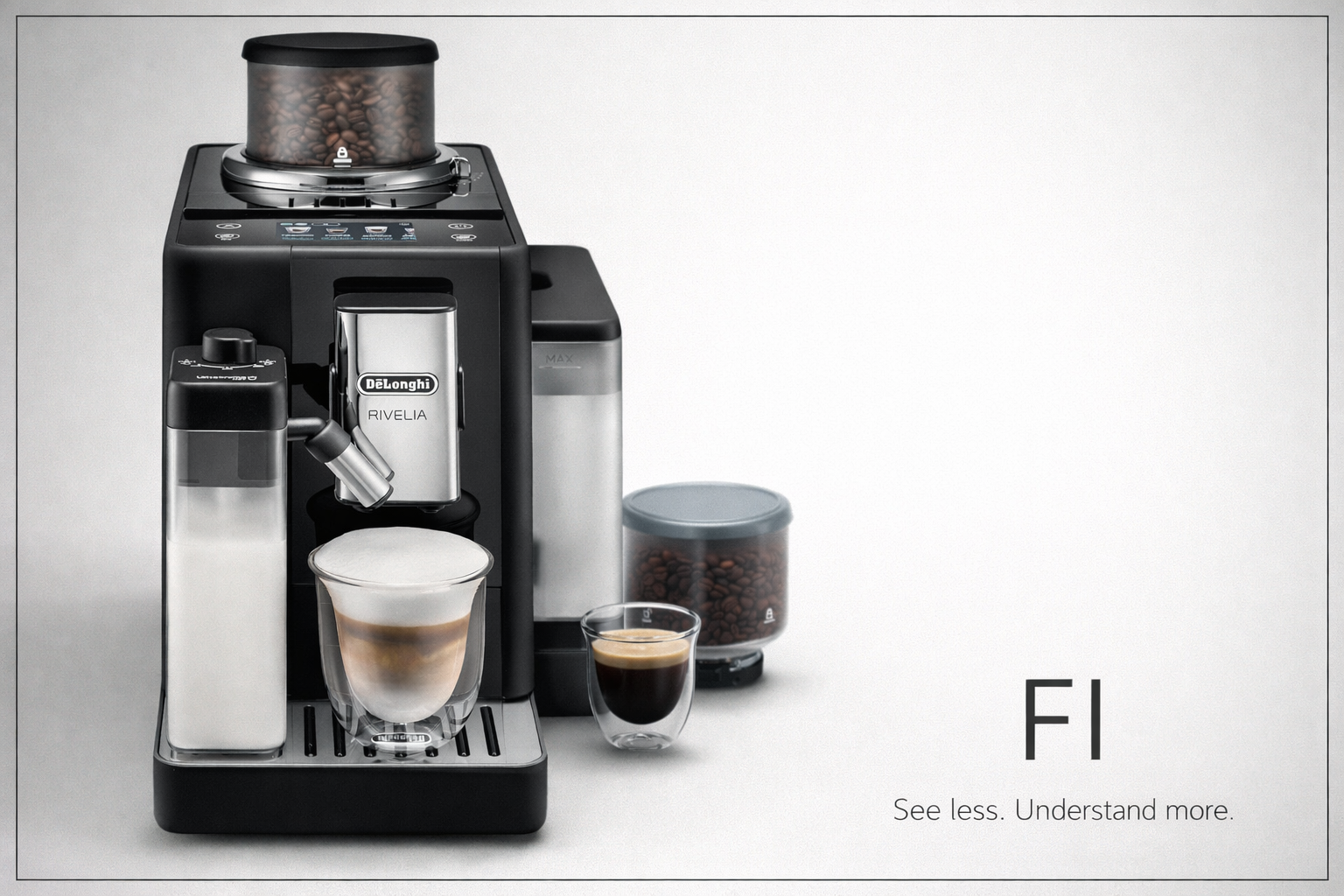
On paper, the Rivelia is a fully automatic espresso machine with a built-in grinder, automatic milk frothing, and a touchscreen interface.
But the feature that explains the whole product is the Bean Switch System: two removable 8.8 oz bean hoppers designed for quick swapping—e.g., regular in the morning, decaf later—without turning bean changes into a messy ritual.
That matters because “changing beans” is one of the biggest hidden causes of inconsistency in home coffee habits:
- you avoid switching because it feels wasteful or annoying
- you keep stale beans in the hopper too long
- you drink the “wrong” coffee at the “wrong” time because the machine isn’t aligned with your routine
Owners consistently frame this as a quality-of-life win (especially the decaf switch), even when they admit the machine is pricey.
The Routines Layer — Why the Touchscreen Isn’t Just UI
De’Longhi positions Rivelia as a machine that “learns your routine,” with up to 4 user profiles and a smart menu that adapts through the day.
Technically, that sounds like convenience. Psychologically, it’s something deeper:
It reduces the friction of identity switching.
One person can be “espresso-only” in the morning and “milk drink” in the afternoon. Two people in one household can have totally different standards. Without profiles, that becomes negotiation and re-adjustment—i.e., variance.
When I read real-world commentary, the pattern is predictable:
- people love the personalization
- they keep using the machine because it “remembers”
- and the machine feels less like an appliance and more like a stable system they can trust
Bean Adapt Technology — The Most Important Part Most People Will Underuse
Rivelia includes Bean Adapt Technology, described as step-by-step guidance to tune grind, dose, and temperature to match a specific bean profile, then save it.
This feature matters for one reason: it attacks the exact point where most super-automatics lose serious coffee people—extraction mismatch.
But there’s a reality I’ve learned from both reviews and owner discussions:
- advanced tuning is appreciated
- but many buyers rarely revisit it after initial setup
- the feature becomes “comfort” even when it isn’t used daily
That still has value. Because even unused, it changes what the machine represents:
not “a button-pusher,” but “a system that can be tuned when something feels off.”
And that alone reduces decision anxiety.
Milk System Reality — Why LatteCrema Hot Feels Like a Commitment Device
Rivelia’s LatteCrema Hot system is marketed as one-touch frothing for dairy and plant-based milk, without a steam wand learning curve.
Here’s the psychological dynamic:
Milk drinks are where people feel “café envy” the most—because they’re the hardest to replicate manually.
So when owners say the machine makes it easy to get consistent milk drinks and cleaning/maintenance feels manageable, what they’re really saying is:
“I’m finally not negotiating with my own kitchen every time I want a latte.”
That’s not flavor. That’s friction removal.
Where People Push Back (The Negative Signals That Actually Matter)
When I map the “bad” feedback, it clusters into a few high-signal areas:
- Price resistance
Many users love the output but still call it expensive or “a bit pricey.”
- Sensitivity / error behavior / reliability anxiety
Some feedback (outside Amazon US) points to units being “sensitive” or throwing errors—enough that it becomes the story instead of the coffee
And there are also mentions of mixed reliability over time in aggregated customer summaries.
- Small-tank / small-friction complaints
Even satisfied owners mention the water tank feeling small—minor, but it’s a “daily touchpoint,” so it can add up.
I treat these as important because they don’t attack taste—they attack stability.
And in your SEA model, stability is the product.
The One Question That Determines Fit (Before You Read Any “Reviews”)
If your routine looks like this:
- one or two drinks repeated daily
- preference shifts (caf/decaf, milk/non-milk) depending on time
- more than one person uses the machine
- you value “consistent enough” more than “manual perfection”
Then Rivelia’s design choices make structural sense: bean switching + saved profiles + guided tuning = variance compression.
If your routine is the opposite—single-bean purism, manual workflow enjoyment, or you get satisfaction from controlling every variable—then the same features may feel like “automation theater,” even if the coffee is genuinely good.
No comparison needed. This is just intent alignment.
Worst-Case Simulation (The Scenario That Breaks the Experience)
Here’s the worst-case I model for Rivelia-style machines:
You buy it for stability, but you live in a household where:
- people don’t clean consistently
- water hardness is high and descaling gets delayed
- milk system gets used heavily with inconsistent rinsing
- the machine starts complaining (alerts/errors), and trust collapses
When trust collapses, you stop experimenting, then you stop using it, and the machine becomes an expensive counter object.
De’Longhi itself emphasizes descaling and filtration accessories for a reason.
This isn’t marketing fluff; it’s the stability tax of automation.
What I’d Read Next (If I Were Moving From Curiosity to Decision)
At this point, the informational question (“what is this machine structurally?”) is answered.
The next step is transactional intent:
- constraints in your kitchen
- cleaning tolerance
- milk frequency
- bean switching realism
- long-term stability expectations
That’s where the Decision Article comes in.
Place this sentence exactly once as the forward-only bridge:
If you want the constraint-based decision lens (without hype), I mapped it here:
[link → Decision Article: “De’Longhi Rivelia — The Stability-First Buying Logic”].
![The Hands-Free Espresso Problem: When Convenience Breaks Consistency ([شاركنينجا][1])](https://focusedinsight.net/wp-content/uploads/2026/02/image-26.png)