MY RING STICK UP CAM PRO BATTERY REVIEW: YOU’RE NOT BUYING A CAMERA. YOU’RE BUYING INTO A SYSTEM — AND THE ENTRY FEE ISN’T WHAT YOU THINK
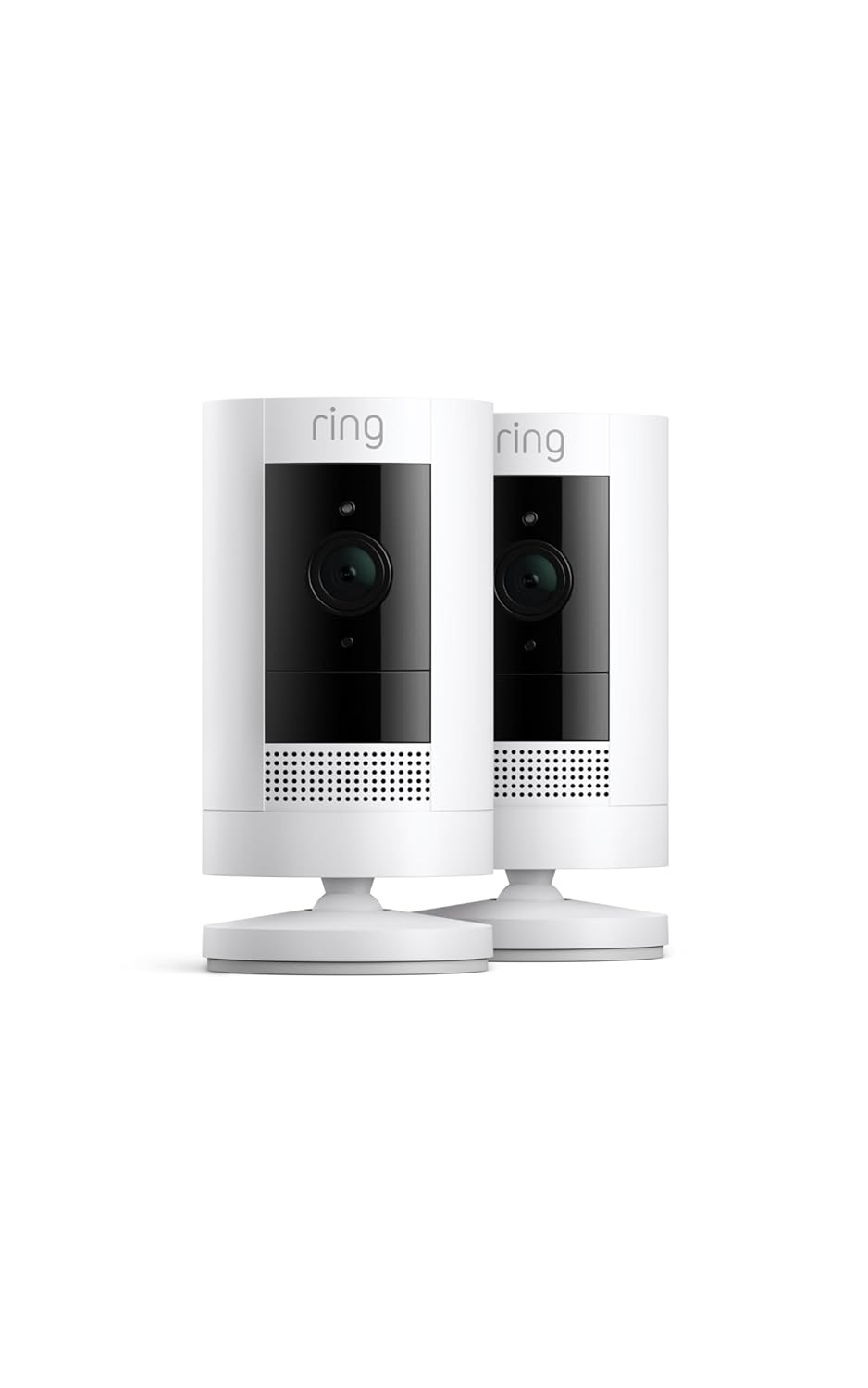
The Camera Works. That’s Not the Whole Story.
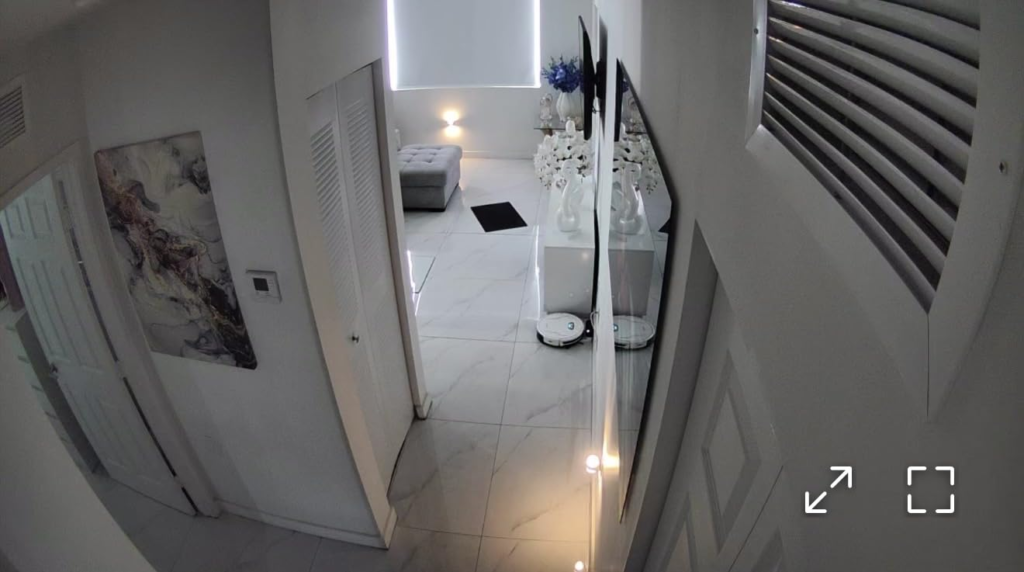
You install it. The app connects cleanly. The image is sharp, night vision is genuinely usable in color, and the first motion alert lands on your phone within seconds. Everything looks right.
Then, a week later, someone walks across your driveway. No alert. You pull up the history — there’s no clip to pull. The event is simply gone, unrecorded, unreviewable, as if it never happened.
The camera wasn’t broken. The Wi-Fi was fine. What failed was the assumption that the camera, alone, was the product you bought.
What You’re Actually Feeling but Not Naming
There’s a specific frustration that Ring users describe consistently, and it isn’t about image quality. It’s about the gap between what the camera can do and what it will do on the plan you’re currently running.
Without a Ring Home subscription, you won’t get motion-detection alerts or video recording. The Ring Stick Up Cam 3 did beam live video to both the Ring app and Amazon smart display — it just didn’t record it. If reviewing or archiving footage was a must, a paid monthly subscription was required.
Live view exists. Alerts for motion exist. But the moment something happens and you’re not watching in real time, the footage is gone unless you’re subscribed. That’s not a footnote — it’s the operating reality of this camera at its purchase price.
The feeling isn’t “this is broken.” The feeling is: “I thought I was protected, and I wasn’t.”
The Hidden Mechanism Behind the Miss
This camera has two layers. Most buyers only pay for the first.
The hardware layer — what’s in the box — is genuinely capable. 3D Motion Detection, Bird’s Eye Zones, Advanced Pre-Roll that captures six seconds of footage in 1080p HD with full audio, dual-band WiFi at 2.4 or 5 GHz, color night vision, HDR video, and Audio+ with echo cancellation. That’s a serious specification sheet.
The intelligence layer — what makes that hardware actionable over time — sits behind a paywall. Plans start at $3.99 a month for a single camera or $10 a month for unlimited cameras. Ring Protect includes video history for up to 180 days, rich notifications, person alerts, and Smart Video Search.
The gap between those two layers is where most buyer disappointment lives. The radar-based 3D detection fires. The Pre-Roll captures the event. But if you have no subscription active, that capture never reaches your history — it fires into a buffer that empties immediately.
| Feature | Without Subscription | With Ring Home Plan |
|---|---|---|
| Live View (real-time) | ✅ Available | ✅ Available |
| Motion Alerts | ✅ Real-time only | ✅ Full detail alerts |
| Video Recording & Storage | ❌ None | ✅ Up to 180 days |
| Person / Package Detection | ❌ Not available | ✅ Available |
| Pre-Roll Footage Access | ❌ Not saved | ✅ Saved with clip |
| Smart Video Search | ❌ Not available | ✅ Available |
| Bird’s Eye View History | ❌ Not stored | ✅ Stored per event |
| Snapshot Capture Archive | ❌ Not saved | ✅ Saved |
The Threshold Where the Outcome Quietly Breaks
There’s a specific usage threshold where the Ring Stick Up Cam Pro behaves exactly as advertised, and one where it delivers a fraction of its advertised capability.
Below the threshold: one camera, active watching, live view use, existing Ring ecosystem (doorbell, alarm). The camera earns its price at this level. The Ring Stick Up Cam Battery works well — it’s best for those already invested in Ring’s ecosystem or Alexa devices.
At the threshold: a high-activity outdoor zone, a busy street, a driveway with frequent movement. Here, battery life becomes variable. Battery life is good — months rather than days or weeks, providing you turn motion sensitivity down. But at high sensitivity, the drain accelerates substantially. Color night vision enabled accelerates it further.
Above the threshold: multiple cameras, no subscription, expectation of full event review capability. At this level, you’ve bought hardware that cannot fulfill its core security promise without recurring monthly spend. $99 might sound like a solid deal, but to actually make use of the product as a camera, you’ll have to pay at least $4 per month per camera. That can get expensive fast, especially if you’re buying multiple cameras.
| Usage Scenario | Hardware Alone Enough? | Required Monthly Cost |
|---|---|---|
| 1 camera, live monitoring only | Mostly yes | $0 |
| 1 camera, event review needed | No | $4.99/month |
| 2–4 cameras, full features | No | $9.99/month (all devices) |
| 4+ cameras, local storage preference | No — complex workaround required | $20/month + Ring Alarm Pro |
| Existing Ring ecosystem user | Yes — strong value | $9.99/month covers all |
Why Most Buyers Misread This Too Early
The comparison most people make before buying this camera is straightforward: Ring vs. a budget competitor on image quality and motion detection. That comparison, run in isolation, almost always favors the Ring Stick Up Cam Pro.
It’s limited to 1080p resolution, but enabling HDR delivers color-saturated images and this camera has very strong night vision, with a color night vision option you might find you don’t even need.
The radar-based 3D detection is functionally different from standard PIR. Ring Stick Up Cam Pro Battery’s radar and Bird’s Eye View function add a fair bit to the price compared to the regular Ring Stick Up Cam, but the system works well and offers a new view on home surveillance that some customers will find invaluable.
But the comparison that matters more is not hardware-to-hardware. It’s total-cost-of-ownership over 24 months. Buyers who run that number after purchase — not before — are the ones who feel the gap.
| Comparison Axis | What Buyers Compare | What They Should Compare |
|---|---|---|
| Primary | Image quality | Total 24-month cost (hardware + subscription) |
| Secondary | Motion detection type | Actual clip-retention behavior without plan |
| Common mistake | Battery vs. plug-in version | Single camera vs. multi-camera subscription structure |
| Hidden variable | Bird’s Eye View capability | Subscription dependency for Bird’s Eye history access |
| Ecosystem factor | Alexa compatibility | Whether existing Ring devices justify the plan cost |
The Bird’s Eye View feature — enabling it disables the camera’s Pre-Roll function, which is a much more useful feature — is a real trade-off that most buyers discover after installation, not before.
Who Is Actually Inside This Problem
This camera is the right call for a specific type of buyer. Not everyone. A specific type.
You’re already running Ring devices in your home — a doorbell, an alarm, or both. The Ring Home Standard plan covers everything for $9.99 per month. At that price, the Stick Up Cam Pro is a clean addition that strengthens an existing system without adding a separate per-device subscription cost.
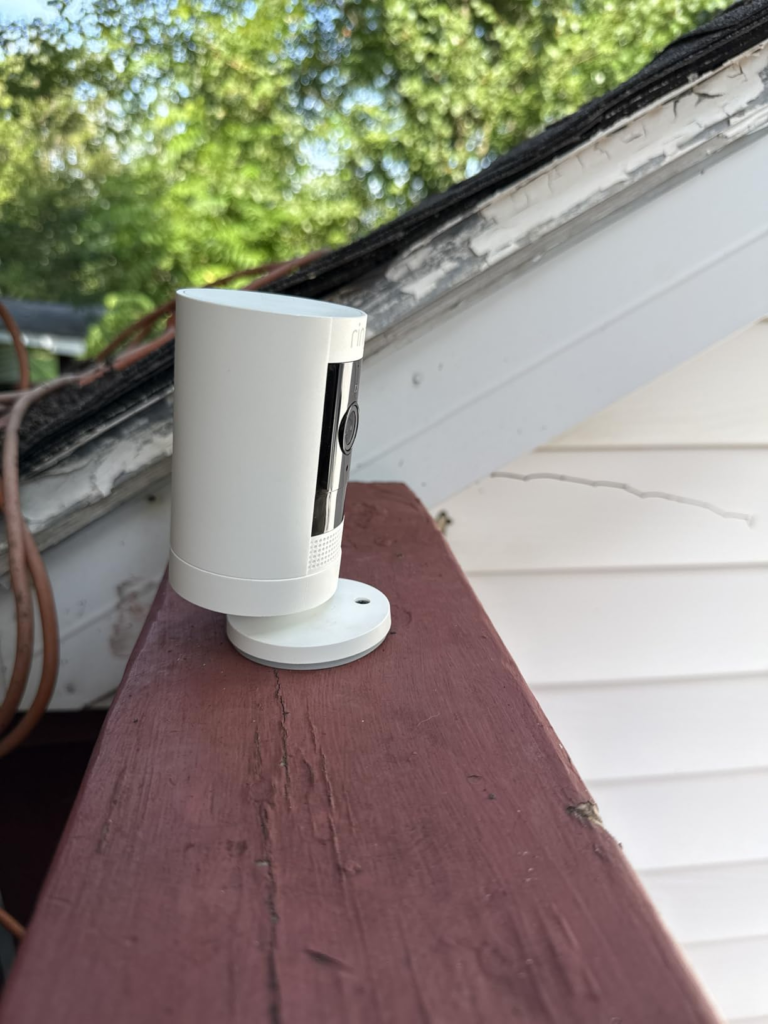
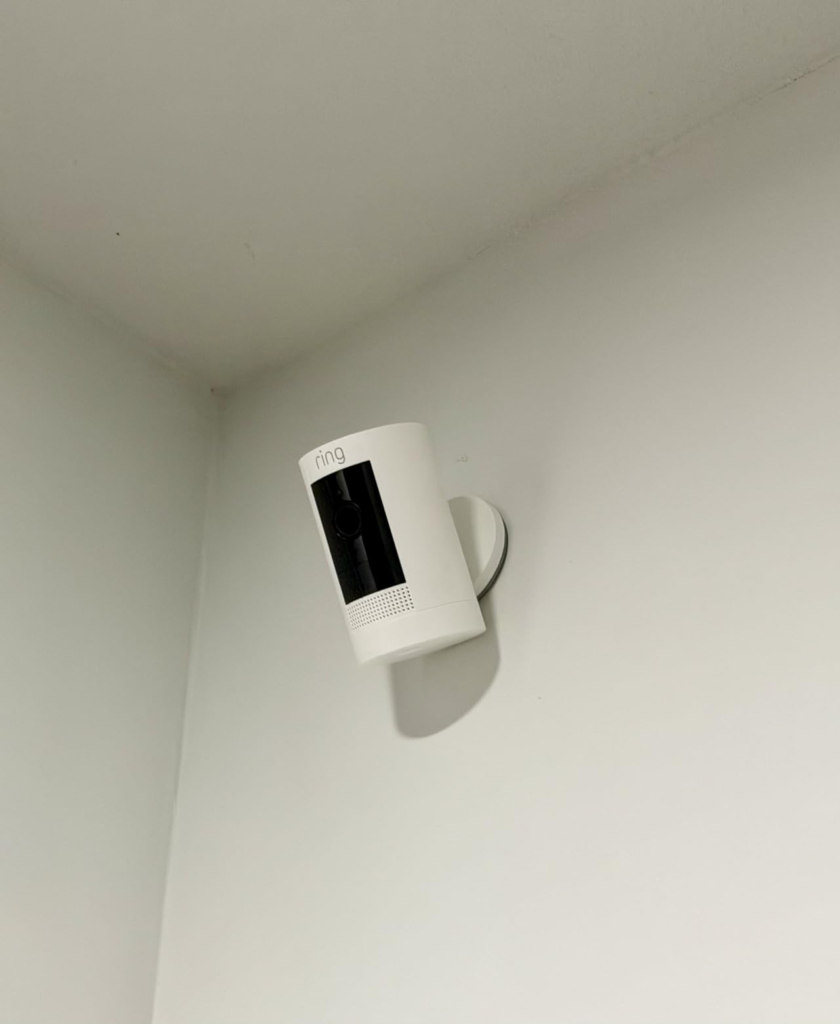
You need flexible placement. The battery version has a USB-C input on the rear, which can be used with the optional adaptor to make it a permanently wired product. The stand can be removed and attached to the rear of the camera, acting as a wall mount. That convertibility is genuinely useful in locations where running a power line is impractical.
You operate in an environment where false alerts have been a persistent problem with previous cameras. The radar-based detection is legitimately better at distinguishing person-sized motion from ambient movement — trees, passing headlights, distant traffic — than standard PIR-based cameras.
You’re building a long-term Ring setup, not buying a one-time standalone device.
| Buyer Profile | Fit Level |
|---|---|
| Existing Ring ecosystem (doorbell + alarm) | ✅ Strong fit — plan cost already justified |
| Single-camera buyer, always actively watching | ✅ Acceptable fit |
| Multi-camera outdoor setup, subscription-averse | ❌ Poor fit — total cost becomes significant |
| Buyer preferring local storage | ❌ Poor fit — local storage requires Ring Alarm Pro + $20/month plan |
| Google Home / Apple HomeKit household | ❌ Poor fit — no HomeKit or Google Home support |
| Budget-first buyer comparing on price only | ❌ Poor fit — price comparison ignores operating cost |
Where Wrong-Fit Begins
The wrong-fit isn’t always obvious at the point of purchase. It often shows up at 30 days, when the free trial ends.
A free 30-day Ring Protect Trial is included with any Ring home security camera purchase. You may subscribe to a Ring Protect Plan at any time during your trial, and you won’t be charged for your subscription until after your trial ends.
During that trial, the camera performs exactly as expected — full video history, full person alerts, Pre-Roll, Bird’s Eye tracking. The experience is clean and complete. Then the trial ends, and users who don’t actively subscribe discover the gap.
The second wrong-fit signal: high-traffic zones with maximum sensitivity. Battery drain in these environments can compress the claimed multi-month battery life down to weeks. The solution — adding a solar panel — is an additional $30–$50 cost that isn’t included in the base price.
The third: Ring’s entire camera lineup lacks any sort of built-in, dedicated local video storage. If you want to store video clips on your terms, you’ll need to have a Ring Alarm Pro, combined with a $20 per month subscription to a Ring Protect Pro plan. That’s a significant amount of additional infrastructure for local storage.
| Wrong-Fit Trigger | What Actually Happens |
|---|---|
| Buys camera, skips subscription after trial | No recorded footage — events undetectable in hindsight |
| Installs in high-traffic zone at max sensitivity | Battery life drops from months to weeks |
| Expects local storage | Requires Ring Alarm Pro + $20/month plan — separate hardware |
| Enables Bird’s Eye View | Pre-Roll disabled — loses early-event footage |
| Multi-camera buyer on Basic plan | Per-camera cost multiplies — $4.99 × each camera |
| Google/HomeKit household | No native integration — Ring app only |
The One Situation Where This Product Becomes Logical
If you’re already paying for a Ring Home Standard plan — or if adding this camera gives you a genuine reason to — the Ring Stick Up Cam Pro Battery is a clear, defensible choice at its price point.
The radar-based 3D detection reduces the alert fatigue that makes most outdoor cameras feel like noise generators after two weeks. Excellent image quality, fine control over alerts, and flexible installation make this one of the best security cameras currently available. The dual-band Wi-Fi, the flexible mounting system, the weather resistance rated for both extreme cold and heat — these are not marketing claims that dissolve under real-world use.
The Pre-Roll feature — up to six seconds of footage before the motion trigger fires — is the detail that separates this camera from standard reactive recording. Most motion-triggered cameras capture what happens after the trigger. This one captures what caused the trigger.
For the right buyer, that distinction is exactly the camera’s value.
What It Solves, What It Reduces, and What It Still Leaves to You
| Category | What the Camera Does |
|---|---|
| Solves | False alert fatigue — radar filters ambient motion reliably |
| Solves | Placement flexibility — battery + optional wired gives true dual-power |
| Solves | Night visibility — color night vision functions without external light |
| Solves | Pre-event context — Pre-Roll captures the approach, not just the arrival |
| Reduces | Alert noise in busy environments when 3D detection is calibrated |
| Reduces | Missed-event frustration — Bird’s Eye View tracks full movement path |
| Still on you | Monthly subscription — no footage storage without it |
| Still on you | Battery management — charging cycle depends heavily on activity level |
| Still on you | Ecosystem commitment — full value only inside Ring’s platform |
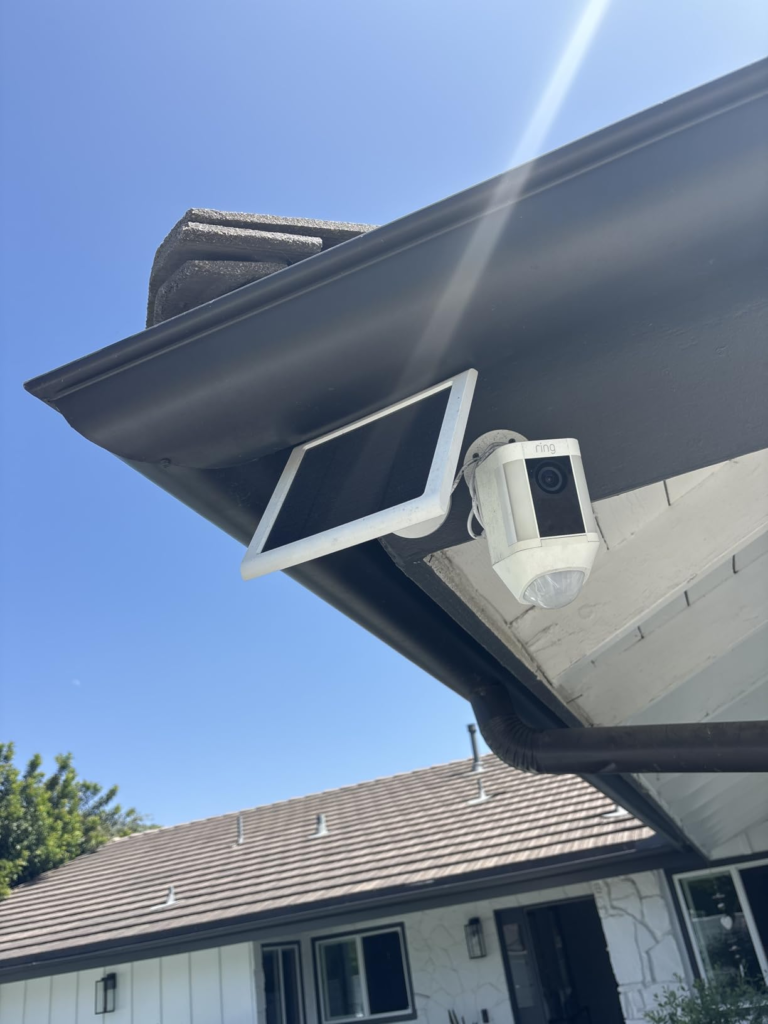
| Still on you | Solar panel if you want near-zero maintenance — not included |
The camera does not protect you from the cost of ignoring the subscription. It does not self-maintain in high-traffic zones without solar. It does not cross into Google Home, HomeKit, or any ecosystem outside Amazon’s.
What it does, within those boundaries, it does well.
Final Compression
The Ring Stick Up Cam Pro Battery is not overpriced for what it does. It is frequently misread for what it costs to operate.
The hardware is real. The radar is real. The image quality is real. The Pre-Roll is genuinely useful. The 3D detection reduces the alert problem that makes most outdoor cameras feel like noise over time.
But the camera functions as a complete security device only when paired with a Ring Home subscription. Without it, you have live view and real-time alerts — not a security record. The 30-day trial disguises this. Most buyers discover the gap when the trial ends.
If you’re already in the Ring ecosystem and the subscription cost is already covered, this camera earns its place cleanly. If you’re starting from zero with one camera and subscription-aversion, run the 24-month total cost before deciding — not after.
If you’re inside the profile described above and ready to build a setup that actually functions as described, the Ring Stick Up Cam Pro Battery is the logical starting point.
Frequently Asked Questions
| Question | Answer |
|---|---|
| Q: Does the Ring Stick Up Cam Pro Battery work without a subscription? | Yes — you can use Live View and receive real-time motion alerts. But without a Ring Home subscription, no footage is recorded or saved. If you miss an event in real time, it’s gone. A free 30-day trial is included with purchase. |
| Q: How long does the battery actually last? | Under moderate activity with balanced sensitivity settings, expect two to three months per charge. In high-traffic zones or with color night vision consistently active, battery life can drop significantly. Adding the optional solar panel (sold separately, ~$30–$50) effectively eliminates the charge cycle. |
| Q: Is Bird’s Eye View worth enabling? | It depends on your priority. Bird’s Eye View tracks a visitor’s full movement path using radar and satellite overlay — useful for broad property monitoring. The trade-off: enabling it disables Pre-Roll, which captures six seconds before the motion trigger fires. For most users, Pre-Roll is the more operationally useful feature. |
| Q: Does the Ring Stick Up Cam Pro work with Google Home or Apple HomeKit? | No. Ring operates within Amazon’s ecosystem. It integrates natively with Alexa and Amazon Echo devices. There is no Google Home or Apple HomeKit support. |
| Q: What subscription plan makes the most sense? | For a single camera: Ring Home Basic at $4.99/month. For a full Ring household (multiple cameras, doorbell, alarm): Ring Home Standard at $9.99/month covers all devices at the same address — significantly better value at scale. |
| Q: What’s the difference between the Pro and the standard Stick Up Cam? | The Pro adds radar-based 3D Motion Detection, Bird’s Eye View and Bird’s Eye Zones, HDR video, Advanced Pre-Roll in full 1080p with audio, Audio+ with echo cancellation, and dual-band WiFi (2.4 + 5 GHz). The standard Stick Up Cam uses PIR-only motion detection, single-band WiFi, and lacks HDR and Pre-Roll. At higher activity levels, the Pro’s detection precision justifies the price difference. |
| Q: Can the battery version be made permanently wired? | Yes. The USB-C input on the rear accepts the optional Indoor/Outdoor Power Adapter, converting it to a plug-in device. Both versions of the camera are otherwise identical in features and price. |
Transparency Note:
This analysis is built on aggregated real-world experience. It extracts what repeatedly holds, what breaks, and what users uncover only after living with the system—then shapes it into a clear model you can use immediately. Think of it as structured experience, refined and presented so you don’t have to learn it the hard way.
“A quick note: Don’t believe the star ratings, but trust personal experience. This article is a compilation of collected experiences”