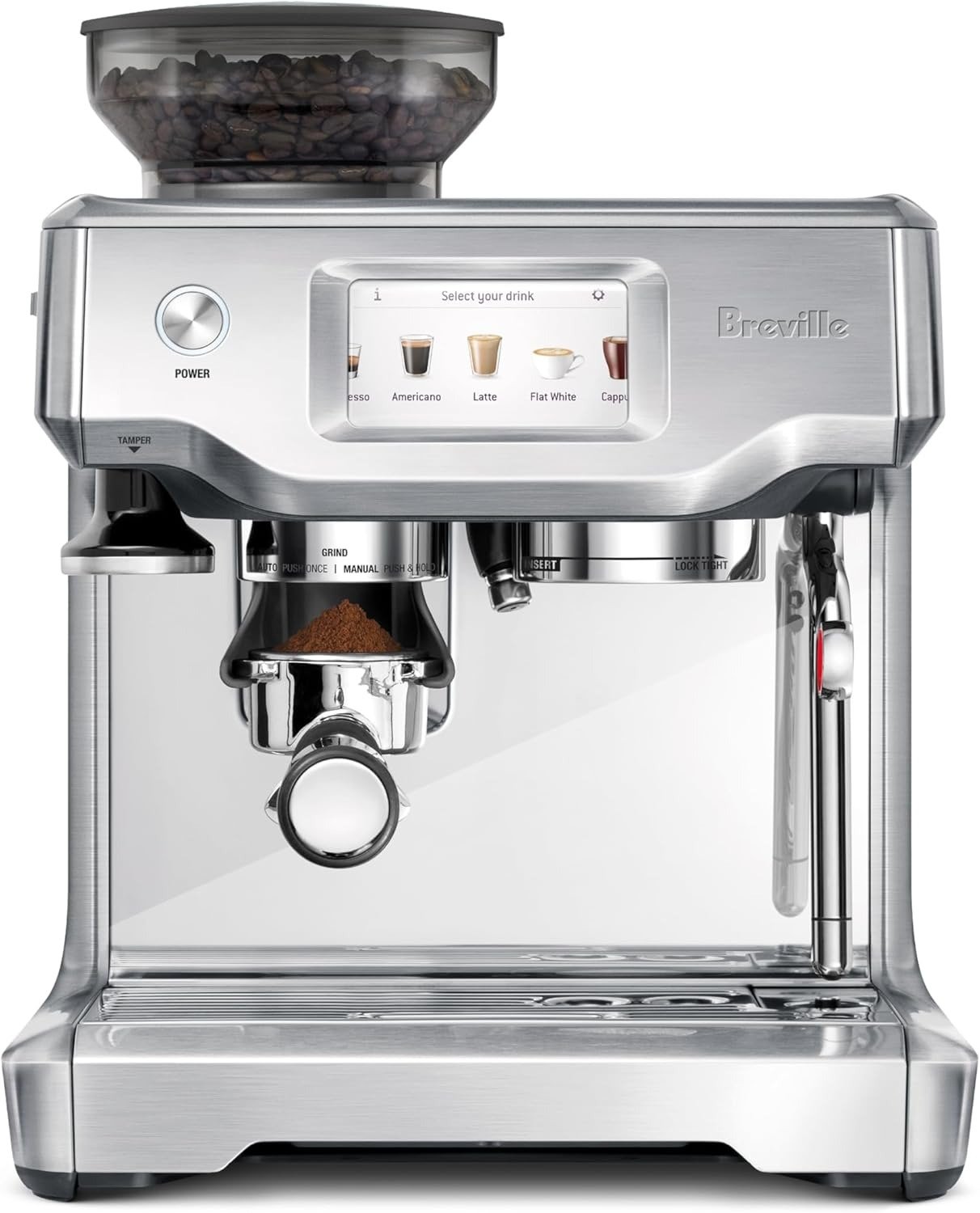
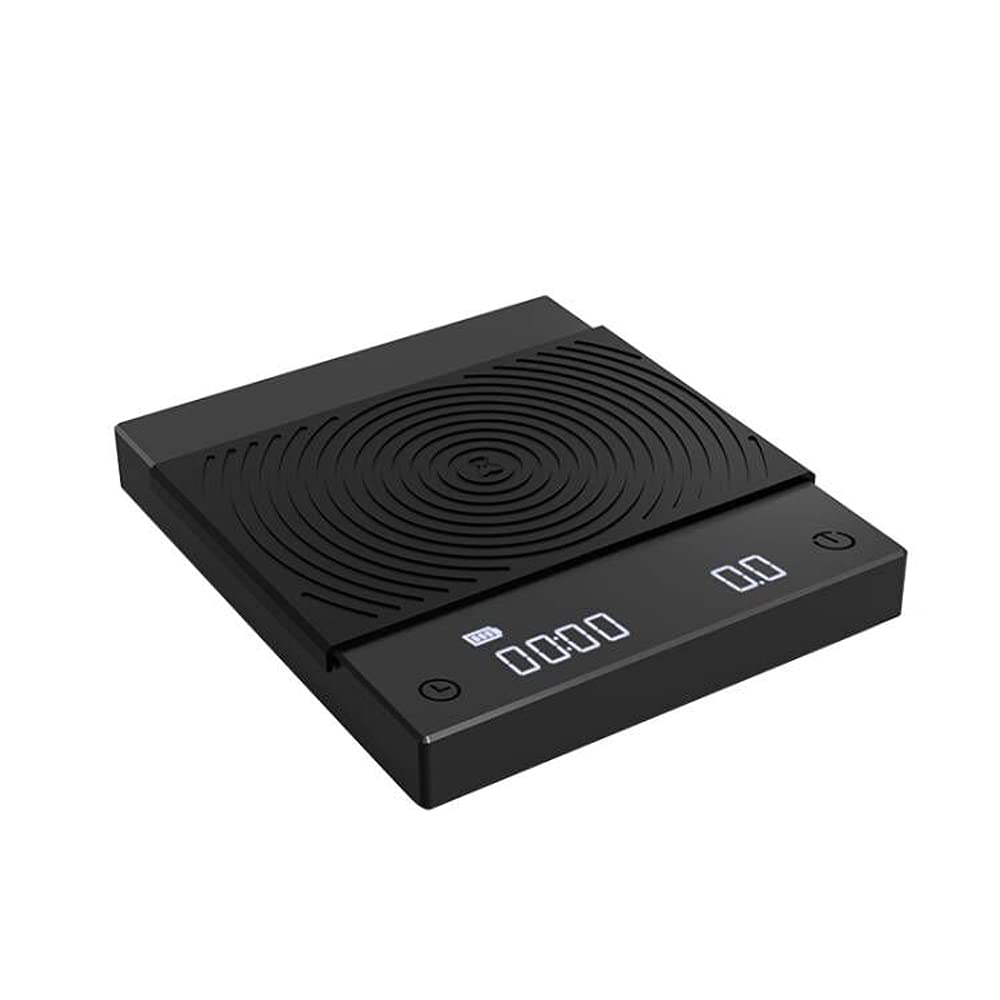
Why This Machine Shifts My Shot Stability — A Technical Decision Breakdown
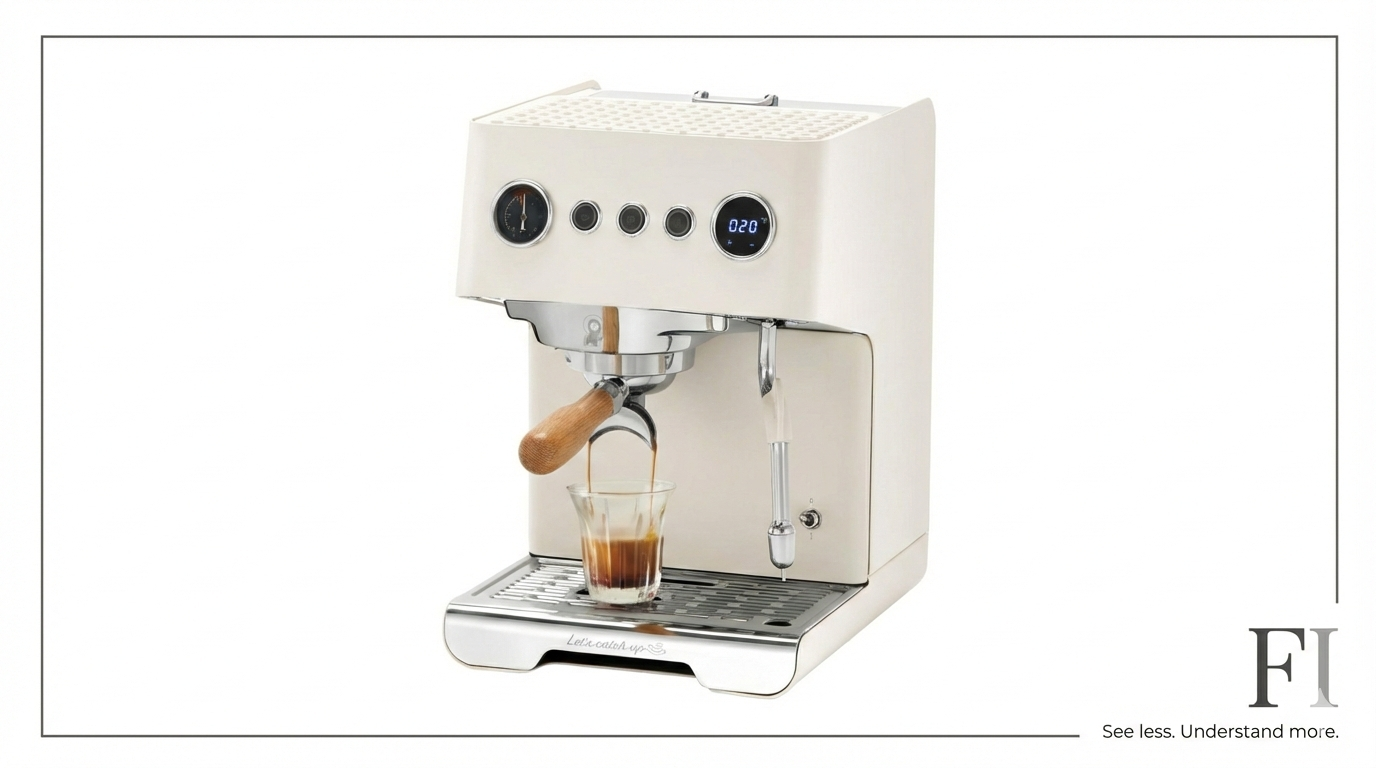
DECISION ANALYSIS
When I dissected this espresso system through real-world feedback and technical behavior patterns, the persistent tension wasn’t “can it make espresso?” — it was how consistently it makes espresso under everyday conditions. What follows isn’t a review. It’s a structural evaluation: how the machine’s core mechanisms influence outcome behavior in real workflows.
Fit Summary
This machine positions itself where thermodynamic control meets practical home prosumer use. What drew me to analyze it was not hype around power numbers or café branding, but rather whether its temperature behavior, pressure control logic, and workflow dependencies reduce variance for operators who want repeatable results.
Technical Analysis
Spec → Mechanism → Behavior → Outcome → Effect
Boiler & Heat Control Logic
Mechanism: Dual PID control with an integrated group design.
Behavior: The PID attempts to stabilize temperature at the brew circuit.
Outcome: Reduced drift between initial and follow-up shots — but only if the machine has warmed through sufficiently.
Effect: I learned that when thermal coupling into the group is effective, taste shifts soften. When it isn’t, I was fighting extraction temperature swings more than grind or tamp.
Context Note: Most consistent machines physically isolate or thermally buffer the brew circuit; integrated group designs aim for this but succeed only if control logic is responsive.
Adjustable Pressure (OPV Behavior)
Mechanism: Manual pressure adjustment via OPV assembly.
Behavior: Users can bias pressure toward classic ~9-bar extraction or experiment with lower/higher setpoints.
Outcome: Pressure can shape body and sweetness — if draft behavior is predictable shot to shot.
Effect: I found that pressure control without corresponding feedback (e.g., clear readout or stable monitor) introduces cognitive complexity for operators not deeply versed in pressure profiling.
Use-Case Fit: Great for operators who want control knobs; less ideal for those who want fewer variables.
Pre-Infusion Control
Mechanism: Configurable pre-infusion duration before full pressure.
Behavior: Aims to more evenly wet the puck and reduce channeling.
Outcome: When timed well (short and centered), channeling impact reduced; when overlong, extraction start became inconsistent.
Effect: I observed that pre-infusion interacts with pressure behavior — it only stabilizes shots when baseline pressure behavior is itself stable.
Steam Wand & Milk Workflow
Mechanism: High-power steam delivery with no automated microfoam assist.
Behavior: Steam is energetic but responsive to user technique.
Outcome: Fine microfoam demands skilled footwork — I often needed tilts, angle shifts, and timing adjustments that a steam assist or temperature rating could have ameliorated.
Effect: Milk texture became a differentiator between “functional” and “repeatable” workflows.
Contextual Specification Notes
- 58mm portafilter aligns with widely available baskets/tampers — this isn’t aesthetic, it’s an ecosystem advantage that reduces ancillary friction.
- Solenoid drain behavior affects daily cleanup consistency — machines that evacuate the group cleanly tend to reduce variance in hit-or-miss extraction rhythm.
- Voltage/power behavior matters in regions with fluctuating input, because parallel brew + steam capability isn’t always silently stable under lower amperage without robust hardware buffers.
Use-Case Fit
This machine structurally fits operators who:
- Are committed to learning shot mechanics and pressure behavior.
- Desire repeatability and control without entering professional café hardware.
- Tolerate a learning phase where workflow friction (pre-infusion/pressure/temperature interplay) is addressed systematically.
It is less suited for operators who want immediate café routine reliability with minimal tuning.
Trade-Offs & Constraints
Trade-Off A: Adjustable pressure → control freedom vs. potential inconsistency if unattended.
Trade-Off B: Integrated group thermal design → compactness vs. sensitivity to starting temperature gradients.
Constraint: Steam performance is powerful but requires manual technique for microfoam repeatability — no assist feature mitigates this.
Each of these is not a flaw in isolation. They become meaningful only in how they affect the user’s daily experience of variance versus stability.
Pricing Logic
Economically, this machine sits between entry prosumer and premium home segments. Value derives not from “feature lists,” but from mechanism quality relative to variance reduction. If the price were judged only against visible features, that would miss the control system’s role in shaping repeatability. From a structural perspective, the investment makes sense if one prioritizes their extraction stability trajectory over catch-all marketing claims.
Observational Validation Layer
1) Technical Claim → Observed Pattern → Interpretation
CLAIM: Adjustable pressure is valuable for taste shaping.
PATTERN: Independent hands-on evaluations repeatedly note flavor shifts when pressure is tweaked — but only when thermal conditions are stable.
INTERPRETATION: Pressure control only enhances outcome when temperature and puck wetting behavior are themselves constrained — control without stable baselines adds noise.
2) Technical Claim → Observed Pattern → Interpretation
CLAIM: Pre-infusion should improve channeling outcomes.
PATTERN: Across user feedback communities, inconsistent pre-infusion timing often correlates with shot variability, not improvement.
INTERPRETATION: Pre-infusion is only stabilizing if the machine’s timing and pressure logic are themselves consistent — otherwise it introduces a new variable.
Verdict
Structurally, this machine rewards operators who understand systemic stability mechanics and are prepared to integrate pressure, temperature, and pre-infusion into repeatable workflows. Its mechanisms are not gimmicks — they are real control points — but they only deliver coherence when the baseline system behavior has low variance. For operators who seek controlled mastery rather than immediate plug-and-play predictability, the system offers a meaningful alignment between feature set and outcome behavior.
For a single forward reference to the reviewed product in its marketplace context:
”Our analysis goes beyond the manual. We’ve synthesized hundreds of user experiences to show you how this hardware actually behaves in the wild—not just on paper.”