SOLIS EDGE REVIEW: YOU’RE BUYING A DEVICE. WHAT YOU’RE ACTUALLY BUYING IS A CONNECTIVITY DECISION YOU’LL KEEP MAKING.
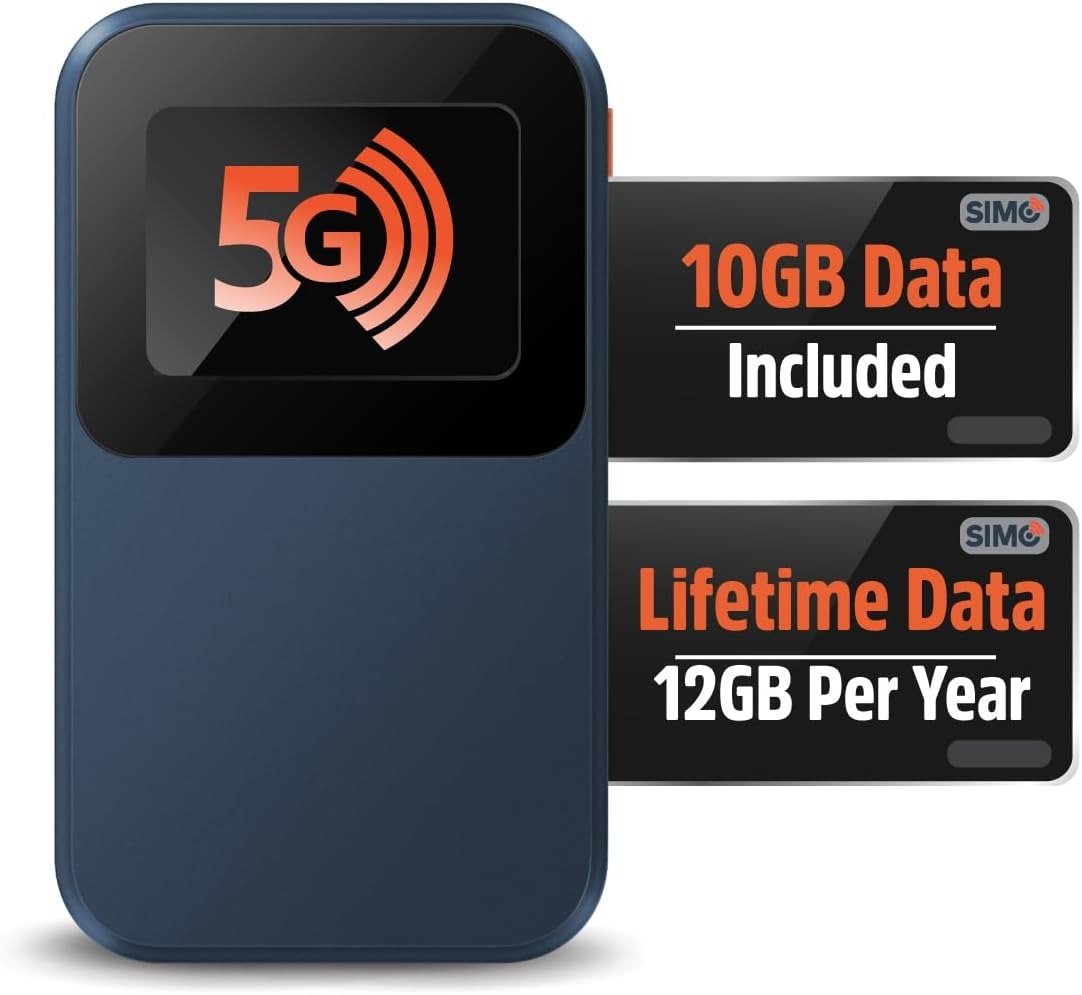
The device is small. Lighter than your passport. It fits in a shirt pocket and costs around $209. It ships with a promise printed in every product listing: 1GB of global data every single month, forever, at no extra cost.
That sounds like the problem is solved.
It isn’t. The problem is just smaller and quieter — and it will wait until you’re mid-meeting in a hotel in Frankfurt, or tethered on three devices in a layover in Dubai, before it makes itself known.
This review is not about whether the Solis Edge works. It works. The question worth answering is: for what, exactly, and at what point does “works” quietly stop being true?
The Result Looks Fine. The Problem Isn’t.
Most people who buy a portable global hotspot aren’t buying speed. They’re buying relief from a specific recurring dread: landing in a new country and not knowing if the internet will cooperate.
The Solis Edge addresses that dread convincingly on the surface. No physical SIM. No carrier contracts. No roaming fees negotiated at an airport kiosk at midnight. You power it on, SignalScan sweeps the local carrier environment, and you’re connected — in theory to the strongest signal available across 300+ carriers in 140+ countries.
That part is largely true. Users across Best Buy, Amazon, and long-term travel forums report consistent international pickup: Japan, Latin America, Europe, the Middle East. The carrier-switching logic works. The device earns its global coverage claim.
But the result you see — connected, signal strength showing, devices joined — is not the same as the outcome you need. What the display doesn’t show you is your data ceiling. And that ceiling is 1GB per month. Always. By default. Forever.
The relief you feel at connection is real. The calculation you didn’t make before connecting is also real.
What You’re Actually Feeling but Not Naming
There is a specific discomfort that portable hotspot buyers carry but rarely name precisely.
It’s not “I want internet.” Everyone wants internet. It’s something narrower: I want to stop making decisions about internet while I’m already somewhere inconvenient.
You don’t want to think about which carrier plan is valid in which country. You don’t want to discover mid-trip that your SIM only covers data at 4G speeds in Japan but 2G in Korea. You don’t want to stand in an airport and pay $22 for 3 hours of Wi-Fi access because you planned badly.
What you want is a device you throw in your bag, power on in any country, and forget about.
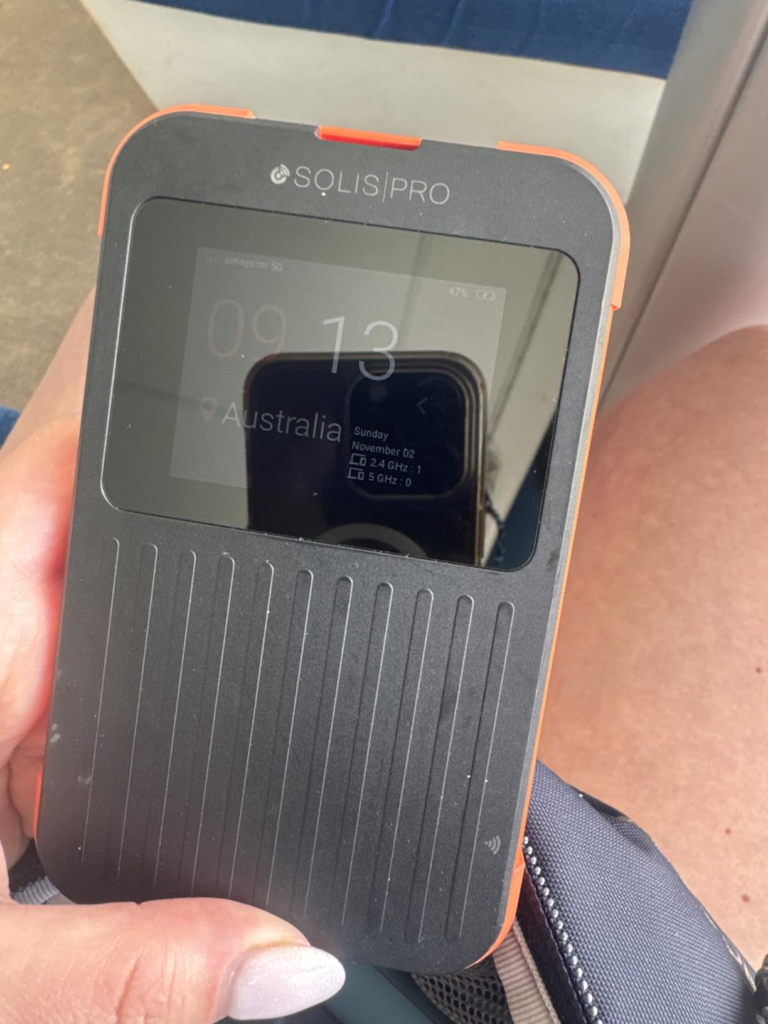
The Solis Edge delivers that feeling for the first two or three days of a trip. Setup is clean. SignalScan is genuinely useful. The 2.4″ touchscreen shows you real signal strength. The 5,000mAh battery runs multiple days between charges. Ten devices can share the connection simultaneously. WPA3 encryption keeps your session private in ways public airport Wi-Fi never will.
The discomfort that doesn’t disappear — the one you didn’t name before buying — is that connection and enough data are not the same thing. The device solves the first problem structurally. The second problem it hands back to you, one month at a time.
The Hidden Mechanism Behind the Miss
Here is what the 1GB lifetime promise actually is, mechanically.
SIMO’s vSIM technology connects the Solis Edge to local carrier networks without a physical SIM. The device negotiates network access at the carrier level, handles switching automatically, and routes your connection through their cloud platform. This infrastructure is real, patented, and the reason the device delivers genuine global coverage without SIM logistics.
The lifetime data allocation — 1GB per month, every month, for the life of the device — sits on top of that infrastructure as a floor. It is not a plan designed for primary internet use. It is, in SIMO’s own framing, a backup plan: something that keeps the device functional and connected even when you’re not actively purchasing additional data.
1GB per month supports roughly 10 to 20 hours of general web browsing. It supports approximately 2 hours of standard video streaming. For email-only use across a short international trip, it may stretch. For anything involving video calls, file uploads, cloud syncing, or sustained remote work, it is exhausted in hours.
Additional data is available: pay-per-GB (purchased as needed, non-expiring), regional subscriptions for North America, and global unlimited monthly plans. The flexibility is genuine. But those purchases are outside the device price — and the requirement for them is not always apparent at the point of purchase, because the marketing language around “lifetime data” implies more permanence than the volume supports.
The mechanism behind the miss: the purchase decision is made based on the word lifetime. The operational constraint arrives based on the number 1.
The Threshold Where the Outcome Quietly Breaks
There is a specific usage threshold at which the Solis Edge stops functioning as a primary travel internet device and reverts to a backup or supplementary tool.
| Usage Pattern | Monthly Data Required | 1GB Lifetime Plan | Gap |
|---|---|---|---|
| Email + light browsing (2–3 hrs/day) | ~3–5 GB | Covered only for ~6–8 days | Shortfall within first week |
| Remote work with video calls (4 hrs/day) | 15–30 GB | Covered for less than 2 hours | Structural shortfall |
| 10 connected devices sharing | Scales with device behavior | Depletes in hours | Not designed for this use |
| Light backup / emergency connectivity | ~0.5–1 GB | Covered | Fits the design |
| Short leisure trip (maps, messaging) | ~1–2 GB | Partially covered | Stretch possible |
The threshold is not at “heavy use.” It’s much earlier than most buyers assume. The Solis Edge crosses from primary-use device into supplementary-use device the moment you have more than two people sharing it, or the moment you open a video conferencing application.
Below that threshold: the device is efficient, clean, genuinely low-friction, and meaningfully better than alternatives that require SIM management.
Above that threshold: you will be buying additional data consistently, and the total cost of ownership changes materially.
This threshold is not a flaw in the hardware. It is a design position. The device is built for the traveler who needs reliable access, not unlimited access. Those are different products.
Why Most Buyers Misread This Too Early
The comparison that seems obvious — Solis Edge versus a local SIM — fails immediately under pressure.
A local SIM requires knowing which carrier works in which country, buying it at a kiosk or ordering it in advance, swapping it in your phone (which locks your personal number during travel), and repeating the entire process at each border crossing. For multi-country travel, this is not a convenience. It is a logistics burden most people underestimate until they’re standing in a foreign phone store at 10pm with no translation support.
The comparison that also seems obvious — Solis Edge versus your phone’s international data plan — fails differently. Most carrier international plans cost $10–15 per day for throttled or capped access, with the fee running whether you use data or not. A week of travel on an international day pass can cost $70–105 in fees alone, without the privacy or multi-device sharing the Solis Edge provides.
The comparison that buyers make too quickly — 1GB per month as “unlimited” because it renews — is where the misread lives. Renewal is not volume. Monthly replenishment of a fixed small amount is not a substitute for a data plan scaled to actual work-level consumption.
The buyers who feel disappointed with the Solis Edge are almost always buyers who made the third comparison and acted on it.
Who Is Actually Inside This Problem
The Solis Edge resolves a real problem for a specific category of traveler. That category is narrower than the marketing language suggests.
The traveler who fits:
- Crosses international borders multiple times per year, often to different countries
- Uses connectivity primarily for email, messaging, maps, and occasional browsing
- Travels with one or two devices, not a full team
- Has sporadic but not continuous work obligations during travel
- Values private, encrypted Wi-Fi over public airport or hotel connectivity
- Prefers to buy data as needed rather than manage a recurring subscription
- Travels to countries where local SIM logistics are complicated or unreliable
The professional or digital nomad who also fits:
- Uses the Edge as a secure backup layer while relying on hotel/office internet for heavy work
- Travels frequently enough that paying $209 once is cheaper than repeated international SIM purchases
- Needs a reliable emergency connection with guaranteed monthly baseline — for device management, messaging, and light access
For these users, the device genuinely delivers. The data from multi-year users across verified review channels confirms it: stable performance across Latin America, Asia, and Europe over 2+ years of travel, with the limitation clearly understood and managed.
Where Wrong-Fit Begins
The wrong-fit profile is as distinct as the right-fit profile.
| Signal | What It Means |
|---|---|
| “I want to work remotely from cafes across three countries” | You will exhaust 1GB within days. Plan cost will surprise you. |
| “I need to share this with my family of four” | Ten devices supported, but data drains proportionally. 1GB is gone in hours. |
| “I want one device that replaces my phone’s data completely” | Designed as supplement, not replacement. |
| “I need 5G speeds continuously” | 5G where available; falls to 4G LTE in many regions. Rural coverage is carrier-dependent. |
| “I need internet in extremely remote areas” | Requires cellular tower coverage. No towers, no connection — same as any cellular device. |
| “I travel domestically and rarely internationally” | Local SIM or phone tethering is more cost-efficient for single-country use. |
The regret cases cluster around one misread: buyers who assumed the 1GB monthly lifetime plan was a starting point that would grow, or that “lifetime” implied “unlimited.” Neither is the structure of the offer.
The other regret vector is price sensitivity. At $199–$209 for the device, plus pay-per-GB or subscription costs for meaningful usage, the total cost over 12 months can exceed what a well-managed eSIM subscription would cost — depending on countries visited and usage volume. The math is not automatically favorable for cost-conscious travelers.
The One Situation Where This Product Becomes Logical
If you are a frequent international traveler who moves across multiple countries in a single trip, uses one or two devices, and wants clean private connectivity without SIM administration — the Solis Edge is the most structurally sound device at its price point.
The 5G + WiFi 6 hardware is the newest in SIMO’s lineup. The 5,000mAh battery runs multiple full days. The SignalScan carrier-switching is automatic and reliable in urban and suburban coverage zones across 140+ countries. The non-expiring pay-per-GB data model means you can load 10GB before a trip and carry it across borders without it disappearing if you don’t use it all. The WPA3-encrypted private connection is materially more secure than hotel or airport Wi-Fi.
No competing device in this weight class — 78.8 grams — offers this combination of global carrier access without SIM management at this price point. The GlocalMe Numen Air requires SIM card management for optimal pricing. The Netgear Nighthawk M6 Pro delivers superior throughput but at $499 and significantly more weight. Neither eliminates the carrier-logistics problem the way SIMO’s vSIM architecture does.
The logic closes for the traveler who has already done the SIM math, already experienced the roaming fee, already sat in a hotel with insecure Wi-Fi and sensitive work open on their screen. For that traveler, the Solis Edge is not a compromise. It is the most friction-free structural answer available at its weight and price.
What It Solves, What It Reduces, and What It Still Leaves to You
| Category | What the Solis Edge Does |
|---|---|
| Solves completely | SIM card management across countries |
| Solves completely | Roaming fee exposure |
| Solves completely | Public Wi-Fi security risk |
| Solves completely | Multi-device sharing (up to 10) |
| Solves completely | Carrier selection and switching |
| Reduces meaningfully | Setup friction on arrival in new countries |
| Reduces meaningfully | Dependency on hotel/airport Wi-Fi |
| Still leaves to you | Data volume planning for heavy use |
| Still leaves to you | Rural coverage gaps (carrier-dependent) |
| Still leaves to you | Purchasing additional data beyond 1GB/month |
| Still leaves to you | Account and plan management via the app |
The device does not eliminate the need to think about data. It eliminates the need to think about SIMs, carriers, and roaming agreements. Those are different things, and it is worth being precise about which problem is being solved.
Battery depletion is real if you leave the device on without active use — it drains overnight if forgotten. The touchscreen response has been noted as slightly sluggish in some reviews. App management is required for plan purchases and account changes; the device itself is not self-contained for those functions.
None of these are dealbreakers for the right user. All of them are worth knowing before you assign expectations the device cannot meet.
Final Compression
The Solis Edge review resolves to a single operational question: Are you buying a primary internet device, or a primary carrier-freedom device?
If the answer is carrier freedom — if what you need is to arrive anywhere in 140 countries, power on, and be connected without SIM administration, roaming fees, or public Wi-Fi exposure — the Solis Edge delivers that structural outcome cleanly, at a weight no competing device matches, for a one-time cost that pays itself back within the first international trip compared to carrier international day passes.
If the answer is primary internet — sustained remote work, video calls, multi-device heavy sharing — the 1GB monthly baseline is not the product you need. You will be purchasing data continuously, and the total cost of ownership should be calculated against that reality before purchase, not after.
The threshold is not a surprise once named. The device is not a fraud. The marketing language is generous with “lifetime” and quiet about “1GB.” The honest version of both is: you get permanent access to a baseline that keeps the device alive and useful, and you scale that baseline to your actual usage by purchasing additional data as needed.
If you are a frequent international traveler, light-to-moderate in data needs, crossing multiple countries, and done with SIM logistics — the decision stops being vague at this point.
Frequently Asked Questions
| Question | Answer |
|---|---|
| Is the 1GB monthly lifetime data actually free, or is there a hidden subscription? | The 1GB per month is genuinely included with the device purchase — no monthly fee, no subscription required. It renews automatically each month for the life of the device. It is real. The limitation is volume: 1GB supports light browsing and email, not sustained remote work or video streaming. |
| What does the Solis Edge actually cost beyond the $209 device price? | If you stay within the 1GB monthly baseline, there is no ongoing cost. If you need more, SIMO offers pay-per-GB bundles (non-expiring, usable across countries), regional subscriptions for North America (USA/Canada/Mexico), and global unlimited monthly plans. The pay-per-GB option is the most flexible for intermittent travelers. |
| Does the Solis Edge actually get 5G speeds everywhere? | 5G is available where local carriers support it. In major urban areas across the US, Europe, Japan, and parts of Asia, 5G connectivity is confirmed. In rural areas or less-developed networks, the device falls to 4G LTE automatically. No cellular hotspot can deliver 5G where the tower infrastructure doesn’t exist. |
| Can I use this instead of my phone’s data plan while traveling? | As a primary replacement — no. As a supplement and security layer — yes. The device is designed to provide private, encrypted Wi-Fi across multiple devices. For data-heavy primary use, the 1GB ceiling requires consistent top-ups, and total cost should be calculated against alternative plans. |
| How does Solis Edge compare to just buying a local SIM in each country? | A local SIM requires purchasing at each destination, carrier research per country, and in some cases physically swapping SIMs — which locks your personal number. For multi-country trips, this is a meaningful logistics burden. The Solis Edge eliminates that entirely. For single-country trips or users comfortable with SIM management, a local SIM may be more cost-efficient per GB. |
| Who should not buy the Solis Edge? | Travelers who need sustained high-volume data for remote work without consistent additional purchases. Families or groups expecting to share heavy data across many devices. Users traveling primarily within one country where local SIM or phone plan international add-ons are cost-competitive. Anyone expecting “lifetime data” to mean unlimited data — it means 1GB per month, always, not more. |
| Is the battery actually sufficient for a full day of travel? | The 5,000mAh battery supports multiple days of standby and a full travel day of moderate active use. Verified users report all-day connectivity without recharging under normal conditions. If left on without active use overnight, it will drain. The USB-C fast charging makes recovery quick. |
Transparency Note:
This analysis is built on aggregated real-world experience.
It extracts what repeatedly holds, what breaks, and what users uncover only after living with the system—then shapes it into a clear model you can use immediately.
Think of it as structured experience, refined and presented so you don’t have to learn it the hard way.
“A quick note: Don’t believe the star ratings, but trust personal experience. This article is a compilation of collected experiences”