Your Doorbell Rang. The Person Was Already Gone. The Arlo Essential Video Doorbell 2K Exists Because of That Exact Moment.
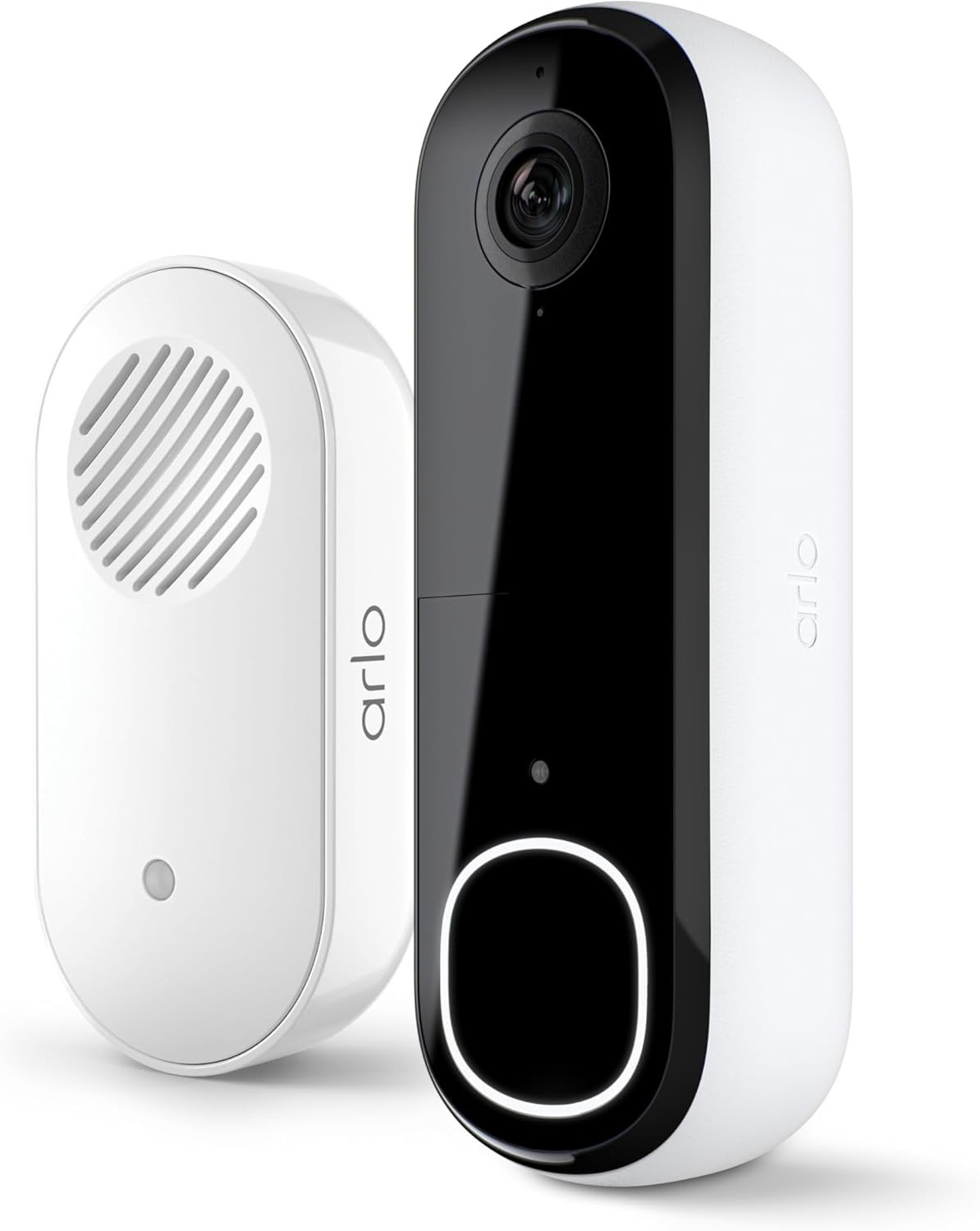
ARLO ESSENTIAL VIDEO DOORBELL 2K
You heard the notification. You opened the app. By the time the feed loaded, whoever was at your door was halfway down the driveway. You got a clip of an empty porch, or maybe a shoulder disappearing out of frame.
That’s not a one-time glitch. That’s a structural problem baked into how most doorbells are designed — and how most buyers evaluate them before purchasing.
They compare megapixels. They compare prices. They compare brand names. They do not compare the specific failure modes that emerge after six weeks of actual use, when the initial excitement of seeing your porch in HD fades and what’s left is the daily friction of a device that almost works.
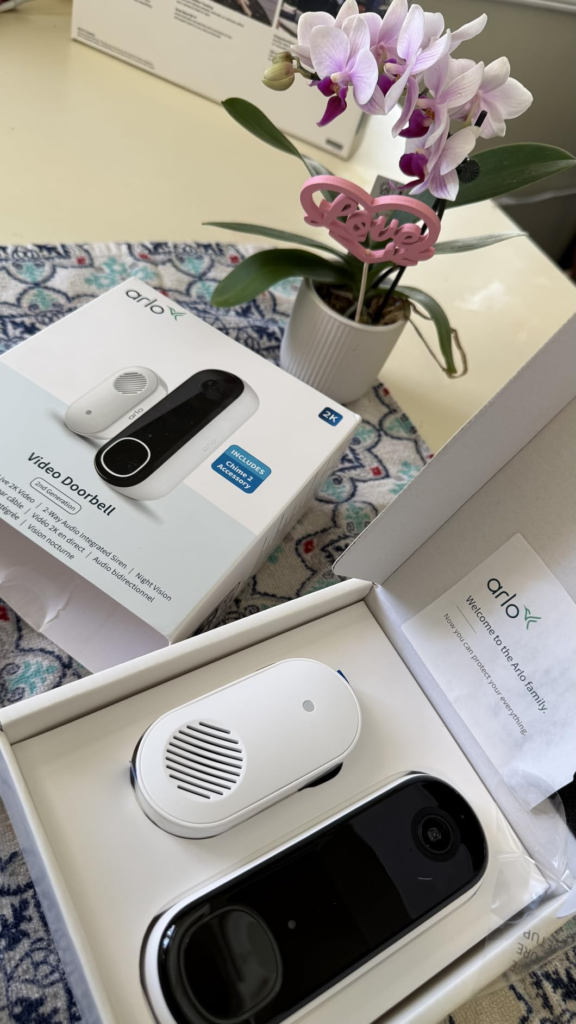
This is the friction the Arlo Essential Video Doorbell 2K (2nd Generation) was engineered around. Not the brochure version of security. The lived version.
The Feed Looks Clean. The Miss Happens Before You Even Open It.
The Arlo 2K doorbell has a documented 2–3 second delay when answering, and motion notifications are slow — often missing movement when the device has been inactive for a period of time. This is the gap no spec sheet lists. Not the resolution. Not the field of view. The latency between something happening at your door and the moment you’re actually watching it.
This gap is not random. It’s a function of how battery-operated smart doorbells wake from sleep, handshake with the cloud, and push a notification to your phone. Often, by the time a motion notification is opened, the person, animal, or vehicle that triggered it is already gone from the frame.
Understanding this doesn’t make the doorbell worse. It makes your expectations accurate. And accurate expectations are the only thing that separates a satisfied buyer from a bitter reviewer six weeks post-purchase.
The question is not whether the Arlo 2K is fast. The question is whether the specific problem you’re solving requires real-time interception — or documentation, deterrence, and post-event clarity. Those are two entirely different use cases, and they point toward two entirely different purchase decisions.
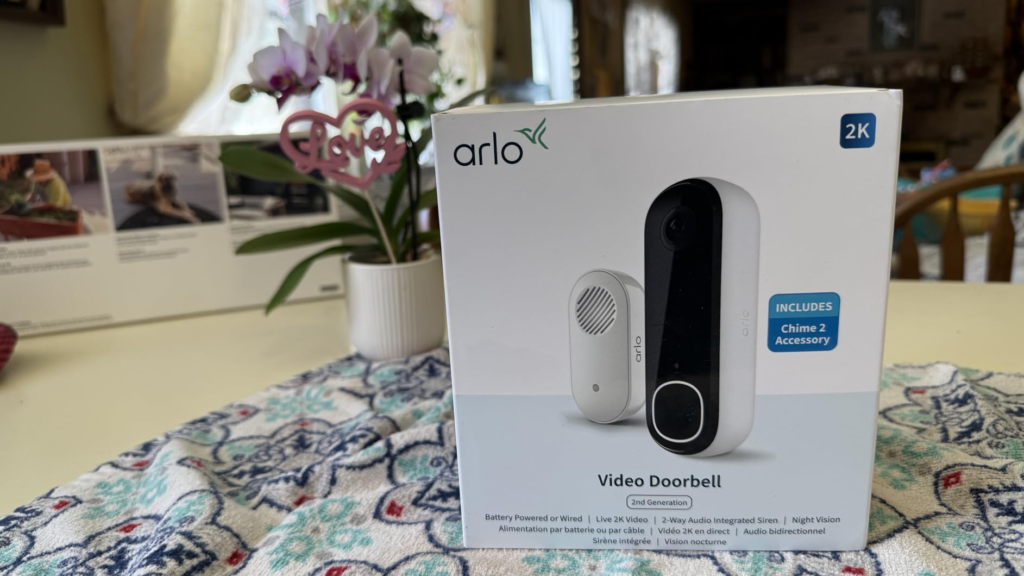
What You’re Actually Feeling but Not Naming Yet
There’s an irritation that most doorbell shoppers carry without being able to articulate it. It surfaces as vague anxiety about the question: will I actually be able to see what happened?
Not just “does it record.” Not “is the video clear.” But: will the frame capture the full scene — the face, the package on the step, the person who rings and then immediately steps back?
Most video doorbells use a 16:9 widescreen ratio. Arlo uses a 1:1 square aspect ratio, which means you get a wide vertical field of view — enough to see a visitor’s face and any packages at their feet in one clean shot, with no extra adjusting needed.
That difference is structural, not cosmetic. A 16:9 frame optimized horizontally shows you wide but cuts the vertical. A 1:1 frame captures the full scene from head to ground. The Arlo 2nd Gen Video Doorbell 2K features a wide 180-degree field of view, providing comprehensive coverage of entrance areas.
The irritation you’ve been feeling? It’s the suspicion that most doorbells were designed for marketing photography, not for the actual geometry of a front porch.
The Hidden Mechanism Behind the Miss
Here is what most doorbell buyers don’t understand until after they’ve installed one: the camera’s resolution is not the primary variable in whether you can identify someone at your door. The frame geometry is.
A 4K camera with a 16:9 horizontal ratio cannot show you a face and a package on the ground simultaneously. Physics prevents it. The optics are optimized for width, not for the vertical depth of a typical front door interaction.
The Arlo Video Doorbell captures full 2K video, delivering a noticeably sharper and more detailed image than 1080p, and uses a 1:1 square aspect ratio — wide enough to see a visitor’s face and any packages at their feet in one clean shot.
The 2K resolution serves a secondary but real purpose: the 2K resolution combined with the 180-degree field of view allows the doorbell to capture packages, visitors, and activity with clarity. When you need to zoom into post-event footage — a license plate, a label on a package, a person’s face — the extra pixel density from 2K over 1080p creates a meaningful zoom margin. You can crop aggressively and still read the detail.
That’s the actual mechanism. Not “better video” in the abstract. Better zoom headroom in footage you’re reviewing after the fact.
The Threshold Where the Outcome Quietly Breaks
There is a specific threshold at which the Arlo Essential Video Doorbell 2K stops delivering its full value, and it’s not talked about enough.
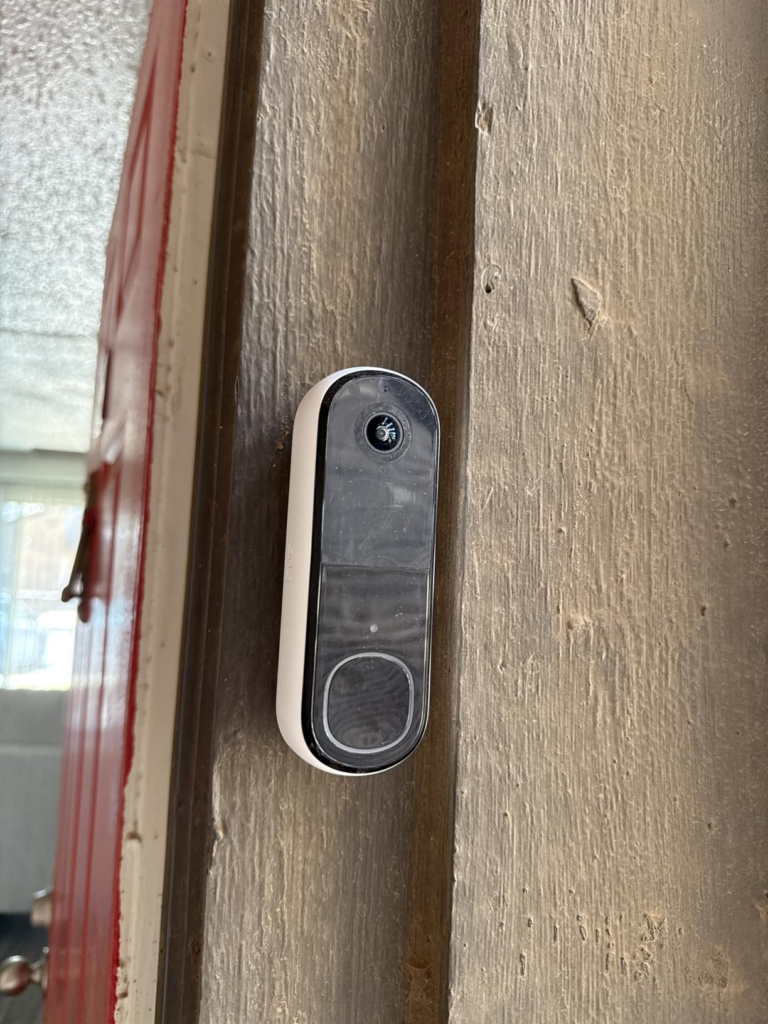
The Arlo Video Doorbell requires a wired doorbell and chime setup with existing electrical wiring and a 16-24 VAC transformer. The connection to a wired mechanical or digital chime is what enables continuous power, reduces latency, and allows the device to capture and transmit videos in real time.
This is the threshold: wired vs. battery-operated installation.
When installed wired, the doorbell stays in a continuous low-power active state. Wake-up latency shrinks. Notification speed improves. The 2–3 second delay compresses. The device behaves like a security device, not like a battery-conserving IoT gadget.
When running on battery, the doorbell enters sleep cycles to preserve charge. Wake-up latency expands. The gap between trigger and notification grows. The experience degrades in exactly the ways that frustrate users most.
This table clarifies what changes between the two modes:
| Factor | Wired Installation | Battery Mode |
|---|---|---|
| Notification latency | Reduced significantly | 2–3 seconds typical |
| Live stream readiness | Near-instant | Delayed wake cycle |
| Motion capture reliability | Continuous | Intermittent after idle |
| Power management | Zero — draws from chime wiring | Requires periodic recharge |
| Long-term usability | Set and forget | Ongoing maintenance task |
If your home does not have existing doorbell wiring between 16–24V AC, the wired installation path is closed to you. Running the Arlo 2K on battery is a viable option — but you must accept that the latency complaints you’ll read in user reviews are real, structural, and not fixable through settings.
Why Most Buyers Misread This Too Early
The most common mistake in this category happens at the comparison stage. A buyer looks at three doorbells side by side, sees that Arlo is priced lower than Google Nest and in the same range as Ring, and concludes the decision is about brand loyalty or ecosystem preference.
That framing misses the only comparison that matters: frame geometry vs. subscription cost vs. installation reality.
Here is the honest comparison across the three major options:
| Metric | Arlo 2K (2nd Gen) | Ring Video Doorbell Pro | Google Nest Doorbell (2nd Gen) |
|---|---|---|---|
| Resolution | 2K HDR | 1536p HD | 960 × 1280 HDR |
| Aspect ratio | 1:1 square | 16:9 widescreen | 3:4 portrait |
| Field of view | 180° diagonal | 160° | 145° |
| Wired option | Yes (16–24V AC req.) | Yes | Yes (wired & battery) |
| Battery option | Yes | Yes | Yes |
| Subscription for smart detection | Yes — $7.99/mo (annual) | Yes — $5/mo | Yes — Nest Aware from $8/mo |
| Free tier without subscription | Live view + basic alerts | Live view only | Live view + some free events |
| Smart home ecosystem | Alexa only | Alexa + Google | Google + Alexa |
| Privacy policy on law enforcement | Requires warrant | Has shared without consent | Strict authentication protocols |
| Notification speed (battery) | 2–3 sec delay | Faster wake | Comparable |
Privacy has become a real differentiator: Arlo requires a warrant before sharing footage, while Ring and Nest have shared video with law enforcement without user consent in emergency situations. For buyers who care about data sovereignty at the front door, this distinction is not minor.
Arlo’s cloud storage fees start at $8 per month for a single camera and $18 for unlimited cameras — lower than many security subscriptions.
The early comparison trap is treating all three as functionally equivalent. They are not. They solve different geometry, fit different installation realities, and carry different ongoing cost structures.
Who Is Actually Inside This Problem
The Arlo Essential Video Doorbell 2K fits a specific profile. Not every buyer. A specific one.
You are a fit for this device if:
- Your home has existing doorbell wiring at 16–24V AC, and you are willing to use it
- You have experienced the package-theft or missed-delivery problem, and want post-event footage that shows both the face and the ground
- You are building or expanding an Arlo camera ecosystem and want your doorbell integrated into the same app
- You care about warrant-required data sharing and Alexa integration is your primary smart home ecosystem
- You want flexible installation — battery or wired — without buying a different model for each
- You are comfortable with a $7.99/month subscription to unlock smart detection, and you understand that without it, you get live view and basic motion alerts only
With an Arlo Secure subscription, you get person detection and 30 days of cloud storage on top of excellent video, audio, night vision, and Alexa integration. The value equation is real — but only when the subscription cost is accepted as part of the total ownership cost from day one.
This table maps the buyer types:
| Buyer Type | Fit Level | Reason |
|---|---|---|
| Existing Arlo camera owner | High | Same app, same ecosystem, unified monitoring |
| Alexa-primary smart home | High | Native integration, no workarounds |
| Wired doorbell home (16-24V AC) | High | Full performance unlocked |
| Package theft / delivery verification focus | High | 1:1 frame captures face + package simultaneously |
| Google Home user | Low | No native Google integration |
| Apple HomeKit user | Low | Requires separate SmartHub — sold separately |
| Subscription-averse buyer | Low | Free tier is limited; smart detection requires plan |
| Renter needing no-drill install | Medium | Battery mode works; performance trade-offs apply |
Where Wrong-Fit Begins
There is a buyer who will feel regret with this device. Identifying that buyer matters more than any feature list.
The absence of anti-theft features, slow loading of notifications, and the necessity for an Arlo Secure subscription to unlock full capabilities present significant drawbacks — particularly for users concerned about security and additional costs.
If you are replacing a Ring doorbell specifically because Ring’s subscription feels expensive, and your plan is to use the Arlo free tier to avoid all ongoing costs, this device will disappoint you. The free tier gives you live streaming and basic motion alerts. Premium features like 60-day video cloud storage, people, package, and vehicle detection, and 24/7 emergency response require a paid subscription after the trial period.
If you are buying this doorbell hoping for Ring-level notification speed on battery, you will be frustrated. The 2–3 second wake delay is not a defect. It is a structural property of battery-operated cloud-connected devices. Ring has invested years in minimizing this latency specifically. At comparable price points, Ring is faster on battery.
If your home runs entirely on Google Home or Apple HomeKit, the Arlo ecosystem creates friction. Arlo’s Video Doorbell excels with Alexa integration but lacks Google and Apple support natively. Apple HomeKit requires an additional SmartHub purchase.
The wrong-fit threshold looks like this:
| Situation | Outcome If Purchased |
|---|---|
| No existing doorbell wiring | Battery mode only — reduced performance |
| Google-primary smart home | Ecosystem mismatch, workaround required |
| Subscription-averse buyer | Most valued features locked behind paywall |
| Needs fastest possible notification | Ring performs better in this specific dimension |
| Expects anti-theft hardware protection | Not present on this device |
The One Situation Where the Arlo Essential Video Doorbell 2K Becomes the Logical Choice
You have existing doorbell wiring. You’ve lost a package to a porch thief, or you’ve returned home to find a delivery note instead of a box, and your current doorbell showed you a blurry horizontal frame with no ground coverage. You are building a camera setup and want everything in one app. You use Alexa. You’re willing to pay $7.99 a month to make the smart detection work.
In that specific convergence of conditions, the Arlo Video Doorbell 2K (2nd Gen) is CNET’s overall favorite and PCMag’s Best Overall pick — its defining feature is genuine flexibility: it’s one of the only doorbells that works equally well on battery or wired power, and you can switch between them without buying a different model.
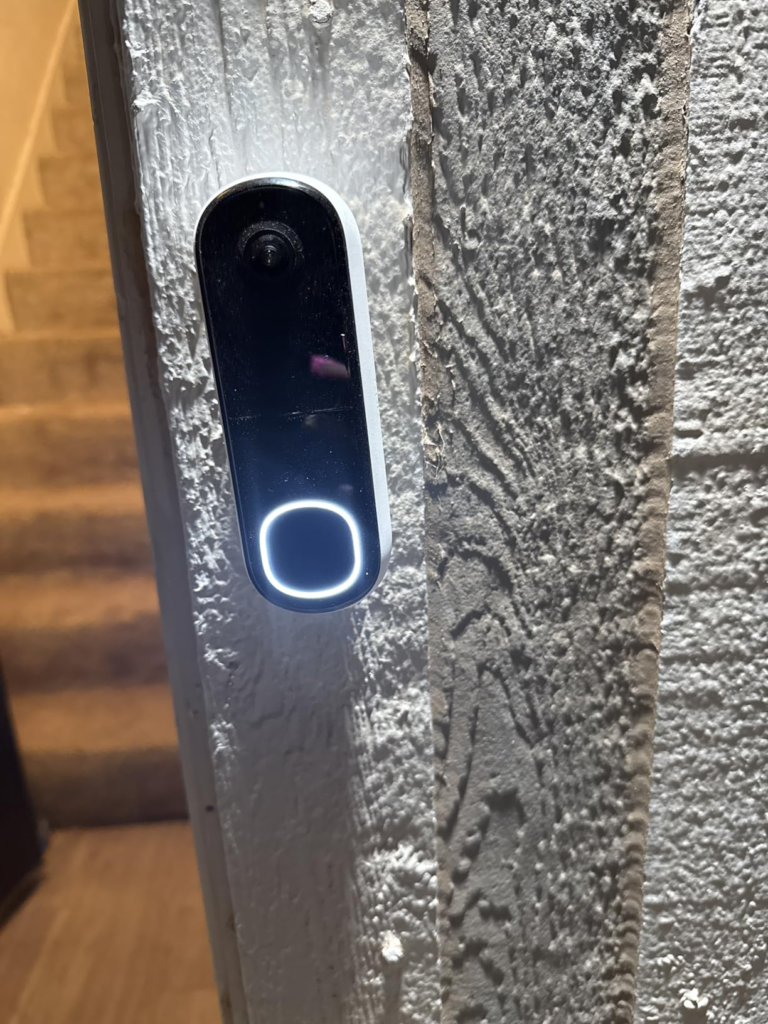
The doorbell is designed to capture what traditional doorbells can’t — including programmable activity zones to reduce false notifications, and AI integration to differentiate between vehicles, people, animals, and packages.
The value is real. The geometry advantage is real. The privacy advantage is real. None of these are marketing language. They are structural properties of a device that was designed with a specific problem in mind — and that fits buyers who live inside that problem.
What It Solves, What It Reduces, and What It Still Leaves to You
This section is not a disclaimer. It is the information that prevents regret.
What the Arlo Essential Video Doorbell 2K genuinely solves:
- The vertical blind spot that eliminates packages from the frame
- The identity verification gap when you need face and ground in the same uncut shot
- The ecosystem fragmentation of managing multiple camera apps
- The installation inflexibility of choosing between battery-only or wired-only doorbells
What it meaningfully reduces:
- False alerts through AI-powered activity zone customization
- Night-time uncertainty through included night vision
- Weather-related failure through IP65-rated construction
- Total subscription cost compared to Ring and Nest tiers at equivalent feature levels
What it leaves to you:
- Accepting and managing the notification latency on battery mode
- Funding the Arlo Secure subscription for smart detection to fully function
- Installing within the 16–24V AC wiring constraint if you want wired performance
- Integrating into non-Alexa smart home ecosystems manually
No device eliminates all of these simultaneously. The question is which trade-offs you can absorb, and which ones will cause daily friction.
Frequently Asked Questions
| Question | Answer |
|---|---|
| Does the Arlo Essential Video Doorbell 2K work without a subscription? | Yes. Live streaming and basic motion alerts function without a subscription. However, smart detection features — person recognition, package detection, vehicle alerts, 60-day cloud storage, and 24/7 emergency response — require the Arlo Secure plan, which starts at $7.99/month billed annually after the included one-month trial. |
| Can I install it without existing doorbell wiring? | Yes. The 2nd Generation model supports both wired and battery-powered operation. If you lack existing wiring, battery mode works — but notification latency increases and motion capture reliability during idle periods decreases compared to wired installation. |
| What voltage does the wired installation require? | The wired configuration requires existing doorbell wiring between 16–24V AC with a compatible transformer. Homes with digital or mechanical chimes within this range are compatible. Homes outside this range must use battery mode. |
| Is the Arlo doorbell compatible with Google Home or Apple HomeKit? | Google Home integration is not natively supported. Apple HomeKit compatibility requires a separately purchased Arlo SmartHub or Base Station. |
| How does the 2K resolution compare to competitors at this price? | At this price tier, the Arlo 2K delivers superior vertical frame coverage through its 1:1 aspect ratio combined with 180-degree diagonal field of view. Ring at comparable price points typically delivers 1080p with a 16:9 ratio. The practical difference is that Arlo shows you more of the vertical scene — both face and ground — while Ring shows you more horizontal width. |
| What happens to recorded footage without a subscription? | Without an Arlo Secure plan, no cloud storage is retained. You can view live streams and receive basic motion alerts, but footage is not stored for later review unless you have an Arlo SmartHub with local storage capability. |
| Is the notification delay fixable through settings? | No. The 2–3 second wake delay on battery mode is a structural property of the device’s power management, not a settings issue. Wired installation reduces this delay substantially by keeping the device in a continuous active state. |
| Does Arlo share footage with law enforcement without consent? | Arlo requires a valid warrant before sharing user footage with law enforcement. This differentiates it from Ring, which has shared footage without user consent in emergency situations. |
Final Compression
The Arlo Essential Video Doorbell 2K is not the right doorbell for everyone. It is the right doorbell for a buyer with wired infrastructure, an Alexa-integrated home, a package-visibility problem, and the willingness to sustain a subscription that unlocks the detection layer the device was built around.
For that buyer, delaying the decision usually means continuing to live with a doorbell that captures motion without capturing meaning — footage that shows something happened without showing you what.
If the conditions above describe your front door, the next logical step is not another comparison. The geometry problem, the ecosystem fit, and the subscription math have already resolved themselves. The decision is simply whether you act on what you now understand.
From our analytics lab: More top-rated reviews
| PRODUCT NAME: GOOGLE NEST DOORBELL BATTERY (GWX3T) |
| PRODUCT NAME: AOSU DOORBELL CAMERA |
Transparency Note:
This analysis is built on aggregated real-world experience.
It extracts what repeatedly holds, what breaks, and what users uncover only after living with the system—then shapes it into a clear model you can use immediately.
Think of it as structured experience, refined and presented so you don’t have to learn it the hard way.
“A quick note: Don’t believe the star ratings, but trust personal experience. This article is a compilation of collected experiences”