Your Network Didn’t Get Slow by Accident. It Crossed a Threshold You Couldn’t See.
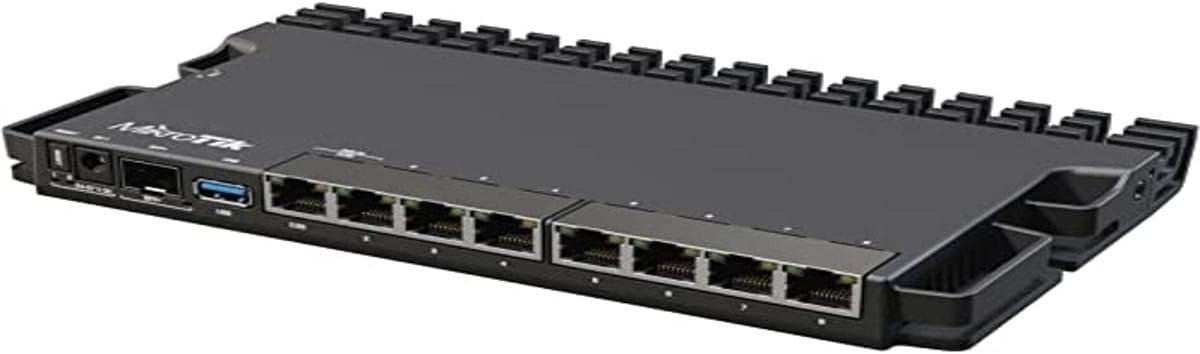
MIKROTIK RB5009UG+S+IN
I have seen this kind of network failure too many times. Nothing looks dramatic at first. A faster ISP plan comes in. A NAS gets added. One access point becomes two. A VPN tunnel starts living in the background. A 2.5G handoff shows up. On paper, everything still looks clean. In practice, the room changes. The silence goes first. Then the confidence. Then that small, low-grade irritation of knowing the network is technically “up” while the experience feels oddly brittle.
That is the exact kind of break point the MikroTik RB5009UG+S+IN was built for: a compact wired router with seven 1GbE ports, one 2.5GbE port, one 10G SFP+ cage, a quad-core ARM CPU, 1GB RAM, passive cooling, and RouterOS v7 already licensed and installed. MikroTik’s own published tests show near-10Gbps fast-path routing/bridging in ideal conditions and about 1.35–1.42Gbps IPsec throughput depending on the profile, which tells you immediately what this box is and what it is not. It is not a toy. It is not a Wi-Fi appliance. It is a small, dense control center for people whose network has started asking for more than a plastic consumer router can deliver.
The Result Looks Fine. The Problem Isn’t.
The first trap is visual. The internet still works. Pages still load. The TV still streams. Your phone still shows full bars. That is why people misdiagnose this stage. They judge the network by whether it is alive, not by whether it is composed. But once you start mixing faster WAN, internal file movement, VLANs, traffic rules, VPN use, or multiple wired and wireless segments, the weak point is no longer “internet yes or no.” It becomes coordination. The network starts behaving like a hallway that was designed for foot traffic and is now carrying carts, ladders, and furniture at the same time.
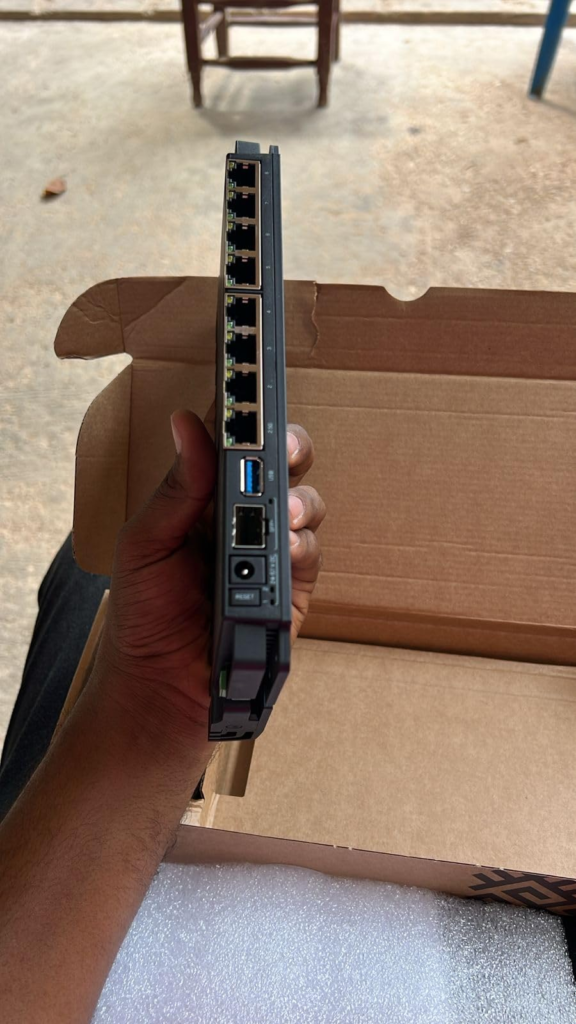
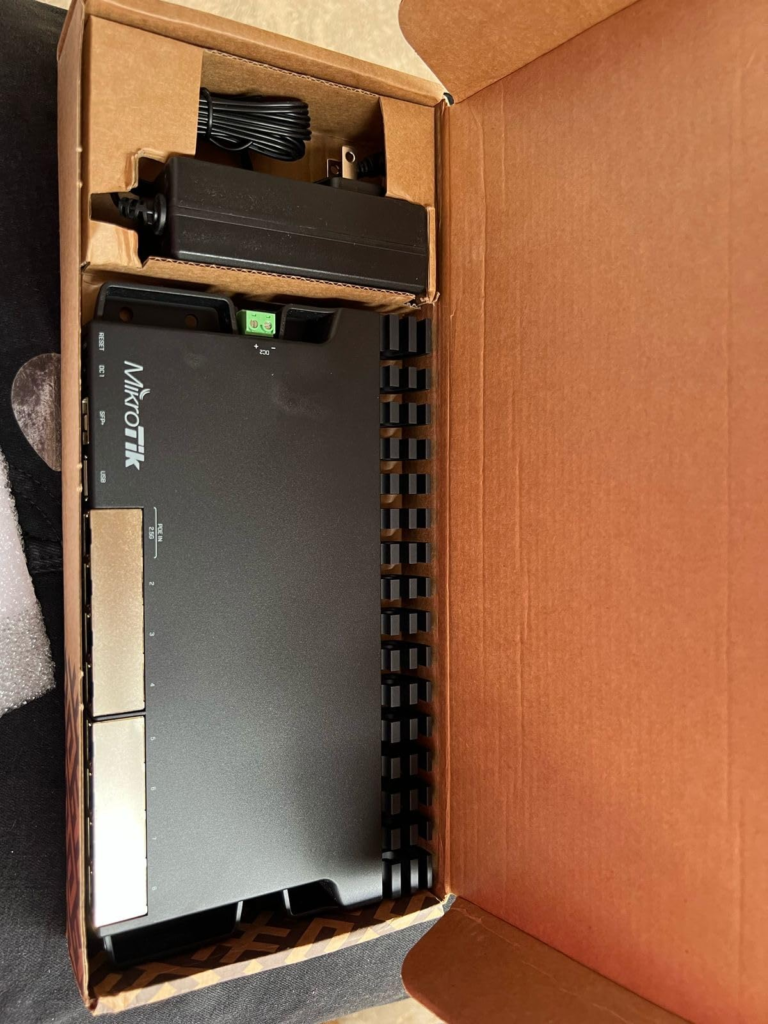
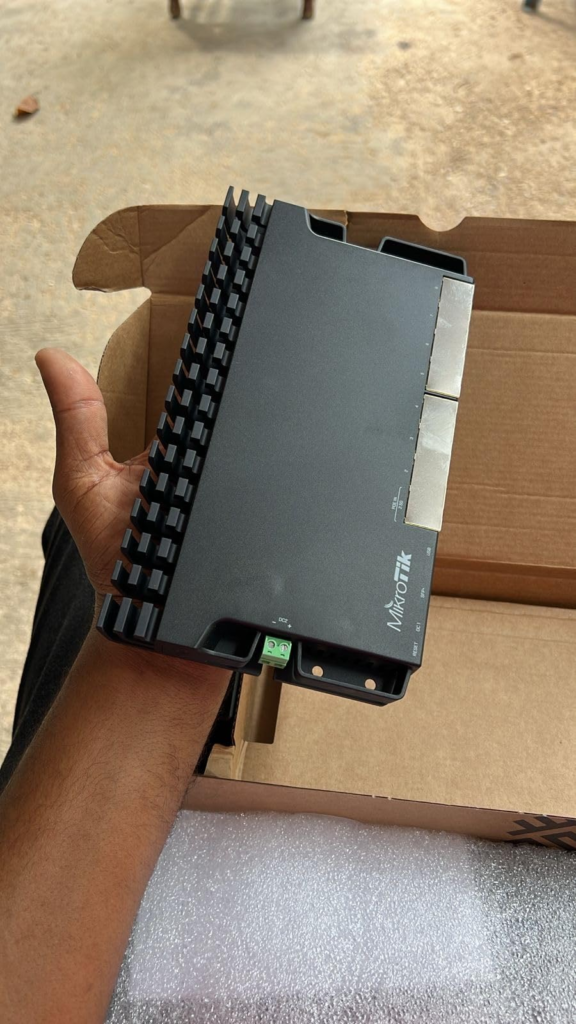
That is where the RB5009 starts making emotional sense, even before it makes technical sense. It removes clutter. One compact metal unit. No fan noise. Multiple power options. Enough port variety to stop the ugly chain of adapters and compromises that slowly turns a tidy office corner into a little shrine to indecision. The chassis is small enough to sit cleanly on a shelf, inside a structured media panel, or in a rack with MikroTik’s mounting hardware, and the enclosure itself is used as a heat sink. Four units can fit in a single 1U rack space, which tells you exactly how MikroTik imagined this product: dense, deliberate, not decorative.
| What looks “fine” at first | What is usually happening underneath |
|---|---|
| Internet speed test still looks decent | Internal traffic, rules, or VPN load is creating friction elsewhere |
| Wi-Fi bars look strong | The bottleneck is routing, uplink design, segmentation, or ISP handoff |
| Downloads feel okay | Simultaneous traffic reveals control-plane weakness |
| The setup looks simple | The simplicity is often fake; it is just hidden mess |
What You’re Actually Feeling but Not Naming
Most buyers do not say, “I need better routing architecture.” They say something softer. They say the network feels off. They say it has become annoying. They say small things keep needing attention.
That wording matters.
What you are usually feeling is one of three pressures:
- Intervention fatigue — too many little fixes, restarts, workarounds, compromises
- Expansion anxiety — every new device feels like it might upset the whole layout
- Trust erosion — the network works, but you no longer trust it when it matters
That is why the RB5009 gets strong reactions from technical buyers. It does not merely add speed. It changes posture. Officially, it gives you seven gigabit ports, one 2.5G Ethernet port, one 10G SFP+ port, USB 3.0, three different power-input methods, passive cooling, and RouterOS v7 with long-term software support commitments. On Amazon, the model holds a 4.6/5 rating from 255 reviews, and even scattered user commentary around the product tends to split the same way: people comfortable with RouterOS praise the power and flexibility; people expecting consumer-grade hand-holding warn that setup can become a headache if you are new to both networking and MikroTik at once. That split is not noise. It is the product’s real psychological border.
The Hidden Mechanism Behind the Miss
Here is the hidden variable most people miss: they judge routers by headline speed, then get blindsided by decision complexity under mixed load.
A network rarely fails because one port is too slow in isolation. It fails because several demands arrive together and the device has to arbitrate them cleanly. That is why MikroTik’s own test tables are more revealing than generic marketing language. With fast path and large packets, the RB5009 is extremely strong. Add rules, queues, or smaller packets, and performance drops the way real hardware always drops when real work begins.
That is not a flaw in the publication. That is the truth you need. Routing with 25 simple queues drops from about 9.85Gbps at 1518-byte packets to about 4.61Gbps at 512-byte packets and far lower with 64-byte packets. Add IP filter rules and it falls further. In IPsec, the box lands around 1.35–1.42Gbps with 1400-byte packets in MikroTik’s test profiles. Those numbers are good. They are also a warning: this router is powerful inside its class, but it is not magic.
| Hidden variable | Why buyers miss it | Why it matters on the RB5009 |
|---|---|---|
| Mixed load | People test one task at a time | Real homes/offices stack tasks at once |
| Rule overhead | Specs rarely foreground it | Queues, filters, and packet size change outcomes |
| WAN handoff type | Buyers fixate on raw ISP speed | PPPoE, VPN, and transceiver choice can become the real ceiling |
| Admin model | Fast hardware distracts from software complexity | RouterOS power is a gift only if you can drive it |
The Threshold Where the Outcome Quietly Breaks
This is the governing model for this article: Threshold.
The RB5009 becomes logical when your network crosses out of the “single-purpose consumer lane” and into the “mixed-load control” lane.
That threshold usually begins when at least three of the following are true:
- You need a 2.5G WAN or LAN edge without stepping into a full rack-scale platform
- You want a 10G SFP+ uplink for fiber, storage, or aggregation
- You run VLANs, VPNs, firewall logic, or traffic shaping and do not want the router to be the first thing that folds
- You want a silent, passively cooled box instead of another tiny fan somewhere in the house or office
- You are building a serious home lab, prosumer office, or small business edge where one box must do more than one simple job
The threshold does not begin merely because you like the idea of owning something more powerful. That is how people overspend and still end up dissatisfied.
There is also a second threshold people discover too late: protocol reality. Community discussions around 2Gbps service and PPPoE make it clear that the RB5009 can be the right box for the wrong expectation. One MikroTik forum thread on 2Gb/s internet reports real-world PPPoE limits around 1.54Gbps in a specific lab setup, with typical results closer to 1.2–1.3Gbps without tweaks. That does not invalidate the router. It tells you where ideal port numbers stop being the whole story.
Why Most Buyers Misread This Too Early
Because they shop by silhouette.
A black metal box with many ports triggers one of two lazy reactions. Either it looks overkill, or it looks like the obvious answer to everything. Both reactions are shallow.
The overkill crowd sees the port spread and the RouterOS reputation and assumes the RB5009 is for laboratories and people who enjoy suffering. The “obvious answer” crowd sees 2.5G and 10G on the front and assumes all multi-gig scenarios are now solved forever. Both are reading the casing, not the fit.
This is where the public commentary is unusually useful. On Reddit, users regularly describe the RB5009 as not overkill for a serious home network while also warning that RouterOS becomes demanding once you move beyond accepting defaults. Other users say the box is “fine” and “does not skip a beat” when you know what you are doing, but also point out that if your VPN ambitions grow or your edge requirements become heavier, stronger models like the CCR line may make more sense. Read carefully and a pattern appears: disappointment usually comes from misread fit, not defective intent.
Who Is Actually Inside This Problem
I would put the right buyer into one of three rooms.
| Buyer type | Why the RB5009 fits |
|---|---|
| The compact-control buyer | You want one silent wired core instead of a pile of smaller compromises |
| The growing network buyer | Your network is no longer “internet + Wi-Fi” and now includes segmentation, storage, tunnels, or faster uplinks |
| The RouterOS-capable buyer | You value control enough to tolerate a steeper learning curve |
This is also where aesthetics stop being superficial. Put the RB5009 on a clean shelf under a desk, in a small rack, or in a structured cabinet, and the room changes because the network stops looking improvised. It is a thin metal slab, 220 × 125 × 22 mm, with a sober industrial face and no fan noise. It does not beg for attention. It restores order.
In a work room, studio, or tidy home office, that matters more than people admit. A network core that looks deliberate changes the emotional temperature of the space. It tells you the system has a center.
Where Wrong-Fit Begins
This is not the router for everybody. That is one of the reasons it is easy to respect.
Wrong-fit begins in four places:
- You want Wi-Fi built in and do not want separate access points
- You want a soft, consumer-style interface more than deep control
- You want effortless multi-gig under every protocol and every heavy feature set without understanding the workload
- You are buying it mainly because the front panel looks powerful, not because your network has crossed the threshold above
There is also a thermal nuance worth naming. The device is passively cooled, and that is a genuine strength for silence and simplicity.
But community discussions also show that SFP+ transceiver choice and enclosure conditions matter, especially with hot copper 10G modules. In other words: the chassis is calm, but your optics and your environment still have a vote.
The One Situation Where This Product Becomes Logical
The RB5009UG+S+IN becomes logical when you need a compact wired core that can sit between consumer clutter and true enterprise excess.
That is the sweet spot.
Not the person who just wants internet in three rooms. Not the person building an oversized rack to feel important. The real fit is the buyer who has already felt the first signs of network adulthood: faster uplink, heavier routing, more devices, more internal traffic, more need for structure, more desire for silence, and less patience for improvised gear stacks.
In that one situation, the RB5009 stops looking expensive and starts looking clean. You get a quad-core ARM platform, 1GB RAM, 1GB NAND, a 2.5G port, a 10G SFP+ cage, three power-input methods, passive cooling, USB 3.0, and RouterOS v7 in a form factor that can live quietly in a serious home office or small business edge. That combination is why the product has persisted as a reference point among homelab and prosumer buyers.
What It Solves, What It Reduces, and What It Still Leaves to You
| It solves | It reduces | It still leaves to you |
|---|---|---|
| Port-role compromise | Fan noise and physical clutter | Learning RouterOS properly |
| Weak uplink flexibility | The need for stacked adapters and awkward boxes | Choosing the right SFP+/WAN design |
| Underpowered mixed-load edge routing | Fear that one more network change will destabilize everything | Matching expectations to protocol realities |
| Lack of a serious wired core | Daily low-grade distrust in the network | Building the rest of the system around it well |
And that last column matters most.
The RB5009 will not rescue a bad network plan. It will not make a confused topology elegant. It will not turn a casual buyer into a good administrator by osmosis. What it does is remove the flimsy center. Once that center is removed, the rest of your decisions finally start to matter in the right order.
Final Compression
Here is the clean version.
If your network is still simple, the RB5009 is too much box and too much brain.
If your network has already crossed into mixed-load reality, and you want one compact wired unit that feels silent, serious, and structurally sane, this is where vague frustration usually ends.
The value is not that it promises everything. The value is that it stops lying about what your network has become.
That is the difference.
A cheap router keeps the room looking calm while the system quietly frays. The RB5009 makes the room look more deliberate because it gives the network an actual spine. Not a louder spine. A cleaner one.
If this is the threshold you are already living inside, this is the logical next step
Transparency Note:
This analysis is built on aggregated real-world experience.
It extracts what repeatedly holds, what breaks, and what users uncover only after living with the system—then shapes it into a clear model you can use immediately.
Think of it as structured experience, refined and presented so you don’t have to learn it the hard way.
“A quick note: Don’t believe the star ratings, but trust personal experience. This article is a compilation of collected experiences”