The Room Looks Automated Until It Forgets You Exist
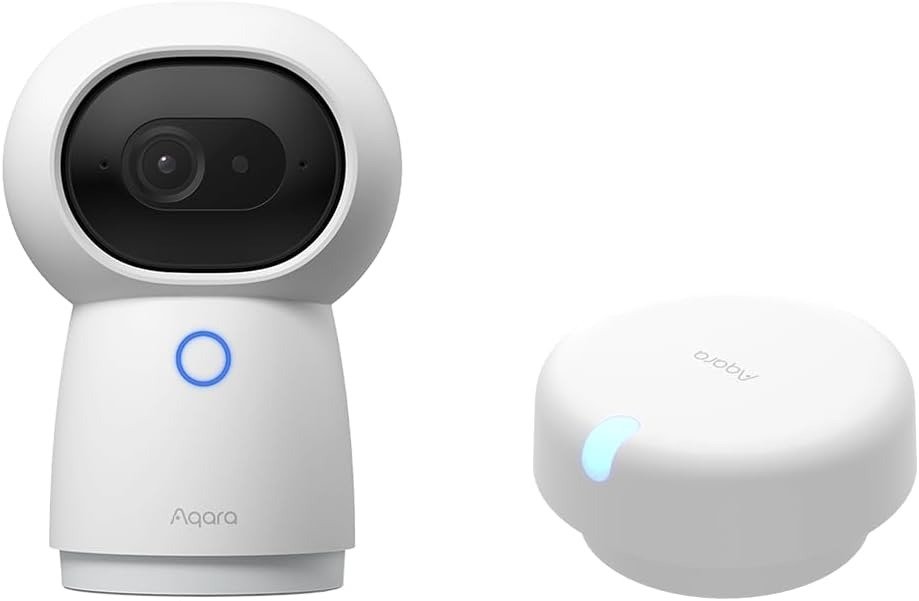
AQARA PRESENCE SENSOR FP2 & CAMERA HUB G3
I think this is where a lot of “smart” rooms quietly lose the argument.
Not when they fail loudly. When they fail politely.
The lights turn off while you are still reading. The camera sees motion, but not context. The room responds to movement, not presence, so the whole setup behaves like an impatient waiter: quick to appear, quicker to leave. You stop calling it broken because every device still works. But the room keeps asking you to prove you are there.
That is the hidden tax.
And once you notice it, motion-only automation starts to feel primitive. Not cheap. Primitive.
The Result Looks Fine. The Problem Isn’t.
A hallway sensor can look brilliant in a demo. Walk in, light on. Walk out, light off. Clean. Fast. Satisfying.
A living room, bedroom, nursery, home office, or open-plan space is different. Those rooms are not about movement. They are about occupancy. Breathing on the sofa. Reading without shifting much. Working at a desk for forty minutes with your shoulders locked in one position. A child asleep. An elderly parent who has fallen and is no longer moving much. That is where the old logic starts cracking.
The Aqara Presence Sensor FP2 exists for that crack. It uses mmWave radar rather than ordinary PIR motion sensing, covers up to 40 m², supports up to 30 zones, and can detect up to five people in one room. Aqara positions it as a presence device, not a simple motion trigger.
The Camera Hub G3 solves a different part of the same room problem. It is a 2K 2304 × 1296 indoor pan-and-tilt camera with AI features, a built-in Zigbee hub, hardware privacy masking, WPA3 support, and broad smart-home compatibility. In plain English: it does not just watch the room; it can become the control center for it.
Put those two ideas together and the point becomes sharper: this bundle is not really about “more gadgets.” It is about replacing a room that reacts to motion with a room that actually understands occupancy and can verify what is happening.
What You’re Actually Feeling but Not Naming
Most buyers do not say, “I need a radar presence sensor plus an AI camera hub.”
They say things like this:
My lights keep shutting off when I’m still.
I want security without turning my home into a paranoid little bunker.
I want the room to feel expensive, calm, and automatic without constant correction.
That last one matters more than people admit.
Because the real irritation is not technical. It is behavioral. You start waving your arms to wake your own house up. You start building workarounds. You shorten timers. You widen triggers. You forgive false alerts because the alternative is darkness. In the end, the room is not serving you. You are babysitting it.
That is the psychological toll of a bad automation stack: interruption, doubt, and tiny acts of manual rescue repeated until the “smart” part becomes décor.
The Hidden Mechanism Behind the Miss
Here is the mechanism most setups get wrong: they measure event when they should measure state.
A PIR sensor waits for heat movement. No movement, no trigger. That logic is fine for pass-through spaces. It is weak in dwell spaces.
The FP2 is designed around presence instead. Aqara says it can detect subtle human presence across a room, track up to five people, and split one room into many named zones. Third-party reviewers repeatedly describe the practical advantage the same way: it keeps working when you are sitting, reading, or barely moving, and it can tell where in the room you are, not merely whether something moved somewhere.
The G3 changes the second half of the equation. A camera alone is often too blunt for comfort; a sensor alone is often too abstract for security. The G3 adds visual confirmation, pan-and-tilt coverage, AI-based recognition features, and hub functionality, so the room can move from “presence detected” to “presence detected and contextually actionable.”
That is why this bundle makes more sense than it first appears.
Not because more hardware is always better. Because the two devices answer different failures.
| Failure in the room | What usually causes it | Which part of the bundle addresses it |
|---|---|---|
| Lights go off while someone is still there | Motion-only logic misses low-movement occupancy | FP2 presence sensing and zone logic |
| One large room behaves like one dumb block | No spatial awareness inside the room | FP2 multi-zone mapping |
| You get alerts but not enough context | Detection without verification | G3 visual monitoring and pan/tilt coverage |
| Your smart-home setup grows messy fast | Too many single-purpose devices | G3 built-in Zigbee hub + FP2 room consolidation |
Table based on Aqara’s official feature set and third-party reviewer observations of how FP2 zone presence differs from basic motion sensing, plus G3’s published camera/hub functions.
The Threshold Where the Outcome Quietly Breaks
This is the threshold.
Not price. Not brand loyalty. Not even camera resolution.
The threshold is the moment your room stops being a pass-through space and becomes a stillness-dependent space.
That is when motion logic begins to lie.
If the room involves sitting, resting, nursing, working, reading, watching, recovering, or sleeping near automation, the old assumption—motion equals occupancy—starts failing under real life. And it fails in a sly way. The setup looks modern. The app looks polished. The routines fire. Yet the experience frays at the edges.
I would name that break point this way:
The Stillness Threshold
The point where a room’s value depends more on detecting quiet occupancy than on catching visible movement.
Once you cross that threshold, the buying logic changes. You are no longer shopping for a sensor. You are correcting a category mistake.
Why Most Buyers Misread This Too Early
Because they compare features before they compare failure modes.
They ask:
Does it support HomeKit?
Does it work with Alexa?
Is the camera 2K?
Can it detect multiple people?
Those are not useless questions. They are just early questions.
The more important question is uglier: what exactly has been annoying you often enough that you started accepting it as normal?
That is where owner feedback around the FP2 gets interesting. The praise is consistent on the upside: people like the near-instant detection, zone exposure, light sensing, and the fact that it can keep a room “aware” even when someone is almost still.
But the complaints are just as revealing. Some users report ghost detections, difficult tuning, ceiling-fan interference, pet confusion in certain setups, and multi-person tracking that can get messy until the room map is adjusted. Aqara and experienced users point to interference zones, sensitivity tuning, and setup refinement as the fix path rather than pretending those problems do not exist.
That split tells you the truth of the product category:
This is not magic. It is a tool with a setup threshold.
If you want something you can slap on a wall in sixty seconds and never tune, this is already the wrong conversation.
Who Is Actually Inside This Problem
I would put the right buyer into three groups.
The still-room buyer.
You care more about occupancy than movement. Desk. Bed. Sofa. Reading chair. Nursery corner. Bathroom routines. Any place where the room should stay responsive even when the body goes quiet.
The open-plan buyer.
You hate treating one large room like one giant undifferentiated blob. Aqara’s FP2 supports up to 30 zones and reviewers note that those zones can be exposed across major ecosystems, which means a kitchen-living-dining layout can behave like distinct spaces instead of one clumsy automation block.
The context buyer.
You do not want detection alone. You want to know what the room is doing and have the infrastructure to build around it. The G3 matters here because it is not merely a lens; it is also a hub with pan/tilt coverage, AI features, infrared control, privacy masking, and support for up to 128 Aqara child devices when the mesh is extended appropriately.
If you are inside one of those groups, this bundle starts looking less like indulgence and more like architecture.
Where Wrong-Fit Begins
Wrong-fit begins when the room is too simple for the bundle.
A plain corridor? Overkill.
A utility closet? Overkill.
A space where visible motion is always obvious and enough? Probably overkill.
Wrong-fit also begins when patience is low.
The FP2 is wired, wants constant power, uses 2.4GHz Wi-Fi, and benefits from thoughtful placement and tuning. Reviewers and owners repeatedly mention that setup quality changes the outcome dramatically. Interference sources such as fans, curtains, and other moving objects can distort results if you do not map the room properly.
Wrong-fit begins again if you imagine the fall-detection feature as a medical system. Aqara explicitly warns against that interpretation, and reviewers note that ceiling-mounted fall mode sacrifices other functions like zones and multi-person tracking.
And wrong-fit definitely begins if you dislike visible cables. Both pieces are powered devices, not battery gadgets. The G3 has no battery, and the FP2’s cable routing is a real-world setup consideration owners mention often.
This matters because regret usually starts where fantasy begins.
The One Situation Where This Product Becomes Logical
This bundle becomes logical in one very specific situation:
You are trying to make a lived-in room feel continuously aware without making it feel intrusive or unstable.
That is the use case.
Not every room.
One important room.
A living room with a main seating area. A studio office where you remain still for long stretches. A nursery-adjacent common area. A bedroom where presence matters more than motion. An open-plan family space where “someone is here” is not enough—you need to know where and occasionally what is actually happening.
That is where the pair clicks.
The cleanest physical setup is usually this:
| Device | Best visual role in the room | Practical placement logic |
|---|---|---|
| FP2 | Quiet, almost invisible room intelligence | High on a wall or carefully mounted where its 120° field can cover the actual occupancy zones; keep it away from known interference sources and use the room map properly |
| G3 | Visible command point with a calm luxury-tech presence | On a shelf, media console, or high furniture edge where pan/tilt can sweep the room without looking awkwardly hidden |
The FP2 is small, flat, matte, and better-looking when it disappears into the room line. The G3 is the opposite: more sculptural, more characterful, almost decorative in the right place. Even a conventional reviewer noted that the G3 stands out physically and looks more distinctive than typical indoor cameras.
And that changes the room.
The FP2 does not ask for visual attention; it earns its keep by removing little annoyances you stop noticing only after they disappear. The G3, placed well, can make the room feel intentional—less like a pile of gadgets, more like a coordinated control layer. That is not fluff. It is what happens when one device vanishes into function and the other anchors the room with visible purpose.
What It Solves, What It Reduces, and What It Still Leaves to You
What it solves:
- The “I’m still here” problem.
- The “one room should not behave like one crude trigger” problem.
- The “I need presence plus optional visual context” problem.
- The “I want one serious indoor camera that also strengthens the rest of the Aqara stack” problem.
What it reduces:
- Arm-waving to keep lights alive.
- Lazy timers that annoy everyone.
- Blind alerts with no room context.
- Sensor sprawl in open-plan layouts.
What it still leaves to you:
- Placement discipline.
- Tuning time.
- Interference mapping.
- Honest expectations about fans, pets, glass, room geometry, and the difference between “works on paper” and “works in your room.”
That last part is the whole review, really.
The happiest owners do not buy this because it is flashy. They buy it because a certain category of daily friction has become too embarrassing to tolerate.
Final Compression
I kept arriving at the same conclusion.
If your room only needs to notice that something moved, this bundle is too much.
If your room needs to understand that someone is still there, where they are, and when visual confirmation or deeper automation starts mattering, the logic changes fast. The Aqara Presence Sensor FP2 handles the occupancy problem. The Camera Hub G3 handles the context-and-control problem. Together, they do not just add features. They repair a false assumption at the center of many smart homes: that movement and presence are basically the same thing.
They are not.
That is why some people will call this excessive, and others will install it, live with it for a week, and wonder why they tolerated motion-only automation for so long.
If your break point is a room that keeps going “smart” at the wrong moments and blind at the worst moments, is the logical next step.
Transparency Note:
This analysis is built on aggregated real-world experience.
It extracts what repeatedly holds, what breaks, and what users uncover only after living with the system—then shapes it into a clear model you can use immediately.
Think of it as structured experience, refined and presented so you don’t have to learn it the hard way.
“A quick note: Don’t believe the star ratings, but trust personal experience. This article is a compilation of collected experiences”