EnGenius ECW336 Review: The Signal Looks Strong. The Buying Logic Often Isn’t.
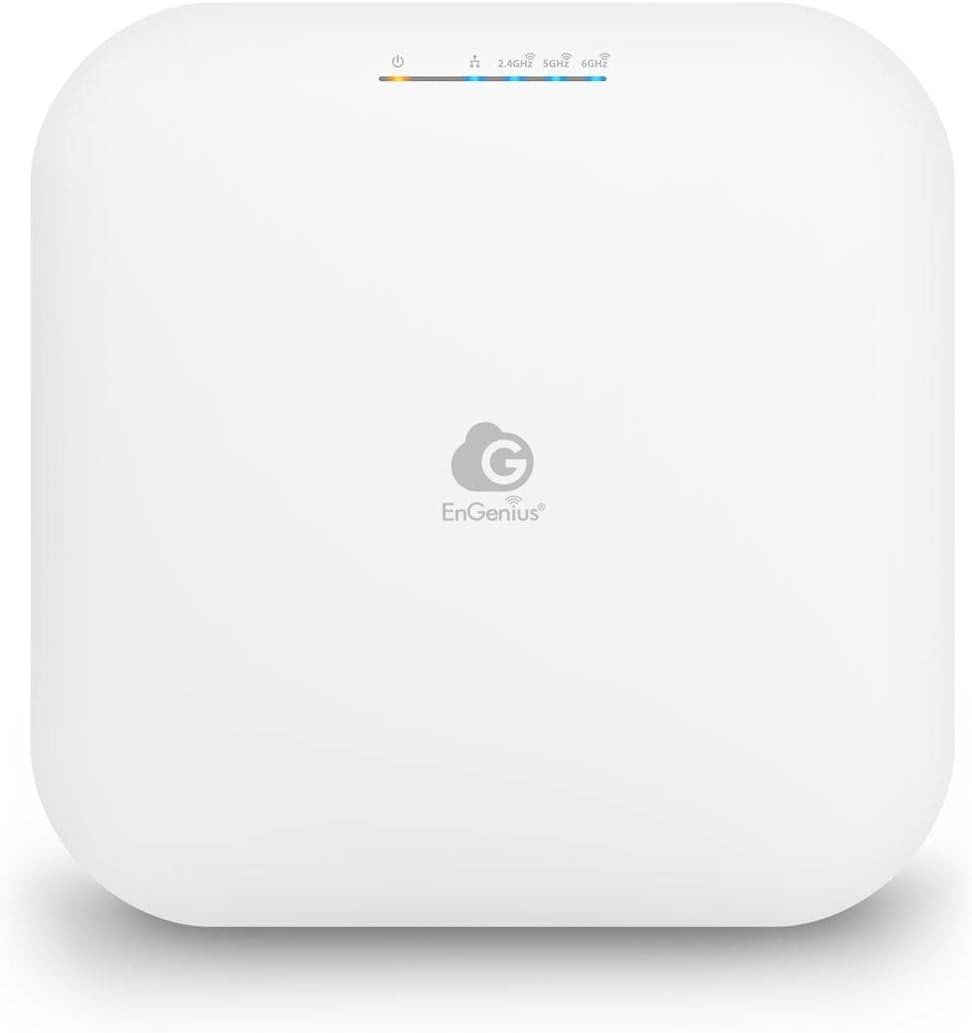
PRODUCT NAME: ENGENIUS ECW336
A bad access point does not always feel bad. That is the trap. The icon stays full, the room stays connected, the ceiling looks clean, and yet the network still drags at exactly the wrong moment—when video calls stack, when a file push starts, when ten people sit under the same white disc and expect silence from the system. That is the kind of product the EnGenius ECW336 is trying to fix. Not weak Wi-Fi in the cartoon sense. Hidden congestion. Quiet friction. The kind that wastes minutes, patience, and trust.
What drew me to this model was not the headline speed claim alone. It was the shape of the promise: tri-band Wi-Fi 6E, a 5GbE PoE+ uplink, 4×4:4 radios across 2.4GHz, 5GHz, and 6GHz, WPA3 support, mesh capability, and cloud management in a ceiling-mount body that stays visually quiet once installed. On paper, that is not a toy. It is a deliberate answer to a specific kind of network pressure.
But the ECW336 has a hard edge people miss early. It is not valuable because it is expensive. It is valuable only after a threshold is already true in your environment. Miss that threshold, and this thing turns from “serious infrastructure” into a very polished misunderstanding.
The Result Looks Fine. The Problem Isn’t.
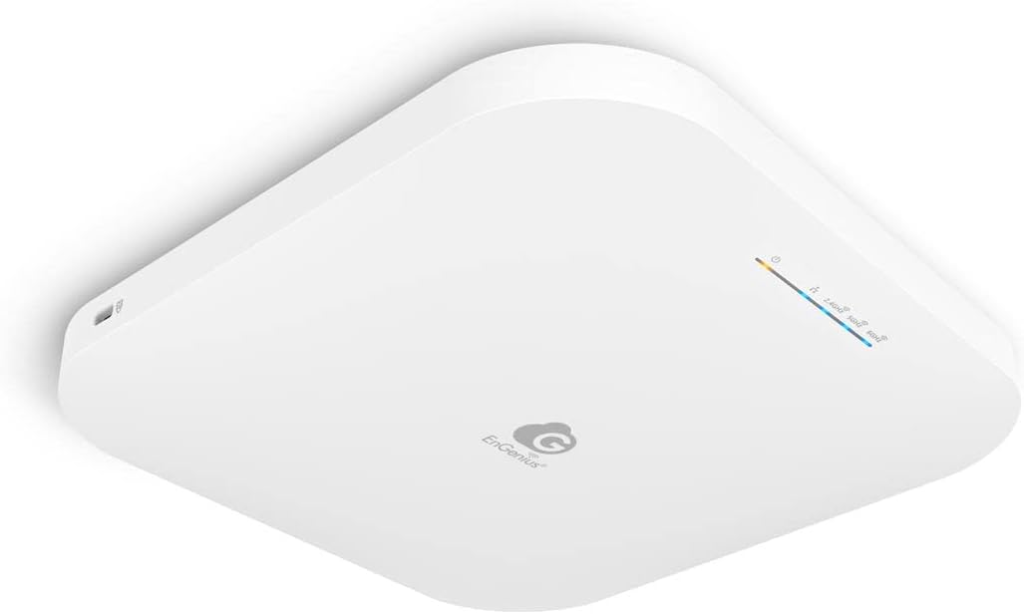
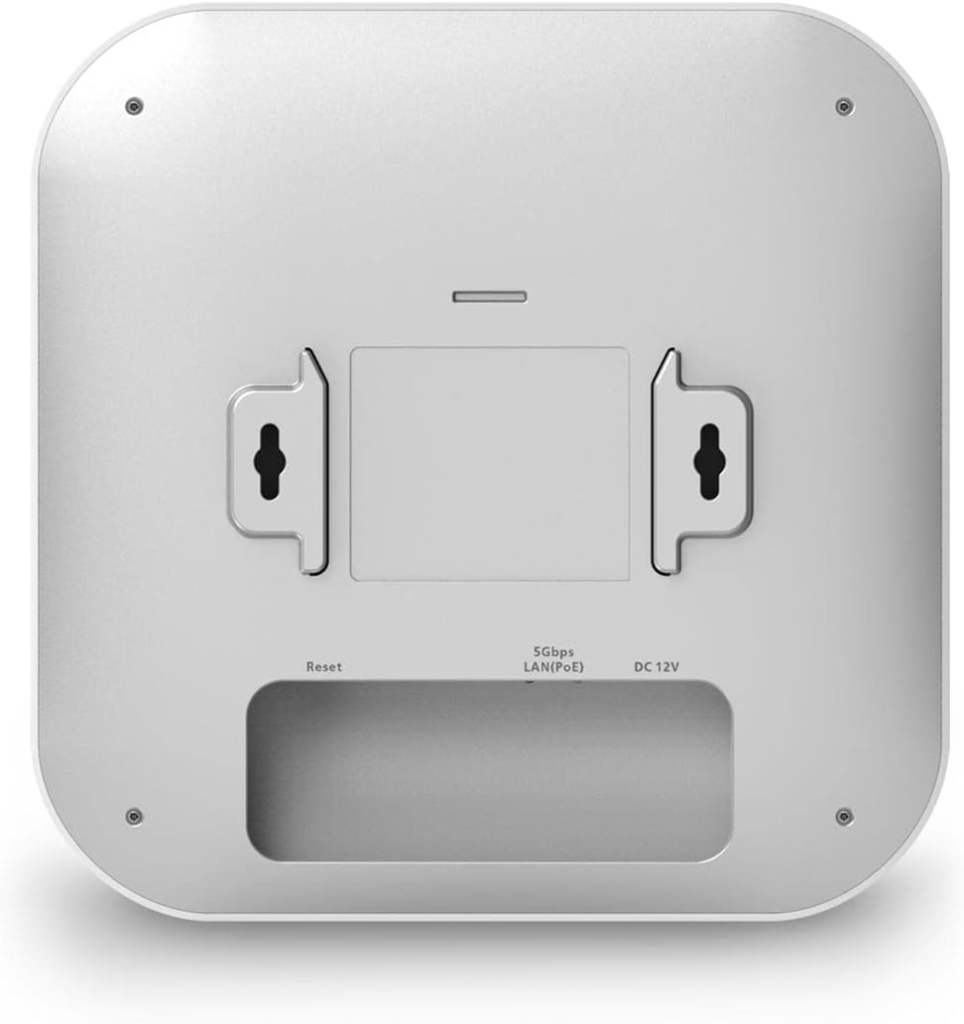
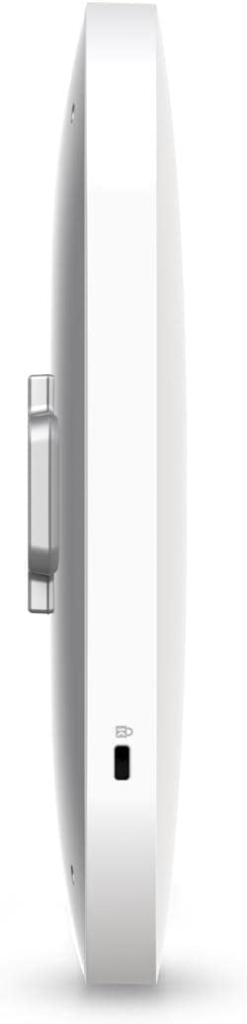
I can see why buyers get seduced by this category. A ceiling AP has presence without screaming for attention. The ECW336 is a square white unit, about 8.07 by 8.07 inches and 1.3 inches thick, with a pale logo, edge LEDs, and a low-profile housing that disappears better on a ceiling than another black router with antennas stabbing the room. Mounted in the center of an office, studio, showroom, or high-end home corridor, it changes the feeling of the space: less gadget clutter, more “this place was planned.”
That visual calm hides the real reason someone ends up shopping for a product like this. Usually it is not because the old Wi-Fi is dead. It is because it is almost good enough. That is worse. A weak network gets blamed quickly. A nearly adequate one steals time in smaller cuts: slow roaming, crowded 5GHz airtime, unstable performance when several modern devices hit the same window, or the strange feeling that the internet “should be fast” but never feels effortless.
Dong Knows found the ECW336 reliable with excellent coverage and no disconnect issues, estimating roughly 2,000 square feet when centrally placed, but also called the raw performance modest relative to price. That split matters. Reliability and coverage can make a network feel fixed at first glance, even when the deeper value question is still unresolved.
What You’re Actually Feeling but Not Naming
Most people do not say, “My network is stuck below its airtime efficiency threshold.” They say the upstairs call stuttered. The conference room felt weird. The upload took longer than it should. The new laptop is supposed to be fast, yet nothing feels premium. That frustration has three layers: crowding, mismatch, and wasted headroom.
Crowding is obvious on older bands. Mismatch is subtler: buying a 6E access point before the client devices, switch, power, and management style are ready for it. Wasted headroom is the cruel one. The ECW336 can expose up to 4,800Mbps on 6GHz, 2,400Mbps on 5GHz, and around 1,200Mbps on 2.4GHz, but those numbers only mean anything when the rest of the chain stops choking it.
That is why this product attracts the wrong buyer as often as the right one. The wrong buyer sees “AX8400,” “6E,” and “5GbE” and imagines instant transformation. The right buyer sees a pressure valve for a network that already has modern clients, a PoE+ multi-gig switch, and a reason to care about cloud administration. Same box. Different reality.
The Hidden Mechanism Behind the Miss
The ECW336’s real mechanism is not magic speed. It is separation. Tri-band design gives old and slow clients somewhere to exist without constantly poisoning the best lanes. The 6GHz band matters because it is cleaner and supports wide channels; EnGenius explicitly positions the AP around the newly opened 6GHz band and 160MHz channels to increase capacity and reduce congestion. That is the hidden variable casual buyers skip over. This is less about a bigger number and more about a cleaner road.
Then there is the uplink. EnGenius gave this unit a 5GbE RJ-45 port with 802.3at PoE+ support, which is not decorative. It is there because a serious tri-band AP can outgrow the assumptions of a 1GbE backhaul. ITPro specifically flagged it as the first SMB-class AP they had seen with a 5GbE multi-gig port, precisely to avoid bottlenecks.
The cloud layer is the other mechanism, and it is where the product becomes either brilliant or annoying. Reviewers consistently note that the ECW336 is built to live inside EnGenius Cloud. Local interface access exists, but not for full configuration. Dong Knows called it “not a local access point,” and TweakTown said it cannot be used as a standalone AP in the normal sense, requiring the Cloud To-Go app for setup and cloud functionality. That is not a side note. That is a boundary line.
The Threshold Where the Outcome Quietly Breaks
This is the threshold that matters:
| Threshold check | If the answer is No | What happens |
|---|---|---|
| Do you already have meaningful 6GHz-capable client devices? | No | The best part of the AP sits idle. |
| Do you have a PoE+ switch and ideally a multi-gig path behind it? | No | You pay for headroom you cannot feed properly. |
| Are you comfortable with cloud-managed networking? | No | The management model feels like a restriction, not a feature. |
| Are you solving density, congestion, or modern client load—not just basic coverage? | No | A cheaper AP often makes more financial sense. |
That is the quiet break point. Below it, the ECW336 looks sophisticated but overqualified. Above it, the logic starts to harden.
Independent testing reinforces that threshold. TweakTown measured about 95/97 Mbps on 2.4GHz, around 649/668 Mbps on 5GHz, and roughly 954/962 Mbps on 6GHz in its test setup. Those are respectable results, especially on 6GHz, but they do not automatically justify the platform for every buyer. Dong Knows went further: reliable, yes; well-priced for the observed performance, no.
That is the uncomfortable truth. This product does not become “worth it” at the moment you can afford it. It becomes worth it at the moment your environment can expose the reason it exists.
Why Most Buyers Misread This Too Early
They compare by label. That is the first mistake. Wi-Fi 6E sounds like a leap, so they assume the leap appears by itself. It does not. A 6E access point in a network full of older clients is like laying a private express lane in a town where most cars cannot enter it. The lane is real. The relief is not.
They also compare by maximum speed instead of by decision chain. The ECW336 uses the Qualcomm Networking Pro 1210 platform, supports 4×4:4 radio chains, up to 23 dBm transmit power depending on regulatory domain, and consumes up to 22.5W. Those numbers matter, but only after the buying logic is clean. Otherwise they become expensive wallpaper for a problem that was never properly named.
And then comes the management trap. A buyer coming from consumer routers may think, “I just want a better signal.” The ECW336 is not really a “better signal” purchase. It is an infrastructure purchase. It wants a cloud account. It wants planned deployment. It wants the kind of owner who values QR onboarding, remote monitoring, SSID control, client visibility, and multi-site management. If that is not you, the friction starts before the benefit does.
Who Is Actually Inside This Problem
The right buyer usually lives in one of these rooms:
| Environment | Why the ECW336 starts making sense |
|---|---|
| Small office with modern laptops and heavy wireless use | Cleaner 6GHz airtime and stronger admin control matter. |
| Retail, clinic, studio, or hospitality floor | Ceiling mount, central coverage, SSID control, and cloud visibility reduce daily friction. |
| High-end home with many premium devices and a wired backbone | The product stops being “too much” once the rest of the network is equally serious. |
| Multi-site SMB managed remotely | Cloud registration, monitoring, and policy consistency become operationally useful. |
That fit is not theoretical. EnGenius positions the AP for business and home on Amazon, while StorageReview explicitly places it in large offices, retail, hospitals, and commercial environments. Reddit sentiment around the brand also leans toward reliability and easy management for simpler deployments, which fits the product’s strongest practical identity: controlled environments that value stability more than forum drama.
I would add one more fit condition that the spec sheet cannot shout loud enough: this unit belongs where the ceiling is part of the plan. Put it centrally. Let the white housing disappear into the room. Feed it clean PoE+. Let the wiring carry the burden so the visible space feels lighter. Done right, it changes not only coverage, but the emotional profile of the place. Less clutter. Less improvisation. More confidence.
Where Wrong-Fit Begins
Wrong-fit starts the moment one of these thoughts is true:
- “I do not want cloud-managed networking.”
- “My clients are mostly older and I just need basic coverage.”
- “I am still on a simple 1GbE switching path and I am not upgrading around the AP.”
- “I want a cheap standalone access point with rich local control.”
- “I am buying the label before I have the environment.”
That is where regret grows. Not because the ECW336 is bad. Because it is specific. Dong Knows explicitly recommends cheaper TP-Link Omada gear for budget-minded buyers chasing similar Wi-Fi outcomes, and both Dong Knows and TweakTown criticize the price-to-performance equation. Even ITPro, which praised connection speeds and setup, still called it expensive. Three different angles. Same warning.
The One Situation Where This Product Becomes Logical
Here is the single situation where the ECW336 stops being a maybe and becomes a clean decision:
You already run—or are intentionally building—a modern, ceiling-mounted, cloud-managed network with PoE+, multi-gig awareness, and a real population of devices that can benefit from 6GHz capacity. In that condition, the ECW336 is not overkill. It is alignment.
That is the moment its parts finally lock together:
| What the product gives you | Why it matters only after the threshold |
|---|---|
| Tri-band 2.4/5/6GHz | Lets old clients coexist while premium devices move cleaner. |
| 5GbE PoE+ uplink | Prevents the AP from being strangled by a small pipe. |
| 24 virtual SSIDs / 8 per band, captive portal options | Useful when segmentation and guest control are real needs. |
| Cloud monitoring and quick QR onboarding | Saves time only if you actually want centralized control. |
| Mesh support | Helps when deployment extends beyond a single room. |
Once I frame it that way, the product becomes much easier to respect. Not as a universal hero. As a sharp tool.
What It Solves, What It Reduces, and What It Still Leaves to You
<br>
What it solves is not “bad Wi-Fi” in the generic sense. It solves a narrower and more valuable problem: modern wireless demand colliding with older deployment assumptions. It gives you cleaner 6GHz potential, business-class management, a multi-gig uplink, and a physically discreet ceiling presence.
What it reduces is intervention burden. The cloud model, QR setup, centralized visibility, and policy handling can lower the amount of manual babysitting required once the environment is built correctly. Reviewers repeatedly mention easy onboarding and useful cloud services, even when they disagree on value.
What it still leaves to you is the expensive part people try to skip: client readiness, switching, power, placement, and purchase discipline. The AP cannot invent 6GHz clients for you. It cannot turn a basic network into an enterprise-grade design by itself. It cannot make price irrelevant. And it does not come with a PoE injector or power adapter in the box.
Final Compression
The EnGenius ECW336 is not the answer to “How do I get better Wi-Fi?” It is the answer to a harder question: “At what point does my network stop being a casual setup and start needing cleaner spectrum, stronger control, and infrastructure that does not flinch under modern load?”
If that point has not arrived, this access point will feel like a premium ceiling ornament with impressive language wrapped around underused capability. If that point has arrived, the logic shifts fast. The white housing stops being decoration. The 5GbE port stops being trivia. The 6GHz radio stops being marketing. They become the exact shape of the correction.
And that is the cleanest way to end it: not with hype, but with a boundary. If your break point is already here—modern clients, real density, cloud tolerance, and a backbone that can carry the load—then the ECW336 is the logical next step.
Transparency Note:
This analysis is built on aggregated real-world experience.
It extracts what repeatedly holds, what breaks, and what users uncover only after living with the system—then shapes it into a clear model you can use immediately.
Think of it as structured experience, refined and presented so you don’t have to learn it the hard way.
“A quick note: Don’t believe the star ratings, but trust personal experience. This article is a compilation of collected experiences”