You Don’t Notice the Failure at First. You Notice the Rooms It Never Truly Reaches.
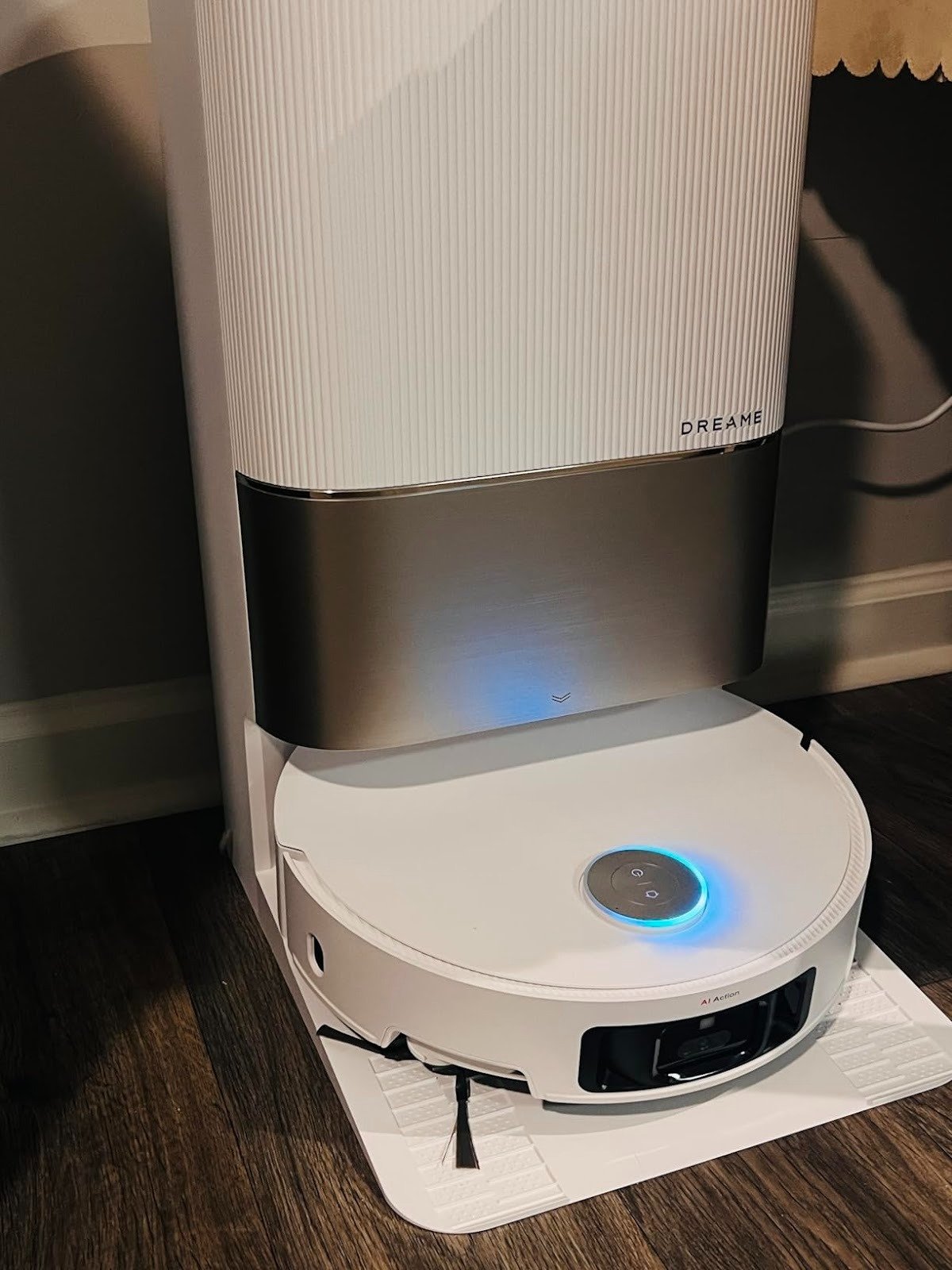
DREAME X50 ULTRA
The dirty secret in this category is simple: many robot vacuums do not fail because they are weak. They fail because your home quietly stops being navigable the moment the floor changes height, the sofa sits too low, a cable snakes across the wrong corner, or a bathroom lip turns one home into three small islands. That is the frame I kept coming back to with the Dreame X50 Ultra. Not suction first. Not app tricks. Not the usual spec-sheet theater. The real question is narrower and more brutal: when does a robot stop being present enough to matter?
Dreame built the X50 Ultra around that question with retractable legs for thresholds, a retractable LiDAR tower for lower furniture, a camera plus 3D structured light for obstacle handling, and a full-service dock. Officially, it claims up to 20,000Pa suction, threshold crossing up to 2.36 inches, clearance down to 3.5 inches, and hair handling up to 11.8 inches. Independent testing broadly confirms the mobility story, while also showing clear limits in edge pickup, fine debris, stains, and battery efficiency.
The Result Looks Fine. The Problem Isn’t.
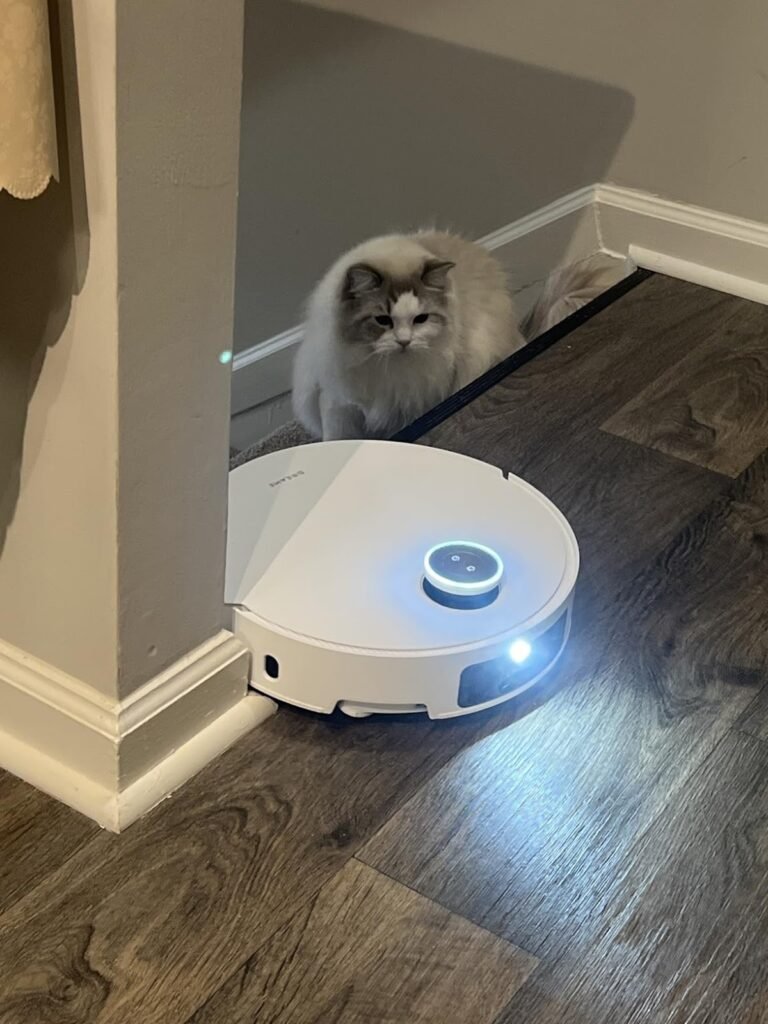
This is the kind of machine that can make a home look maintained while still leaving behind the exact kind of friction that irritates you later. The floor appears cleaner. The dock handles the dirty work. The robot slips under furniture many towered LiDAR models would never attempt. It avoids objects well enough that you stop doing the little pre-clean shuffle before every run. And that matters. RTINGS describes its obstacle avoidance as excellent, saying it detects and avoids almost every obstacle, including pet waste, though it can still get snagged by USB cables and, more rarely, extension cords. Their review also highlights how unusual the X50’s low-height and threshold behavior is compared with other Dreame flagships.
But “looks fine” is where weak reviews often stop. The more useful question is what keeps repeating after the novelty wears off. Here, the X50 Ultra starts to split into two identities. One is a mobility specialist. The other is a merely good cleaner wearing flagship clothing. RTINGS found it acceptable on hard floors and decent on carpet, but repeatedly pointed out that it struggles with fine debris along edges and in corners and is only mediocre on stains, often needing extra passes. That distinction matters more than the marketing copy does.
What You’re Actually Feeling but Not Naming
Most people describe the wrong annoyance.
They say, “My robot vacuum misses spots.” What they often mean is something more specific:
- it doesn’t reach the room often enough
- it doesn’t pass the obstacle cleanly enough
- it doesn’t stay in contact with the real mess long enough
That is a different problem.
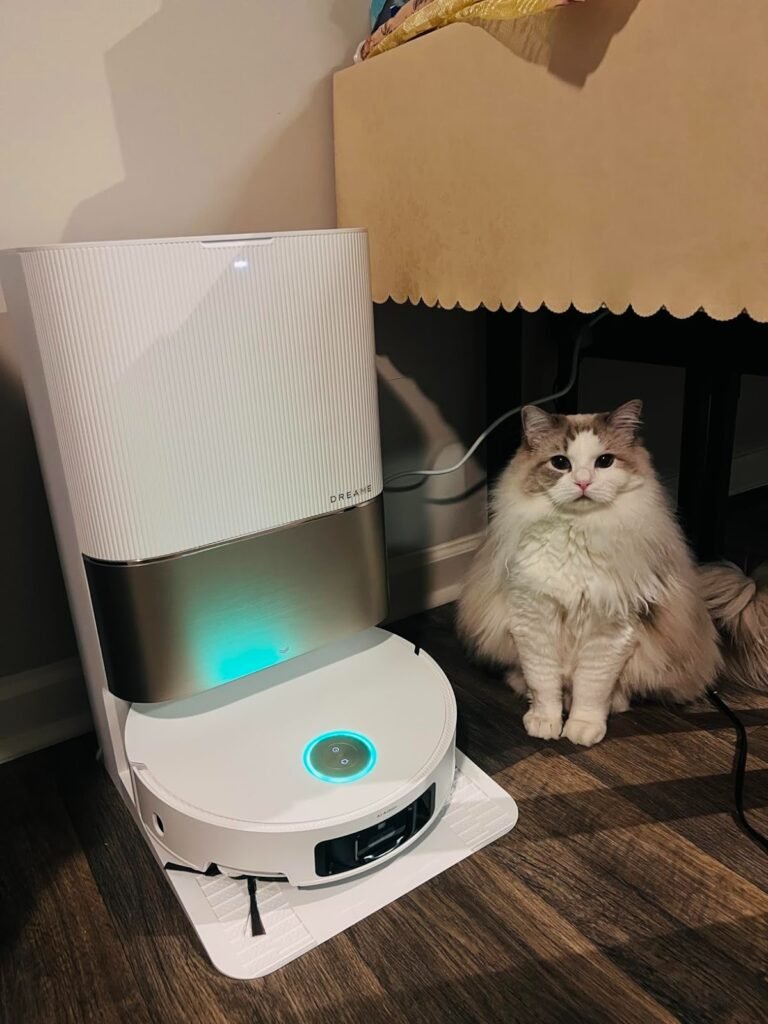
A robot can have big suction, loud claims, and a self-empty dock, then still behave like a careful guest instead of a housekeeper. It hesitates at the transition strip. It refuses the low cabinet. It detours around daily clutter. It returns to charge too often in larger or carpet-heavy homes. You do not experience that as “navigation architecture.” You experience it as low-grade domestic irritation: a floor that is never fully reset, a machine that is always almost done, a routine that still needs you standing nearby to finish the part you thought you had paid to remove. User reports and forums around the X50 Ultra repeatedly surface that exact battery frustration, with complaints about faster-than-expected drain and longer cleaning cycles because the robot needs to recharge mid-job. Vacuum Wars’ comparison work also scored its battery efficiency at 2.1 against a category average of 2.3, with Roborock’s Saros 10R at 2.8 in the same comparison.
The Hidden Mechanism Behind the Miss
The hidden variable here is not suction. It is access continuity.
That is the mechanism.
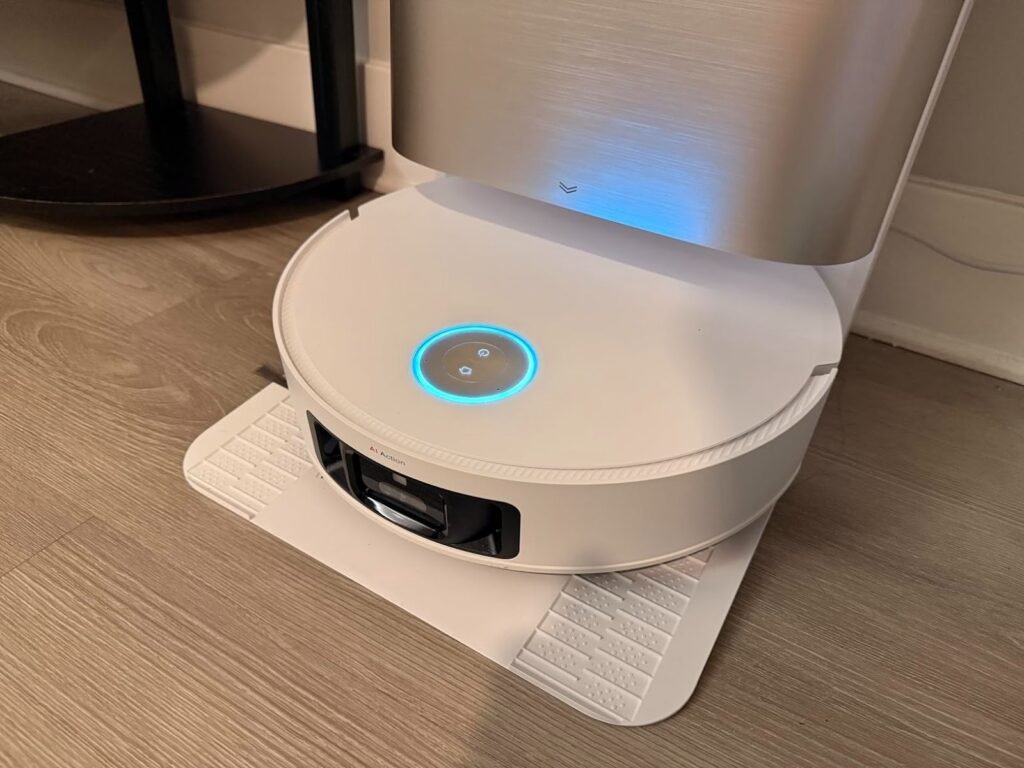
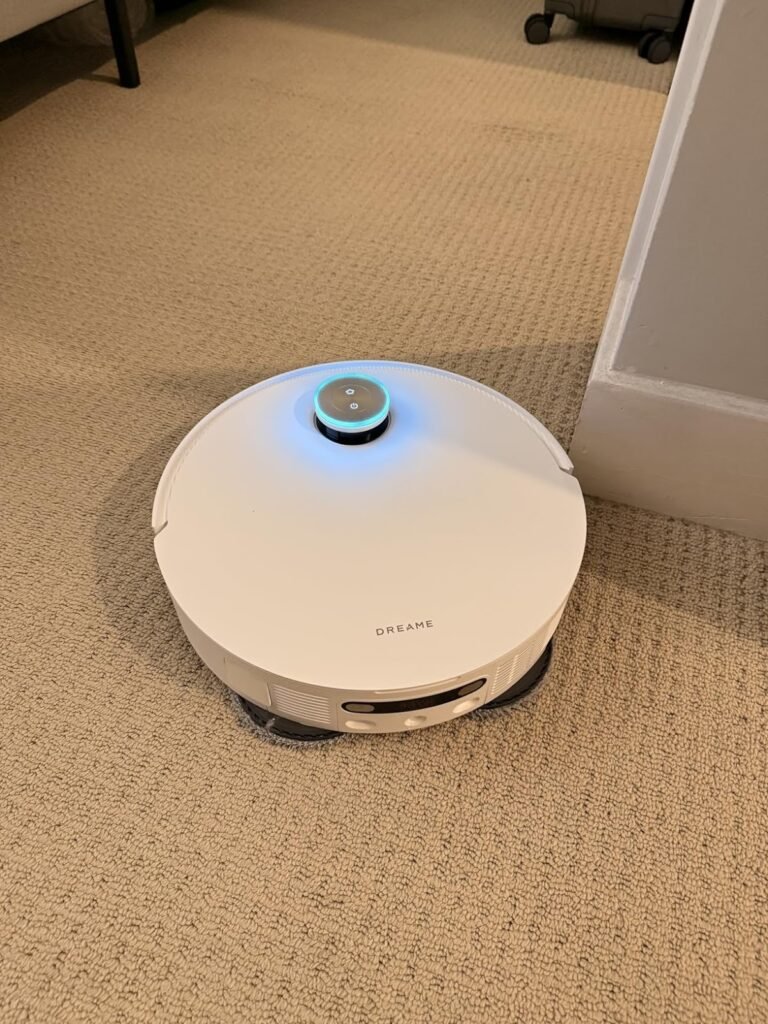
A robot vacuum becomes dramatically more valuable when it can preserve cleaning continuity across the small interruptions that normally break the run: raised thresholds, low-clearance furniture, cables, toy scatter, and dark tight spaces. Dreame’s answer is unusually literal. The X50 Ultra uses ProLeap retractable legs to climb, a retractable LiDAR arrangement for lower clearance, and a camera-plus-structured-light system to avoid obstacles with more confidence than many rivals. RTINGS measured a maximum threshold height of 3.8 cm in their testing and described the threshold-clearing performance as fantastic. They also found the clearance behavior materially better than most LiDAR-tower robots, especially once the retractable sensor design is factored in. Official Dreame specs go further on paper, claiming up to 2.36 inches of obstacle crossing and clearance down to 3.5 inches.
That changes the experience of ownership more than another jump in suction numbers would.
Because here is the part most spec tables bury: a robot that reaches more of your actual home, more often, with less babysitting, can outperform a “stronger” robot in daily life even when its raw debris pickup is not class-leading. That is why reviewers who focus on lived navigation tend to sound warmer on the X50 Ultra than reviewers who focus narrowly on pickup charts. The Verge called it a big upgrade for hard floors specifically because the new leg-style mechanism can get into more spaces, while Gizmodo praised it as quiet, powerful, easy to set up, and highly capable, even while flagging a weak spot.
The Threshold Where the Outcome Quietly Breaks
This is the governing model for this article:
The break point is not dirt load. The break point is access failure.
Once your home crosses a certain threshold of physical interruption, the usual robot-vacuum buying logic starts to break. That threshold tends to appear when three things stack together:
| Threshold Signal | What It Looks Like in Real Life | Why It Changes the Decision |
|---|---|---|
| Raised transitions | bathroom lips, door tracks, room dividers, uneven thresholds | coverage stops being continuous |
| Low furniture | sofas, beds, sideboards with awkward clearance | dust zones become permanent blind spots |
| Daily floor clutter | cables, pet items, chairs, scattered objects | unsupervised runs become unreliable |
The X50 Ultra is strongest precisely when this threshold is the real problem. Its design is not quietly better in an abstract sense. It is better in the specific moment where ordinary robot behavior becomes timid. RTINGS says its obstacle avoidance is industry-leading and its low-height and threshold behavior are major leaps forward for Dreame. Vacuum Wars describes the machine as engineered around quiet threshold crossing and under-furniture access.
But another threshold exists on the negative side too:
| Negative Threshold | What Starts to Matter More | Why the X50 Ultra Becomes Less Impressive |
|---|---|---|
| Fine dust along walls | edge pickup, brush extension behavior | RTINGS found it leaves fine debris in corners and along edges |
| Repeated sticky messes | stain agitation, deeper mop effectiveness | RTINGS called stain handling mediocre and often multi-pass |
| Large, carpet-heavy homes | battery efficiency per charge | owners and tests report quicker-than-expected drain |
That is where the rosy first impression begins to thin out.
Why Most Buyers Misread This Too Early
They buy suction.
They should be buying failure resistance.
This category trains people to compare the wrong way. A bigger Pascal number feels decisive. A dock with more automated functions feels premium. A long feature list feels like certainty. But feature-led judgment is exactly how you end up with a machine that wins the unboxing and loses the month.
The X50 Ultra almost dares you to make that mistake because its headline specs are noisy enough to distract from its actual value. The real value is not “20,000Pa.” The real value is that Dreame tried to engineer around the point where a robot normally becomes annoying to own. When RTINGS says it is only fair overall on hard floors but excellent at obstacle handling, that is not a contradiction. It is the key to understanding the product. This is not a universal cleaning champion. It is a machine that becomes disproportionately logical when mobility is the bottleneck.
You might assume that means it is automatically the better flagship. Not quite. That would be too clean, too easy, too convenient. The uncomfortable truth is that some competing robots clean hard floors better or mop tougher stains better. RTINGS explicitly notes that the Ecovacs X8 Pro Omni significantly outperforms the X50 in stain removal and hard-floor debris pickup, while the Roborock Saros 10R is the better overall robot in their comparison, with better hard-floor pickup, comparable obstacle avoidance, and better mopping. The X50’s answer is different: it wins its case when the house itself is the obstacle.
Who Is Actually Inside This Problem
You are inside this problem if your home punishes interruption more than it punishes raw mess.
That usually means one of the following:
- you have multiple room transitions that lesser robots treat like borders
- you have low furniture that gathers dust in unreachable strips
- you want hands-off runs in a home that is not perfectly prepped
- you have pets, cables, and ordinary clutter, and you are tired of rescue missions
- you care more about coverage continuity than about winning a lab test on flour against a baseboard
For this buyer, the X50 Ultra makes immediate sense. Officially, Dreame backs that use case with retractable legs, 3.5-inch low-clearance behavior, an anti-tangle DuoBrush for hair up to 11.8 inches, extendable brush and mop coverage, and a dock that empties, refills, washes, dries, and even heats mop-cleaning water to 176°F according to RTINGS’ dock overview. Amazon’s current listing also shows a 4.5/5 average from 131 ratings and a $1,499.99 price on the version indexed in search results.
Where Wrong-Fit Begins
This is where I would slow the buyer down.
Not everything impressive is right.
The X50 Ultra is the wrong fit if your main irritation is one of these three:
| Wrong-Fit Type | What You Actually Need | Why This Isn’t the Cleanest Match |
|---|---|---|
| Edge perfectionist | stronger fine-dust pickup along walls and corners | RTINGS repeatedly found it weak with fine debris at edges |
| Stain-first buyer | a more aggressive mopping system | RTINGS called stain performance mediocre |
| Large-run efficiency buyer | stronger battery efficiency over long jobs | Vacuum Wars and owners report below-average battery behavior |
There is another subtle wrong-fit group too: people who buy premium robot vacuums hoping to stop thinking entirely. The X50 Ultra reduces intervention. It does not erase it. RTINGS still found cable-related catches in some cases. Forum and Reddit threads still mention battery frustrations, odd pathing at times, and imperfect threshold behavior in certain real homes. Even a mobility-forward robot remains a robot. It lives inside edge cases. It does not abolish them.
The One Situation Where This Product Becomes Logical
The Dreame X50 Ultra becomes logical when your house has already exposed the limit of ordinary robot movement.
That is the exact moment.
Not sooner.
Not for everyone.
If your break point is this combination—raised transitions, low-clearance furniture, daily clutter, and a desire to run the machine with less supervision—then the X50 Ultra stops looking like an expensive gadget and starts looking like a structural correction. The product is not logical because it promises everything. It is logical because it attacks the one failure mode that quietly ruins trust in this category: the machine cannot stay meaningfully present across the whole floor plan. On that problem, the X50 Ultra is unusually well-armed. Officially, it is built for obstacle crossing up to 2.36 inches and clearance down to 3.5 inches; independently, RTINGS praised its threshold and object handling in real use, and The Verge singled out the step-climbing design as the meaningful upgrade.
What It Solves, What It Reduces, and What It Still Leaves to You
| Category | What the X50 Ultra Does Well | What It Reduces | What It Still Leaves to You |
|---|---|---|---|
| Thresholds and room transitions | excellent real-world crossing behavior for a robot vacuum | fewer stranded rooms, fewer failed runs | not every threshold behaves identically in every home |
| Low furniture access | retractable LiDAR improves clearance versus typical towered robots | fewer dust shadows under sofas and cabinets | safety settings may still limit very tight gaps |
| Obstacles and clutter | excellent avoidance, including strong pet-waste handling in RTINGS testing | fewer rescue missions, less pre-cleaning | cables can still cause rare intervention |
| Maintenance | full-service dock automates most routine upkeep | less daily labor, less messy mop care | consumables and long-term upkeep still exist |
| Cleaning results | good enough for many homes, especially medium/large debris | cleaner floors with less effort | fine dust edges, stubborn stains, and battery efficiency remain weaker points |
That table is the whole story compressed. Strong mobility. Strong avoidance. High automation. But not flawless cleaning, not elite stain work, and not the battery machine I would choose for very large, demanding runs.
Final Compression
Most robot vacuum reviews ask the wrong question.
They ask, “How powerful is it?” The smarter question is, “Where does my current robot stop being reliably present?”
If that failure happens at the doorway, under the sofa, around the clutter, or at the point where you are tired of preparing the room for the machine that was supposed to save you effort, the Dreame X50 Ultra is one of the most rational premium picks in the category. Not because it is perfect. Because it is unusually honest about the battlefield it was designed for. It is a threshold machine. A continuity machine. A machine for homes that interrupt weaker robots before the cleaning even begins.
If your real pain is dried-on kitchen residue, ultra-clean wall edges, or maximum square footage per charge, this is where the fit starts to loosen. But if your home keeps breaking lesser robots at the transition points, this is where the decision stops being vague.
Transparency Note:
This analysis is built on aggregated real-world experience.
It extracts what repeatedly holds, what breaks, and what users uncover only after living with the system—then shapes it into a clear model you can use immediately.
Think of it as structured experience, refined and presented so you don’t have to learn it the hard way.
“A quick note: Don’t believe the star ratings, but trust personal experience. This article is a compilation of collected experiences”