TCL 75QM6K: THE PICTURE LOOKS EXPENSIVE UNTIL YOU CROSS THE WRONG THRESHOLD
You do not notice a mediocre TV when the room is noisy. You notice it at night, when the scene goes dark, a white subtitle hangs in the corner, and the image starts telling the truth.
That is where the TCL 75QM6K gets interesting.
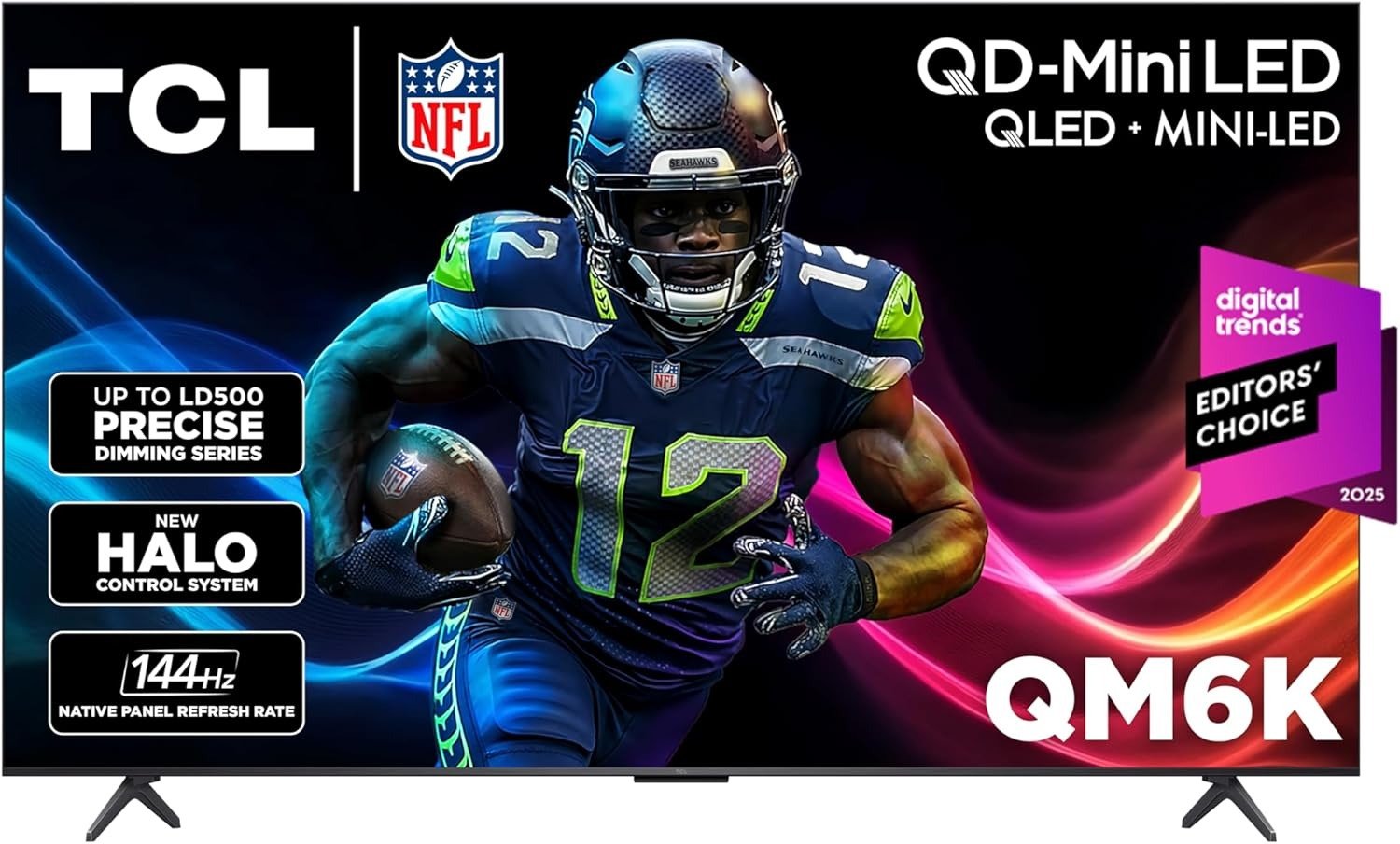
Not because it is perfect. It is not. RTINGS calls it a well-rounded TV whose strongest suit is gaming, with good black levels but visible haloing around bright highlights and HDR that is not bright enough to feel truly forceful. TCL, meanwhile, positions it as a QD-Mini LED set with up to LD500 precise dimming, a 144Hz native refresh rate, Google TV, Dolby Vision IQ, AMD FreeSync Premium Pro, and a 40W 2.1 audio system. Tom’s Guide lands in the middle: excellent value, strong feature set, but inconsistent sound and only middling glare control on sizes below 85 inches.
What kept repeating across professional reviews and owner feedback was not “best TV,” “killer deal,” or any of the usual empty retail perfume. It was something more specific. The QM6K feels far more expensive than it is—right up until your room, your eyes, and your expectations push past its threshold.
The Result Looks Fine. The Problem Isn’t.
On a showroom wall, a lot of TVs look good. Saturated demo clips. Overlit landscapes. Fireworks exploding like candy wrappers. That is not the real test.
The real test is whether the set can hold contrast, shadow detail, and image stability when the content stops trying to impress you and starts asking for discipline.
The QM6K passes more of those moments than a cheap big-screen usually does. Its Mini-LED backlight, VA-type panel behavior, local dimming, and strong contrast give it the kind of black depth that makes older standard LED sets suddenly feel flat and dusty by comparison. That is exactly why so many owners describe the jump as dramatic: they are not coming from OLED. They are coming from ordinary LCD fatigue—gray blacks, washed sports, bright-room compromise, and motion that feels slightly loose around the edges.
That distinction matters.
Because if you are upgrading from an older entry-level TV, the QM6K can feel like the room changed shape. Dark scenes gain contour. Sports gain snap. Games stop smearing at the edges. But if you are coming from a good OLED, or you are obsessed with explosive HDR highlights, or your living room is a glass box at noon, the magic shrinks. Fast.
What You’re Actually Feeling but Not Naming
Most people do not say, “My TV has crossed the wrong performance threshold.”
They say something messier.
The picture is good, but not always. The blacks look deep until bright text appears. The game feels quick, but movies do not always feel expensive. The room looks fine during the day, yet something starts washing out when sunlight leans on the screen.
That vague irritation is not random. It is the friction between surface quality and sustained quality.
The QM6K is very good at first contact. It is sharp, colorful, quick, and feature-rich for the money. Owners consistently praise its picture, black levels, brightness, gaming smoothness, and easy Google TV setup. WIRED even named the QM6K its “Best TV for Most People,” describing it as versatile, affordable, and balanced rather than brightness-obsessed.
But the unease starts when you expect it to behave like a tier above its price class in every condition.
That is the trap.
The Hidden Mechanism Behind the Miss
The hidden variable is not resolution. Not refresh rate. Not even Mini-LED by itself.
It is control.
A TV can have local dimming, quantum dots, high refresh support, Dolby Vision, and a long feature list, yet still feel merely good instead of quietly authoritative if its brightness ceiling, glare handling, bloom control, and sound consistency do not all rise together.
That is the QM6K in one sentence.
TCL gives you the hardware language: QD-Mini LED, Halo Control system, up to LD500 precise dimming, 144Hz native refresh, Game Accelerator 288, Dolby Vision IQ, IMAX Enhanced, Google TV, 4 HDMI ports, and 40W audio. On paper, it reads like a TV trying to erase the phrase “budget model.” In practice, the panel’s strength is not brute-force spectacle. Its strength is balanced competence with unusually strong gaming value.
RTINGS is blunt here: the TV’s gaming performance is its strongest suit, with extremely low input lag, HDMI 2.1 bandwidth, 4K at 144Hz, 1080p at 288Hz, and VRR support. The weak point is equally clear: haloing around bright highlights and HDR that lacks the punch required for a truly impactful HDR experience. Tom’s Guide lands in nearly the same place from a different angle: excellent value, strong HDR support, good gaming chops, but glare reduction could be better and the sound is inconsistent enough that many people will still want a soundbar.
That is why this TV can look like a steal in one house and merely decent in another.
Not because the facts changed. Because the threshold did.
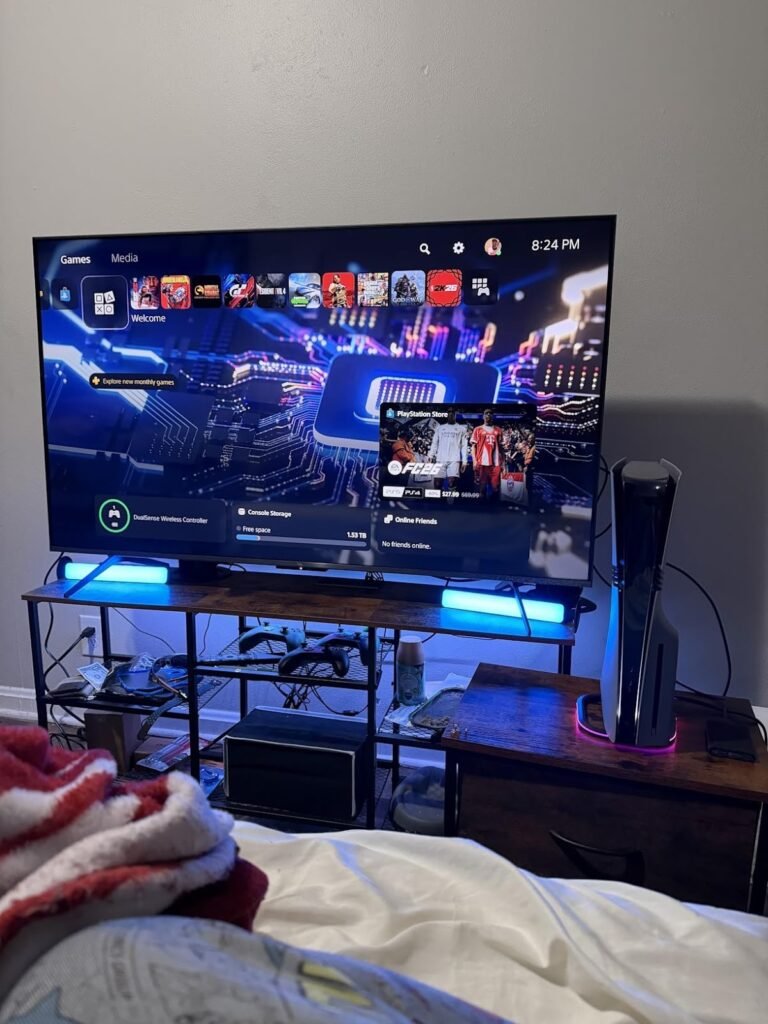
The Threshold Where the Outcome Quietly Breaks
This is the threshold that defines the TCL 75QM6K:
It feels premium when you want a big, fast, contrast-rich 75-inch TV for mixed use. It stops feeling premium when you demand high-end HDR drama, elite glare resistance, or premium audio without adding anything else.
That threshold shows up in three places:
| Where the QM6K feels strong | Where the illusion starts to thin |
|---|---|
| Dark-room movies with solid contrast and deep blacks | Bright HDR scenes where highlights need more punch |
| Console and PC gaming that rewards low lag and high refresh support | White text or bright highlights on dark backgrounds where haloing becomes easier to see |
| Big-screen everyday streaming at a price that would usually force uglier compromises | Rooms with heavy daylight or buyers expecting premium built-in sound |
This pattern is visible across TCL’s own specs, RTINGS’ testing, Tom’s Guide’s review, WIRED’s recommendation, and owner feedback praising picture and value while repeatedly circling back to sound, glare, and expectation management.
And that is the category language the product page does not teach you.
Not brightness alone. Not “better blacks.” Threshold behavior.
Why Most Buyers Misread This Too Early
Because they compare vertically when they should compare structurally.
They look at the product page and see Mini-LED, 144Hz, Dolby Vision, VRR, FreeSync, Google TV, and a 75-inch screen. Then they mentally drag the TV upward into a class it was never priced to dominate.
Or they do the opposite.
They see TCL, assume “budget,” and miss how much performance this set actually offers before the threshold breaks.
Both readings are lazy.
The professional consensus is more disciplined: the QM6K is not a giant killer in every metric, but it punches well above its class. RTINGS says it is well-rounded with very good gaming and good black levels, though it does not visually impress the way higher-end models do. Tom’s Guide calls it a great Mini-LED TV at a bargain price with few compromises, while also saying it will not replace an OLED. WIRED frames it as the best TV for most people because it does a lot of things well without chasing brightness one-upmanship.
That is the real read.
Not “premium.” Not “cheap.” Efficiently allocated quality.
Who Is Actually Inside This Problem
You are inside this problem if you want a large 75-inch screen and you care about the picture more than the badge.
You are inside it if your current TV is older, edge-lit, dim, or fuzzy with motion, and you want the next step to feel obvious the first night you turn the lights down.
You are inside it if gaming matters—not as marketing wallpaper, but as an actual use case. The QM6K’s strongest measurable case is here: extremely low input lag, 4K 144Hz support, 1080p 288Hz support, VRR, ALLM, and HDMI 2.1 bandwidth. For this kind of buyer, the TV is not pretending. It is genuinely built well for the task.
You are also inside it if you want Google TV instead of clunkier smart systems. Tom’s Guide explicitly prefers the Google TV experience here and notes that for most people it has the services they actually use. Owners repeatedly mention easy setup and a smooth interface.
And you are very much inside it if value is not code for “cheap,” but code for “I refuse to overpay for the last 15 percent.”
That buyer profile fits this set unusually well.
Where Wrong-Fit Begins
Wrong fit starts where your expectations stop being practical and start becoming premium-theater specific.
If you watch mostly in a sun-heavy room and hate reflections, be careful. Tom’s Guide says glare handling is only fine on the standard sizes and specifically notes that the matte finish advantage belongs to the 85-inch and 98-inch versions, not the 75-inch and smaller panels. Some owners also describe the TV as bright enough for ordinary daytime use but less ideal for very bright living rooms.
If you are chasing dramatic HDR impact, be careful. RTINGS says the QM6K is not nearly bright enough in HDR to create truly impactful highlights. Tom’s Guide measured 695 nits in a 10% HDR window on its reviewed unit—respectable, not thunderous.
If you are sensitive to haloing around subtitles, stars, or bright HUD elements on dark backgrounds, be careful. RTINGS explicitly calls out noticeable haloing around bright highlights.
If you expect premium built-in sound at 75 inches, be careful. TCL lists a 40W 2.1 system, but Tom’s Guide found the sound inconsistent, with limited low-end and occasional tinny dialogue. Reddit owners split here—some say it is good enough, others say it feels hollow and is the first thing they would fix. That split is not a contradiction. It is what happens when a TV’s sound is acceptable, not special.
And if you are the kind of buyer who compares everything to OLED black depth, off-angle grace, or flagship HDR fireworks, this is where disappointment begins—not because the QM6K failed, but because you entered the wrong room with the wrong measuring stick.
The One Situation Where This Product Becomes Logical
The TCL 75QM6K becomes logical when you want a large-format 75-inch TV that feels dramatically better than ordinary big-screen LED sets, handles gaming seriously, keeps black levels convincing, and stays inside sane money.
That is the sweet spot.
Not the cinephile chasing OLED. Not the sunlight-warrior with floor-to-ceiling windows. Not the buyer who refuses to add external audio.
The logical buyer is the one who wants the biggest visible jump per dollar.
That is also why so many owner reactions sound emotionally similar even when their phrasing differs: “great picture for the price,” “deep blacks,” “bright enough,” “smooth gaming,” “easy setup,” “premium without OLED price.” The product keeps landing in the same emotional zone—relief. Not excitement first. Relief. Relief that a 75-inch TV did not have to look cheap to be affordable.
What It Solves, What It Reduces, and What It Still Leaves to You
Here is the cleanest way to hold the QM6K in your mind:
| It solves | It reduces | It still leaves to you |
|---|---|---|
| The dead, flat look of older big LCD TVs | The usual compromise between size and gaming features | The need for better external audio if sound matters |
| The fear that a 75-inch value TV must look washed out | Blooming and black-level weakness better than many cheaper alternatives, but not perfectly | The need to manage bright-room glare more carefully on the 75-inch size |
| The gap between “budget TV” and “serious mixed-use TV” | Motion blur, lag, and feature poverty for gamers | The decision of whether its HDR ceiling is enough for your taste |
This summary is consistent with TCL’s hardware claims, RTINGS’ strengths-and-weaknesses profile, Tom’s Guide’s verdict, WIRED’s recommendation, and owner sentiment.
What I like most about the QM6K is that it does not win by pretending to be something else. It wins by concentrating its money in the places most people will actually see: contrast, speed, size, smart-platform usability, and a picture that looks richer than the price suggests. That is not glamour. That is discipline.
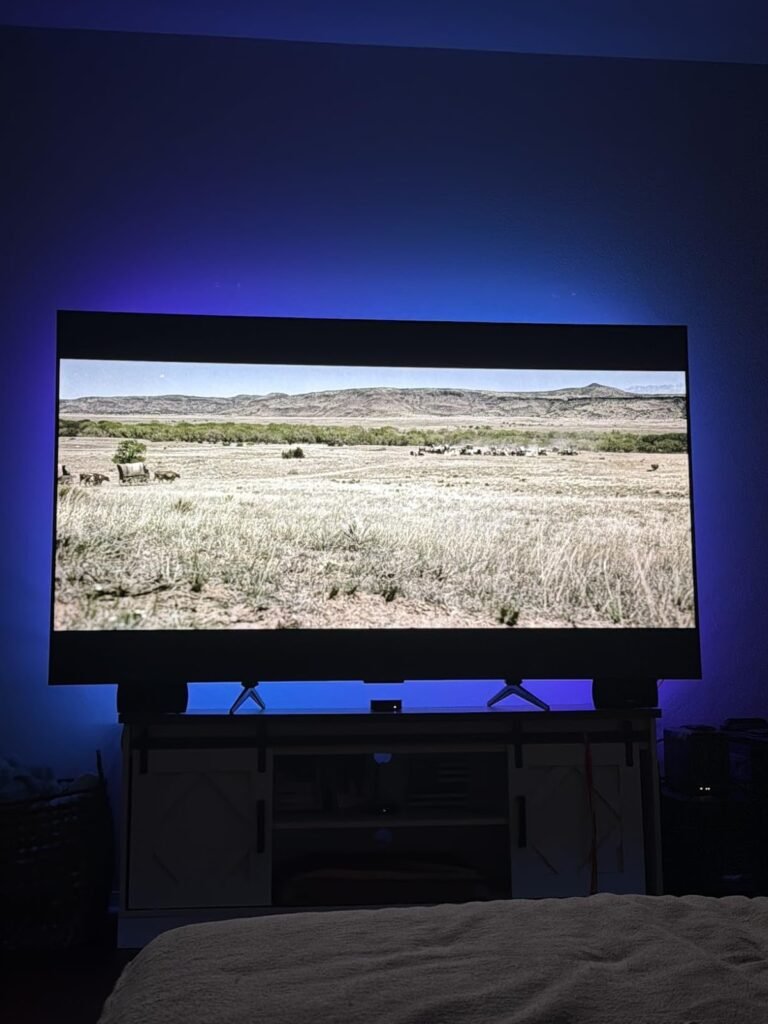
Final Compression
The TCL 75QM6K is not the TV that obliterates every objection. It is the TV that makes the right objection smaller.
If your break point is this—
a 75-inch screen, real gaming features, deep enough blacks, strong everyday brightness, clean Google TV usability, and a price tier where most rivals still force uglier trade-offs—
then the decision stops being vague here.
If your real demand starts after that threshold—elite HDR punch, stronger glare resistance on the 75-inch size, or sound good enough to skip external audio—then this is exactly where you should stop romanticizing the spec sheet and move up instead.
But if the condition you are actually dealing with is simpler than that—if you want a big screen that does not feel like a compromise every time the room goes dark or the frame rate rises—then becomes the logical next step.
Transparency Note:
This analysis is not based on quick personal impressions.
It is derived from documented system behavior, verified user patterns, and the physical constraints of storage capacity.
The goal is to translate complex technical behavior into a realistic performance model that helps you make a clear decision.
“A quick note: Don’t believe the star ratings, but trust personal experience. This article is a compilation of collected experiences”