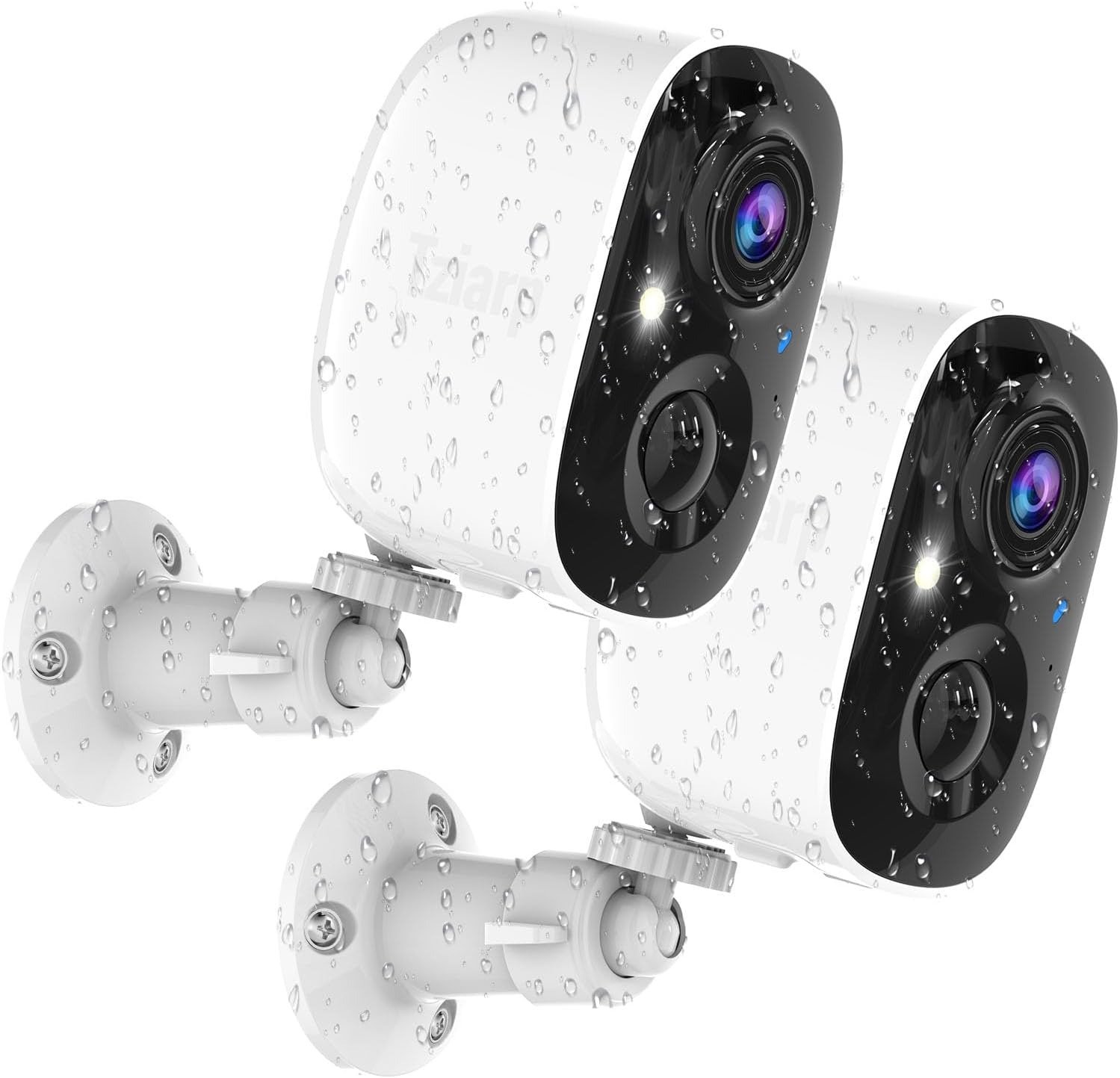
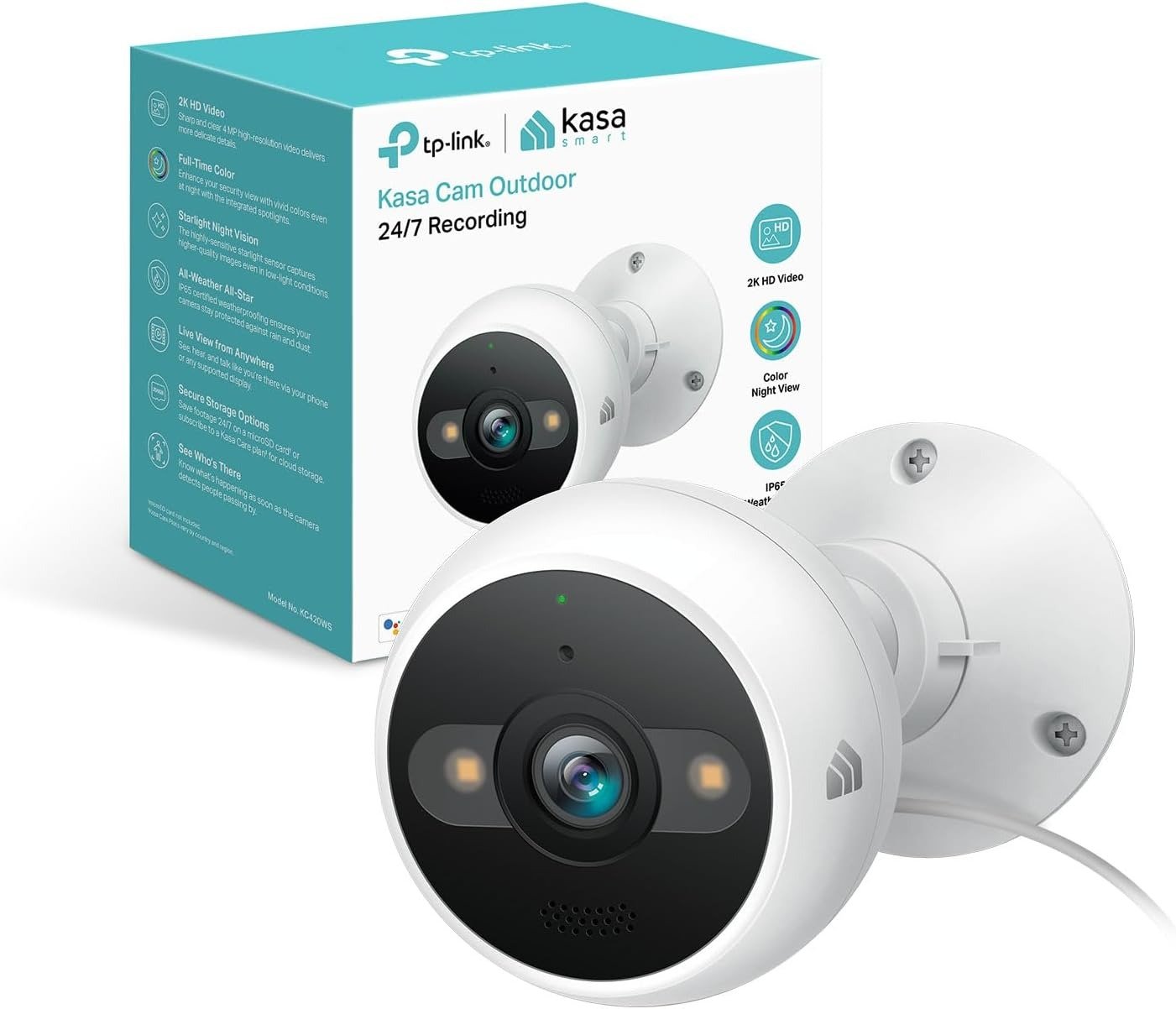
Tapo C246D Review: The View Gets Bigger Before the Blind Spot Gets Smarter
TAPO C246D
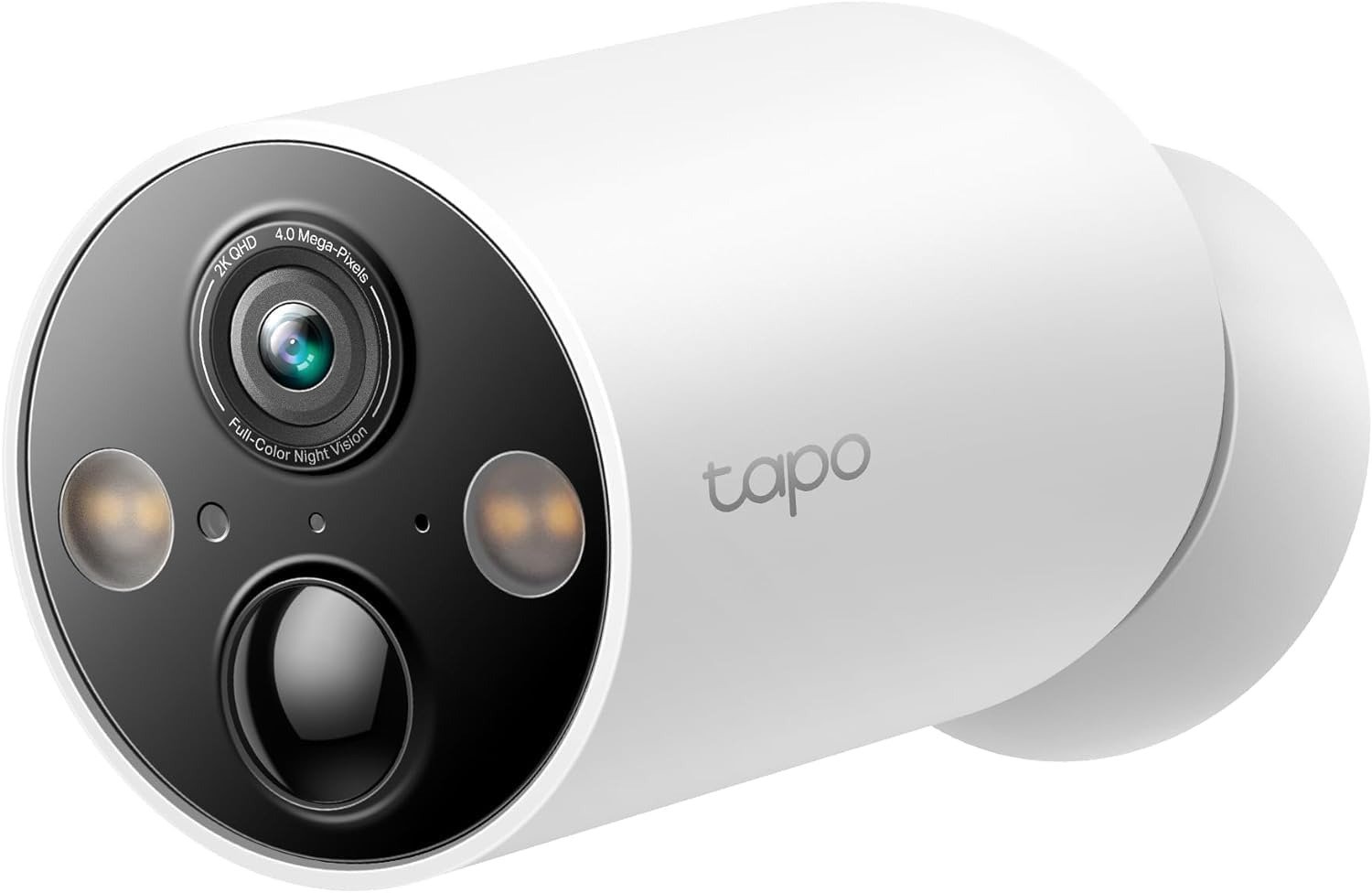
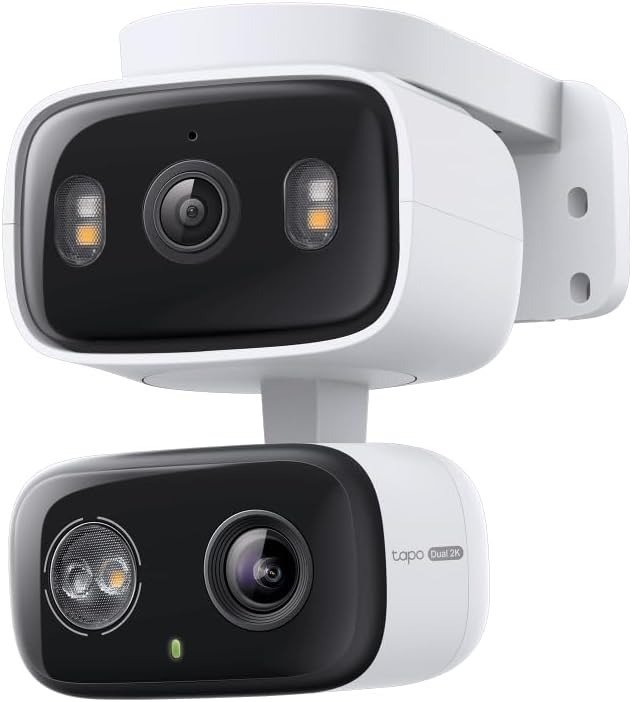
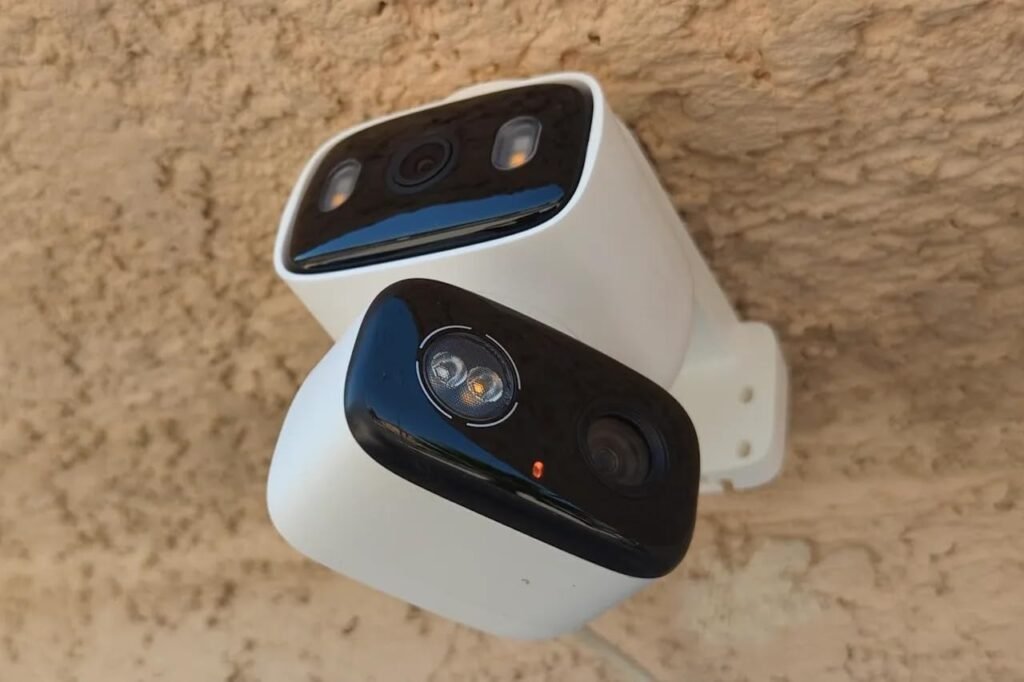
You do not notice a weak camera when nothing is happening. You notice it after the second or third useless alert, when the driveway clip starts too late, when the person is already leaving frame, or when the wide view looked reassuring right up until you needed detail. That is the real tension around the Tapo C246D. It gives you more surface area than a basic single-lens camera, but the real decision is not “dual lens or not.” It is whether your problem begins at the exact threshold where broad visibility stops being enough and targeted detail starts mattering more. The C246D is built around that split: one fixed 2K wide lens, one 2K pan/tilt telephoto lens, smart tracking, AI alerts, local storage, and an IP65 housing meant for indoor or outdoor use.
The Result Looks Fine. The Problem Isn’t.
At first glance, this camera solves a very common frustration. A normal camera makes you choose between wide coverage and useful detail. The C246D tries to remove that compromise by combining a fixed wide lens with a separate pan/tilt telephoto lens in one body, so one area stays visible while the second lens moves in for closer tracking. TP-Link positions that as “two areas at the same time,” and that framing is accurate enough to matter. This is not just another pan/tilt camera. It is a camera designed for people who are tired of choosing between seeing the whole scene and seeing the part that actually matters.
What I kept coming back to is this: most people do not buy a security camera because they need “coverage.” They buy one because they are already annoyed by a specific kind of miss. A package area that sits outside the useful center of frame. A side path that is visible, but never clear enough. A backyard gate that does not justify a second camera but still keeps producing uncertainty. That is where the C246D starts making sense. Not when you want more pixels. When you want fewer interpretive gaps. The product’s own design points toward that use case, and third-party testing broadly supports it: in good lighting, Tom’s Guide found the image crisp and tracking effective, though not especially smooth, while user discussions repeatedly focus on the camera’s ability to reduce blind spots without adding a second unit.
What You’re Actually Feeling but Not Naming
Most buyers describe the wrong symptom.
They say they want a better camera.
Usually, they want a better decision window.
That is different.
The actual irritation is not “my camera quality is bad.” It is closer to this: I can see enough to worry, but not enough to stop checking twice. That low-grade friction is where cheap camera satisfaction starts collapsing. You get a clip, but not the part that settles the question. You get movement, but not identification. You get an alert, but not enough context to act cleanly. The C246D is aimed directly at that form of unfinished surveillance. Its one-tap smart focus, dual-view layout, motion tracking, and telephoto lens are all trying to compress that gap between broad awareness and usable confirmation.
I would name that gap the confirmation threshold.
That is the point where “I saw something” stops being useful, and “I know what happened” becomes the only standard that matters.
If your current camera already gives you enough evidence to settle the event, this product is probably unnecessary. If your current footage keeps forcing replays, zoom guesses, and second thoughts, then you are much closer to the problem this model is designed to solve. That distinction is more useful than the usual feature checklist because it maps the purchase to the actual annoyance instead of the spec sheet fantasy. The product’s dual-lens architecture, telephoto emphasis, and tracking behavior all support that interpretation.
The Hidden Mechanism Behind the Miss
The hidden variable is not resolution alone.
It is lens role separation.
The C246D uses a fixed wide-angle 2K lens for constant scene awareness and a separate 2K pan/tilt telephoto lens with a 6 mm focal length for closer detail. TP-Link says the telephoto lens provides “3× clarity compared to standard lens” and supports up to 10.8× digital zoom, while the wide camera holds a roughly 125° field of view. That matters because most cameras try to do both jobs with one viewpoint. This one splits the jobs. One lens watches. The other interprets.
That sounds like marketing until you translate it into behavior.
A single camera usually fails in one of two ways. It is either wide enough to keep the scene in frame but weak at distance, or tight enough to show useful detail but too narrow to give context. The C246D’s design is an attempt to dodge that structural trap. When the fixed lens detects activity, the pan/tilt lens can move to follow it. In practical terms, that means the camera is trying to preserve both context and target detail inside one event cycle rather than making you choose before the event even happens.
That is also why the camera’s strengths and weaknesses are unusually placement-sensitive. Tom’s Guide found the dual-lens system effective in good light and useful for tracking, but also noted that the wide camera could have been wider in some setups, and that tracking movement was not perfectly smooth. User feedback adds another recurring point: the fixed wide lens only has a narrow manual vertical adjustment range, so higher or awkward mounting positions can turn the “wide safety net” into a bad angle that never really stops feeling off.
The Threshold Where the Outcome Quietly Breaks
Here is the threshold plainly:
The C246D works best when your problem is not pure perimeter coverage. It works when your problem is mixed coverage with recurring uncertainty inside one connected space.
That is the break point.
If you need one camera to watch a doorway and still resolve what is happening deeper in the yard, the product starts becoming rational. If you only need a static overview, it is excessive. If you need highly precise long-distance identification across a very large property, it is still the wrong tool. The threshold is not “outdoor vs. indoor.” It is not even “budget vs. premium.” It is whether your surveillance problem contains both awareness and confirmation in the same scene. The entire camera is engineered around that narrow problem shape.
Another threshold shows up in detection quality. TP-Link’s own troubleshooting guidance for false alerts recommends target distances of roughly 1.5 to 5 meters for the most accurate detection behavior, and it notes that reflections, angled motion, environmental movement, and auto-tracking interactions can all produce noisy alerts. That aligns with what buyers often report in practice: strong image quality and setup ease, but mixed experiences with motion sensitivity and occasional false alerts when conditions are messy. This is not unusual for consumer cameras, but it matters because a dual-lens system does not remove bad placement. It punishes lazy placement more clearly.
| Threshold Signal | What It Usually Means |
|---|---|
| You keep getting alerts with poor usable detail | A single wide view is not solving the real problem |
| You can see the area, but still cannot judge the event cleanly | You are inside the confirmation threshold |
| Your scene has one main zone plus one recurring point of interest | Dual-lens logic starts to fit |
| Your camera is mounted high and angled down sharply | The C246D’s fixed wide lens may become the weak point |
| Your environment has traffic, rain, reflections, or moving foliage | Detection tuning will matter more than specs |
The table above is the simplest way I can compress it: this camera is not about “more view.” It is about more useful view at the moment a wide view stops being enough. That is the threshold.
Why Most Buyers Misread This Too Early
Most buyers misread this camera because they use the wrong metric first.
They look at dual lenses and assume “better security.”
That is too vague to be useful.
The first mistake is feature-led judgment. Buyers see 2K, AI detection, motion tracking, color night vision, local storage, Alexa/Google support, and a dual-lens layout, then mentally round all of it up to “complete package.” The camera does have those features. It also stores locally on microSD up to 512 GB, offers optional cloud storage, supports privacy and detection zones, and uses IP65 weather resistance. But none of those features answer the real fit question by themselves.
The second mistake is angle denial.
The fixed lens is not infinitely flexible. TP-Link’s own product page says the wide-angle lens can be manually adjusted vertically only from -10° to 10° and horizontally by 360° during installation. That limited vertical range is not a minor footnote if you plan to mount the camera high and expect the wide lens to look meaningfully downward. User comments repeatedly flag this exact issue, especially for ceiling or elevated mounting. So the camera’s strongest concept can break for a very ordinary reason: the wrong install angle.
The third mistake is assuming smart alerts remove tuning.
They do not.
The C246D offers built-in AI detection for people, pets, vehicles, and baby cries without a subscription, and users can configure detection zones. But TP-Link also documents the ways false alerts still happen: reflective surfaces, rain, complex motion paths, auto-tracking interactions, and objects whose shapes are misread. In other words, this is a smart camera, not a self-explaining one. Buyers who want a set-it-and-forget-it perimeter box may read the specs too optimistically.
| Common Early Assumption | What Actually Matters More |
|---|---|
| Dual lens means universally better coverage | Dual lens helps only when your scene needs both context and target detail |
| 2K fixes distant identification | Lens role and framing matter as much as raw resolution |
| AI detection reduces maintenance to zero | Detection zones, sensitivity, and placement still shape the experience |
| Pan/tilt solves every blind spot | The fixed wide lens angle can still limit the whole setup |
| “Indoor/outdoor” means flexible everywhere | Mounting geometry still decides whether the concept works |
Who Is Actually Inside This Problem
This camera fits a very specific person.
It fits the buyer who has already learned that one static angle is not enough, but who still does not want to deploy two separate cameras.
That usually means one of these scenarios:
- a front yard where you need continuous awareness of the overall approach, but clearer detail on the walkway, porch, or vehicle zone
- a backyard where one lens needs to hold the gate or broad area while the second lens follows movement deeper into the space
- a side entrance, driveway corner, patio, or mixed indoor-outdoor transition where broad context and usable close detail both matter inside one event
It also fits buyers who care about subscription avoidance. The camera supports local microSD recording up to 512 GB, with cloud storage optional rather than mandatory, and the AI detection features are positioned as subscription-free. That matters because a lot of camera frustration is economic, not just technical. It is not only “did I catch the event?” It is “did I pay monthly and still end up with ambiguous clips?” The C246D has a real advantage here for people who want a broader feature set without immediately stepping into a recurring fee model.
I would also include Tapo ecosystem users in the good-fit group. Reviewers and users who already live inside the app tend to describe the camera as easier to integrate into an existing setup, and several large review surfaces show strong sentiment around ease of installation, value, and picture quality, even when functionality and motion sensitivity get more mixed reactions. That is not a small point. Cameras are not judged only by image quality. They are judged by whether they become another maintenance chore.
| Need | Fit |
|---|---|
| One camera watching two meaningful zones | Strong |
| Broad awareness plus closer event detail | Strong |
| No required subscription for useful recording | Strong |
| Very high mount with steep downward angle | Weak |
| Simple static overview with no zoom need | Weak |
| Large-property long-distance identification | Borderline to weak |
| Existing Tapo app familiarity | Strong |
| Zero-tuning expectation | Weak |
Where Wrong-Fit Begins
This is not for everyone.
It is not for buyers who think every coverage problem should be solved by one smarter camera instead of two better-placed ones.
If your scene is huge, open, and distance-heavy, the C246D can still leave you dissatisfied. The telephoto lens helps, but it does not turn a consumer 2K dual-lens camera into a professional long-range identification tool. If your priority is maximum image crispness at distance under difficult light, you are pushing beyond the clean shape of this product. Tom’s Guide saw good performance in daylight and respectable low-light behavior, but also noted that low-light detail softens and that tracking motion is not perfectly fluid. That is a fair trade at this tier, not a miracle.
It is also a wrong fit if your mounting position is awkward by design. The limited vertical adjustment of the fixed wide lens has shown up too often in real user feedback to ignore. If you need steep angle correction from a high mount, the camera’s core promise can quietly weaken before you even start tuning the software. In that situation, the problem is not the app, not the AI, and not even the telephoto lens. The problem is geometry.
And it is the wrong fit if you expect a camera to eliminate false-alert management. TP-Link explicitly documents how reflections, rain, diagonal motion, environmental clutter, and tracking interactions can still create false triggers. Some buyers report having to adjust sensitivity or zones to stop over-triggering. That does not disqualify the camera. It simply means the product is for buyers willing to tune a system, not just hang a device.
The One Situation Where This Product Becomes Logical
The Tapo C246D becomes logical in one very specific situation:
when a single wide camera keeps leaving you uncertain, but a two-camera install still feels excessive for the space you are actually trying to watch.
That is the cleanest justification I can give it.
In that situation, the camera’s design stops looking clever and starts looking efficient. One fixed 2K lens maintains scene awareness. One 2K telephoto pan/tilt lens gives you targeted follow-up. AI detection lets you narrow which events matter. Local storage prevents the camera from becoming a subscription decision first. IP65 means the indoor/outdoor flexibility is real, not just label-deep. And the dual-view layout addresses a genuine gap between “I saw movement” and “I saw enough.”
I would not authorize it as a universal recommendation.
I would authorize it as a threshold correction.
Once you are inside that threshold, the product stops competing as “another camera” and starts functioning as the shortest path between broad coverage and interpretable events. That is why it has been received well for value and image quality across large user-review surfaces, even while motion behavior and mounting flexibility get more mixed scrutiny. It solves a narrow but common failure pattern better than a generic single-lens camera usually does.
What It Solves, What It Reduces, and What It Still Leaves to You
What it solves is straightforward. It reduces blind-spot anxiety inside one connected viewing area. It makes it easier to keep a wide context while still getting closer detail on the movement that matters. It gives you smart detection categories without forcing a subscription, and it supports local recording up to 512 GB if you want the camera to keep working even when you do not want another monthly bill.
What it reduces is quieter, but more important.
It reduces the habit of second-guessing your own footage.
It reduces the number of times you feel like the camera “caught something” without really resolving it.
It reduces the need to choose, in advance, between overview and detail.
What it still leaves to you is the part many buyers do not want to hear. You still have to place it well. You still have to think about mounting height, angle, scene clutter, and where subjects actually move. You still have to tune detection zones and sensitivity if your environment is messy. And you still have to accept that low-light detail and tracking smoothness remain consumer-tier trade-offs, not escaped laws of physics.
| You Gain | You Trade Off |
|---|---|
| Two viewing roles in one camera body | More dependence on careful placement |
| Better chance of resolving events without a second camera | Less forgiveness if the fixed wide lens angle is wrong |
| Smart detection without required subscription | Ongoing tuning in busy scenes |
| Strong value logic for mixed-zone monitoring | Not the cleanest choice for huge, distance-heavy spaces |
Final Compression
I would compress the Tapo C246D down to one sentence:
It is not the camera for people who want “more features.” It is the camera for people whose current wide view still leaves too much doubt.
That is the whole decision.
If your problem is simple static coverage, skip it.
If your property demands long-range identification across a large open area, skip it.
If your camera position will force a steep downward angle on the fixed lens, be careful.
But if your actual break point is the moment broad visibility stops being enough and event confirmation starts mattering, this is where the decision stops being vague.
Transparency Note:
This analysis is not based on quick personal impressions.
It is derived from documented system behavior, verified user patterns, and the physical constraints of storage capacity.
The goal is to translate complex technical behavior into a realistic performance model that helps you make a clear decision.