The Point Where the EPLO U8MAX Becomes the Right Answer
DECISION ANALYSIS
After going through the product data, owner feedback, and review material, I would not buy the EPLO U8MAX because it is a “premium smart toilet.” I would buy it only under a narrower condition: when I want one fixture to reduce repeated bathroom friction across flushing, seating comfort, cleanup, splash control, and hands-free use in a way a standard toilet cannot. That is the decision line.
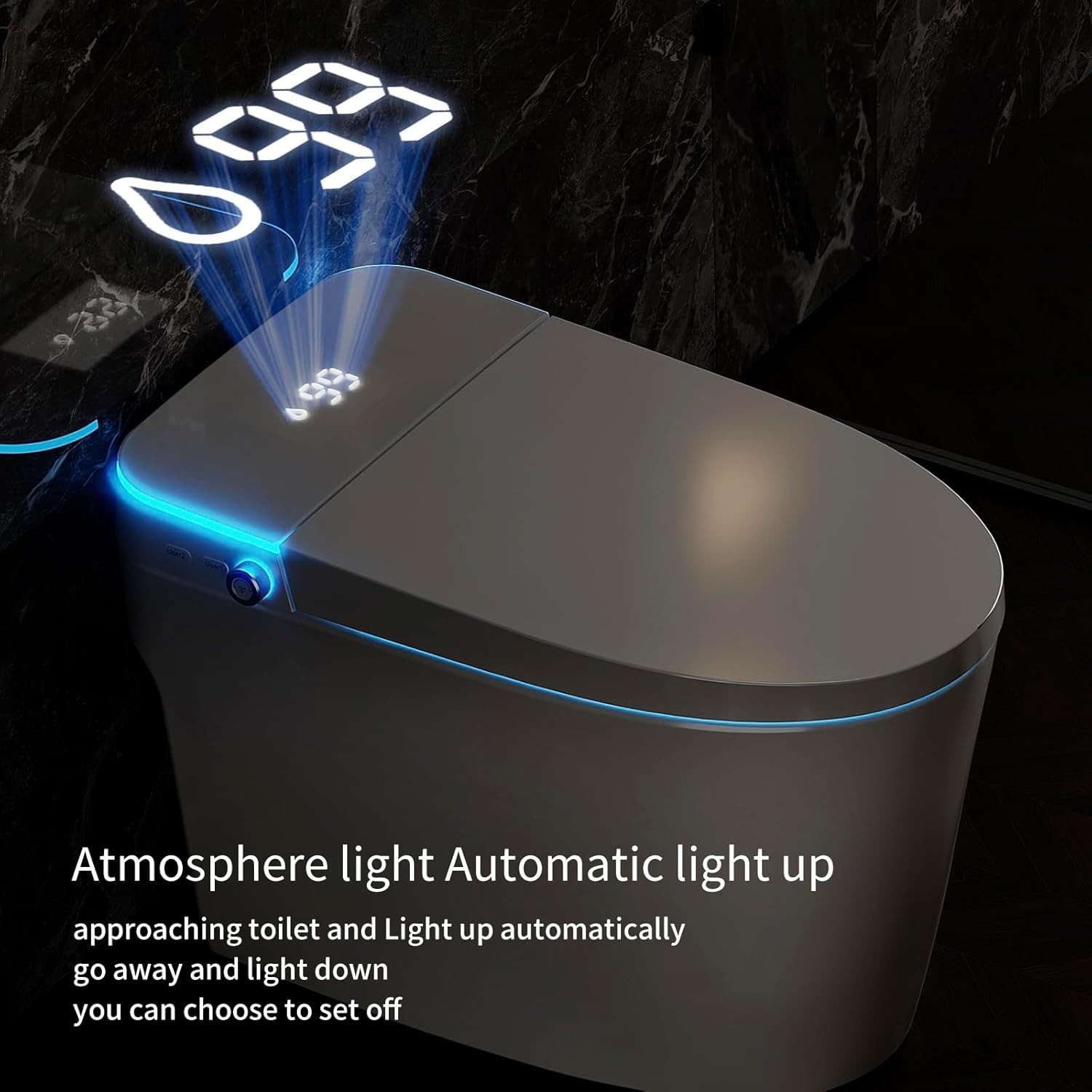
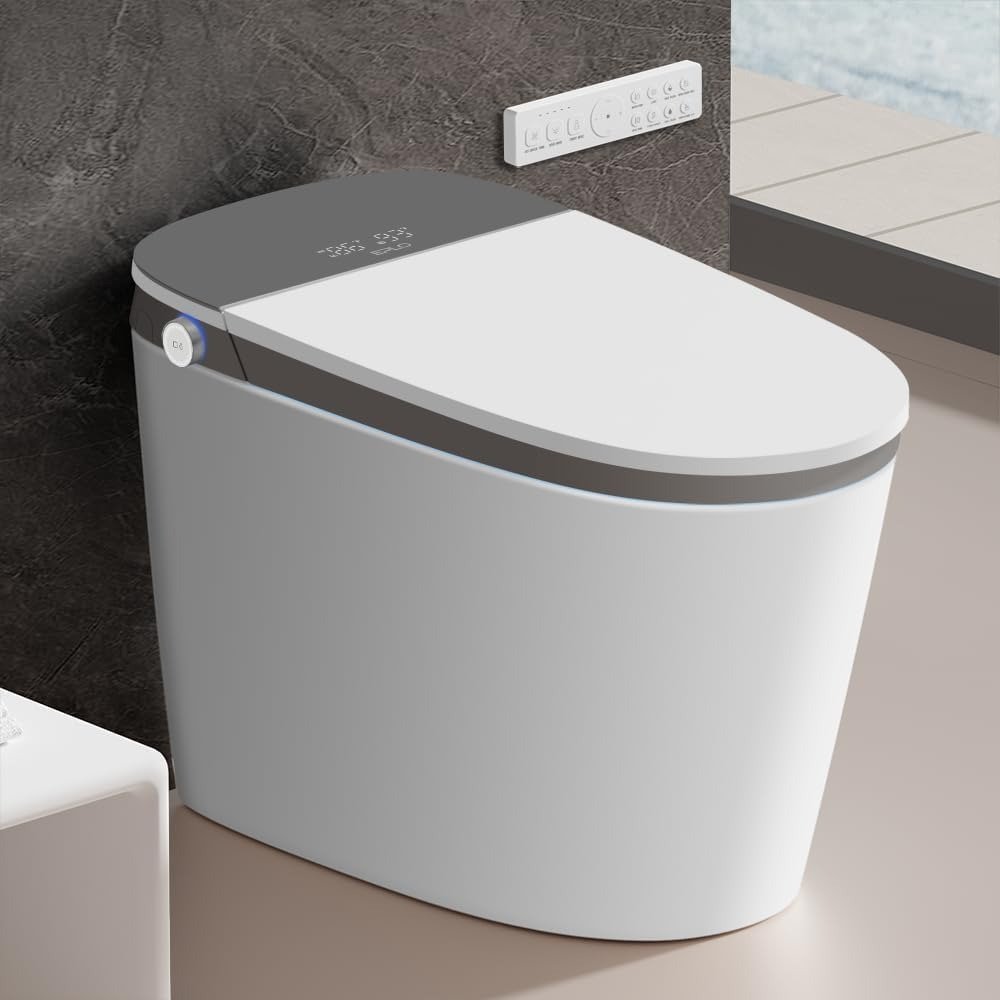
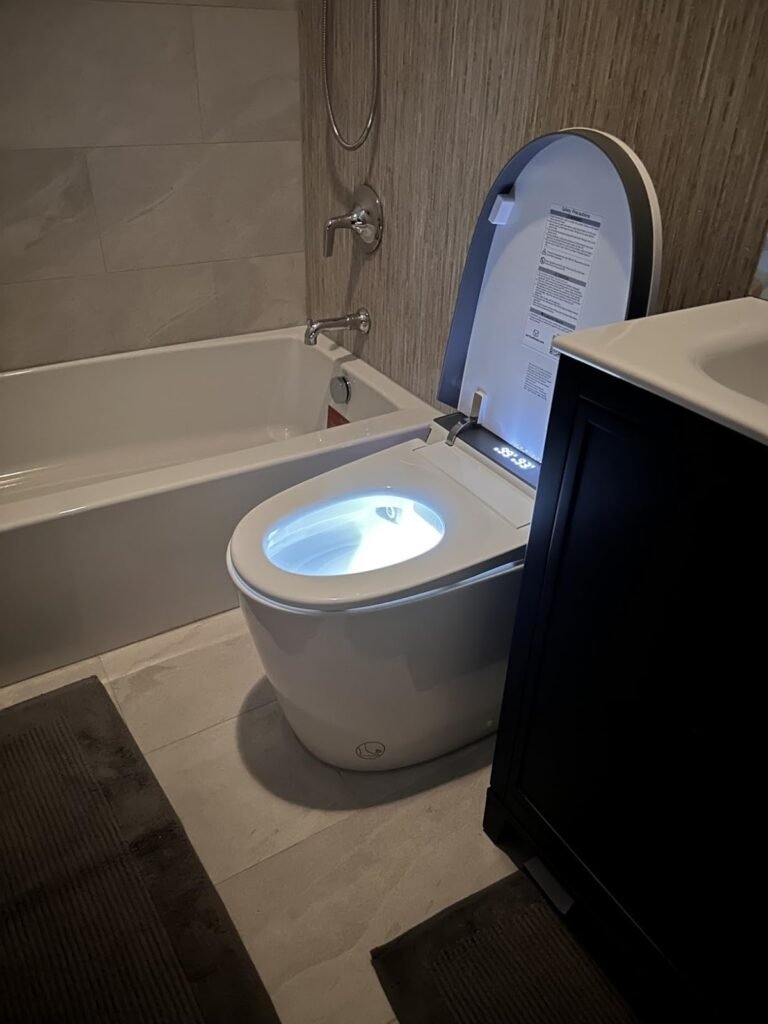
The product case is strong. EPLO lists the U8MAX with a 1000g MaP flush score, built-in tank and pump, dual flush at 1.6/1.1 GPF, backup-battery flushing, auto lid, auto flush, foot-sensor control, heated seat, instant warm-water wash, dryer, deodorization, dual LED display, and foam shield splash control. On paper, that is a long feature list. In practice, I reduce it to four decision variables: flush reliability, routine comfort, mess reduction, and automation tolerance.
The Single Governing Model: Threshold
My threshold for this product is simple. The EPLO U8MAX becomes worth it when the bathroom is no longer just a room you pass through, but a place where repeated minor irritation has become part of daily life.
That threshold is crossed when several of the following are true at once:
Repeated Friction
Why It Matters Here
- You are tired of inconsistent or underwhelming flushing
Built-in tank + pump and 1000g MaP positioning aim directly at that. - You want less splashback and less bowl mess
Foam shield is designed exactly for that. - You want less touching of lid, seat, and flush surfaces
Auto open/close and foot sensor reduce contact points. - Standard bowl height feels low or awkward
17.41-inch comfort height changes the sit/stand movement. - You care about wash comfort more than toilet-paper dependency
Warm-water wash and heated seat matter more over time than on day one. - You live somewhere where power interruptions are real
Backup-battery flush moves from “nice extra” to real value.
If only one of those is true, I do not think the math is strong enough. If four or five are true, the U8MAX starts looking logically well-matched.
What Convinced Me
The flush spec is real, but the context matters more. MaP’s own guidance says 500 grams or more is already exceptional, while 350 grams satisfies the EPA WaterSense performance floor. So the U8MAX is not merely claiming adequacy. It is claiming the ceiling. But because normal household demand is usually below that threshold, the raw flush number alone is not the buying reason. It is the foundation that lets the rest of the routine features matter without feeling like a cosmetic layer sitting on top of a mediocre toilet.
I also put real weight on the built-in tank and pump. Many buyers focus on bidet features and ignore the plumbing behavior underneath. EPLO’s claim that the system is not limited by water pressure, plus backup flushing during outages, points to a product that is trying to solve operating conditions, not just add conveniences. That is the kind of hidden engineering choice that often ends up being more important than marketing-friendly extras.
The Real Cost of the Strength
This is where I get more selective. The same automation that makes the U8MAX attractive can become its own form of friction. One owner review described the left-side sensor as so sensitive that the lid could close unexpectedly during cleanup for a right-leaning user, while the dryer still was not strong enough to replace wiping efficiently.
Another owner liked the product overall but still noted that the lid opening could become annoying while moving around the bathroom, even though the function was easy to disable. I do not read those as deal-breakers. I read them as the operational cost of hands-free intelligence. You gain less touching and more automation, but you trade off some behavioral predictability.
That matters because the wrong buyer will read “auto” as “effortless.” The better reading is “partially delegated.”
Compatibility Split 3.0
Excellent Fit
The U8MAX is an excellent fit if you want an integrated unit that treats the bathroom as a daily-use system, not just a fixture. It fits buyers who value strong flush positioning, comfort-height ergonomics, reduced contact points, warm wash, and better control of splash and bowl mess. It also makes more sense in homes where inconsistent water pressure or occasional outages make ordinary toilets feel less dependable.
Good Fit
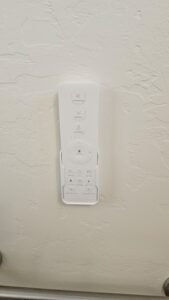
It is a good fit for buyers moving up from a standard toilet who are ready for a more appliance-like bathroom experience and are comfortable learning a remote, settings logic, and sensor behavior. Trustpilot feedback around EPLO as a seller trends positive on setup, responsiveness, and perceived value, and one owner review on EPLO’s site described a cracked seat housing being replaced quickly without hassle. That does not erase risk, but it does improve confidence around after-sales handling.
Borderline Fit
It is borderline for buyers who mainly want bidet benefits and heated comfort but do not need a full integrated toilet. Public expert and editorial coverage around bidet seats still tends to center on seat-based options from established brands because they are easier to install, easier to move, and less disruptive than replacing the entire toilet.
Even plumber commentary in public forums leans that direction. If your main goal is warm-water cleaning rather than whole-fixture replacement, the integrated format may be more commitment than necessary.
Poor Fit
This is a poor fit if your priority is absolute simplicity, no learning curve, minimal install complexity, or a dryer strong enough to stand in for wiping every time. It is also the wrong fit if you are highly sensitive to automation quirks or want a toilet that behaves like a basic mechanical object with no behavioral negotiation.
Hidden Costs I Would Factor In Before Saying Yes
| Hidden Cost | What It Means in Practice |
|---|---|
| Installation complexity | Integrated, skirted smart toilets can be more demanding than buyers expect. |
| Sensor adaptation | You may need to learn how the lid/flush logic behaves in your space. |
| Dryer expectations | Warm air is comfort support, not guaranteed wipe replacement. |
| Maintenance rhythm | Foam, filters, and feature systems imply more than standard-toilet ownership. |
| Size and weight | At 116 lb and full-unit dimensions, this is not a casual swap. |
My Decision Logic
I would say yes to the EPLO U8MAX when I want one purchase to solve a cluster of medium-sized annoyances at once. Not one annoyance. A cluster.
That distinction matters because this product is not strongest as a single-feature buy. It is strongest when the bathroom routine itself has become inefficient enough that flush confidence, splash control, hands-free use, comfort height, warm wash, and lower-contact operation all stack into a noticeable improvement. That is when the price and complexity start making sense.
Final Binary Table
| Statement | Verdict |
|---|---|
| “I just want a toilet that works.” | No |
| “I want my bathroom routine to feel cleaner, easier, and less hands-on.” | Yes |
| “I need the strongest possible flush on paper, but I do not care about automation.” | Borderline |
| “I want fewer daily annoyances, not just more features.” | Yes |
| “I expect smart behavior with zero quirks.” | No |
| “I can accept setup, learning, and some adjustment in exchange for a more complete bathroom system.” | Yes |
Verdict
The EPLO U8MAX is not the logical buy because it is flashy. It becomes the logical buy when your bathroom friction has crossed a threshold and you want to compress that friction into one integrated fixture.
Its strongest case is not status. It is repeated-life utility: strong flush positioning, water-pressure independence, comfort-height seating, reduced splash, reduced contact, and a cleaner-feeling routine.
Its weakness is equally clear: automation has behavior, and behavior is not the same thing as invisibility. If that trade makes sense in your life, this stops looking like an expensive gadget and starts looking like a structurally correct purchase.
Transparency Note:
This analysis is not based on quick personal impressions.
It is derived from documented system behavior, verified user patterns, and the physical constraints of storage capacity.
The goal is to translate complex technical behavior into a realistic performance model that helps you make a clear decision