The Room Is Not Dirty. It Just Never Fully Recovers.
ANALYSIS FRAMEWORK
The problem usually starts at night, not in the specs
You vacuum. You open a window. You change the sheets. And a few hours later the room still feels slightly used, like the air never came all the way back.
That is the part many people struggle to describe. It is not dramatic. It is persistent.
If you have pets, allergies, fabrics that trap odor, or a bedroom that gets closed up for long stretches, the room starts carrying a low-grade load all the time.
That is the point where I stop asking whether an air purifier is “worth it” and start asking a harsher question: has the room crossed the recovery threshold?
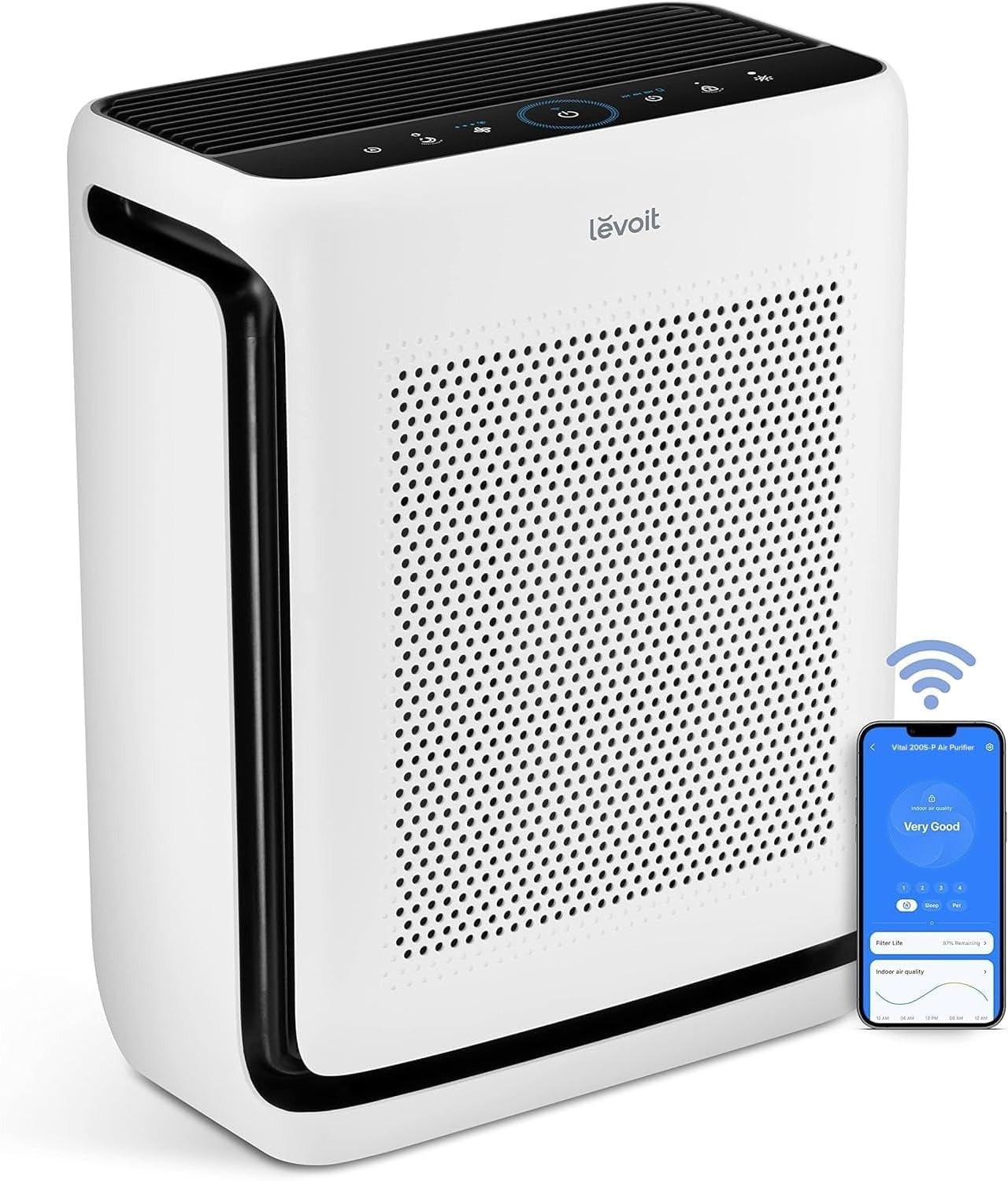
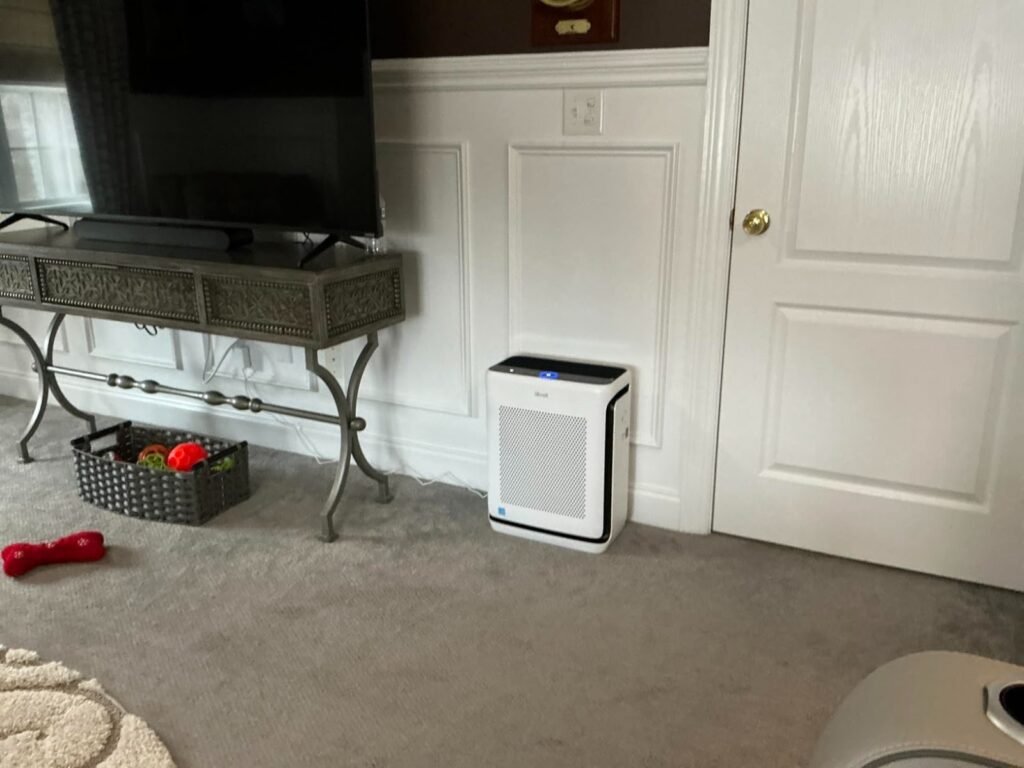
The LEVOIT Vital 200S-P is built for exactly that moment, with a published CADR of 250 CFM, AHAM Verifide ratings, a washable pre-filter, a pet-oriented U-shaped inlet, and noise rated as low as 23 dB on its official product page.
The first mistake is chasing filtration when the real issue is recovery speed
This is the part that catches people off guard. The hidden variable is usually not “Can this purifier filter air?” Plenty of purifiers can.
The real split happens when a room gets contaminated again faster than a weak purifier can normalize it.
That is why the Vital 200S-P keeps earning attention in independent reviews: not because it sounds luxurious, but because it appears to restore rooms quickly enough to matter in daily life.
RTINGS describes it as offering great overall filtration and relatively quiet operation for medium-sized spaces, while HouseFresh’s March 2026 testing says it reached PM1 zero in 23 minutes at top speed and still cleared to PM1 zero in 46 minutes at a much quieter speed 2 setting.
That second number is the one that matters more than most shoppers realize, because a purifier that only works when it is annoyingly loud tends to lose the routine battle in real homes.
The surprising part is that pet performance is not really about pets
On paper, this looks like a pet-oriented purifier. In practice, the pet angle is just a clue.
What the product is really optimized for is recurring room contamination. Pets happen to create it well: fur, dander, odor, tracked-in dust, and airflow obstructions from hair buildup.
LEVOIT explicitly markets the additional U-shaped air inlet as a way to catch airborne pet fur and odors without causing clogs, and RTINGS notes that the model is specifically marketed toward heavy-shedding pet owners.
But the deeper point is broader: once a room generates repeat mess, airflow resilience matters almost as much as the filter itself.
That is one reason this model reads differently from smaller units that look fine until routine friction starts stacking.
The uncomfortable truth is that many people buy for the first week, not the fifth month
This is where weaker recommendations usually collapse. People compare purifiers like they compare first impressions.
They ask which one looks cleaner, quieter, or smarter on day one. The real test is whether you still trust it after repeated use, repeated dust, repeated odor, repeated fur, repeated nights with the door closed.
HouseFresh highlights this model’s washable pre-filter, good app integration, and strong sub-$200 value, but it also points to the operating rhythm people tend to ignore: the optical sensor should be cleaned roughly every two months for accurate readings, and the bonded filter design means you replace the full filter unit even if one layer wears faster than the others.
That is not a deal-breaker. It is the real cost map.
And real cost maps build more trust than polished promises ever do.
My golden rule is simple: buy for the point where annoyance becomes repetitive
That is the “aha” most shoppers need. Do not buy an air purifier because clean air sounds nice.
Buy it when your room starts creating repeat work. If you are wiping surfaces too often, waking up with heavier air, noticing pet smell settle into fabrics, or finding that a room feels stale long before it should, you are no longer solving an abstract problem.
You are trying to shorten the room’s recovery cycle.
The Vital 200S-P fits that logic unusually well because its spec sheet, third-party testing, and user-facing design all point in the same direction: medium-to-large lived-in rooms that need steady reset capacity, not showroom bragging rights.
Official coverage claims place it at up to 388 sq ft for 4.8 air changes per hour and much larger at 1 ACH, while Amazon’s listing also emphasizes large-room use and publishes CADR figures for smoke, dust, and pollen.
Threshold table: when this starts making sense
| Room reality | Threshold read |
|---|---|
| Small room, light dust, no pets | Weak fit |
| Bedroom with recurring allergy load | Strong fit |
| Pet room with visible fur and stale-air buildup | Strong fit |
| Medium or large room that never feels fully reset | Strong fit |
| Tight room where floor space is precious | Borderline fit |
| Buyer mainly focused on heavy chemical or VOC control | Weak fit |
| Buyer who wants automation and low daily babysitting | Strong fit |
The reason this table matters is that it compresses the right decision variable.
Air purifiers do not fail only on filtration. They fail on fit.
AirPurifierFirst’s 2025 review also places the Vital 200S at roughly 245 CFM and around 4.8 ACH for rooms around 380 sq ft, describing it as nearly identical in performance to the Core 400S.
That is useful because it reinforces the same functional zone: this is not a toy purifier and not an industrial machine. It is a household threshold purifier.
Who this immediately makes sense for, and who should keep walking
This makes sense for people dealing with repeat dust, pet load, closed-room staleness, and allergy pressure in spaces big enough to expose weak airflow quickly.
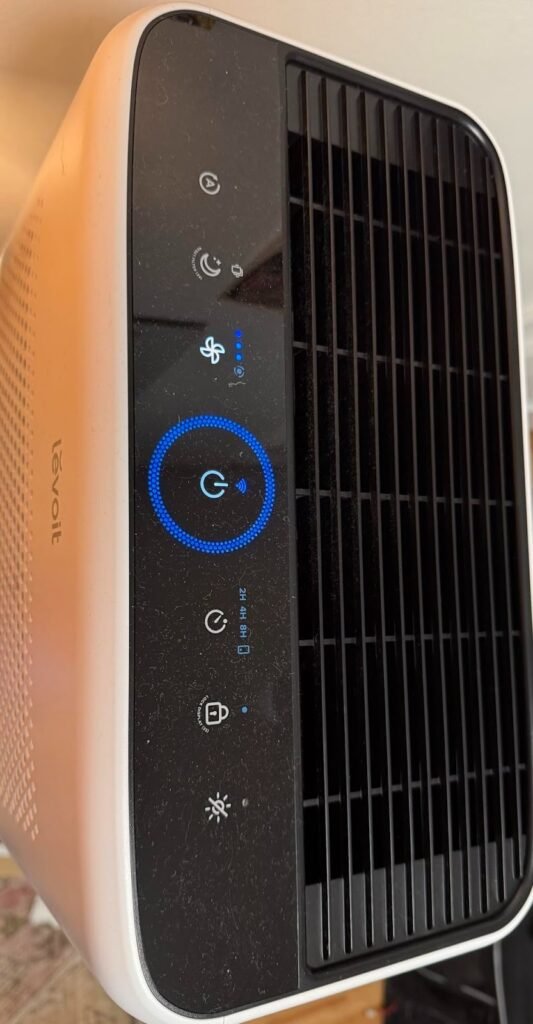
It also makes sense for people who know they will not manually manage a purifier all day and want Auto Mode, app scheduling, and a display that can behave better in a bedroom.
HouseFresh specifically calls out the light detection mode as a helpful bedroom feature, and the official page emphasizes smart scheduling, air-quality monitoring, and voice assistant integration.
This does not make sense for someone hoping one purifier will magically solve every air problem, including serious gases or VOC-heavy scenarios.
It also does not suit buyers who need ultra-compact placement or who treat maintenance as unacceptable rather than occasional.
RTINGS flags the unit’s bulk as a downside for smaller rooms, and that boundary matters because a wrong-fit purifier creates a different kind of friction: visual friction, floor-space friction, and eventual resentment.
The next missing piece is not “more reviews.” It is fit precision.
Once you understand the threshold, broad advice becomes less useful.
The next question is narrower and more valuable: does the LEVOIT Vital 200S-P fit your exact room pattern, or does it simply sound impressive from a distance?
That is where the decision article becomes the missing piece.
It moves from room-wide friction into exact fit, exact trade-off, and exact boundary.
Transparency Note:
This analysis is not based on quick personal impressions.
It is derived from documented system behavior, verified user patterns, and the physical constraints of storage capacity.
The goal is to translate complex technical behavior into a realistic performance model that helps you make a clear decision