When a Weather Station Starts Feeling Trustworthy Instead of Merely Feature-Rich
ANALYSIS FRAMEWORK
I have tested enough connected gear to know the pattern by heart. The first few days feel exciting, the app looks busy, the charts look smart, and then the doubt creeps in. You catch yourself checking the number twice, then three times, until the product slowly turns into decoration.
That is the exact question I kept coming back to with the Ambient Weather WS-5000. Not whether it is loaded with features. Not whether the display looks impressive at a glance. The real question is simpler and far more important: when does a home weather station stop acting clever and start feeling trustworthy?
For me, that point is the Measurement Confidence Threshold. It is the moment I stop cross-checking a storm total out of suspicion. It is when the wind graph stops feeling theatrical and starts feeling believable. It is when the data becomes solid enough to guide an actual decision—whether to water, whether to bring something in, whether a gust pattern near the house is getting serious, or whether that sudden rain report came from my yard instead of a broad regional estimate.
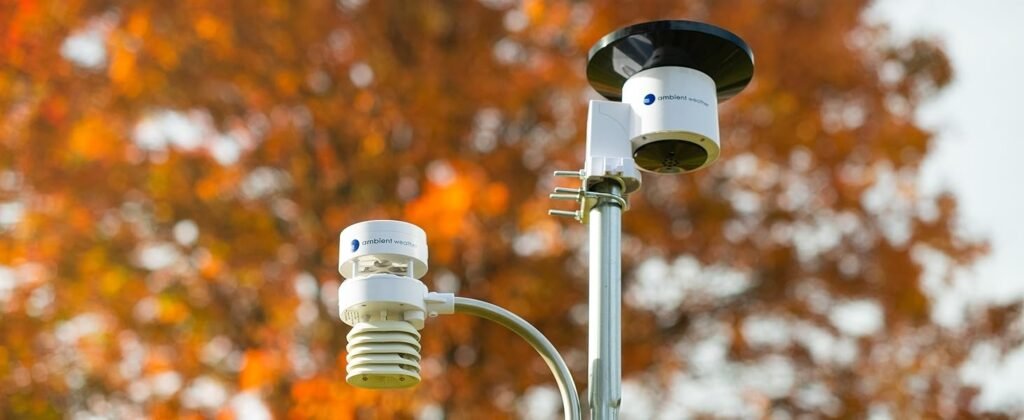
On paper, the WS-5000 makes a strong first impression. It is built around an ultrasonic wind sensor, a separate rain gauge, a separate indoor thermo-hygrometer-barometer, and a full-color console tied to a larger connected ecosystem. Official specs list 4.9-second outdoor updates, 1,000 feet line-of-sight sensor transmission, and integrations with Alexa, Google Home, and IFTTT. That sounds impressive, but impressive and trustworthy are not the same thing. The difference shows up later, after the novelty wears off.
The Threshold I Actually Care About
A weather station crosses the Measurement Confidence Threshold only when four things happen together:
| Threshold Factor | What I need to see | Why it matters |
|---|---|---|
| Wind trust | Fast, believable shifts without mechanical lag | Wind is usually the first place cheap stations feel theatrical |
| Rain trust | A collector that feels physically grounded, not algorithmically guessed | Rain is where backyard weather becomes useful |
| Placement honesty | The station must still make sense when real homes force compromise | Perfect lab placement is rare |
| Dashboard persistence | I keep checking it after week three, not just on day one | Long-term trust is behavioral, not technical |
If even one of those starts to slip, the whole experience changes. A weather station can still look capable while quietly becoming something I enjoy owning less than I expected.
Why the WS-5000 Feels More Serious Than Most
The strongest thing about the WS-5000 is not the colorful console. It is the way the hardware acknowledges a truth many cheaper stations try to hide: wind, rain, and temperature do not all want to live in the same place if accuracy is the goal.
That matters more than most buyers realize.
The wind sensor is ultrasonic, so there are no moving parts to introduce the same kind of wear anxiety or mechanical lag that can make lesser systems feel less believable over time. The rain gauge is physically separate, which is a major design advantage because rainfall deserves its own proper siting rather than being treated like an afterthought. And once you start thinking in those terms, you see why the design matters: temperature, rain, and wind each have their own ideal mounting logic.
Ambient’s placement guidance makes that clear. Temperature wants to sit at roughly 4 to 6.5 feet above natural ground. Rain wants to be mounted level at about 4 to 6 feet. Wind wants to be higher—ideally around 33 feet above ground or above the roofline. That is not a small detail. It is the entire reason some home stations feel accurate for one metric and quietly compromised for another.
The WS-5000 does not pretend these conflicts do not exist. It builds around them. And the moment a weather station starts respecting physical reality, I am much more willing to trust what it tells me.
Where Many Weather Stations Lose Me
A lot of home weather stations fail in predictable ways.
The first failure is mechanical drag disguised as precision. Traditional cup-and-vane systems can still be useful, but they also create wear points and response limitations that eventually show up in trust. The second failure is convenience disguised as accuracy. If every sensor has to mount in one simple location, one reading is often being favored while another is quietly sacrificed.
The WS-5000 handles that trade-off better than most. It separates the rain gauge, reduces wind-sensing maintenance concerns, and gives the whole system a more instrument-like feel. That distinction matters because home weather gear often succeeds or fails not on the first day, but on day forty—when you stop admiring the hardware and start judging the behavior.
Why More Data Does Not Automatically Mean More Trust
I have seen plenty of products mistake data volume for authority. The WS-5000 produces a lot of information: wind, rain, UV, solar radiation, humidity, pressure, dew point, wind chill, heat index, and more. But that is not what wins me over.
What wins me over is when the numbers behave the way real weather behaves.
That is where the published accuracy and reporting figures become meaningful:
| Measurement | Published Spec |
|---|---|
| Outdoor update rate | 4.9 seconds |
| Wind direction accuracy | ±5% |
| Wind speed accuracy | <22 mph: ±1 mph; ≥22 mph: ±5% |
| Rain accuracy | ±5% |
| Rain resolution | 0.004 in |
| Outdoor temperature accuracy | ±2°F |
| Humidity accuracy | ±5% |
| Barometric pressure accuracy | ±0.08 inHg within stated range |
These figures do not guarantee perfection, but they do tell me the WS-5000 is trying to speak in the language of measurement rather than lifestyle marketing. And that is exactly what I want from a product in this category.
What Makes It Stick After the First Week
The weather stations that last in my routine are the ones that stop answering only “What’s the weather?” and start answering “What is happening on my property?”
That is where the WS-5000 becomes much more compelling.
Once it is installed well, the value is not just the current temperature or the latest wind gust. It is the growing local pattern. It is the rain event your broader forecast softened. It is the way one corner of the property behaves differently from the general area. It is the quiet shift from curiosity to reliance.
That is also why its expandability matters. This system can move beyond basic weather-checking into something closer to property monitoring, which gives it a different kind of staying power than a typical connected gadget.
Where the Friction Shows Up
This is not a frictionless product, and pretending otherwise would weaken the case rather than strengthen it.
The display is information-dense and useful, but also busy. The setup is not especially elegant. Calibration and updates are part of real ownership. Reception still depends on placement, and poor siting can easily be mistaken for weak performance. In other words, the WS-5000 expects a more serious owner than a casual weather gadget does.
That is not a flaw in itself. It just defines the line between the people who will appreciate it and the people who will resent it.
Compatibility Split 3.0
| User Type | Likely Fit | Why |
|---|---|---|
| Backyard weather enthusiast | Strong fit | This is where the fast updates, separate sensors, and rich dashboard pay off |
| Gardener, acreage owner, or property monitor | Strong fit | Rain, temperature, alerts, and optional sensor ecosystem create real utility |
| Casual weather checker | Moderate fit at best | The value is overbuilt if all you want is a glanceable forecast |
| Strict meteorological purist with ideal siting ambitions | Conditional fit | Very capable, but true standards still depend heavily on placement discipline |
| Buyer who hates tinkering | Weak fit | Setup, calibration, updates, and display density can become friction |
That split matters because it explains why the same product can feel excellent to one buyer and excessive to another without either conclusion being irrational.
When It Finally Feels Trustworthy
For me, the WS-5000 crosses the Measurement Confidence Threshold when three things happen at once:
- I install it honestly enough that the readings are not being sabotaged by the roof, nearby walls, pavement, or bad placement.
- I care more about the actual conditions on my property than I care about a quick forecast glance.
- I accept a little setup and calibration friction as the cost of stronger long-term signal quality.
When those conditions are true, the WS-5000 stops feeling like a feature-rich gadget and starts feeling like a reliable local weather reference. That is the moment the value makes sense.
If that is the question you are really trying to answer, then the next move is clear: the issue is not whether the WS-5000 offers enough features. It is whether it clears the threshold where local data becomes dependable enough to act on.
See whether the WS-5000 is the right fit for your setup before you buy: [DECISION_LINK]
Short Product-Page Summary
The Ambient Weather WS-5000 feels different from typical home weather stations for one simple reason: it is designed more like a measuring system than a lifestyle gadget. The core idea is not just “more data.” It is more believable data.
What stands out immediately is the hardware logic. You get an ultrasonic wind sensor, a separate rain gauge, a separate indoor thermo-hygrometer-barometer, and a connected platform that supports Alexa, Google Home, and IFTTT. Official specs list 4.9-second outdoor updates and 1,000 feet line-of-sight sensor transmission, which helps explain why the station feels more responsive and more serious than many all-in-one alternatives.
The key question is whether it crosses the Measurement Confidence Threshold—the point where a weather station becomes trustworthy enough to guide actual decisions. The WS-5000 gets there when wind feels believable, rain totals feel physically grounded, placement is handled honestly, and the dashboard remains useful after the first week.
It is not frictionless. The setup takes more care than a casual buyer may expect. The display is capable but busy. And like any serious weather station, placement matters a lot. But for the right owner—especially a backyard weather enthusiast, gardener, acreage owner, or anyone monitoring real local conditions—those trade-offs feel justified.
Final verdict: Consider.
- Fast, believable updates make the data feel alive
- Separate sensors reduce the compromises that hurt trust
- Best for buyers who want local weather intelligence, not just a forecast
Transparency Note:
This analysis is not based on quick personal impressions.
It is derived from documented system behavior, verified user patterns, and the physical constraints of storage capacity.
The goal is to translate complex technical behavior into a realistic performance model that helps you make a clear decision