Your Porch Looks Covered. The Blind Spot Starts Lower Than You Think
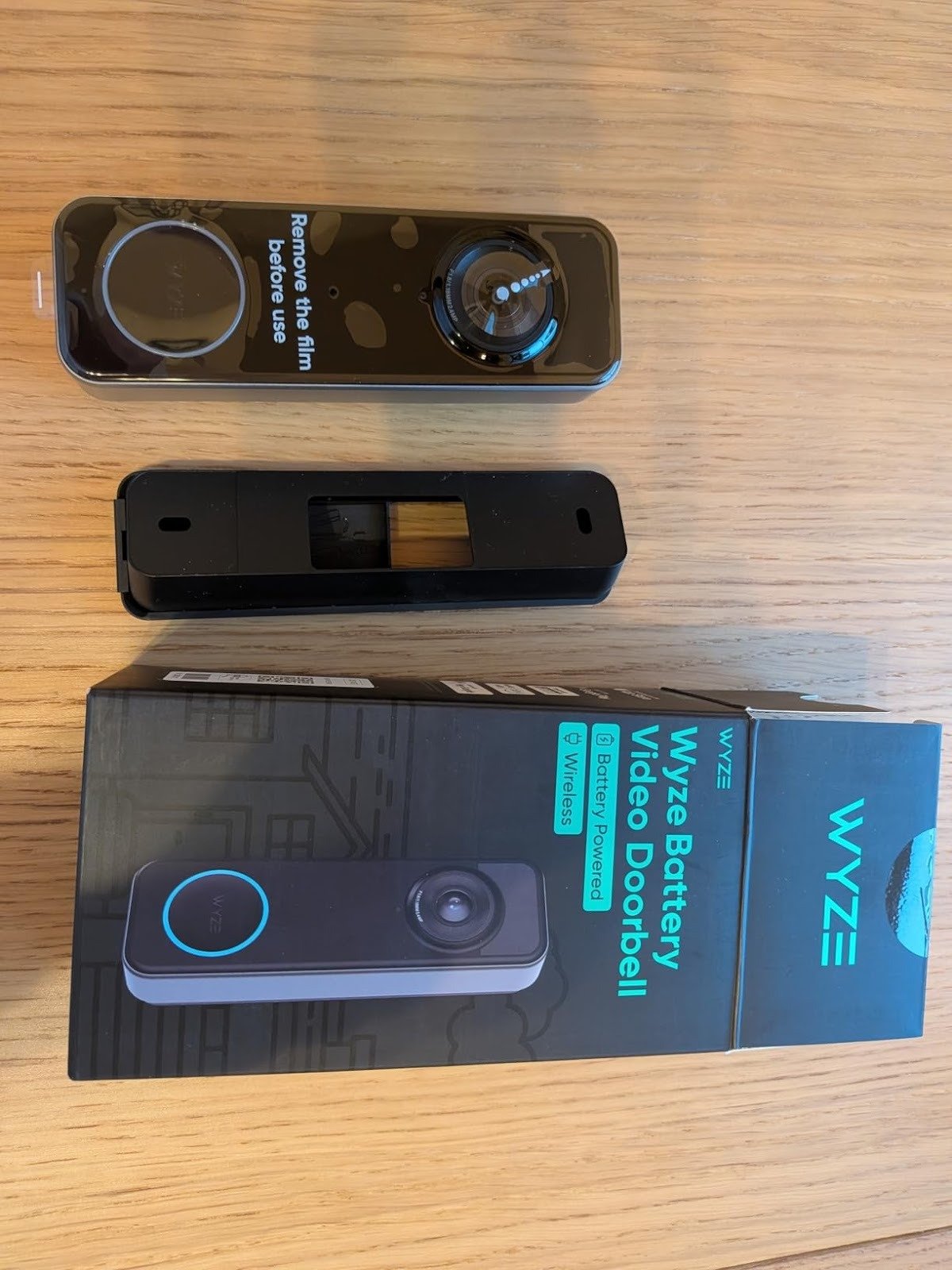
WYZE BATTERY VIDEO DOORBELL
The mistake usually happens at the doorstep.
You install a doorbell, glance at the live view, and the picture looks fine. A face appears. Motion alerts arrive. The app opens. On paper, the job seems done.
Then the real miss starts showing up in smaller ways. A package sits too close to the wall and drops near the bottom edge. A visitor stands off-center. An alert arrives, but the clip begins after the useful moment. Or the battery promise that sounded effortless turns into another small maintenance chore you did not plan to inherit.
After going through the official specs, hands-on reviews, firmware notes, and buyer feedback on this model, what stood out to me was not that Wyze built a “cheap doorbell.” It is that they built a threshold product. Below a certain expectation, it feels unusually competent. Above that line, the compromises become obvious very quickly.
The Result Looks Fine. The Problem Isn’t.
What makes this category deceptive is that “good enough” is easy to fake in a product page.
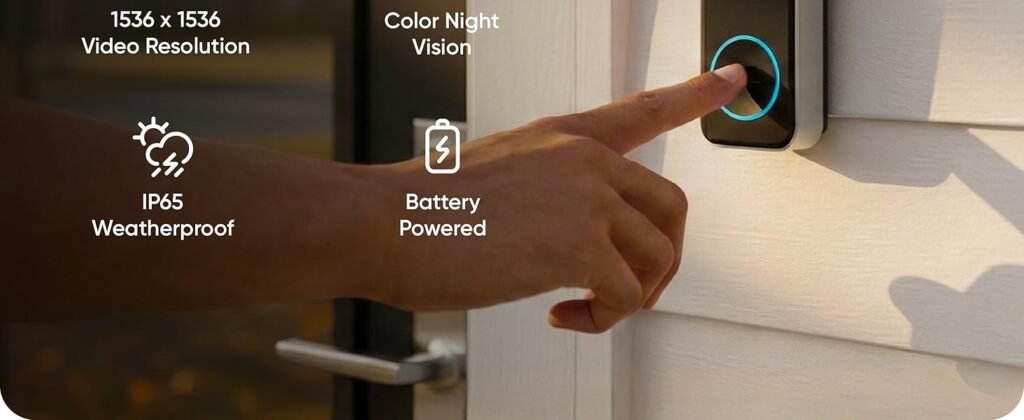
The Wyze Battery Video Doorbell gives you a square 1536 x 1536 feed, a 150° x 150° field of view, battery or wired power, color night vision, IP65 weather resistance, two-way audio, and motion alerts. At roughly $56 on Amazon and about $66 list price, that is an aggressive feature stack for the money. Amazon also shows a 4.0-star average from 258 ratings and notes that 3K+ units were bought in the past month.
That is exactly why people misread it.
The obvious picture quality is not the real story. The real story is coverage discipline. This doorbell is most persuasive when the failure you are trying to prevent happens near the threshold line of the frame: low packages, close visitors, awkward porch geometry, and entryways where a standard wide rectangle still leaves the wrong thing cropped out. Wyze’s 1:1 head-to-toe framing exists to solve that specific problem, not to win a spec war.
What You’re Actually Feeling but Not Naming
Most buyers do not say, “I need better vertical framing.”
They say things like:
- “My current doorbell sees the person, but not the package.”
- “I get alerts, but they start too late.”
- “I do not want another subscription-only camera.”
- “I do not want wiring drama, but I also do not want to recharge something every few weeks.”
That cluster of annoyances has a shape. It is not a simple image-quality problem. It is a doorstep continuity problem.
What you are reacting to is the gap between visible activity and usable evidence. A doorbell can look perfectly acceptable in a daytime app demo and still leave you with weak porch coverage, clipped events, or storage rules that break at the exact moment you stop babysitting the system. Tom’s Guide liked the Wyze’s under-$100 value, strong day/night clarity, and head-to-toe coverage, but also called out that real battery life would not come close to six months. PCWorld praised the flexibility and value, yet still flagged paid AI, a separately sold chime path, and missing HomeKit support as real constraints.
The Hidden Mechanism Behind the Miss
The hidden variable here is not megapixels. It is what I would call coverage relevance.
A doorbell earns its keep when the shape of its view matches the shape of your problem. Wyze leans into a square 1:1 format with a 150° x 150° field of view precisely so it can see visitors and parcels tucked close to the door. That matters more than a prettier spec line once the package sits beneath the camera instead of six feet away on the walkway.
The second hidden variable is power behavior.
Wyze sells this as wire-free or wired. That sounds like simple flexibility. It is not. It changes the product’s behavior. Official support says battery life is 3–6 months with normal use, while Tom’s Guide saw much shorter endurance in real use and colder weather. Hardwiring does more than save charging trips: it unlocks the stronger version of this product, because continuous local recording requires a microSD card and a hardwired setup. Even Wyze’s troubleshooting material states that continuous recording requires hardwiring.
That is the part casual buyers miss.
This is not really one doorbell. It is two experiences wearing one shell:
| Operating mode | What it feels like in practice |
|---|---|
| Battery-first | Easy install, cleaner commitment, less wiring friction, but battery life becomes part of ownership |
| Hardwired + microSD | More stable long-term logic, better continuity, local recording becomes materially more useful |
The spec sheet hints at that split. The ownership experience confirms it.
The Threshold Where the Outcome Quietly Breaks
Here is the threshold.
This doorbell stops feeling “cheap and smart” and starts feeling “right” only when your real need is coverage and flexibility, not premium image bragging rights.
That line matters because the Wyze is not the sharpest camera in the category. Tom’s Guide explicitly says the video is not as sharp as the 2K and 4K options from Nest and Ring, even though it remains detailed enough for clear face and pet identification day and night.
So the break point is simple:
| If your priority is… | Outcome with this doorbell |
|---|---|
| Head-to-toe porch visibility | Strong fit |
| Battery or wired flexibility | Strong fit |
| Local storage path | Strong fit, especially when hardwired |
| Top-tier sharpness or HDR prestige | Weak fit |
| Apple Home ecosystem | Wrong fit |
| Set-it-and-forget-it battery expectations in heavy use | Borderline to weak |
That is the threshold language the product page does not say plainly enough.
Why Most Buyers Misread This Too Early
They shop from the wrong metric.
A lot of people still buy doorbells as if the decision starts with resolution, app screenshots, or brand prestige. That is lazy filtering. It misses the operational burden that shows up after week three.
Wyze’s own support pages make the practical story very clear: charging from 0–100% can take about six hours, installation can be under one minute on a wooden frame, mechanical chime support requires a Wyze Chime Controller, motion alerts use PIR plus edge processing, and firmware updates in February 2026 specifically addressed connectivity stability, cloud upload reliability, settings persistence, and a battery-drain issue that could hang the device. In other words, this is a product where the boring details matter more than the marketing headline.
The uncomfortable truth is this: a low-priced smart doorbell only feels like a bargain if you are shopping for the right inconvenience. If you are trying to remove wiring pain, porch blind spots, and subscription dependence, Wyze makes sense. If you are trying to remove maintenance altogether while also demanding flagship imaging and premium ecosystem polish, you will read the same device as compromised.
Who Is Actually Inside This Problem
I would place the real-fit buyer in a narrower box than Wyze’s marketing does.
This product is for the person who wants three things at once: a front door camera that is easy to install, can be run without full rewiring, and still gives them a local-storage path and porch-friendly vertical view. It is also a good fit for renters, budget-conscious homeowners, and people whose current frustration is not “my video is ugly,” but “my current camera misses the wrong part of the moment.” PCWorld’s take lands in the same territory: renters and people who want simple front-door security without wiring are exactly where the value clicks.
It also fits buyers who do not mind using Alexa or Google Assistant and who are not building around Apple HomeKit, because this doorbell supports Alexa, Google Assistant, IFTTT, and Wyze Automations, but not HomeKit.
And it fits someone who understands that the subscription is optional for basic usefulness, but not optional if they want the richer AI layer. Wyze’s plans add 14-day cloud history and smart alerts at the lower tier, and 60-day cloud storage, AI search, descriptive alerts, and emergency dispatch at the higher tier.
Where Wrong-Fit Begins
Wrong fit begins the moment you expect this to behave like a premium camera without premium tradeoffs.
If you care most about the sharpest video, HDR-class refinement, or a luxury ecosystem feel, this is the wrong purchase language. Tom’s Guide explicitly ranks it as a budget play, not a category leader for raw image quality, and notes the missing sharpness compared with stronger 2K and 4K rivals.
Wrong fit also begins if you are already irritated by charging-related maintenance. Wyze says 3–6 months in normal use; Tom’s Guide saw much less in realistic testing. That does not make the product dishonest. It means the battery claim lives inside favorable conditions, not your worst month.
It is also a weak choice if you want a full “buy once, never think about it again” experience. Firmware improvements as recent as February 10, 2026 addressed connection stability, cloud upload issues, and battery-related hangs. That is a useful sign of active support, but it also tells me this is a living, app-dependent device, not a dead-simple appliance.
The One Situation Where This Product Becomes Logical
This product becomes logical when your porch problem is vertical miss plus installation friction.
That is the exact moment the Wyze Battery Video Doorbell stops being “the cheap option” and starts being the right instrument. The square view is relevant. The battery-or-wire choice matters. The microSD slot matters. The low price stops being the lead feature and becomes the bonus feature.
This is the cleanest way I can compress the fit:
| Need | Fit |
|---|---|
| You want a better view of packages near the door | Strong |
| You cannot or do not want a complicated install | Strong |
| You want local storage as part of the plan | Strong |
| You want elite image quality above all else | Weak |
| You rely on Apple HomeKit | No |
| You hate recharging anything mounted outside | Borderline |
That is why I would not authorize this as a universal recommendation. I would authorize it only for the buyer whose failure point starts at the doorstep, not in the spreadsheet.
What It Solves, What It Reduces, and What It Still Leaves to You
What it solves is straightforward. It improves coverage at the part of the scene many doorbells mishandle. It lowers the installation barrier. It gives you a real local-storage route. It can run wire-free or wired. It keeps weather resistance, color night vision, two-way audio, and mainstream voice-assistant support in a price band where many products still strip features away.
What it reduces is more important than what it solves. It reduces porch uncertainty. It reduces “did the camera catch the package?” anxiety. It reduces upfront cost. It reduces the chance that you will need to commit to a full wiring project on day one. Reviewers also found the setup unusually fast, with Tom’s Guide getting from unboxing to alerts in about 10 minutes and Wyze saying basic mounting on wood can take under a minute.
What it still leaves to you is the adult part of the decision. You still have to choose whether you are living in battery mode or hardwired mode. You still have to decide whether a subscription is worth it for your use case. You still have to accept that local continuous recording requires hardwiring. And you still have to live outside Apple HomeKit.
That is not a flaw in the article. That is the honest boundary of the product.
Final Compression
Here is the shortest true version.
The Wyze Battery Video Doorbell is not the doorbell I would point to when someone wants the cleanest premium image, the most polished ecosystem, or zero-maintenance ownership. It is the one I would point to when the real problem is lower-frame coverage, installation reluctance, and the desire to keep cost and storage under tighter control. The moment you understand that, the product reads differently. It stops looking “budget.” It starts looking correctly scoped.
If your break point starts here, this is where the decision stops being vague:
Transparency Note:
This analysis is not based on quick personal impressions. It is derived from documented system behavior, verified user patterns, and the physical constraints of storage capacity. The goal is to translate complex technical behavior into a realistic performance model that helps you make a clear decision.
5 Comments