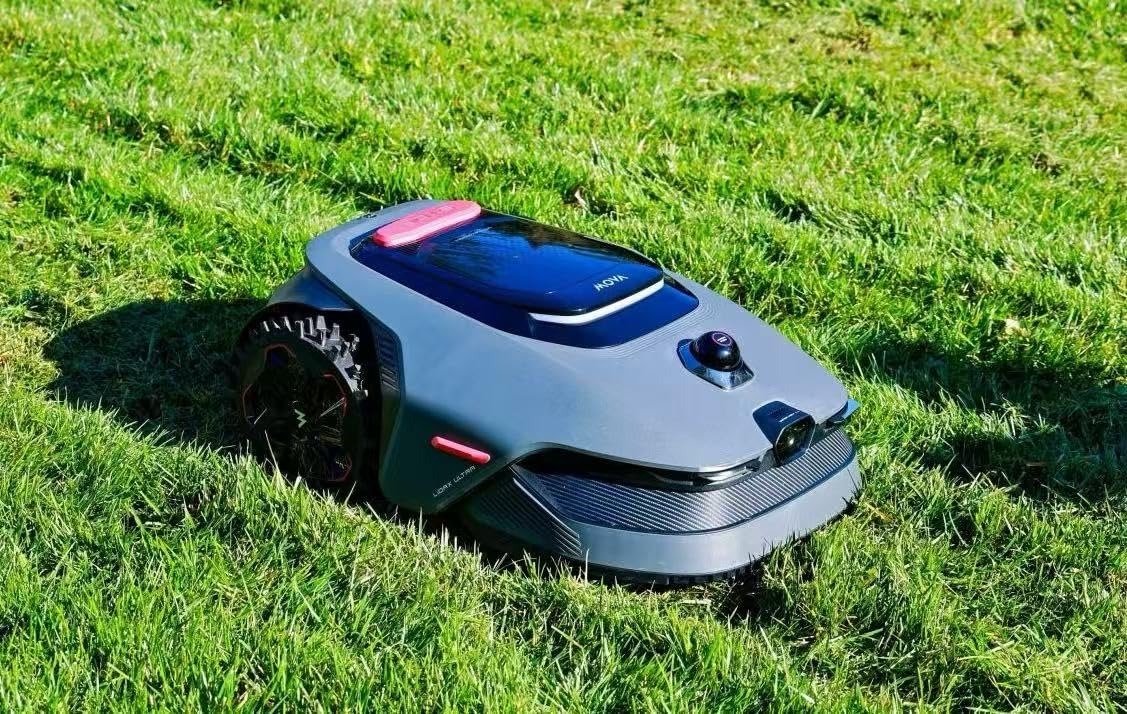
Wire-Free Robot Mowers Don’t Fail Randomly — They Drift Outside a Stability Window
ANALYSIS FRAMEWORK
In my evaluation, the “wire-free” promise lives or dies inside a simple reality: these mowers behave consistently only while they can reliably perceive position and boundaries. When that perception is strong, the cut looks structured and repeatable. When it weakens, small errors accumulate into visible misses.
The One Model I Use: The Navigation Stability Window (Variance Window Model)
I treat performance as a window, not a guarantee:
- Stable Window: navigation stays repeatable, edge passes look deliberate, and the mower completes zones without “confused wandering.”
- Unstable Window: the mower still works, but probability of drift escalates—missed strips, cautious slowdowns, or stoppages become more common.
This matters because wire-free systems are context-dependent. They’re not “good” or “bad”—they’re stable or unstable under your yard’s conditions.
The Measurement That Decides Everything (Simple, Observable)
I watch for a single measurable signal:
Re-track Frequency: how often the mower has to re-orient, re-map, or visibly “think” in the same spots on repeated runs.
If that frequency stays low, the mower is inside the window. If it rises, your yard is pushing it out of the window.
Drift Pattern (4–5 Causal Steps) You Can Actually Recognize
This is the drift chain I’ve seen repeatedly in owner reports and field-style testing narratives:
- Minor hesitation in the same shaded/complex area
- Route compression (shorter, safer passes) that leaves thin uncut lines
- Edge behavior changes (wider safety buffers near fences/walls)
- Stop/return loops become more frequent during the session
- Human intervention starts to creep back in (manual edge touch-ups or re-zoning)
Behavioral Load Mapping (Where Owners Accidentally Break the Window)
The yard isn’t the only factor. Usage behavior can push the same mower in or out of its stable window:
- Frequency: light daily maintenance mowing is easier than “weekly rescue mowing.”
- Pattern: many tight zones, narrow corridors, and frequent no-go edits increase cognitive load.
- Exposure Duration: long sessions amplify small navigation inconsistencies into visible results.
If you treat it like a “maintenance system” (frequent, light cuts), stability improves; if you treat it like a “catch-up mower,” drift risk rises.
The Human Moment (The Part Specs Don’t Warn You About)
The first time I watched a mower approach a fence line, I realized the real ownership question isn’t “does it cut close?”—it’s “do I trust it near things I care about?” That’s why many people choose safer edge settings and accept a small buffer, even if the product claims very close edging.
Compatibility Split 3.0 (No Pressure, Just Fit)
Path A — Compatible
You’re likely inside the stability window if your lawn is:
- within the designed size class and session time you can tolerate,
- not dominated by dense obstruction zones,
- and you prefer frequent maintenance passes over heavy cuts.
Path B — Misaligned (and it’s rational not to buy)
You’re likely outside the window if:
- the lawn has persistent “visibility dead zones” (dense canopy / tight structure),
- you hate dealing with firmware/Wi-Fi/app friction,
- or you expect one long, perfect session with zero corrections.
Where This Lens Goes Next (Closed Spine Link)
If you want the decision compressed into a clean yes/no split for one specific model, go here:
Transparency Note: This analysis is not a passing personal opinion; it is the result of synthesizing feedback from real buyers, documented reviews, and technical documentation. The objective is to present a clear, structured interpretation of the data, free from personal bias.

One Comment