When an Induction Cooktop Finally Feels Predictable
ANALYSIS FRAMEWORK
I kept coming back to the same question while evaluating modern induction cooktops: what actually makes one feel easy to live with after the novelty wears off?
It is not raw speed alone. It is the moment the appliance crosses a practical threshold where heat response, pan detection, and zone behavior stop feeling like features on a spec sheet and start feeling like control in a real kitchen.
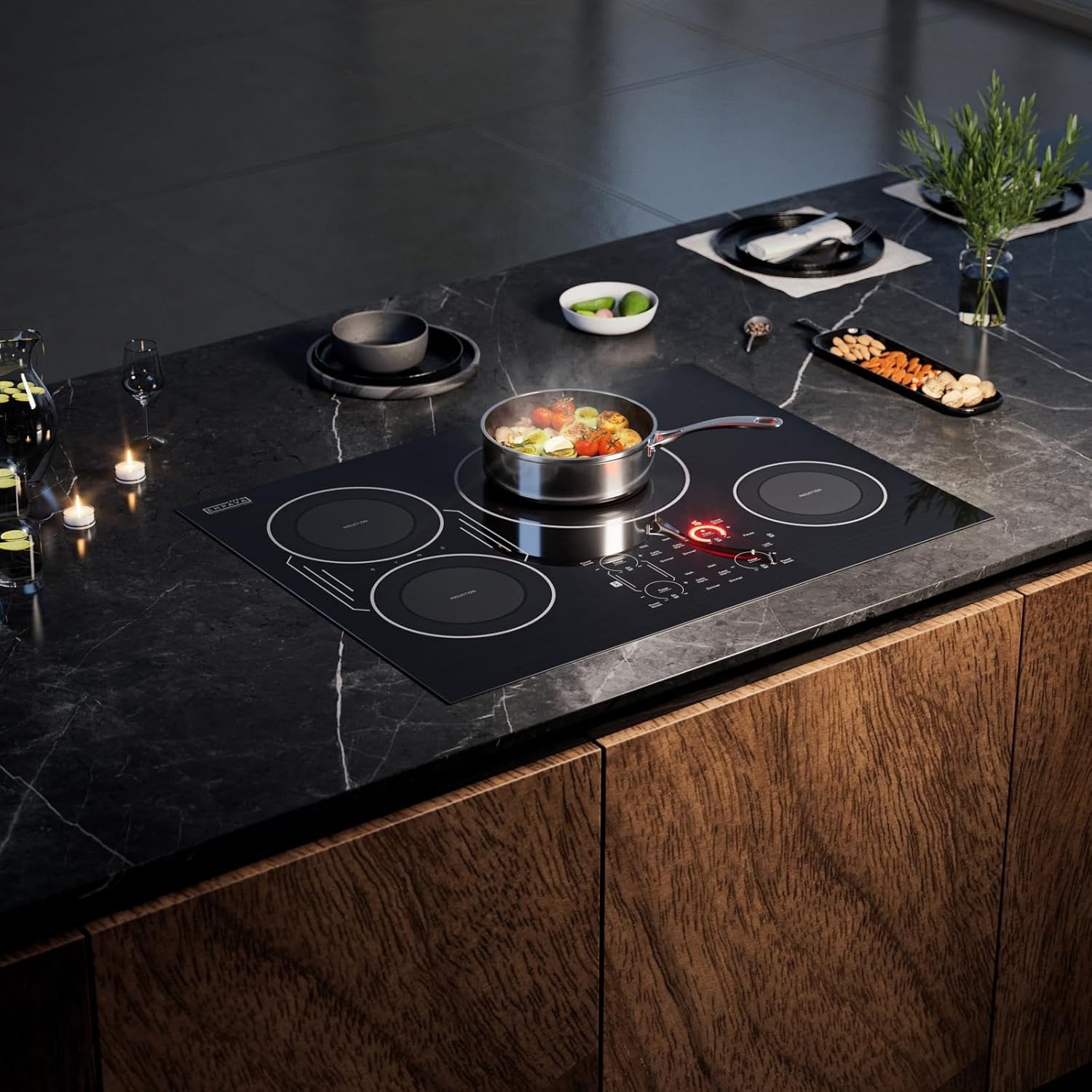
That is the threshold I kept measuring against while looking at the Empava EMPV-30EC82H, a 30-inch, 4-zone induction cooktop with Bridge-SYNC, 17 power levels plus boost, preset melt/warm/simmer modes, pan sensing, and 8700W total power at 240V.
The Threshold Is Not Power, It Is Stability Under Normal Cooking
A lot of people shop cooktops by maximum wattage, but that is only the loudest number in the room.
What usually changes everyday cooking is whether the cooktop can move from quick heat-up to controlled holding without forcing me to fight it.
On this Empava model, the right rear zone reaches up to 4.0kW in boost, the left side can bridge to 3.7kW for larger cookware, and the controls offer 17 heat settings instead of the usual blunt jumps that make low-heat cooking feel vague.
On paper, that tells me the cooktop is not only trying to boil fast, but also trying to stay useful once the pot is already hot.
Where I See the Real Value in This Layout
What I like about this configuration is that it is not pretending to be a luxury showpiece first and a cooking tool second.
The left-side bridge matters because the threshold for “this cooktop fits my routine” changes the moment I can handle a griddle, long pan, or oversized piece of cookware without awkward dead spots.
The right rear 10-inch zone matters because it gives me a true high-output anchor for bigger pots, while the smaller zones preserve flexibility for saucepans and everyday prep.
That mix is more meaningful than a flashy control panel if the goal is a kitchen that feels organized instead of busy.
What Owner Reactions Suggest
The early owner feedback I found is small, which matters, because this model appears relatively new.
Amazon lists it as first available on September 16, 2025 and ranks it #9 in cooktops, while Lowe’s shows a 5/5 rating from two reviews.
The praise is specific rather than emotional: easy install, easy cleaning, smooth controls, and a generally positive cooking experience.
The most useful criticism is also practical: the glass surface shows everything and needs frequent wiping if I care about keeping it visually spotless.
That is not a deal-breaker to me, but it is exactly the kind of daily-friction detail that tells me the feedback is real.
The Quiet Problem This Kind of Cooktop Solves
The hidden problem in many kitchens is not that cooking is slow.
It is that cooking feels slightly messy, slightly jumpy, and slightly harder to predict than it should.
That is where this kind of induction design starts to make sense.
Pan sensing, auto shut-off behavior, child lock, a wipe-clean glass surface, and glide-touch adjustment are not exciting in isolation, but together they reduce small moments of interruption.
I notice that more than I notice marketing phrases.
The threshold here is simple: once the appliance reduces enough tiny annoyances, I stop thinking about the appliance and start thinking only about the food.
Who This Threshold Fits Best
From my reading, this threshold fits three kinds of kitchens especially well.
It fits the person moving from old coil electric and wanting faster response without learning a complicated premium system.
It fits the buyer who actually uses larger cookware and will benefit from a bridge zone instead of paying for a feature that never gets touched.
And it fits the cook who values steadier low-heat behavior enough to care about simmer, melt, and warm presets rather than treating every burner as a blast furnace.
That is where the product starts feeling like a practical tool rather than just a modern-looking upgrade.
The One Question I Would Ask Before Moving Forward
The only serious question I would ask is not whether the cooktop is powerful enough.
It clearly is.
The question is whether my kitchen and habits are actually aligned with a hardwired 240V/40A induction setup and cookware that must be induction-compatible.
If that compatibility threshold is already met, then the more important decision becomes whether this particular model crosses the stability threshold well enough to justify itself in daily use.
For me, that is the more intelligent question to ask.
If that is exactly the decision you are trying to make, the next step belongs in the dedicated decision article.
Transparency Note:
This analysis is not based on quick personal impressions.
It is derived from documented system behavior, verified user patterns, and the physical constraints of storage capacity.
The goal is to translate complex technical behavior into a realistic performance model that helps you make a clear decision

One Comment