VIVOSUN GIY Smart Grow Tent System 3×3 Review: The Fit Breaks at Trust Before It Breaks at Hardware
DECISION ANALYSIS
The buyer who usually regrets this kind of product is not the one who gets the weakest light. It is the one who buys relief and accidentally adds a new habit loop.
That is why I would not begin this decision with wattage. I would begin with the lived problem: you are tired of stitching together a tent, fan, filter, controller, and light from different boxes, and you want one system that feels less like building a cockpit from spare parts.
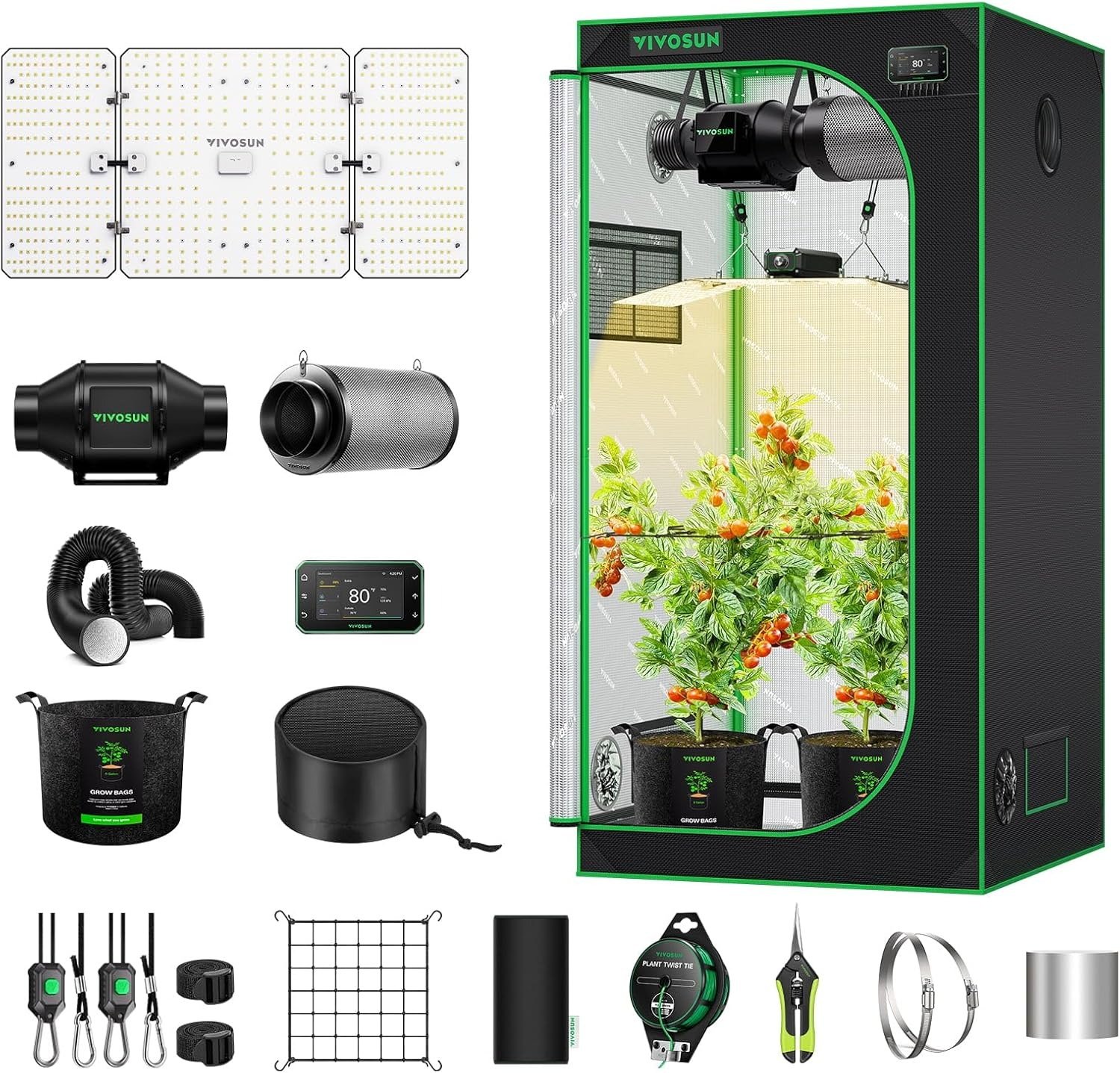
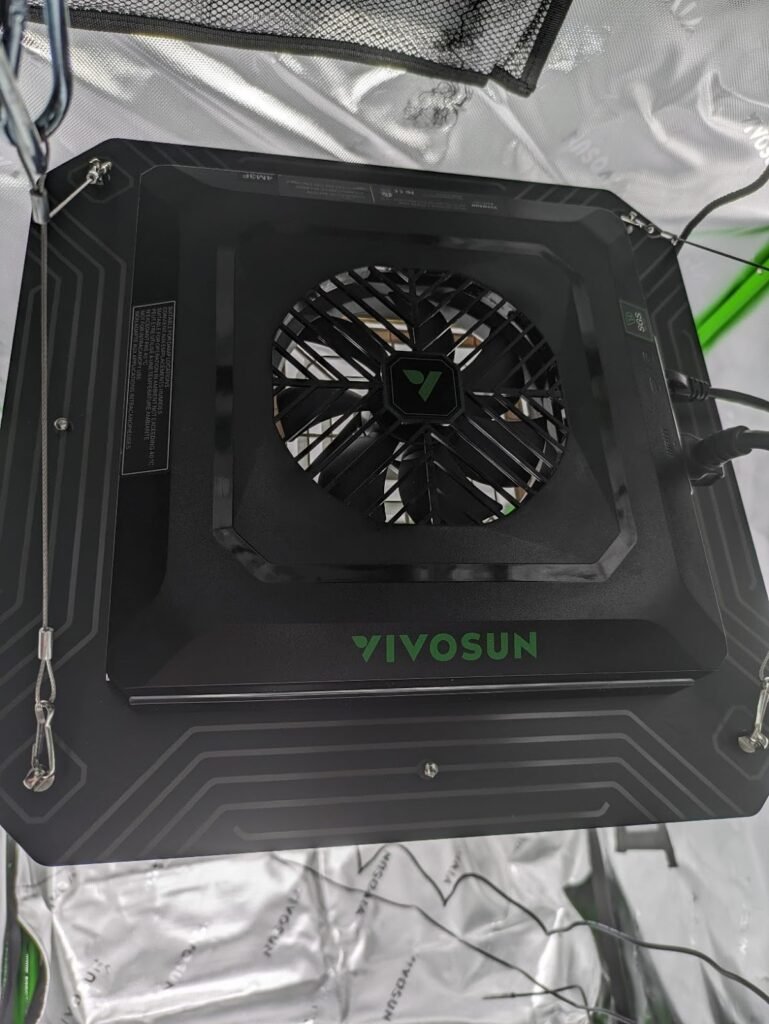
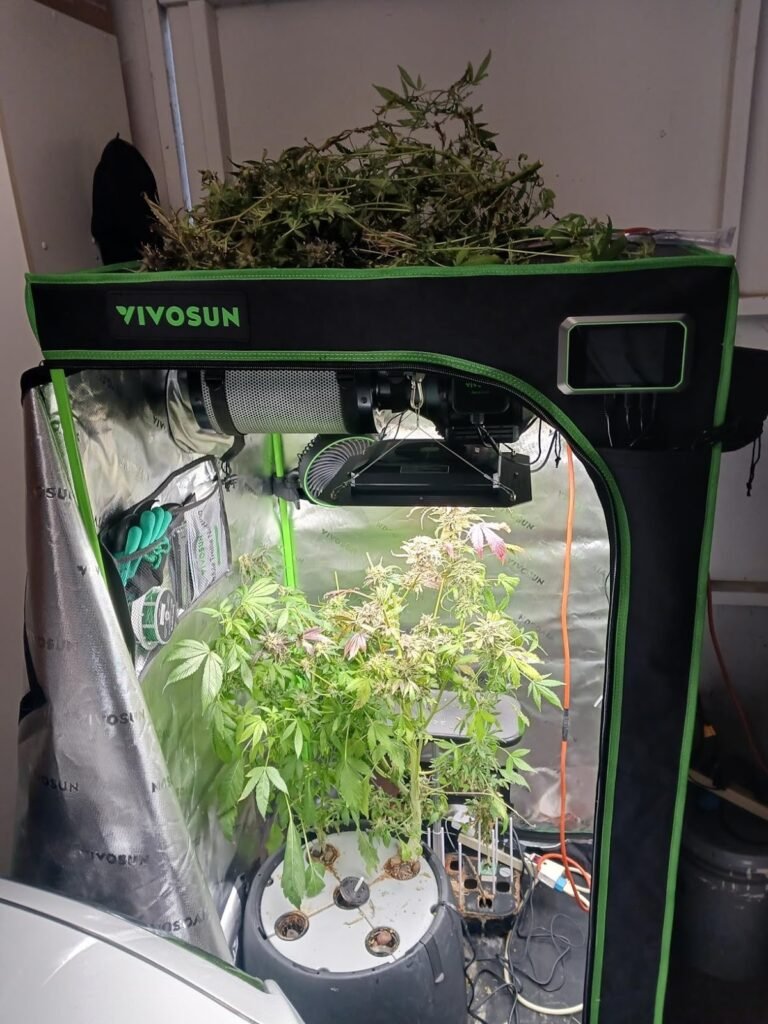
The VIVOSUN GIY 3×3 kit makes a strong first case because the bundle is complete and the architecture is clean: tent, 200W full-spectrum light, 4″ inline fan up to 195 CFM, controller, filter, ducting, and setup accessories in one integrated stack. For the right buyer, that alone removes a surprising amount of friction.
What This Product Solves Better Than It Looks
What it solves well is not everything. It solves setup compression.
That matters because beginners and even many intermediate buyers do not fail on plant ambition. They fail on assembly chaos: wrong parts, mixed ecosystems, vague compatibility, too many micro-decisions before anything starts running.
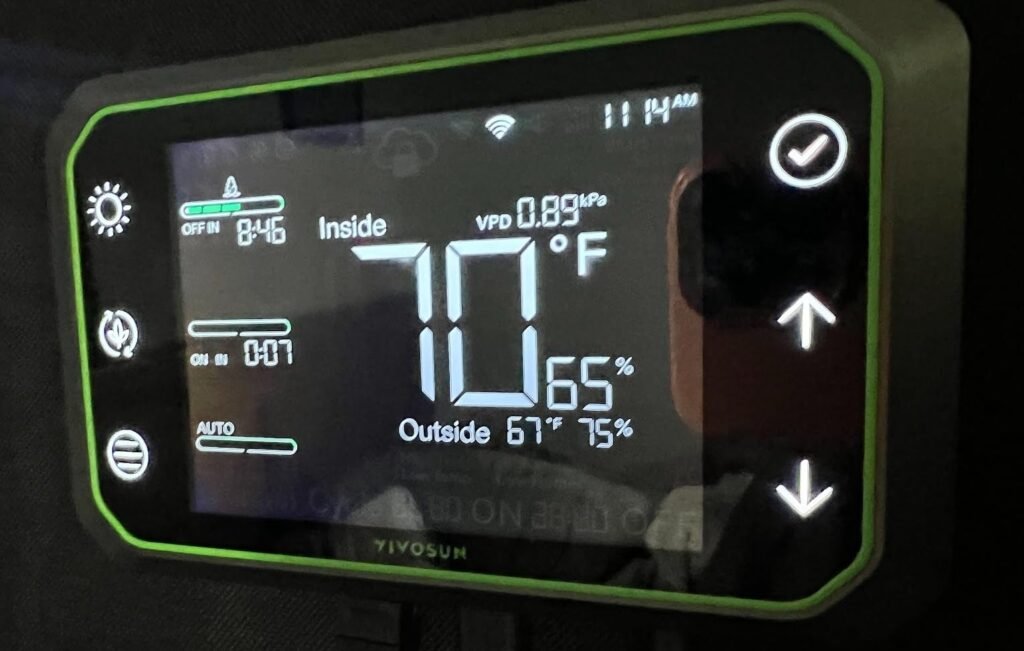
This kit reduces that chaos. The GrowHub adds one more practical advantage: VIVOSUN says it can manage connected equipment in one app, store historical data, send alerts, continue with the last saved settings when offline, and reconnect automatically after connectivity returns. That is a real convenience layer, not just prettier packaging.
There is also a quieter strength here: the system makes sense spatially. A 3×3 footprint with a 200W light and 4″ ventilation package is easier to reason about than random oversized or undersized component mixes. In other words, the kit is not impressive because it looks advanced. It is impressive because it is less likely to waste your first week.
The Secret That Decides Whether You Keep Liking It
Here is the part most buyers do not hear clearly enough:
The value of this kit rises or falls on whether you trust the controller enough to stop checking it.
If that sounds too psychological, it is not. It is operational. The GrowHub depends on 2.4 GHz Wi-Fi for pairing, the app’s live data refreshes every minute, and remote features are not the same thing as local/offline behavior. Those are manageable boundaries.
But they become emotionally expensive when a buyer expects “smart” to mean invisible certainty.
Community reports show exactly why this matters. Some users describe the VIVOSUN ecosystem as practical and easy to live with. Others report probe dropouts or controller-related inconsistencies that pull them back into manual checking.
That split is not random internet drama. It reveals the product’s decision boundary: if your tolerance for verification is low, the same feature set that looks convenient on day one can feel fragile later.
The Counter-Intuitive Fit Test
Most buyers ask, “Does it have enough features?” The better question is, “Will those features reduce my attention load?”
That single shift changes the decision.
If you want a coherent entry into a 3×3 smart tent and you are realistic about what automation can and cannot do, this system has a strong logic. If you want premium-grade confidence, wide ecosystem freedom, or a setup that you barely think about once it is running, the threshold becomes much tighter.
The hardware may still be adequate. The relationship may not be.

What I Would Not Pretend Away
I would not flatten the noise issue. And I would not flatten the app-trust issue.
On the fan side, user reports split between “fine even near sleep” and “noticeable whine at full output in a quiet house.” On the controller side, the official documentation outlines functional boundaries while owners report both successful automation and intermittent probe/controller frustration.
Neither side should be hidden, because this is exactly where bad-fit regret is born. The weak review says, “results may vary.” The useful review says, “here is the condition under which this becomes annoying.”
Binary Decision Table
| Decision Condition | Verdict |
|---|---|
| You want one integrated 3×3 path instead of building piece by piece | Strong Fit |
| You value setup simplicity over chasing the most elite ecosystem | Strong Fit |
| You can tolerate some supervision instead of blind trust | Good Fit |
| You are highly sensitive to night noise | Borderline Fit |
| You want maximum control maturity and minimal troubleshooting tolerance | Weak Fit |
| You expect the tent to fix a bad room by itself | Wrong Fit |
That is the cleanest Compatibility Split for this product. Not dramatic. Not vague. Just useful.
The Trade-Off Most Buyers Need to Hear in Plain English
| You Gain | You Trade Off |
|---|---|
| faster path to a complete setup | less freedom to hand-pick every component |
| one ecosystem with app control | some dependence on controller/app stability |
| cleaner first-time setup experience | a lower ceiling than buyers chasing maximum polish |
| organized environmental control | a routine that still benefits from real-world checking |
That is the product in one glance. You gain order. You trade off some openness and, depending on your expectations, some emotional certainty.
My Golden Rule for This Decision
Here is the rule I would actually use:
Buy this only if your main problem is setup friction, not trust anxiety.
That sounds simple, but it is the whole decision. When setup friction is the pain, this kit can feel like a lifeline. When trust anxiety is the pain, the same kit can become one more thing you keep checking. The hardware does not change. Your threshold does.
Final Decision
The VIVOSUN GIY Smart Grow Tent System 3×3 makes sense for the buyer who wants controlled simplicity, a unified 3×3 ecosystem, and a faster route to a workable indoor grow setup. It becomes a weaker decision for the buyer who is unusually noise-sensitive, demands premium-grade controller confidence, or expects automation to substitute for room stability.
The fit breaks at trust before it breaks at hardware. That is the honest boundary.
And that boundary matters because once you see it clearly, the next move becomes obvious: not whether the kit is “good,” but whether your room and routine let this ecosystem stay useful over time.
Transparency Note:
This analysis is not based on quick personal impressions.
It is derived from documented system behavior, verified user patterns, and the physical constraints of storage capacity.
The goal is to translate complex technical behavior into a realistic performance model that helps you make a clear decision