The Night You Realize the Problem Is Not the Plant 🌱
You notice it at the worst time. Not while unboxing. Not while hanging the light. It happens later, when the room is quiet and you are half-awake, wondering whether the temperature drifted, whether the fan ramped too hard, whether the app is showing what the tent is actually doing.
That is the moment this category stops being about LEDs and ducting and starts being about relief. A smart grow tent only earns its place when it reduces that midnight checking habit. If it does not, the word “smart” becomes decoration.
The VIVOSUN GIY 3×3 kit is interesting because it gets very close to being a relief system — but the part that decides everything is not the light. It is the trust threshold.
When the Kit Feels Coherent Instead of Cobble-Together
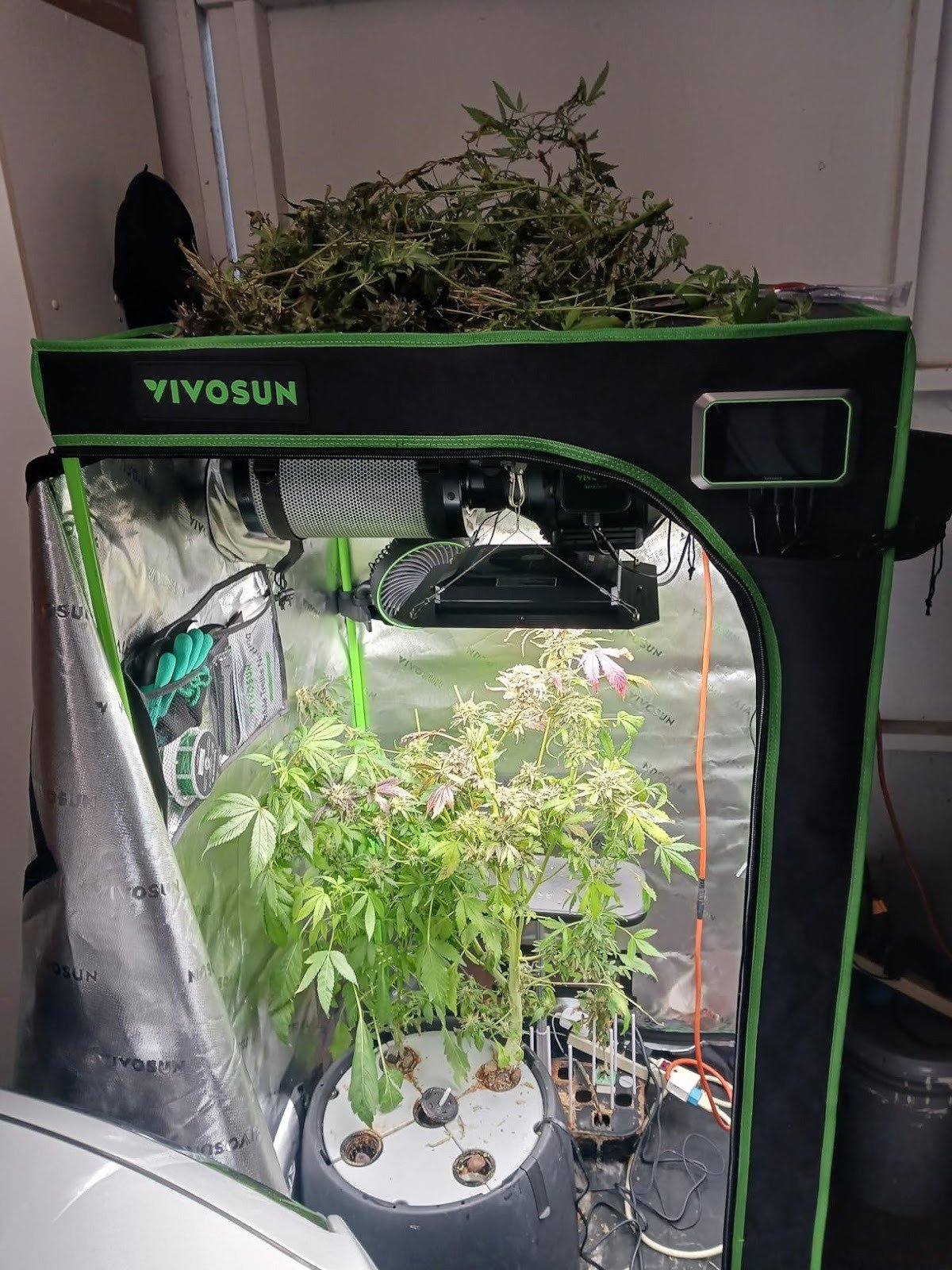
The first reason this kit catches attention is simple: the package is coherent. The listing bundles a 36″ x 36″ x 72″ tent, a 200W full-spectrum LumaLight, a 4″ AeroZesh G4 inline fan rated up to 195 CFM, a GrowHub E42A+ controller, carbon filter, ducting, and the small accessories people usually forget until setup day.
That matters more than it looks. A scattered setup creates decision fatigue before the first plant settles in. A unified setup cuts that down.
The second reason is more subtle. The GrowHub is not presented as a timer with a nicer shell. VIVOSUN positions it as the control center for light scheduling, ventilation, and environmental monitoring, with app-based access, alerts, historical data, and continued operation from the last saved settings when the controller goes offline.
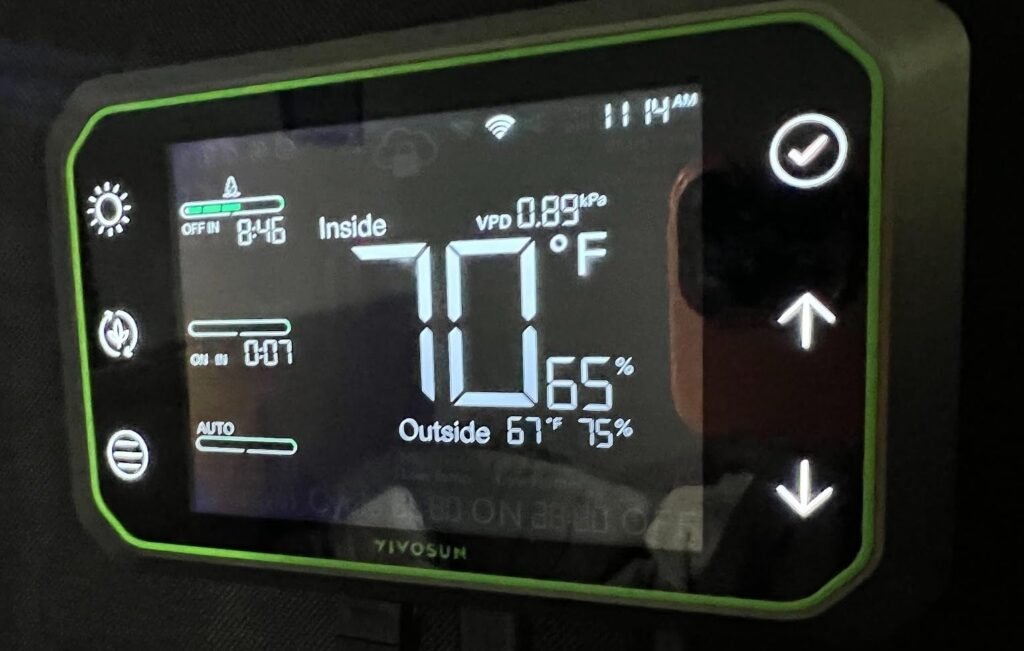
On paper, that sounds like convenience. In practice, it is only convenient if the system is calm enough that you stop second-guessing it. That is the secret most listings glide past.
The Uncomfortable Truth Most Buyers Learn Too Late
Most people assume automation fixes instability. It does not. It exposes it.
That is the counter-intuitive truth in small grow systems. If the room around the tent runs hot, swings in humidity, or sits in a place where noise matters at 2 a.m., the controller does not erase those problems. It manages around them.
VIVOSUN’s own documentation makes the boundaries clear: the GrowHub uses 2.4 GHz Wi-Fi, app data refreshes every minute, remote control and live data depend on connectivity, and offline use falls back to local/basic operation with the last programmed settings. That is not a flaw by itself.
The real issue is expectation. Buyers often expect the system to create stability from chaos, when what it really does is organize a stable setup more neatly.
This is where owner feedback becomes more useful than polished listing copy. Some growers describe the ecosystem as easy, integrated, and practical to live with. Others report probe disconnects after updates or sensor interruptions that force them back into verification mode.
Once that happens, the product changes shape psychologically. It is no longer removing mental load. It is asking for supervision. That is the threshold.
The Real Failure Usually Starts in the Routine, Not in the Specs
Here is the mistake I see again and again: people study wattage, tent size, and fan CFM, then ignore the thing that will decide whether they keep the system or resent it — routine trust.
A tent can have the right dimensions, the right accessories, even a clean all-in-one package, and still lose its value if it makes you check the app like a nervous pilot glancing at instruments during turbulence.
The strongest products in this category do not merely “work.” They fade into the background. The weak ones keep calling you back into the loop. With this VIVOSUN kit, the hardware bundle is easy to justify. The control confidence is where the decision gets personal.
When Performance Starts to Decline
It does not fail dramatically. It begins with small signals.
| Threshold Signal | What It Really Means |
|---|---|
| You keep opening the app after schedules are already set | trust has not formed |
| Your room swings hard outside the tent | the controller is compensating, not solving |
| You care about sleep-level quiet | fan behavior becomes part of the buying decision |
| You expect “hands-off” growing | your expectation is ahead of the system |
| You want open-ended device freedom | ecosystem limits start feeling tighter |
That last line matters because VIVOSUN’s controller documentation is clear about compatibility boundaries, Wi-Fi requirements, and mode behavior. This is an integrated ecosystem first, not an open tinkerer’s playground. That is a strength for some buyers and a ceiling for others.
The Noise Question Is Smaller on Paper Than in Real Life
A spec sheet cannot tell you what a recurring sound feels like after midnight.
That is why the fan discussion matters more than most reviews admit. In one Reddit thread, a user said the 4″ AeroZesh worked well and was quiet enough to sleep next to, especially below full power. In the same discussion, another user said the fan developed a noticeable whine at 100% during flowering and became hard to ignore in a quiet house.
Both reports can be true because fan noise is not experienced in a vacuum. It is experienced in a bedroom, office, apartment, or shared room, layered on top of your tolerance for repetition. If your setup lives near where you sleep, the noise threshold becomes part of the product, not a footnote.
My Simple Rule Before I Move Inward
Here is the Aha moment that makes this category easier to judge:
A smart grow tent is worth paying for only when it reduces checking behavior more than it increases monitoring behavior.
That one rule cuts through a lot of noise. If your real problem is setup friction — matching parts, wiring the basics, getting a workable 3×3 environment up quickly — this kit starts to look logical.
If your real problem is trust friction — fear of app inconsistency, noise sensitivity, or unstable room conditions — the same kit can feel much less attractive after the first week.
Who This Surface Is Pulling In — And Who It Isn’t
| Need | Fit |
|---|---|
| One-box 3×3 smart setup | Strong |
| Lower setup friction | Strong |
| Unified app ecosystem | Strong |
| Bedroom-level noise sensitivity | Borderline |
| Maximum controller confidence | Borderline to Weak |
| Open-ended hardware freedom | Weak |
This is not for the buyer who wants to “set it and emotionally disappear.” It is for the buyer who wants a cleaner start, fewer moving parts, and a more organized path into the category.
That is a narrower promise than most smart-grow marketing suggests, which is exactly why it is more useful.
The Piece Most People Miss Before the Buying Decision
The first article should not close the case. It should expose the hidden variable. In this case, that variable is not yield fantasy or app screenshots.
It is the line where convenience turns into supervision.
If that line matters to you, the next step is not “buy now.” The next step is sharper: does this kit fit your room, your tolerance, and your routine well enough that trust can actually form?
That is the missing piece, and that is where the decision article has to do the real work.
Transparency Note:
This analysis is not based on quick personal impressions.
It is derived from documented system behavior, verified user patterns, and the physical constraints of storage capacity.
The goal is to translate complex technical behavior into a realistic performance model that helps you make a clear decision