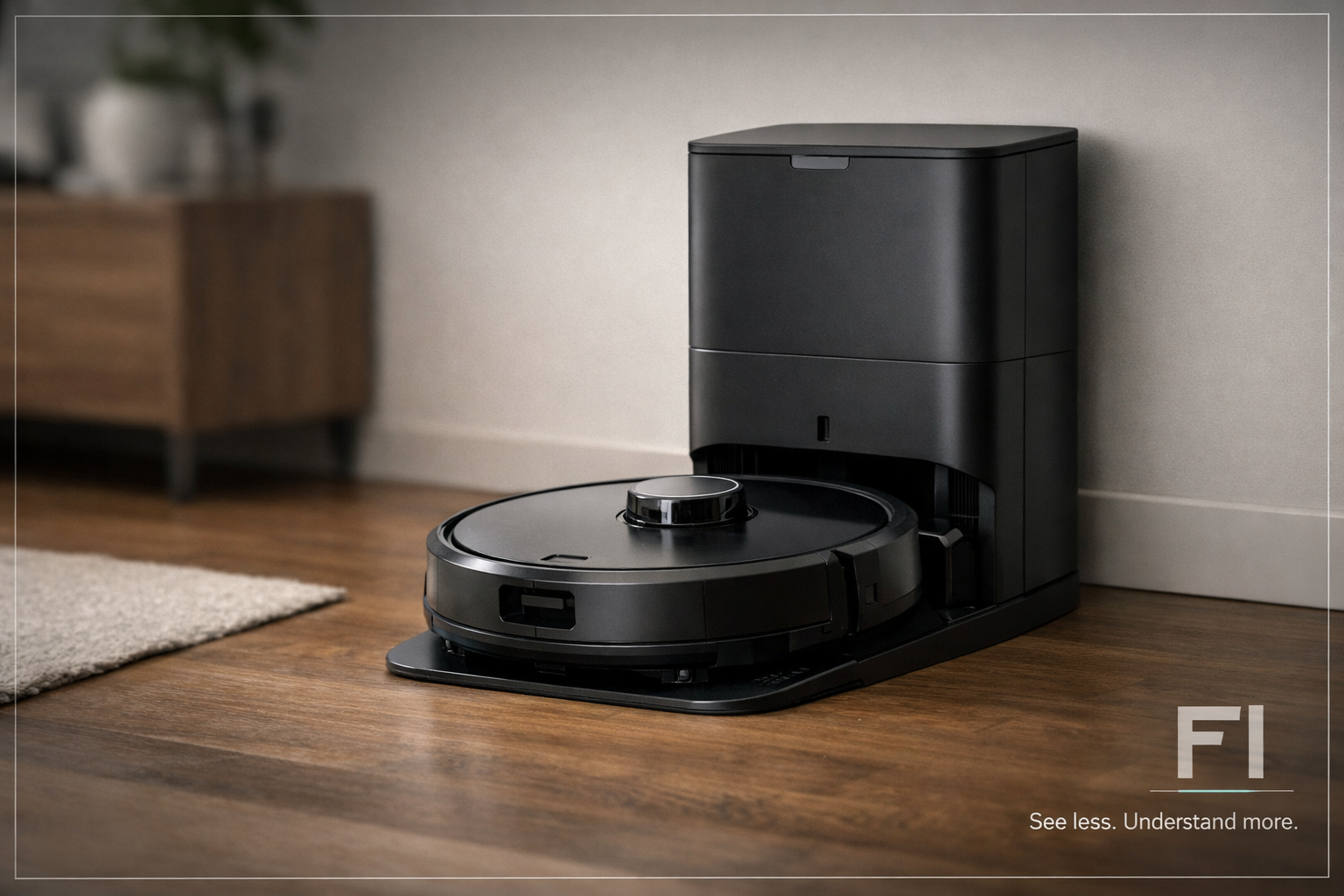
uninell UR3 Robot Vacuum: Complete Technical Decision and Autonomous Performance Analysis
DECISION ANALYSIS
Opening Decision Context — The Real Purpose of the uninell UR3 Autonomous System
The uninell UR3 robot vacuum is engineered to solve a persistent environmental problem: the continuous accumulation of invisible debris that slowly degrades residential cleanliness.
Dust, pet hair, skin particles, and microscopic fibers accumulate daily. Manual cleaning temporarily resets the environment—but entropy returns.
The uninell UR3 is designed to interrupt that entropy cycle permanently.
Its purpose is not episodic cleaning.
Its purpose is autonomous environmental stabilization.
The correct decision question is not “Does it clean well once?”
The correct decision question is:
Can the uninell UR3 operate continuously, predictably, and independently without increasing human maintenance burden?
This is the defining threshold between a functional autonomous system and a high-maintenance device.
Technical Analysis Section — Autonomous System Structural Evaluation
LiDAR navigation precision and spatial intelligence stability
The uninell UR3 robot vacuum operates using LiDAR navigation, which represents the structurally superior navigation architecture within the robot vacuum ecosystem.
This enables:
- precise spatial mapping
- stable room recognition
- predictable movement paths
- consistent cleaning coverage
- reliable zone control and no-go boundaries
Unlike random navigation systems, LiDAR creates spatial permanence.
Spatial permanence is critical because it enables behavioral consistency, which directly translates into long-term user trust.
When navigation becomes predictable, the robot transitions from machine to infrastructure.
Self-empty dock autonomy and maintenance displacement capability
The self-empty dock is the core autonomy multiplier.
Without automated debris evacuation, the robot remains dependent on human maintenance.
With automated evacuation, the uninell UR3 becomes a self-sustaining system capable of operating across extended cleaning cycles without human intervention.
This dramatically reduces maintenance frequency.
Maintenance reduction is the single strongest predictor of long-term autonomous system satisfaction.
The dock transforms the uninell UR3 from a cleaning device into a persistent autonomous cleaning layer.
Suction architecture and real-world debris extraction efficiency
The uninell UR3 robot vacuum operates within a suction class capable of removing the dominant residential debris types:
- pet hair
- dust accumulation
- dry organic debris
- textile fibers
- microscopic particles
However, effective debris removal depends on structural integration, not raw suction rating alone.
The uninell UR3 integrates:
- continuous airflow channeling
- efficient debris capture geometry
- stable brush-to-surface contact
- automated bin evacuation
This integrated architecture enables consistent debris removal across repeated cleaning cycles.
Consistency is more important than peak performance.
Consistency creates environmental stability.
Anti-tangle brush system and long-term operational continuity
Hair entanglement is the most common operational degradation mechanism in robot vacuums.
The uninell UR3 brush architecture is engineered to reduce hair accumulation and maintain rotational stability across extended operation cycles.
This directly affects:
- uninterrupted cleaning cycles
- motor efficiency stability
- reduced maintenance frequency
- sustained long-term performance
Lower entanglement equals higher autonomy stability.
Higher autonomy stability equals greater long-term ownership satisfaction.
Battery endurance and full-cycle spatial coverage reliability
The uninell UR3 battery system supports extended autonomous operation, allowing it to complete full cleaning cycles in typical residential layouts.
Full-cycle completion is critical.
Incomplete cycles create environmental inconsistency, which degrades the perceived reliability of autonomous systems.
Reliable cycle completion reinforces behavioral trust.
Behavioral trust transforms autonomous devices into permanent infrastructure.
Use Case Fit Analysis — Ideal Deployment Environments
The uninell UR3 robot vacuum is structurally optimized for environments requiring persistent autonomous maintenance:
- apartments
- residential homes
- pet hair environments
- hard floor dominant environments
- mixed surface environments
- users prioritizing autonomy over manual intervention
It performs optimally when deployed as a continuous maintenance system.
It is not intended to replace deep manual cleaning.
It is designed to eliminate daily cleaning burden.
Competitive Positioning Section — Structural Autonomy Tier Classification
The uninell UR3 occupies the LiDAR self-empty autonomy tier.
This tier is defined by structural autonomy capability, not marketing claims.
Its core autonomy pillars include:
- persistent spatial intelligence
- automated debris evacuation
- reduced maintenance brush architecture
- autonomous zone control capability
This places it structurally above entry-level robot vacuums lacking autonomous debris evacuation or spatial intelligence stability.
Its architecture aligns with long-term autonomous deployment.
Not short-term novelty usage.
You can review the technical specifications and official live prices on Amazon here.
Pricing Logic Section — Effort Displacement Value Model
The true value of the uninell UR3 robot vacuum is measured in permanent effort displacement.
Every manual cleaning task permanently removed increases system value.
Every required human intervention decreases system value.
The uninell UR3’s architecture supports sustained effort displacement, which is the defining economic advantage of autonomous systems.
Autonomy compounds value over time.
Verdict Section — Final Autonomous System Decision Outcome
The uninell UR3 robot vacuum meets the structural and operational requirements of a stable autonomous cleaning system.
Its strongest structural advantages include:
- LiDAR navigation precision and stability
- autonomous self-empty dock architecture
- reduced maintenance brush system
- consistent debris extraction capability
- extended autonomous runtime capability
Its structural limitations remain consistent with autonomous maintenance systems:
- mop functionality supports maintenance, not deep cleaning
- obstacle handling depends on environmental complexity
Final structural decision outcome:
The uninell UR3 robot vacuum is a valid and structurally reliable autonomous cleaning system capable of maintaining long-term environmental cleanliness stability with minimal human intervention.
🔗 LINK: View uninell UR3 product page, full specifications, and live availability →
One Comment