Why Some Air Fryers Feel Effortless and Others Start Fighting You
ANALYSIS FRAMEWORK
I have had that moment more than once: I load an air fryer thinking dinner will be easy, then halfway through I am opening the basket, shaking, rotating, and silently negotiating with food that was supposed to be effortless.
That pattern is what pushed me toward one simple question: when does an air fryer stop feeling fast and start feeling crowded?
The answer, at least in real use, has less to do with raw quart numbers than most people think. What actually changes the experience is whether the machine gives food enough exposed surface area to cook in a calm, even, repeatable way.
Once that space disappears, performance starts drifting. Browning becomes patchy. Timing gets less predictable. Crispness turns selective. The machine still works, but it starts asking for supervision.
The Single-Layer Crisping Threshold
The frame I keep coming back to is what I call the Single-Layer Crisping Threshold. This is the point where the basket still has enough open room for heat and airflow to circulate without obstruction. Below that threshold, the appliance feels composed.
Food browns with more consistency. Moisture escapes the way I want it to. I do not feel pulled back into the process every few minutes.
Cross above that threshold and the tone changes immediately. Pieces begin blocking one another. Edges pick up color faster than centers. Top surfaces look promising while lower zones lag behind. Instead of a quick, stable cook, I end up correcting the result.
That is the hidden dividing line in this category. Not “small versus large.” Not “cheap versus premium.” Stability versus crowding.
Why Capacity Numbers Often Tell the Wrong Story
This is where people get misled. A larger number on the box sounds like freedom, but usable cooking area is what actually determines how relaxed the experience feels.
A deep basket can technically hold more food while still making me pile, overlap, or layer ingredients in ways that interfere with airflow.
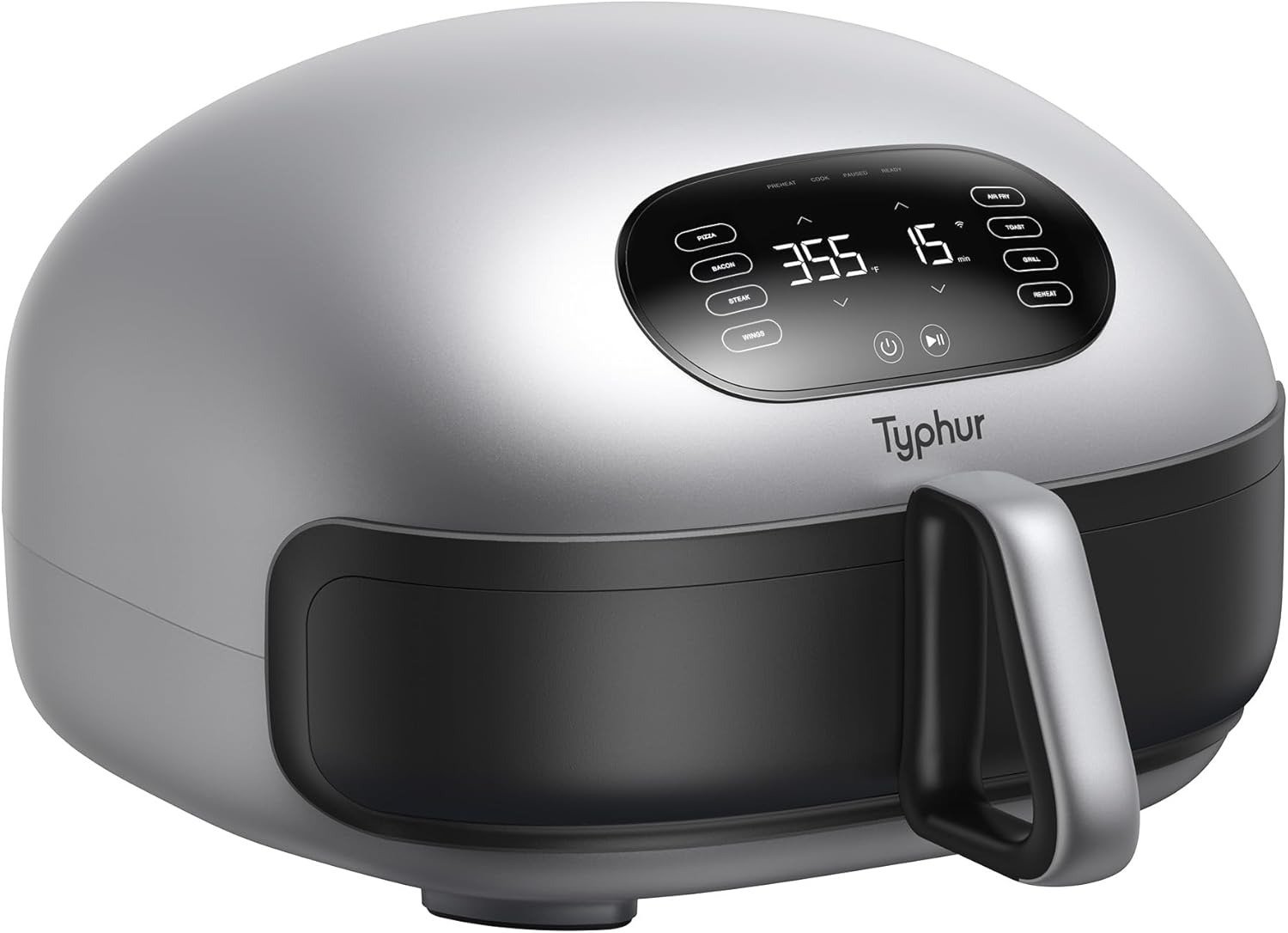
A wide chamber changes that equation. It lets fries spread instead of stack. It lets wings sit with less contact. It gives bacon and toast room to behave like flat foods rather than compressed ones.
In practice, that means less mid-cook intervention and a higher chance that the meal finishes with the kind of evenness people assume all air fryers deliver.
The promise of “capacity” is only meaningful when it protects the threshold instead of destroying it.
What Performance Drift Looks Like Over Time
The most interesting part of this category is that drift is not purely technical. It becomes behavioral. At first, people adapt. They shake more often. They add time. They stop trusting presets and start cooking by instinct.
None of that feels dramatic in the moment. But over weeks, it changes the emotional identity of the appliance.
A machine that once felt fast starts feeling supervisory.
That shift matters because convenience products live or die by whether they reduce friction repeatedly, not occasionally. If the basket design keeps forcing me into correction mode, the air fryer loses its status as a weekday shortcut and becomes something I tolerate rather than enjoy.
The Mechanical Reason Crowding Changes Everything
At a mechanical level, the logic is straightforward. An air fryer is a compact convection system. It depends on moving hot air around the food with enough consistency to drive off surface moisture and create browning where I expect it.
Once food starts blocking circulation paths, the machine still has heat, but it no longer has equal access.
Some pieces sit in direct airflow. Others sit in the wake behind them. Some release moisture into cramped pockets that soften the surfaces around them. The appliance is still active, but the cooking opportunity is no longer distributed fairly.
That is why an air fryer can look powerful on paper and still feel strangely uneven in actual use. Volume alone does not create freedom. Geometry does.
Why This Threshold Matters More Than Raw Speed
People often shop this category like a race. Which model is faster? Which one gets hotter? Which one has more presets?
In practice, those questions matter less than whether the appliance stays below the threshold often enough to preserve trust.
A machine that cooks a little more slowly but keeps food spread out and predictable can feel better than a hotter unit that constantly forces repositioning. Stability reduces friction in a way spec sheets rarely capture.
It affects cleanup habits, weekday frequency, noise tolerance, and whether the appliance actually earns permanent counter space.
The real advantage is not just crispness. It is reduced intervention.
The Compatibility Split That Actually Matters
After looking at how this category behaves in real kitchens, the meaningful split is not beginner versus expert. It is pattern of use.
| Use Pattern | What Matters Most | What Usually Goes Wrong |
|---|---|---|
| Solo / light snack cooking | speed, compact size, simple cleanup | larger units feel wasteful |
| Regular two-to-four person cooking | single-layer surface area, evenness, lower intervention | deep baskets create crowding drift |
| Large households / split meals | multi-zone flexibility or very wide surface | one-zone systems can still bottleneck meal timing |
That split explains why one buyer sees a premium air fryer as overbuilt while another sees it as the first design that actually fixes their daily frustration.
The machine is not simply good or bad. It either fits the threshold of your meals or it does not.
The Quiet Resolution
Once I started viewing air fryers through the Single-Layer Crisping Threshold, the category became much easier to read.
Some models are really selling the idea of volume. A smaller number are solving a far more important problem: keeping food exposed, airflow clear, and intervention low enough that the machine still feels helpful after the novelty wears off.
That is the line I now care about most. When an air fryer preserves space instead of pretending to, it stops behaving like a crowded shortcut and starts behaving like a stable tool.
[Link to Decision Article — DECISION_LINK]
Short Product-Page Summary
I stopped judging air fryers by quart numbers alone because that is not what decides whether they feel easy to live with.
What matters is whether the basket keeps food spread out enough to stay below what I call the Single-Layer Crisping Threshold. Once food starts piling or overlapping, airflow gets interrupted, browning becomes uneven, and the appliance starts demanding more correction than most people expect.
That is the hidden reason some air fryers feel fast and satisfying while others slowly become annoying. The issue is not just power. It is geometry.
A wide cooking surface protects airflow, lets moisture escape more predictably, and lowers the need for shaking, rotating, or extending time mid-cook. A deep basket may look generous, but it can still create congestion where the top finishes first and the center lags behind.
For solo snack cooking, compact models still make sense. For regular two-to-four person cooking, usable surface area matters much more. For larger households, the decision often shifts toward multi-zone flexibility or truly wide cooking layouts.
If your current frustration is not lack of heat but too much crowding, that is the right lens to use before buying your next air fryer.
Final verdict: Consider.
It gives you a better way to judge real-world air fryer performance.
It explains why “capacity” often fails in practice.
It leads naturally toward models that reduce intervention instead of adding it.
Read the decision review here: [DECISION_LINK]
Transparency Note:
This analysis is not based on quick personal impressions.
It is derived from documented system behavior, verified user patterns, and the physical constraints of storage capacity.
The goal is to translate complex technical behavior into a realistic performance model that helps you make a clear decision