Toshiba OptiChef ML2-STC13SAIT Review: The Point Where a Combo Oven Becomes Worth Keeping
DECISION ANALYSIS
I’ve learned to be suspicious of appliances that sound too complete.
When a countertop machine promises to microwave, air fry, sensor-cook, defrost, connect to an app, answer Alexa, and still feel simple in daily use, I don’t assume it’s brilliant. I assume it has something to prove.
That is exactly why the Toshiba OptiChef ML2-STC13SAIT is interesting.
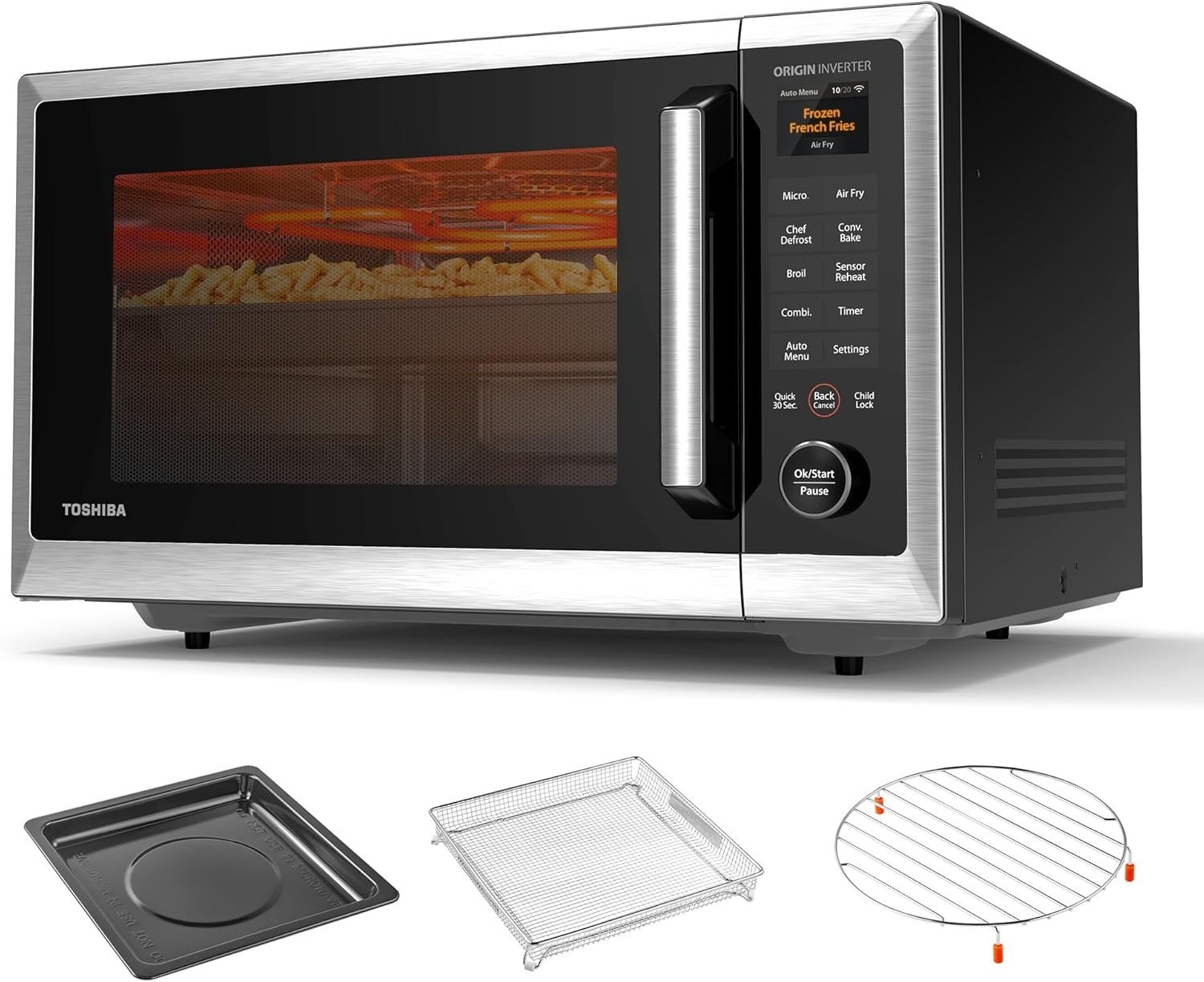
On paper, it gives itself every chance to matter: 1100W output, 1.3 cu. ft. capacity, Origin Inverter technology, a built-in humidity sensor, ChefFry Plus air frying, a 2.4-inch color screen, app and Alexa compatibility, room for a 13-inch pizza or a whole chicken, and a stated defrost system that can be up to 40% faster than traditional methods. It also arrives with a 4.1-star average from 150 ratings, 200+ bought in the past month, and a Best Sellers Rank of #56 in countertop microwave ovens.
Those are not throwaway details. They shape what kind of buyer this product is actually for.
The Model I’m Using
I’m using one model only: Threshold.
The question is not whether the Toshiba OptiChef can do many things.
The question is when it starts doing enough of them well enough that I stop thinking of it as a compromise product.
For me, that threshold has four checkpoints:
- Microwave performance has to feel stable.
- The air-fry mode has to be useful, not symbolic.
- The workflow has to reduce intervention.
- The cleanup penalty has to stay acceptable.
If the product clears those four points, it earns its place. If it stumbles badly on one of them, the promise weakens fast.
What the Specs Actually Mean in a Real Kitchen
A lot of appliance listings bury the buyer in features without translating any of them into kitchen impact. That is where this product deserves a more practical reading.
1100W output matters because it gives the machine enough strength to feel responsive for routine microwave work.
1.3 cu. ft. matters because the cavity has to handle normal household portions without forcing awkward compromises.
Origin Inverter technology matters because smoother power delivery tends to feel more controlled in real reheating and defrosting.
A humidity sensor matters because the less guesswork I need, the more likely I am to trust the machine repeatedly.
ChefFry Plus matters only if it creates real texture and not just extra heat.
The 2.4-inch color screen matters more than it sounds, because combo appliances often lose users at the control level before they fail at the cooking level.
App and Alexa support matter for some households, but they are secondary unless the core cooking behavior already feels dependable.
In other words, the Toshiba OptiChef is not interesting because it stacks features. It is interesting because several of those features point toward lower intervention in everyday use.
Where I Think This Product Is Strongest
If I strip away the marketing language and focus on what this machine is most likely to do well, the answer is clear: it looks strongest as a microwave-first replacement system.
That’s the right lens.
This machine makes the most sense when I imagine how people actually use their countertop appliances Monday through Friday. They’re reheating leftovers, defrosting protein, warming side dishes, handling quick convenience meals, and occasionally crisping something that would benefit from texture. That is the pattern this Toshiba seems built to serve.
The combination of 1100W output, 1.3 cu. ft. capacity, Origin Inverter technology, and humidity sensor cooking supports exactly that kind of use. These are not decorative specs. They are the specs that influence whether daily reheating feels crude or controlled.
And if the microwave side is strong, the whole product immediately becomes more believable.
Where Buyers Need to Stay Honest
This is the part where many purchase decisions go wrong.
A buyer sees “air fry” and mentally compares the product to a dedicated basket-style air fryer. That expectation can distort the entire evaluation. The Toshiba OptiChef does not need to be the best dedicated air fryer in your kitchen universe to be worth owning. It needs to be good enough at crisping that I don’t regret relying on it for moderate, real-life use.
That means the standard is not perfection. The standard is usefulness.
Can it handle:
- frozen snacks
- leftover fries
- wings
- nuggets
- roasted vegetables
- quick browning jobs
If the answer is yes in a way that feels satisfying rather than technical, then the air-fry mode contributes real value. If you want the hardest crunch, the fastest browning, and the easiest grease cleanup every single time, you are probably still better served by a dedicated air fryer. That is not a weakness unique to this Toshiba. That is the category boundary.
The Behavioral Risk Most Buyers Miss
The real danger with combo machines is not that they fail immediately. It is that they lose habitual trust.
That happens when the machine starts creating micro-friction:
- the cavity gets messy
- the accessories interrupt quick use
- the air-fry function feels slower than hoped
- cleanup starts to feel like a tax
- switching modes does not feel as seamless as the feature list suggested
This is why I care so much about the Replacement Threshold. A combo machine is only valuable if it stays convenient after the honeymoon period ends.
And this is also why the Toshiba’s design choices matter. A larger, more capable cavity gives it a more serious role in the kitchen, but it also raises expectations. At 45.6 pounds and 21.8 by 19.4 by 12.8 inches, this is not a casual appliance. It occupies real territory on the counter. To justify that presence, it has to reduce repeat friction, not merely advertise flexibility.
Compatibility Split 3.0
This is the cleanest way I can frame the buying decision.
| Buyer profile | Fit with Toshiba OptiChef ML2-STC13SAIT | Why |
|---|---|---|
| Small kitchen, apartment, or shared counter | Strong fit | One box replaces multiple lighter-use appliances |
| Microwave-first home that also wants crisping | Strong fit | Inverter + sensor + air fry is a sensible stack |
| Busy household needing low-intervention reheating and defrosting | Strong fit | Sensor logic and size matter more than extreme crisping |
| Air-fryer enthusiast chasing best crunch | Weak fit | Category tradeoff still applies |
| Buyer wanting the cheapest good microwave | Weak fit | Extra modes cost money they may never use |
| Buyer who hates cleaning appliance interiors | Mixed to weak fit | Air-fry grease inside a microwave cavity is still a real issue |
That table says more than most listings ever will. The product is not universally right. But for the right buyer, it is rationally compelling.
Decision Table
| Question | My read |
|---|---|
| Is it likely to replace a basic microwave well? | Yes |
| Is it likely to replace a dedicated air fryer completely? | No |
| Does the feature set match real household use? | Yes, especially for microwave-first homes |
| Is the size justified? | Yes, if you want multi-role use |
| Is it the best fit for crunch-first buyers? | No |
| Is it the best fit for convenience-first buyers with limited space? | Very likely |
My Verdict After Looking at the Whole Picture
The Toshiba OptiChef ML2-STC13SAIT becomes much easier to understand the moment I stop asking it to be a miracle.
It is not a true air-fryer killer that happens to microwave.
It is a serious microwave-centered countertop system that adds credible crisping, added cooking range, and lower day-to-day guesswork for the right household.
That distinction matters because it aligns the product with the buyers most likely to love it.
If your kitchen life is microwave-heavy, your counter space matters, and you want one appliance that can handle reheating, defrosting, occasional crisping, and broader convenience tasks without feeling flimsy, this model makes real sense. If you are buying primarily for maximum air-fry performance, the category itself is still working against you.
That is why my decision here is simple:
When I judge the Toshiba OptiChef by the right threshold, it looks like a smart buy for the buyer it was actually built for.
And that is usually where the strongest purchase decisions come from — not from chasing the loudest promise, but from recognizing the product that quietly fits your real kitchen better than the alternatives.
If that sounds like your kitchen, this is the point where the product stops looking clever and starts looking justified.
[See the product here: [PRODUCT_LINK]]
Final verdict: Consider.
It combines 1100W output, 1.3 cu. ft. capacity, inverter control, humidity sensor cooking, and air frying in one serious countertop unit.
It looks strongest for microwave-first households that want credible extra functionality without adding another appliance.
Its main limitation is category-based: buyers chasing the best dedicated air-fry experience may still want a separate unit.
Short Product-Page Summary
The Toshiba OptiChef ML2-STC13SAIT makes the most sense when I stop thinking of it as a gadget and start thinking of it as a microwave-first countertop replacement system. That framing changes everything.
You’re getting 1100W output, 1.3 cu. ft. capacity, Origin Inverter technology, a built-in humidity sensor, ChefFry Plus air frying, a 2.4-inch color screen, app and Alexa compatibility, space for a 13-inch pizza or a whole chicken, and a defrost system that can be up to 40% faster than traditional methods. The footprint is substantial at 21.8 by 19.4 by 12.8 inches, and at 45.6 pounds it is clearly designed to play a serious role on the counter, not disappear into it.
For the right buyer, that role is very attractive. If your kitchen life revolves around reheating leftovers, defrosting protein, warming side dishes, and occasionally crisping frozen foods or roasted vegetables, this machine has a strong logic behind it. The microwave side looks like the real anchor, while the air-fry mode adds useful flexibility rather than serving as the sole reason to buy.
That said, I would not treat this as a full replacement for a dedicated basket-style air fryer if crisping is your highest priority. The smarter expectation is broader utility, lower appliance clutter, and less day-to-day intervention for microwave-heavy households.
If your goal is fewer appliances and more useful convenience, this is a compelling match.
The best combo appliance is not the one with the most modes — it’s the one you actually trust every day. See this one here:[PRODUCT_LINK]]
Final verdict: Consider.
Transparency Note:
This analysis is not based on quick personal impressions.
It is derived from documented system behavior, verified user patterns, and the physical constraints of storage capacity.
The goal is to translate complex technical behavior into a realistic performance model that helps you make a clear decision