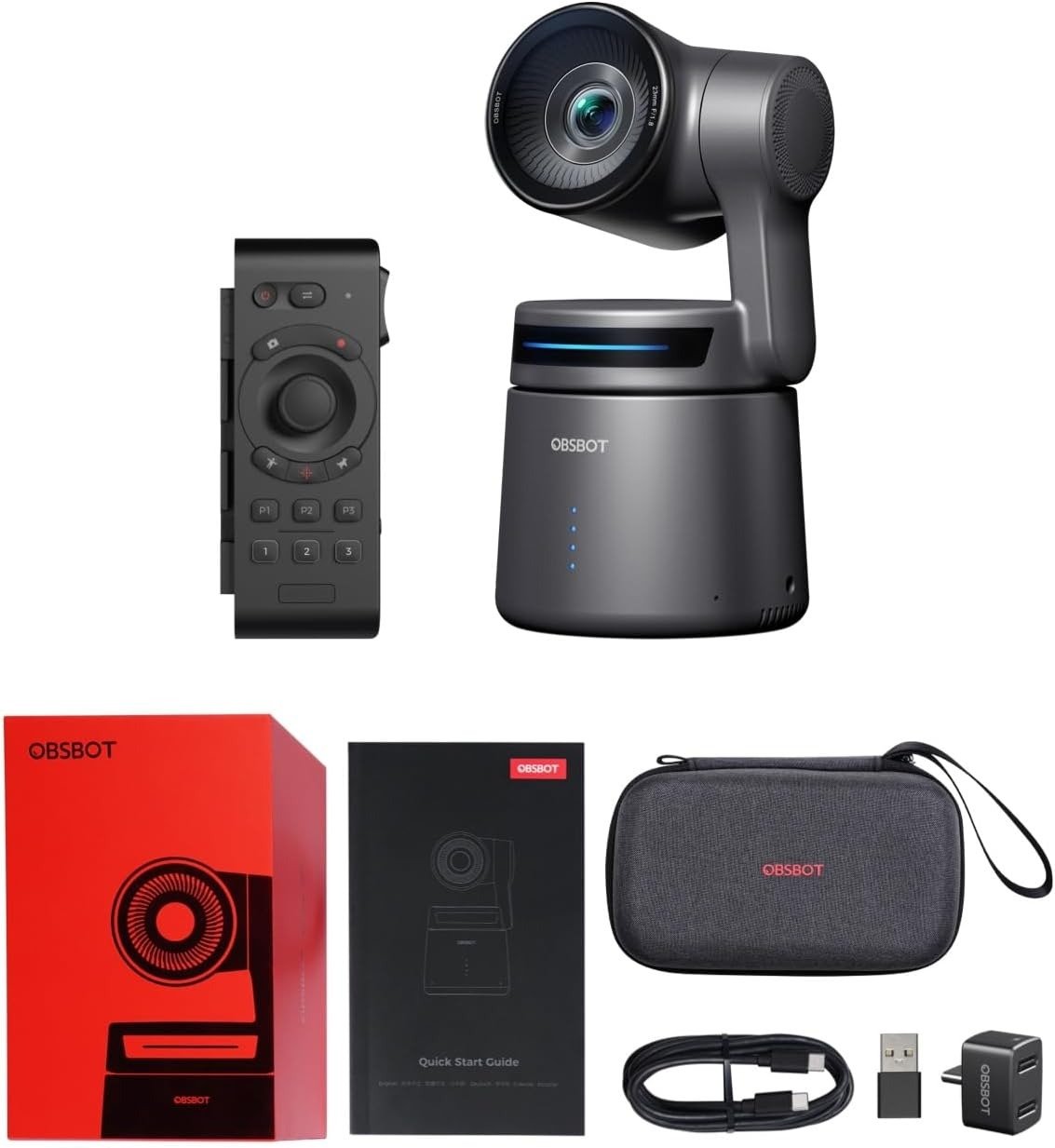
Who the OBSBOT Tail Air Actually Fits Once the Convenience Starts Mattering
DECISION ANALYSIS
The easiest way for me to evaluate the OBSBOT Tail Air is not by asking whether it is good.
The real question is whether the convenience lands in the right place for the workflow.
Because once I look beyond the feature list, the camera becomes easier to understand:
This is not a camera designed for everyone who wants better video.
It is designed for people who want to remove small operational tasks from their production routine.
Tasks like:
- adjusting framing
- tracking movement
- controlling the camera remotely
- managing a solo recording session
My Compatibility Split
I read the Tail Air through a clear compatibility structure.
| Fit Tier | Who this sounds like |
|---|---|
| Excellent fit | Solo creators, educators, presenters, podcasters |
| Good fit | Small teams building compact multicam setups |
| Borderline fit | Buyers expecting strong zoom and tracking together |
| Wrong fit | Long-distance venues or stage installations |
This split matters more than any feature list.
Excellent Fit
The camera becomes most convincing when placed relatively close to the subject and used in environments where movement occurs naturally.
Typical environments include:
- podcast tables
- teaching setups
- product demonstrations
- small livestream studios
- conference rooms
In those situations the camera removes repeated manual adjustments.
That is where the Tail Air becomes genuinely useful rather than simply impressive.
Why the Solo-Creator Fit Is So Strong
What I appreciate most about the Tail Air is that most of its features reinforce the same scenario.
- AI tracking
- gesture control
- compact body
- wireless operation
- battery capability
- app control
- network streaming compatibility
These features all serve the same goal:
reducing operator workload in small production environments.
When features move in the same direction like this, the product tends to feel coherent.
Good Fit — With Conditions
The camera can also work well in small multi-camera environments.
However, this is where the ecosystem begins to matter.
Once multiple cameras enter the setup, additional components may become relevant:
- network adapters
- licensing layers
- mounting accessories
This does not invalidate the product.
It simply changes the budget logic.
Borderline Fit
The most dangerous buyer category is the buyer who wants both automation and strong optical reach.
That combination is where expectations start drifting.
The Tail Air’s fixed lens and digital zoom mean that distance can quickly expose limitations.
For buyers who prioritize zoom or low-light flexibility, the product becomes less convincing.
Wrong Fit
The Tail Air becomes the wrong choice when the primary need involves:
- long-distance framing
- stage coverage
- large venue recording
- strong optical zoom requirements
- demanding low-light environments
In those scenarios the product is solving the wrong problem.
The Long-Term Friction Worth Considering
Long-term friction tends to appear in repeated use rather than in first impressions.
Common concerns include:
| Routine Factor | Potential Friction |
|---|---|
| Battery discipline | remembering charging cycles |
| Accessory expansion | ecosystem costs |
| Distance creep | placement moving farther over time |
| expectation drift | expecting more optical performance |
These are not fatal flaws, but they shape long-term satisfaction.
My Decision Boundary
For me the decision comes down to one sentence:
The OBSBOT Tail Air works best when an intelligent camera assistant matters more than optical reach.
When that condition is true, the product removes friction in ways traditional cameras cannot.
When it is false, the trade-offs become more noticeable.
Final Verdict
The Tail Air sits in a category I think of as precision purchases.
When the workflow matches its design philosophy, the camera simplifies production.
When the workflow requires different strengths, the same features can feel limiting.
Understanding that boundary is what makes the purchase decision clear.
Transparency Note:
This analysis is not based on quick personal impressions.
It is derived from documented system behavior, verified user patterns, and the physical constraints of storage capacity.
The goal is to translate complex technical behavior into a realistic performance model that helps you make a clear decision