The Shot Isn’t the Real Test. The Morning Is. My Terra Kaffe TK-02 Review for People Who Are Tired of Coffee Friction
TERRA KAFFE TK-02
You do not notice a bad coffee machine at the moment it pours. You notice it when you are late, half-awake, staring at yesterday’s cup rings, and the machine asks you to become a part-time technician before it gives you caffeine.
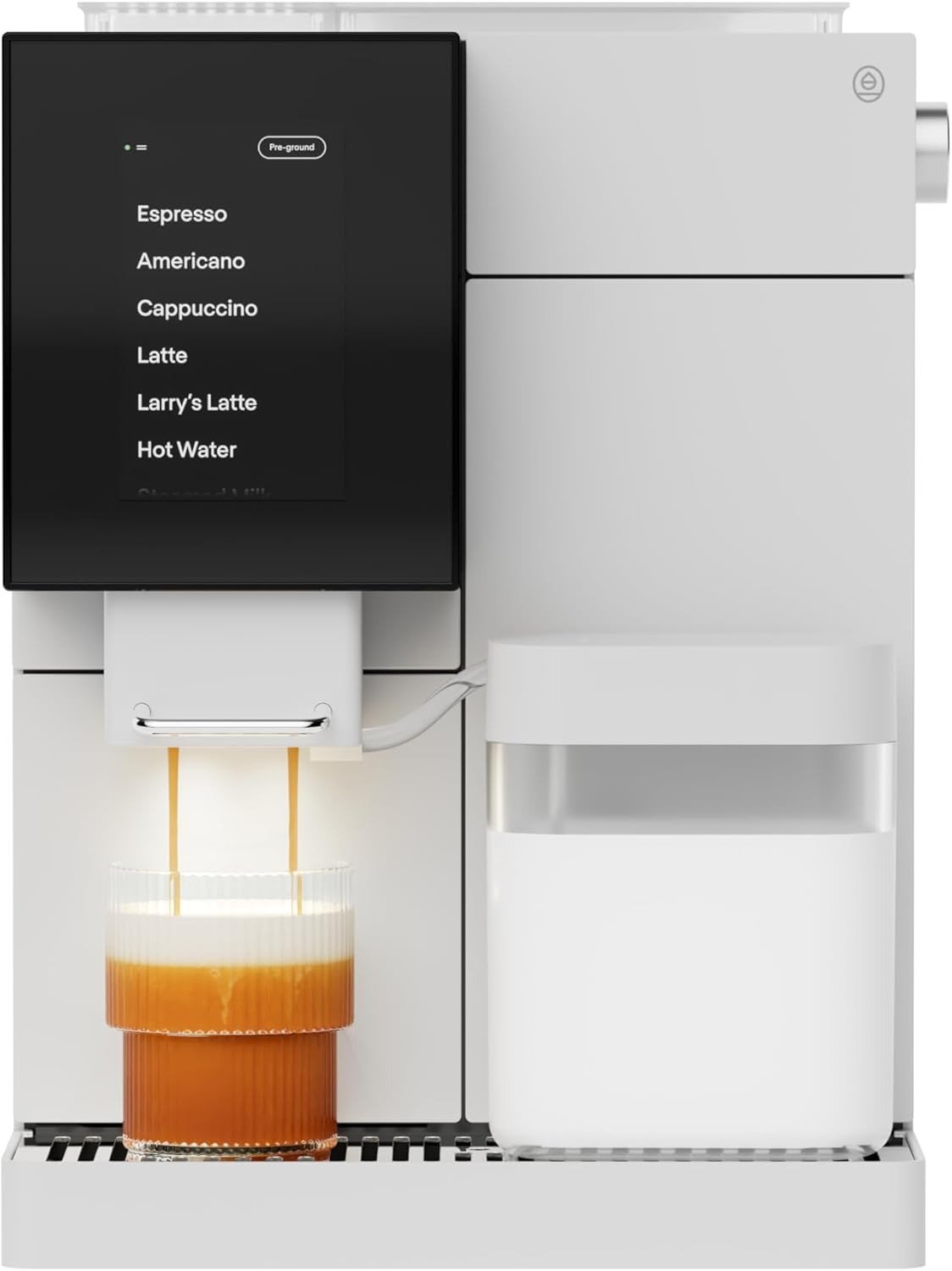
That is the real frame for the Terra Kaffe TK-02. Not crema porn. Not pump-pressure chest beating. Not the fantasy that owning a more expensive machine magically makes mornings feel controlled. What pulled me into this machine was something quieter: it promises to remove intervention. Grind. dose. rinse cycles. scheduling. milk texturing. even firmware updates. On paper, that sounds like convenience. In practice, it is either relief or another layer of maintenance wearing a prettier coat. The TK-02 sits right on that line. Its official spec sheet lists a 48 mm conical burr grinder, 75 fl oz water tank, 600 mL milk carafe, 9-bar pump pressure, a 16-ounce hopper, and a 2-year/5,000-brew warranty, while Amazon’s product page also markets a 19-bar pump and app-driven wake/sleep scheduling. That contradiction is not a small detail. It tells you exactly how this category gets misread: people chase the loud spec, then live with the quiet burden.
The Result Looks Fine. The Problem Isn’t.
A lot of machines can give you one respectable cup. That is not rare anymore. The rarer thing is a machine that still feels usable on a wet Tuesday, after repeated milk drinks, after the novelty burns off, after you realize coffee at home is not one romantic ritual but a chain of tiny interruptions.
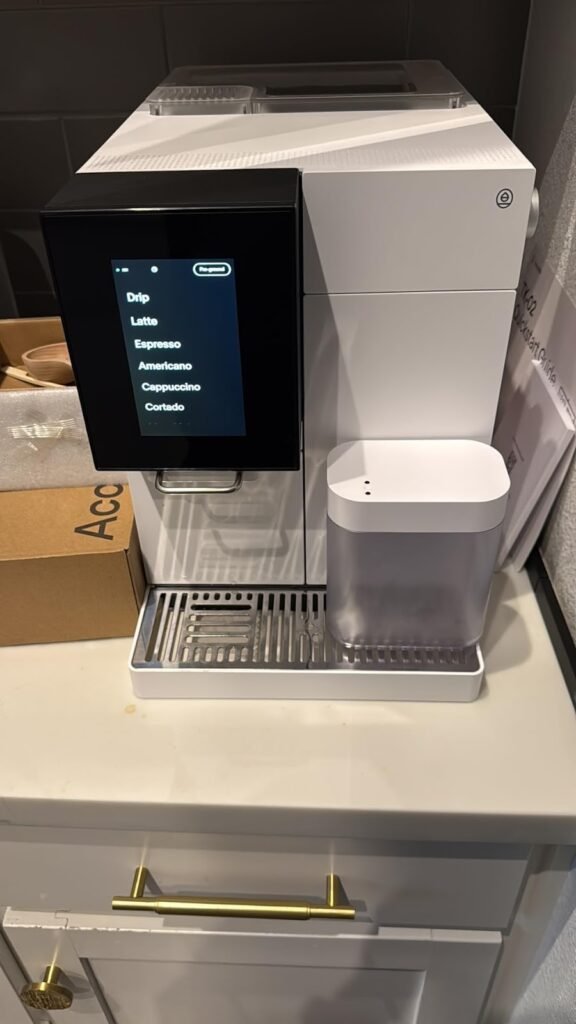
That is where the TK-02 makes its case. Reviewers consistently praise its quiet operation, strong customization, front-access layout, 5-inch touchscreen, and unusual ability to brew both espresso-style drinks and true drip coffee from the same machine. Tom’s Guide found it notably quieter than competitors and highlighted the depth of drink customization; Food & Wine called it its best smart super-automatic and praised both brew quality and the way self-cleaning cycles reduce some of the usual intimidation.
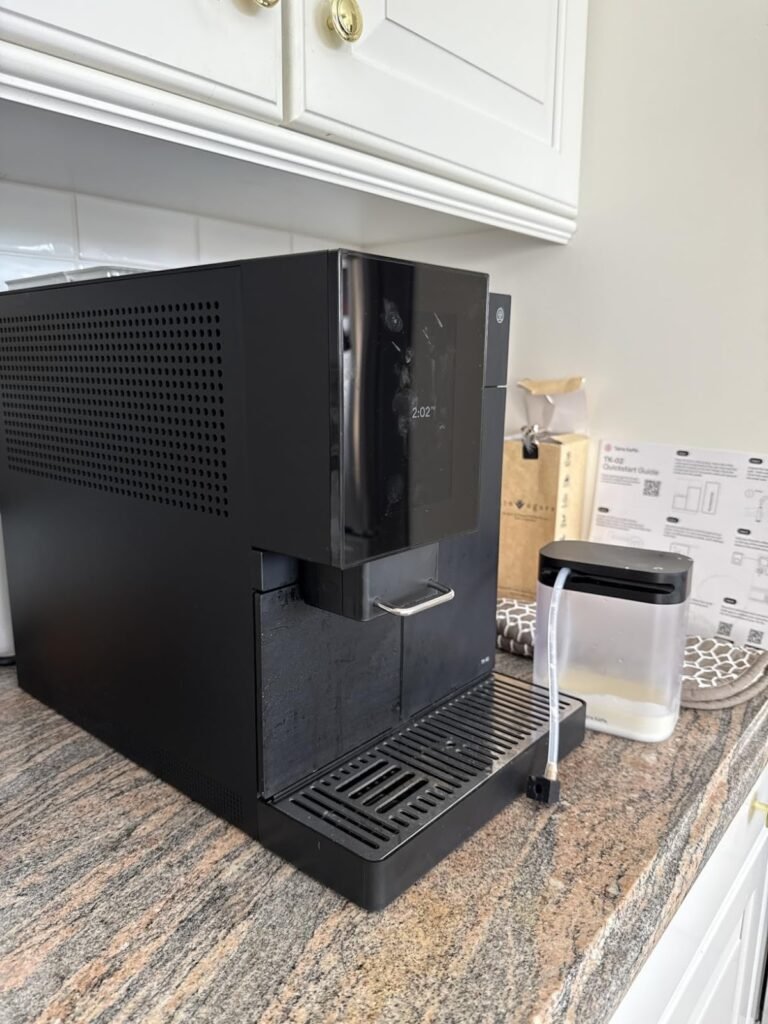
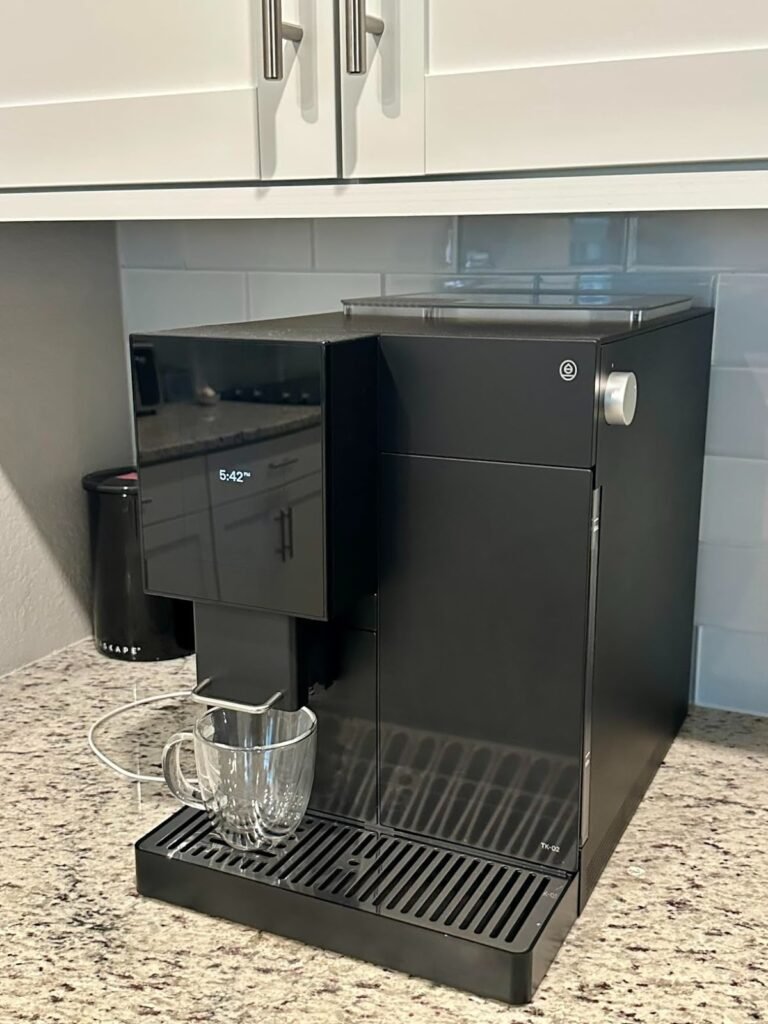
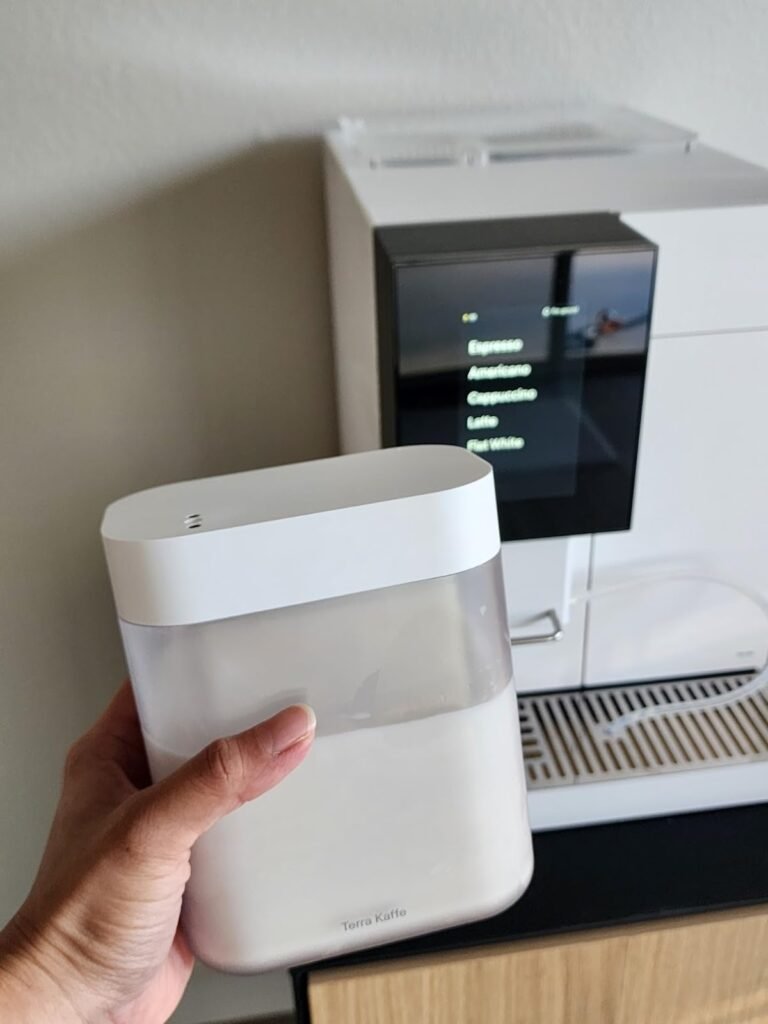
But this is where buyers get trapped: the coffee can be good while the ownership experience still goes wrong. Owners and reviewers repeatedly circle the same annoyances—the milk hose is fiddly, the drip tray is shallow, the machine is large, app behavior matters more than it should, and some users report reliability or service frustrations serious enough to turn convenience into the opposite of convenience. A super-automatic does not fail only when the espresso tastes flat. It fails when the machine starts negotiating with your patience before breakfast.
What You’re Actually Feeling but Not Naming
Most people describe the problem badly. They say, “I want better coffee at home.” That is too vague. What they usually mean falls into one of three things:
| What people say | What they usually mean |
|---|---|
| “I want café-quality coffee.” | I want less inconsistency without learning barista mechanics. |
| “I want a premium machine.” | I want the routine to feel smoother, faster, cleaner. |
| “I’m tired of buying coffee out.” | I want the house to stop losing small amounts of money and time every morning. |
The hidden friction is not taste alone. It is intervention burden. The repeated need to dial, steam, wipe, purge, troubleshoot, or mentally prepare for the machine before the day has even started.
That is why the TK-02 has real appeal. It does not sell you romance first. It sells you reduced hand labor. Whole bean or pre-ground input, one-touch drinks, app-synced recipes, scheduled wake times, automatic rinse and deep-clean prompts, and OTA updates all point at the same promise: fewer manual decisions between sleep and your first cup. Terra Kaffe says those custom drinks and settings follow your account, and reviewers repeatedly describe the machine as highly personalized and unusually easy to shape around routine.
The Hidden Mechanism Behind the Miss
Here is the part buyers often miss: the TK-02 is not really competing on espresso purity. It is competing on routine compression.
You might think, at first glance, that this machine lives or dies on the usual espresso-forum vocabulary—bars, extraction, grinder geometry, milk texture, temperature control. Those matter. They are just not the first gate. The first gate is whether the machine can turn a multi-step morning habit into one clean motion often enough that you keep using it.
That is why the hybrid brew unit matters more than it first appears. The machine can handle espresso drinks and true drip coffee, and Terra Kaffe now even supports a 28-ounce drip-carafe mode through the app. Tom’s Guide reported drip coffee around three and a half minutes on average and found the result rich enough to justify the slower brew. Food & Wine emphasized that the milk system works well across dairy and non-dairy options, while Seattle Coffee Gear notes the adjustable frothing dial and app-linked features as part of the machine’s appeal. This is not just feature stacking. It is an attempt to eliminate appliance sprawl: one machine instead of an espresso machine plus separate drip setup plus milk workflow.
That is also why the pressure-number debate is less important than it looks. Terra Kaffe’s official product page lists 9 bars. Amazon’s listing markets a 19-bar pump. If that discrepancy bothers you, good. It should. Because it exposes a lazy buyer reflex in this category: spec worship. Espresso machines do not become better because the page screams a bigger number. They become better when they can deliver consistent results without making you babysit the workflow. The TK-02’s real selling mechanism is not “more bar.” It is “less friction per cup.
”
The Threshold Where the Outcome Quietly Breaks
This machine becomes logical at a very specific threshold.
Not when you merely enjoy coffee.
Not when you want kitchen eye candy.
Not when you want to play barista on weekends.
It becomes logical when your daily coffee routine has crossed the intervention threshold: the point where manual effort, cleanup, and inconsistency cost you more than the premium you pay to remove them.
I would define that threshold like this:
| Intervention Threshold Signal | What it means |
|---|---|
| You make multiple drinks most days, not occasional novelty drinks. | Automation saves repeated effort, not isolated effort. |
| You switch between espresso drinks, milk drinks, and sometimes plain coffee. | The hybrid brew unit starts doing real work for you. |
| More than one person uses the machine. | Saved profiles and app-level customization matter more. |
| You value quiet, speed, and low-fuss operation over tactile craft. | The machine’s personality fits your actual behavior. |
| You are tired of separate tools, separate cleanup, separate rituals. | Consolidation becomes part of the value. |
Below that threshold, the TK-02 is easy to overbuy. Above it, the price begins to make uncomfortable sense. The machine currently sells around $1,795 direct from Terra Kaffe, with a stated list price of $1,995 and a 30-day/150-brew trial on the official site. That is premium money. It only stops feeling excessive when you are not buying coffee theater—you are buying back mornings.
Why Most Buyers Misread This Too Early
They use the wrong metric too soon.
They compare it like a spec sheet.
They imagine the first week, not month six.
That is the trap.
Most buyers see a touchscreen, app control, a milk carafe, software updates, and a price north of many competitors, then ask the wrong question: Is it overengineered? The better question is: Does my routine already justify engineered convenience?
Tom’s Guide liked the granularity of control, the quiet operation, and the ability to build user profiles, but still flagged the small water tank and annoying milk hose. Food & Wine loved the custom drink depth and mostly hands-off cleaning, yet still called out the app’s lack of multiple profiles and the hand-wash burden of the milk hose. Reddit owner discussions add another layer: some users love the machine but complain about milk freshness in the carafe, others report post-update milk issues, and a few describe reliability and service experiences that would be hard to forgive at this price. None of that means the TK-02 is bad. It means this machine is badly purchased by people who think “premium” automatically means “frictionless forever.”
Who Is Actually Inside This Problem
The TK-02 is for a narrow but very real kind of buyer.
You are inside this problem if you want all three of these at once:
- low-effort daily coffee
- meaningful drink customization
- less manual skill, not more
You are especially inside it if your house behaves like a mini café without the romance—one person wants espresso, another wants a milk drink, someone else wants drip coffee, and nobody wants a counter crowded with three half-solutions. The machine’s official feature set is almost built around this pattern: custom drinks tied to your account, wake scheduling, OTA updates, whole bean or pre-ground input, and a drip-carafe expansion for multi-mug use. Review coverage backs that up: the strongest praise is not “best espresso ever,” but “this fits into life cleanly.”
Psychologically, this buyer is not chasing hobby pleasure. They are escaping decision fatigue. They are tired of mornings that ask too much. The TK-02 makes the most sense for the person who does not want to perform coffee competence every day just to earn a decent cup.
Where Wrong-Fit Begins
Wrong-fit begins the second you buy this machine for status instead of structure.
If you love manual control for its own sake, the TK-02 may feel sterile. If you enjoy steaming milk by hand, nudging extraction variables, or treating coffee as a craft object, its one-touch intelligence can feel like a sealed door. Tom’s Guide explicitly notes that the modern, screen-driven design will lack classic manual-machine charm for enthusiasts.
Wrong-fit also begins if your budget is already tense. Because expensive automation is not forgiving. A cheap machine can be annoying and still feel tolerable. A $1,795 machine that glitches, demands service, or keeps adding little frictions feels personally offensive. That is why negative owner reactions sound so sharp: not just disappointment, but betrayal. The emotional tax is higher because the machine was supposed to remove stress, not invoice it. Owner complaints around service delays, ghost-brewing behavior, milk-path issues, and repeated repairs make far more sense once you see the actual emotional contract behind a super-automatic.
And one more thing: if you mainly drink simple black coffee and do not care about profile-level customization, milk drinks, or app behavior, the TK-02 can be too much machine. Not too much power. Too much system.
The One Situation Where This Product Becomes Logical
The Terra Kaffe TK-02 becomes logical in one specific situation:
When your real problem is not making espresso. It is removing recurring friction from a multi-drink household routine without dropping into pod coffee or manual barista work.
That is the lane.
In that lane, the machine is unusually persuasive. The hardware is substantial without being absurdly commercial. The front-access design reduces awkward refilling and emptying. The screen is simple enough for non-enthusiasts. The app extends customization instead of merely duplicating the panel. The machine can brew hot espresso, milk drinks, iced coffee, and drip coffee, and the firmware-driven nature of the platform means it can keep gaining features over time. Food & Wine, Tom’s Guide, Wired, and Terra Kaffe’s own platform all point in the same direction here: this is a convenience-first, software-aware, design-heavy super-automatic aimed at people who want café range without café labor.
That does not make it universal. It makes it clear.
What It Solves, What It Reduces, and What It Still Leaves to You
| Category | What TK-02 solves | What it reduces | What it still leaves to you |
|---|---|---|---|
| Drink workflow | One-touch espresso, milk drinks, drip, iced options | Manual brewing steps | Bean choice still matters; recipe tuning still matters |
| Customization | Dose, volume, temperature, strength, saved drinks | Repeating the same adjustments daily | You still need to learn your preferred settings |
| Morning routine | Auto wake, account sync, front access, auto cleaning prompts | Startup friction and mental load | You still empty trays, refill water, clean milk path |
| Milk drinks | Adjustable froth behavior with dairy and non-dairy support | Separate frothing hardware | The hose/carafe cleanup is still a real chore |
| Long-term ownership | OTA updates and warranty coverage | Feature stagnation and some maintenance anxiety | Software dependence and service experience still matter |
That last column is the one cheap marketing never shows you. And it matters more than the first two.
Because the TK-02 is not a magical kitchen monolith. It is a high-function convenience machine with a real maintenance perimeter. Reviewers describe much of the cleaning as automated, but not all of it. The milk system still asks something from you. The drip tray still asks something from you. The fact that the machine can do more also means there is more system to own.
Final Compression
Here is the cleanest way I can put it.
If you are shopping for espresso performance as a hobby, the Terra Kaffe TK-02 is not the center of gravity.
If you are shopping for relief from repeated coffee friction, it starts to look much stronger.
That is the threshold. Not “Do I like coffee?” Not “Is the design beautiful?” Not even “Can it make a good latte?” The real question is simpler and harsher: Has my routine become annoying enough that automation is now cheaper than continued irritation?
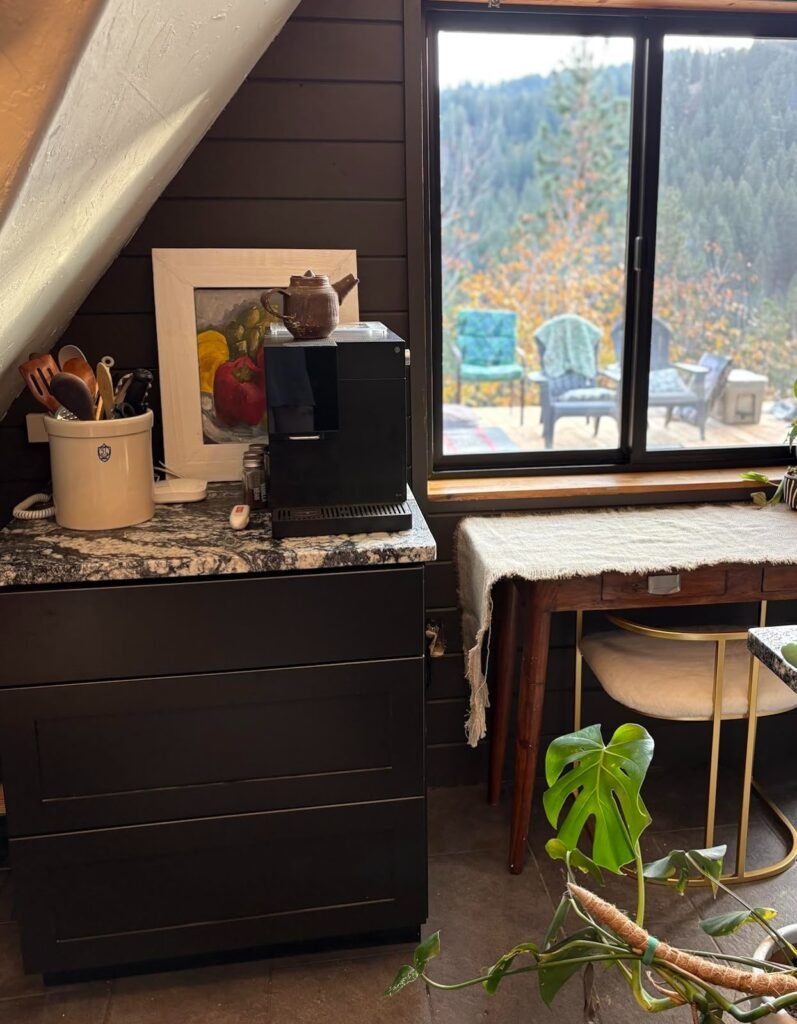
For the right buyer, the answer is yes. And when it is yes, the TK-02 stops looking like a flashy appliance and starts looking like a structural correction: a quiet machine, a broad drink range, strong customization, real drip capability, app-linked scheduling, and enough automation to make the morning feel less like a series of tiny negotiations. For the wrong buyer, it is an expensive lesson in buying convenience before your life actually needs it.
Transparency Note:
This analysis is not based on quick personal impressions.
It is derived from documented system behavior, verified user patterns, and the physical constraints of storage capacity.
The goal is to translate complex technical behavior into a realistic performance model that helps you make a clear decision.
“A quick note: Don’t believe the star ratings, but trust personal experience. This article is a compilation of collected experiences”
![The Hands-Free Espresso Problem: When Convenience Breaks Consistency ([شاركنينجا][1])](https://focusedinsight.net/wp-content/uploads/2026/02/image-26.png)