TCL A1
A projector can fool you in under a minute. The image blooms across the wall, Netflix opens without a dongle, the handle clicks into place, and for a moment it feels like you just cheated the whole big-screen market. Then the room pushes back. A lamp in the corner. A pale wall. Afternoon light leaking through the curtain. Suddenly the picture is still there, but the conviction is gone. That is the real TCL A1 question—not whether it works, but where it quietly stops working the way you hoped.
The Result Looks Fine. The Problem Isn’t.
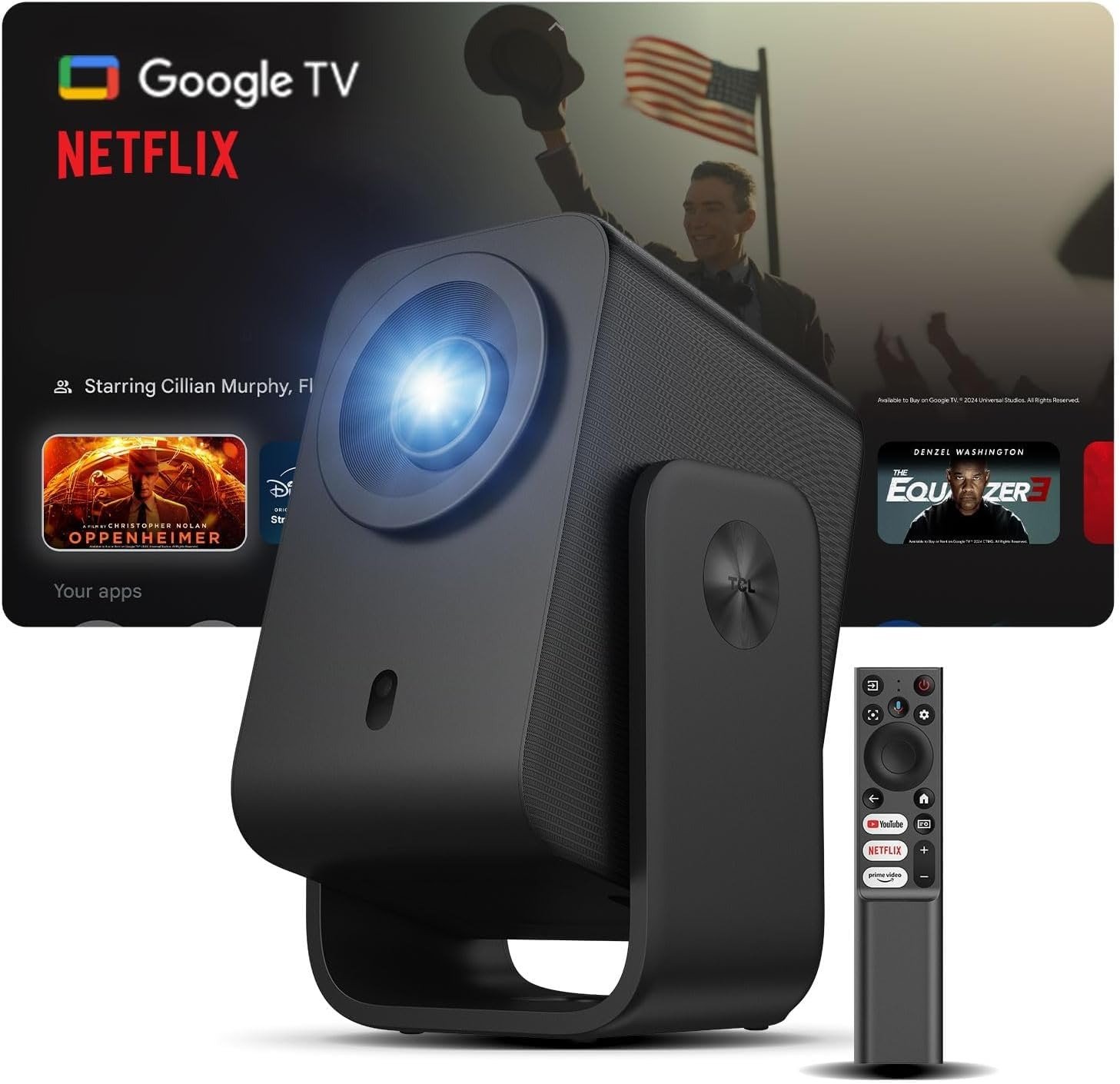
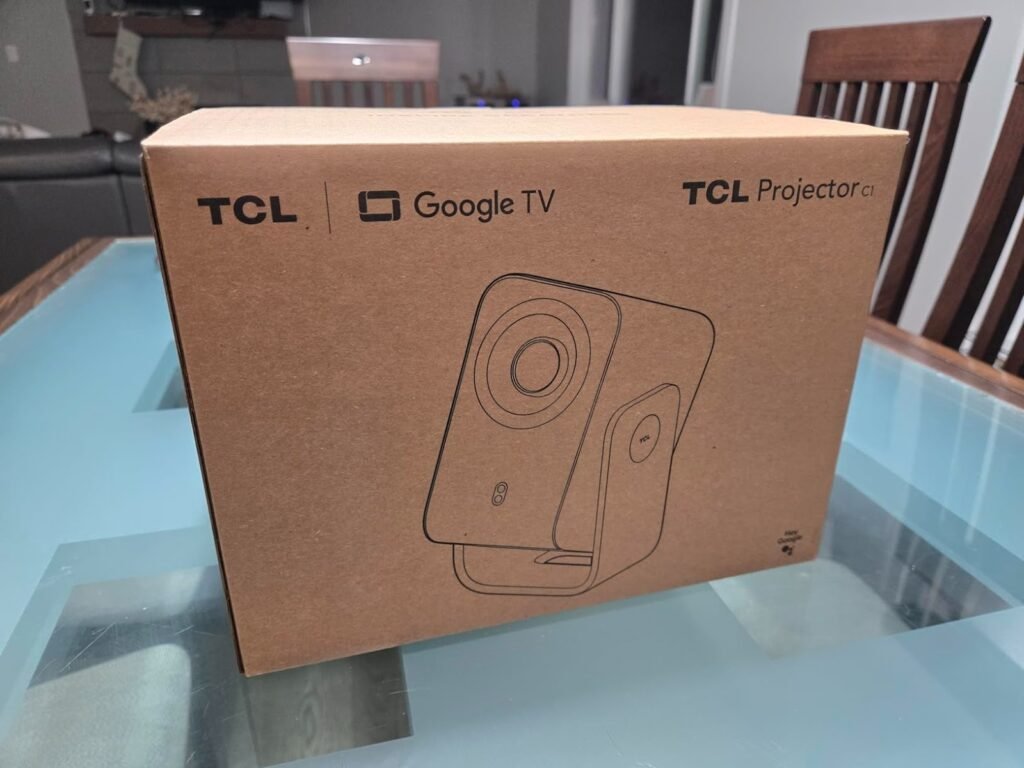
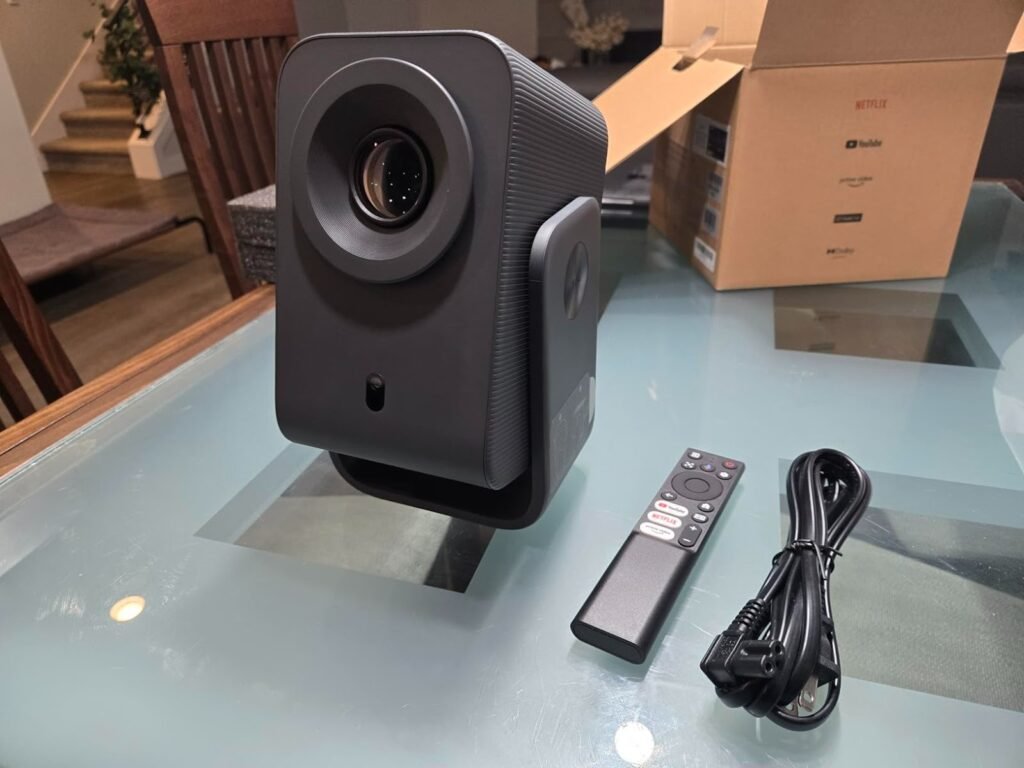
The TCL A1 is easy to like on first contact because the convenience stack is real. It is a native 1080p LCD projector with an LED light source, Google TV, Chromecast, auto focus, auto keystone, intelligent screen alignment, dual 8W speakers with Dolby Digital+, Bluetooth 5.1, and a carry handle that doubles as a stand. It weighs 5.5 pounds, supports a 45- to 120-inch image, and TCL rates it at 360 ISO lumens. That is a clean, coherent package, especially when TCL’s own US store has listed it at $299.99.
What makes it seductive is not raw performance. It is the absence of friction at the beginning. You set it down. It straightens itself. It focuses. It streams. That opening smoothness hides the harder question: whether the room, the screen size, and your habits will stay inside its brightness limits long enough for the purchase to feel smart six weeks later instead of clever for one night.
What You’re Actually Feeling but Not Naming
Most people do not say, “I bought below my brightness threshold.” They say something vaguer.
The image is there, but it feels washed.
Dialogue is clear, but the scene looks tired.
The projector is convenient, but I only really enjoy it when the room is heavily controlled.
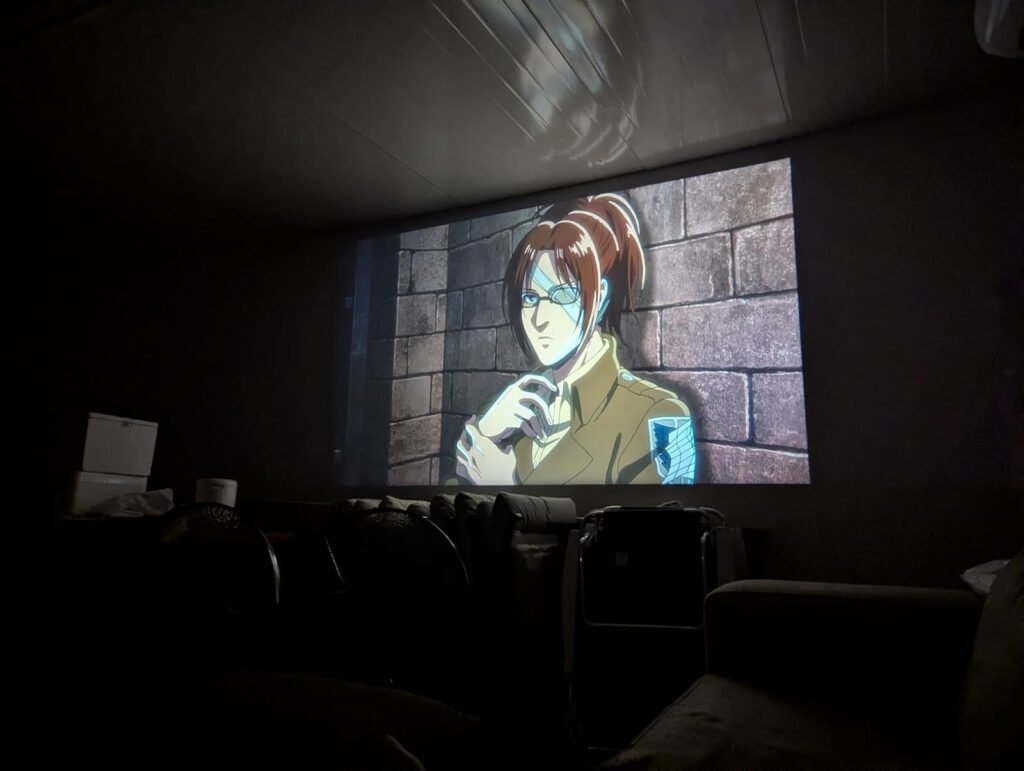
That discomfort has a shape. It is the gap between visible and convincing. A projector does not fail only when you cannot see the picture at all. It fails earlier—when blacks lift, contrast thins, and you start unconsciously dimming the room, shrinking the image, or saving it for night use just to get back the punch you expected. RTINGS’ projector guidance makes the general rule plain: brighter projectors hold up better when the room is not fully blacked out. Android Police’s TCL A1 review was even more direct, saying 360 ISO lumens is too dim for daytime viewing unless the room is extremely controlled.
That is the psychological toll here. You do not feel that you bought a bad projector. You feel that you keep negotiating with it.
The Hidden Mechanism Behind the Miss
The miss is not mysterious. It is structural.
The TCL A1 uses an LCD projection system with a 360 ISO-lumen brightness rating and a listed 2000:1 contrast ratio. On paper, that is enough to produce an enjoyable image in the right environment. In practice, brightness is the gatekeeper in portable projection, because the moment ambient light rises or image size expands, perceived contrast starts slipping before the spec sheet feels alarming.
That is why this product creates such split reactions. Reviewers and buyers often praise the setup ease, built-in streaming, portability, and surprisingly capable speakers, yet the same product keeps colliding with the same boundary: it wants darkness more than the lifestyle marketing suggests. Sound & Vision framed it as decent indoors and optimistic outdoors, while Android Police called out daylight weakness explicitly. A UK Amazon review snippet praised the speaker clarity but still wished bass were stronger and complained that manual focus and keystone were buried too deep in the interface.
The hidden variable, then, is not “picture quality” in the abstract. It is room control per inch. The larger and brighter your environment expectations become, the faster the A1 runs out of authority.
The Threshold Where the Outcome Quietly Breaks
This is the threshold I would name for the TCL A1:
The Ambient Light Break Point — the point where the image remains technically watchable but stops feeling worth the scale you bought it for.
That threshold is shaped by three forces:
| Threshold factor | TCL A1 reality | What happens when you cross it |
|---|---|---|
| Room light | 360 ISO lumens | Contrast thins fast and daytime use becomes compromised |
| Screen ambition | Rated for 45″–120″ | The bigger you go, the less forgiving the projector becomes |
| Power assumptions | AC power required, 140W draw | “Portable” becomes room-to-room, not anywhere-you-want portability |
Specs from TCL and its official sheet support those boundaries directly, and third-party coverage repeatedly points to the same practical conclusion: the A1 is not a daylight freedom machine; it is a dark-room convenience machine wearing portable clothes.
There is a second threshold as well, softer but real: The Setup Depth Threshold. Auto tools do most of the work, but once you move beyond the easy path, some users have found manual focus and keystone buried deeper than they expected in the interface. That matters less if you place it once and leave it alone. It matters more if you keep moving it.
Why Most Buyers Misread This Too Early
Because they judge it by the wrong three things.
First, they overvalue the first image. Any projector can look exciting in a controlled demo moment. The real test is repeated use in a real room, at a real size, at the hour you actually watch.
Second, they confuse streaming convenience with projection strength. Google TV, native app access, Chromecast, and Netflix support remove a lot of setup pain. They do not create brightness. They do not deepen blacks. They do not rescue a 120-inch image from ambient light.
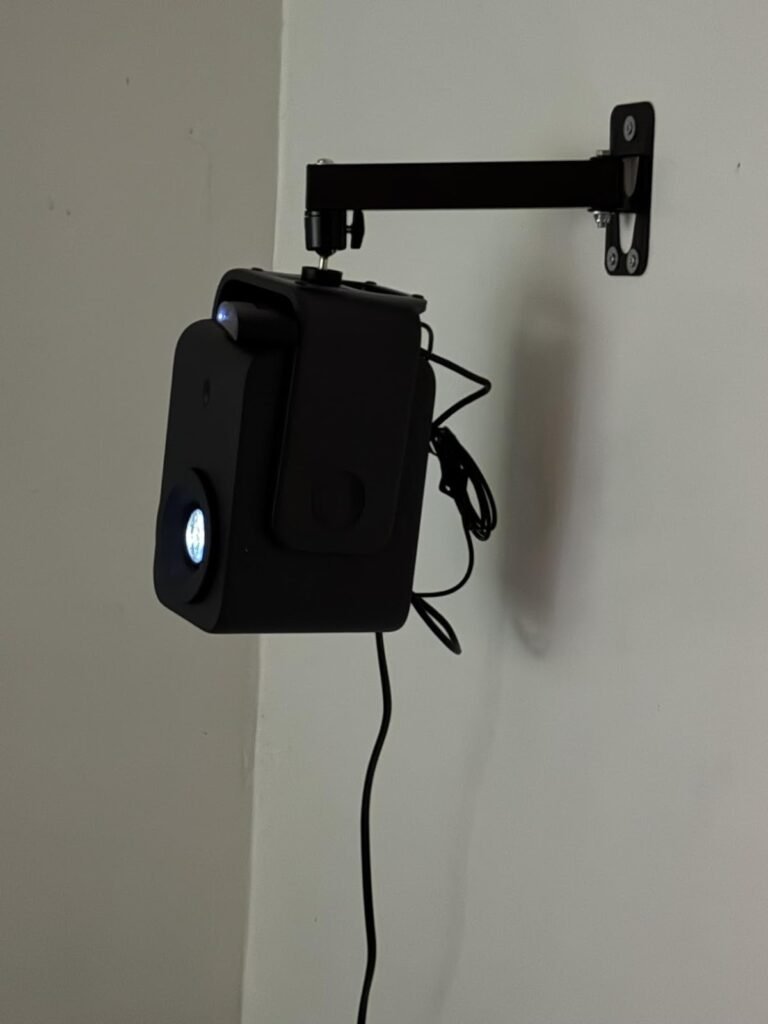
Third, they hear “portable” and imagine battery freedom. The TCL A1 is physically carryable, yes. It is not cordless. TCL’s own documentation says it requires a 115V power input, and comparison coverage has repeatedly flagged AC-only operation as one of its real limitations versus some more mobile rivals.
That is the early comparison trap. Buyers compare features. The product is decided by thresholds.
Who Is Actually Inside This Problem
You are inside this problem if your real use case sounds like this:
| You probably fit the TCL A1 | Why it works |
|---|---|
| You watch mostly at night or in a dim room | The brightness ceiling hurts less |
| You care more about fast setup than reference image quality | Auto focus, auto keystone, and Google TV reduce friction |
| You want a compact big-screen device for bedroom, apartment, or occasional backyard use with power nearby | The handle, small footprint, 5.5 lb weight, and built-in speakers make it easy to deploy |
| You are fine with casual gaming, streaming, and general entertainment rather than home-theater perfection | It includes Game Mode, 1080p output, and 16W audio |
Those strengths are not imaginary. They are exactly why the projector is getting solid marketplace sentiment: 4.5/5 from 96 ratings on Amazon UK and 4.7/5 from 29 ratings on Walmart, alongside recurring praise for ease of use, audio clarity, and convenience.
Where Wrong-Fit Begins
Wrong fit begins the moment you secretly expect one of these three things:
- A bright-room TV replacement.
- A truly cable-free travel projector.
- A cinematic image that stays confident at the largest sizes without carefully managed light.
That buyer is where regret starts.
If you want to leave curtains open, throw a huge image casually, and never think about luminance discipline, this is the wrong category pressure to place on the A1. If you want serious home-theater black levels, stronger contrast authority, or room-flexible brightness, even budget long-throw alternatives can make more sense. RTINGS’ own general projector rankings keep reinforcing the broader truth: brightness and contrast are what keep a projector from collapsing outside ideal conditions.
And if your version of portability means camping, unplugged backyard use, or hotel-room spontaneity without hunting for an outlet, the A1’s AC dependence is not a footnote. It is a wall.
The One Situation Where This Product Becomes Logical
The TCL A1 becomes logical when your real problem is not “I need the best projector.”
It is this:
I want the least annoying way to get a big image in a dark or dim space without adding a streaming stick, separate speakers, or a complicated setup ritual.
That is its lane. And inside that lane, it makes sense.
At roughly 5.5 pounds with a built-in handle/stand, Google TV, licensed Netflix on its product pages, Chromecast, auto focus, auto keystone, 1080p resolution, and dual 8W speakers, it solves a very specific kind of fatigue: the fatigue of turning movie night into a hardware project. It removes boxes. It removes cables. It removes the stupid little setup tax that makes people stop using half the gadgets they buy.
That is the quiet authorization here. Not “this projector beats everything.” Not “this is the only answer.” Just this: if your break point is convenience inside a controlled-light room, the TCL A1 stops looking like a compromise and starts looking like a clean decision.
What It Solves, What It Reduces, and What It Still Leaves to You
What it solves:
- It gives you native 1080p big-screen streaming without needing extra devices.
- It reduces setup friction with auto focus, auto keystone, and screen alignment.
- It gives you usable built-in sound from dual 8W speakers, which multiple sources and buyer snippets describe as clear and surprisingly capable for the class.
What it reduces:
- Cable clutter.
- Accessory dependence.
- The mental resistance that comes from “I don’t feel like setting this up tonight.”
What it still leaves to you:
- You still need wall power.
- You still need light discipline if you want the image to look convincing.
- You may still want external speakers if you care about bass weight, not just clarity.
- You still need to be realistic about size. “Up to 120 inches” is not the same as “looks equally strong at 120 inches in whatever room you happen to have.”
That last part matters most. The A1 does not punish unrealistic buyers immediately. It punishes them later, when the room is brighter than expected, the screen is larger than ideal, and the novelty has worn off.
Final Compression
The TCL A1 is not a projector for people chasing projector performance as an end in itself. It is for people trying to remove friction from casual big-screen watching in spaces they can darken.
That is the whole decision.
If you want brightness margin, true travel freedom, or a projector that keeps its authority when the room refuses to cooperate, stop here. This is where wrong-fit begins.
If your real life looks different—night viewing, controlled light, easy streaming, compact storage, fast setup, power outlet nearby—then the TCL A1 stops being vague. It becomes specific. And once the use case becomes specific, the decision usually does too. If this is the condition you are actually dealing with, this is the logical next step.
Transparency Note:
This analysis is not based on quick personal impressions.
It is derived from documented system behavior, verified user patterns, and the physical constraints of storage capacity.
The goal is to translate complex technical behavior into a realistic performance model that helps you make a clear decision.
“A quick note: Don’t believe the star ratings, but trust personal experience. This article is a compilation of collected experiences”