SONY BRAVIA THEATER SYSTEM 6 REVIEW: THE SOUND GETS BIG BEFORE THE ROOM FEELS READY
The Result Looks Fine. The Problem Isn’t.
Most people do not buy the wrong home theater system because the sound is weak. They buy the wrong one because the demo sounds exciting for ten minutes, then the room starts asking for things the spec sheet never warned them about: floor space, cable tolerance, speaker placement, patience. That is where this Sony setup gets interesting.
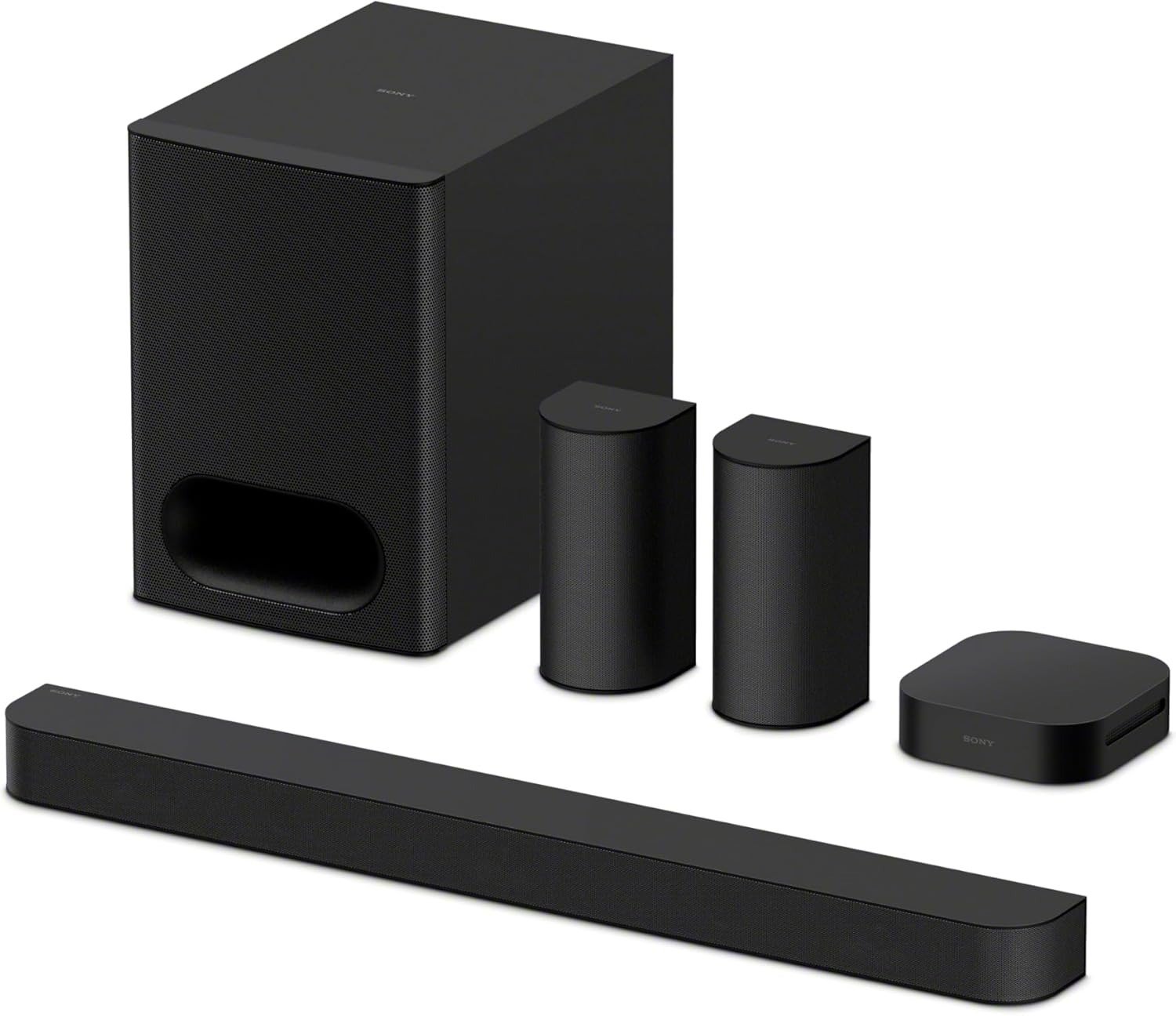
On paper, the Sony BRAVIA Theater System 6 looks like a neat shortcut: 5.1 channels, Dolby Atmos, DTS:X, a subwoofer in the box, rear speakers in the box, and a rated 1,000W total output. It gives you the language of cinema without asking you to build a receiver-based speaker system from scratch. Sony also positions it as an all-in-one package with wireless rear connectivity, voice-focused dialogue tools, and app-based setup.
But the first truth is less glamorous. This is not the kind of soundbar system you buy because you hate complexity. Reviewers keep circling the same point from different angles: the sound is bigger, deeper, and more enveloping than you expect at this level, yet the installation is awkward, cabling is more old-school than the marketing makes it sound, and the subwoofer is physically substantial.
That contradiction is the whole story.
What You’re Actually Feeling but Not Naming
The friction here is not “I want better TV sound.” That is too vague. Too polite.
What you are usually feeling is this:
Your TV gets loud, but it does not wrap around you.
Dialogue is present, but not anchored.
Explosions land, but the room never changes shape.
That last part matters. A thin, convenient bar can make a film sound cleaner. It does not always make the air in the room behave differently. The System 6 is built to do that. Owners repeatedly praise the sense of theater, the bass weight, and the way rear effects make scenes feel more complete, while professional reviewers describe it as room-filling, fluid, immersive, and unusually weighty for the money.
So the unnamed annoyance is not lack of volume. It is lack of enclosure. You want sound that stops behaving like it is trapped inside the television.
The Hidden Mechanism Behind the Miss
Here is the hidden variable most buyers miss: cinematic satisfaction is not created by output alone. It is created by how convincingly the system closes the gap between front-stage sound and room-wide movement.
That is why this product behaves differently from many neat, all-in-one bars. Sony gives you a dedicated center-focused front stage, a separate subwoofer, and actual rear speakers. The result, according to multiple reviews, is a presentation with more scale, more bass authority, and a more cohesive surround field than many simpler bars in the same general tier. What Hi-Fi? calls it “impressively enveloping and cohesive,” while WIRED highlights the smooth blend between the bar and subwoofer and the strength of the rear speaker integration.
The mechanism is simple, even if the room behavior is not. You are not hearing one chassis trying to fake a world. You are hearing a system that distributes work across front, rear, and low-end channels, then uses Sony’s virtual processing layer—S-Force PRO and Vertical Surround Engine—to stretch that field further.
That is also why the design feels strangely old and strangely smart at the same time. It does not chase minimalism first. It chases physical assistance.
The Threshold Where the Outcome Quietly Breaks
This article runs on one model only: Threshold.
The threshold here is not price. It is not wattage. It is not even Dolby Atmos support on the box.
The threshold is this:
The Sony BRAVIA Theater System 6 becomes the right answer only when your dissatisfaction with flat TV sound is stronger than your resistance to hardware presence, setup friction, and visible compromise.
Below that threshold, it is too much system.
Above that threshold, it starts making unusual sense.
That is because the compromises are real. The soundbar connects physically to the subwoofer. The rear speakers are not freely wireless in the way many people imagine; the sub transmits to a rear receiver box, which then connects to the rear speakers by cable. There is no built-in streaming platform, no voice control, and no upfiring drivers despite Atmos and DTS:X support. Several reviews also point out that firmware updating can be annoying, and the whole design is less elegant than the product photos first suggest.
That is the break point. Not sonic. Practical.
Why Most Buyers Misread This Too Early
They misread it because modern audio shopping trains people to worship the wrong metrics.
Slimmer is better.
Cleaner is better.
More wireless is better.
Sometimes that is true. Here, it can send you in the wrong direction.
If you judge this Sony system like a lifestyle soundbar, it looks clumsy. The subwoofer is large. The wiring story is messy. The aesthetic is plain. One reviewer called the design unusual and old-school; another said the system is only wireless in the most minimal sense. Those criticisms are not nitpicks. They are part of the purchase decision.
But if you judge it by a different standard—how much genuine cinematic body and surround cohesion you can get without moving into a receiver-and-speakers rabbit hole—the picture changes quickly. What Hi-Fi? says the System 6 can do things no other soundbar at this level can match, especially in bass punch, surround cohesion, and overall scale. Expert Reviews calls it powerful, refined, and affordable, and specifically notes that its music performance is better than expected, with the subwoofer behaving with unusual restraint and timing when configured sensibly.
That is why early comparison traps fail. People compare silhouette, not outcome.
Who Is Actually Inside This Problem
You are inside this problem if three things are true.
First, you want real rear activity, not just a louder front wall.
Second, you care about dialogue clarity and bass pressure at the same time, because one without the other is where many mid-tier systems start to feel thin or theatrical in the wrong way.
Third, you are willing to let the room serve the system a little, instead of forcing the system to disappear completely.
That fit profile lines up with what the product actually offers: a 5.1-channel package, center-channel dialogue focus, subwoofer-led low-end weight, rear speakers for wraparound effects, Dolby Atmos and DTS:X decoding, Bluetooth, HDMI eARC, optical input, 3.5mm input, and BRAVIA Connect app control. Owners consistently describe easy day-one improvement over TV speakers, while reviewers emphasize especially strong movie immersion and dialogue solidity.
This is not a product for someone chasing invisible elegance. It is for someone tired of hearing a movie happen mostly in front of them.
Where Wrong-Fit Begins
Wrong-fit begins the moment you need the audio system to solve an aesthetic problem before it solves an acoustic one.
If you hate visible hardware, stop here.
If you want true plug-and-vanish simplicity, stop here.
If the phrase “rear receiver box plus cables” already made your shoulders tighten, stop here.
That reaction would not be irrational. Reviews repeatedly flag the cabling, the size of the subwoofer, and the slightly awkward installation as the main tradeoffs. WIRED explicitly lists messy cabling, failed firmware updating, lack of upfiring drivers, and high pricing among the drawbacks. Expert Reviews also notes occasional hardness at sudden loud peaks and a very slight sync awareness in rare cases on a Samsung TV via eARC.
Wrong-fit also begins if your room is too small to let this system breathe. Big bass in a tight room can feel less like immersion and more like a heavy boot on the floorboards. The System 6’s strength is scale. In the wrong room, scale can turn from pleasure into pressure.
The One Situation Where This Product Becomes Logical
The Sony BRAVIA Theater System 6 becomes logical in one very specific situation:
You want a clear jump into full-bodied surround sound without stepping all the way into a traditional AV receiver setup, and you are willing to pay for acoustic payoff with physical tolerance.
That is where this system earns its place.
I would not frame it as the cleanest option. I would not frame it as the most advanced option. I would frame it as something rarer: a system that still believes hardware should do a meaningful part of the work. The bar handles the front stage. The subwoofer brings the mass. The rears stop the room from collapsing forward. And unlike many “good enough” TV audio upgrades, this one has been repeatedly praised for producing a genuinely enveloping, cohesive, and weighty result rather than a cosmetic one.
That is the authorization point. Not hype. Fit.
If that is your condition, this is the logical next step.
What It Solves, What It Reduces, and What It Still Leaves to You
What it solves:
- It solves the flat-front problem.
- It solves the “voices float but never lock” problem.
- It solves the “action is loud but not spacious” problem.
What it reduces:
- It reduces the gap between soundbar convenience and proper surround involvement.
- It reduces the need to buy rears and a subwoofer separately, because they are already in the box.
- It reduces the sense that you are paying mainly for software tricks inside one bar.
What it still leaves to you:
- You still need placement discipline.
- You still need tolerance for cables.
- You still need to be honest about room size, furniture layout, and whether the subwoofer’s physical presence will irritate you every single day.
And there is one more thing. The System 6 does not erase the laws of category physics. No upfiring drivers means its Atmos story leans on processing and speaker layout rather than literal overhead hardware. That does not make it fake. It just defines the ceiling.
Final Compression
The easiest mistake with the Sony BRAVIA Theater System 6 is to see its cabling and walk away. The second easiest mistake is to see the Atmos badge and imagine magic without setup cost.
The correct reading sits between those two errors.
This is a physically assertive, slightly awkward, sonically impressive system that trades elegance for scale, pressure, and surround coherence. It is not for everyone. That is precisely why it works so well for the right buyer.
If you want the room to stay neat, this is too much.
If you want the movie to stop sounding trapped inside the TV, this is exactly the kind of product that starts making sense.
And that is the real decision. Not whether the box says Dolby Atmos. Whether your frustration has already crossed the point where tidy audio stops being enough.
Transparency Note:
This analysis is not based on quick personal impressions.
It is derived from documented system behavior, verified user patterns, and the physical constraints of storage capacity.
The goal is to translate complex technical behavior into a realistic performance model that helps you make a clear decision.
“A quick note: Don’t believe the star ratings, but trust personal experience. This article is a compilation of collected experiences”