Your Floor Looks Clean — Until You Walk On It
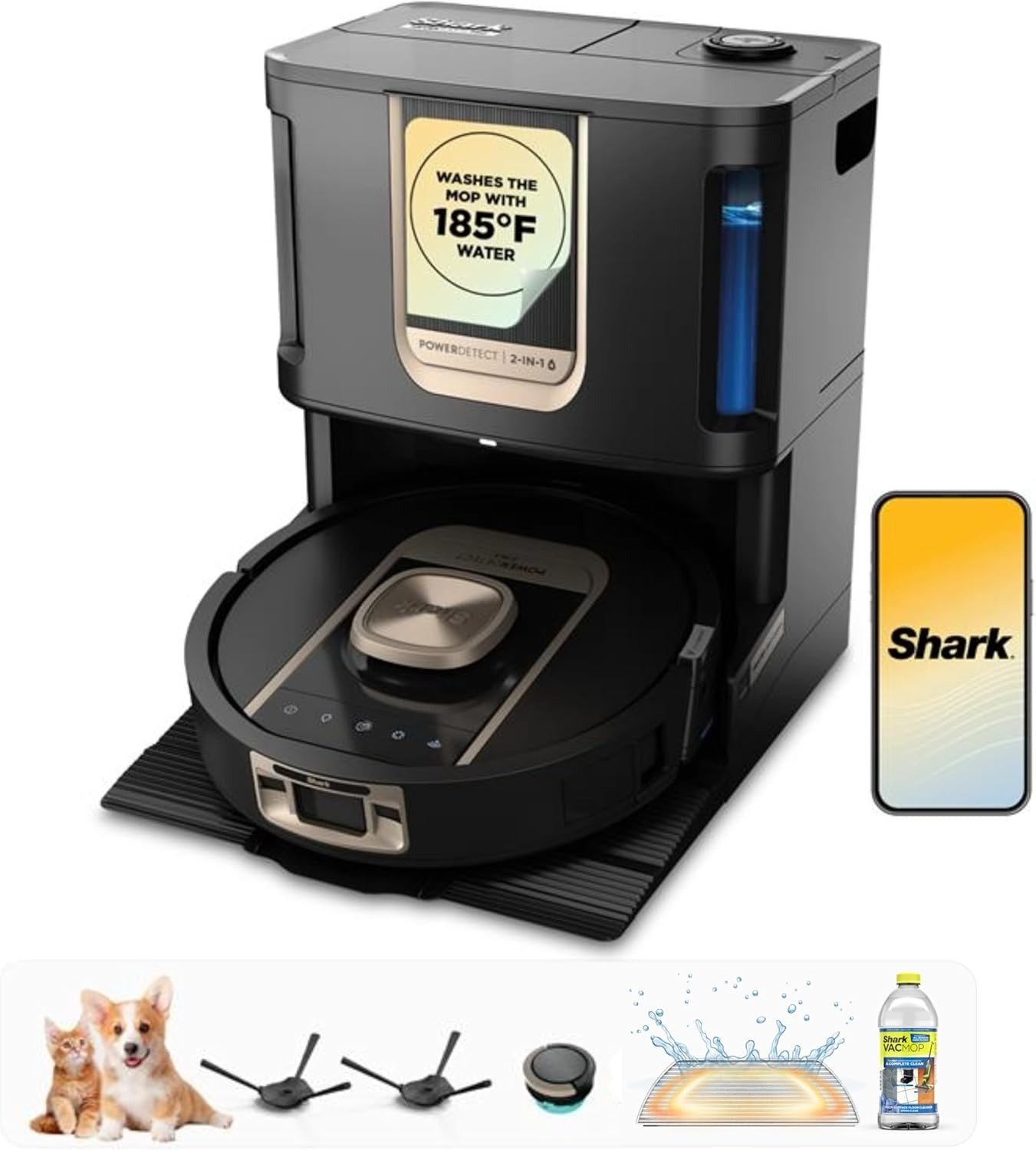
Shark PowerDetect 2-in-1 / ThermaCharged NeverTouch
You don’t see the problem.
You feel it.
A slight drag under your feet.
A dull film near the edges.
A floor that looks done—but asks for one more pass.
That’s where most robot vacuums quietly fail.
Not in the obvious mess.
In the daily repeat.
The Result Looks Fine. The Problem Isn’t.
Most robots remove what you can see.
Very few handle what comes back tomorrow.
That’s the difference.
The Shark ThermaCharged isn’t built to impress in one run.
It’s built to remove the loop:
- Emptying the bin
- Refilling water
- Cleaning the mop
- Drying the pad
All handled automatically.
Not as features.
As elimination of friction.
What You’re Actually Dealing With
You’re not dealing with dirt.
You’re dealing with unfinished cycles.
You clean → it looks fine → it degrades → you step back in.
That loop is the real problem.
And once you notice it, performance specs stop mattering.
The Hidden Mechanism Most People Miss
Cleaning isn’t defined by suction.
It’s defined by what happens after the robot finishes.
If the mop stays dirty → next run is compromised
If the bin fills → automation breaks
If the tank empties → cycle stops
Shark closes that chain:
- Self-empty (up to 60 days)
- Auto-refill (up to 30 days)
- Heated mop wash
- Hot-air drying
This is not stronger cleaning.
This is cleaning without interruption.
The Threshold Where Robots Start Failing
Here’s the real split:
| Condition | Outcome |
|---|---|
| You want less daily involvement | Strong fit |
| Mostly hard floors | Strong fit |
| You’re tired of managing the robot | Strong fit |
| You expect perfect navigation in clutter | Weak fit |
| You want deep software control | Weak fit |
This is the threshold.
Not price.
Not specs.
Control vs Release.
Why Most People Choose Wrong
They compare features.
But the real question is simpler:
“Will this remove me from the cleaning loop?”
Most don’t.
This one gets closer.
Who This Actually Works For
This works if:
- Your floor is never “dirty”—just never fully done
- You’re repeating the same light cleaning daily
- You want to stop thinking about it altogether
This does NOT work if:
- Your home is clutter-heavy
- You depend on perfect obstacle avoidance
- Your priority is deep carpet extraction
Where Wrong-Fit Begins
You gain:
- Less maintenance
- Cleaner mop cycles
- Fewer manual steps
You trade:
- Less control
- Less precision in messy spaces
- Less advanced software depth
That trade is the design.
Not a flaw.
When This Becomes the Logical Choice
This becomes logical when your problem is no longer cleaning.
It’s repetition.
Not big messes.
Just the constant return of “almost clean.”
At that point, this isn’t a gadget.
It’s a system correction.
What It Solves — And What It Doesn’t
| Layer | Reality |
|---|---|
| Solves | Daily floor upkeep without manual loops |
| Reduces | Intervention, maintenance effort |
| Leaves | Prep in clutter, expectation control |
Final Compression
Most robot vacuums clean.
Then give the work back to you.
This one reduces that return.
Not perfectly.
But enough to matter.
If your break point is here:
“I’m tired of dealing with this every day.”
Then the decision stops being vague.
And becomes obvious.
Transparency Note:
This analysis is not based on quick personal impressions.
It is derived from documented system behavior, verified user patterns, and the physical constraints of storage capacity.
The goal is to translate complex technical behavior into a realistic performance model that helps you make a clear decision