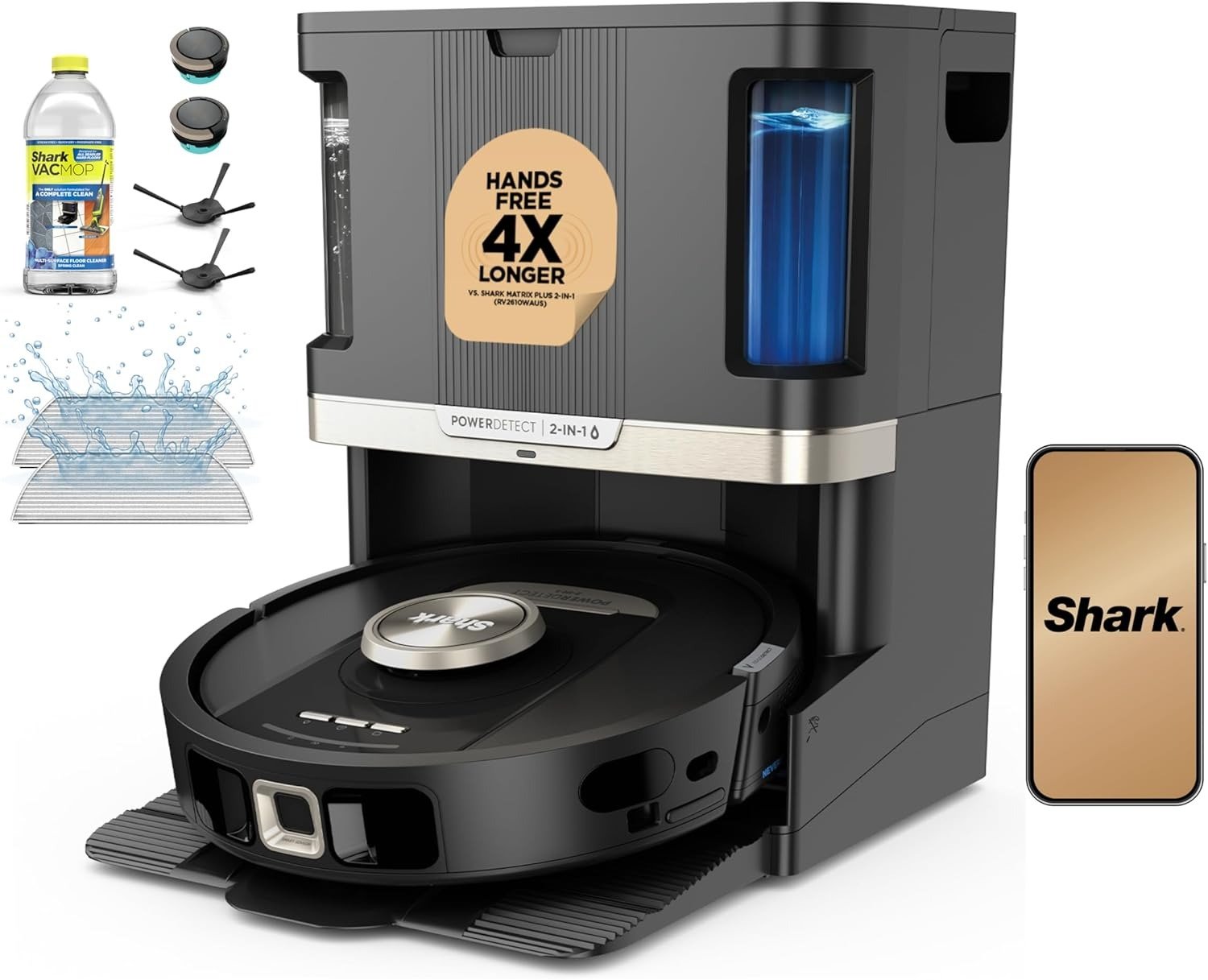
Shark PowerDetect NeverTouch Pro (AV2800ZEBK): I Decide by the Autonomy Window, Not Hype
DECISION ANALYSIS
I treat this robot like a system with a measurable stability range: how consistently it completes runs without intervention as your home’s transitions, clutter drift, and mixed surfaces increase.
Technically, the pitch is clear: a 2-in-1 vacuum+mop with a base that self-empties (up to ~60 days), refills water (up to ~30 days), and washes/dries the mop pad after runs—plus PowerDetect behaviors for dirt/stains, floor type, and edges.
Model Used: Variance Window (Because Most Homes Don’t Fail in One Dramatic Moment)
This isn’t a “cliff” product for most users. It’s a compression product: performance and autonomy gradually tighten as your environment becomes less predictable. That makes the correct model a Variance Window, not a Threshold Collapse.
Numeric Range: The Autonomy Window I’d Bet On
I translate “hands-free” into a practical percentage range—how often it finishes scheduled intent without you rescuing it.
- Light Transition Load: 85%–95% hands-free
Mostly hard floors, minimal rugs, low clutter drift, furniture layout stays consistent. - Medium Transition Load: 65%–85% hands-free
Some rugs/thresholds, chairs move daily, occasional cords/toys, pets add unpredictability. - High Transition Load: 45%–65% hands-free
Multiple rugs + frequent clutter drift + tight chair forests + high pet output. This is where users report “possessed routing,” missed intent, and irritation spikes.
When Performance Starts to Decline (Time + Repetition, Not Day One)
This compression usually appears in phases:
- Runs 1–5: optimism phase (mapping feels “fine,” results look clean)
- Week 2–4: reality phase (you learn the repeat failure nodes: thresholds, edge zones, chair legs, wet/dry behavior)
- After routine changes: compression accelerates (guests, seasonal rugs, pet shedding spikes, clutter drift)
The 3 Anchors I Use to Keep the Decision Honest
Temporal Anchor (observable)
If I’m intervening more than 1–2 times per week after the first two weeks, I’m not in “hands-free.” I’m in management mode.
Sensory Anchor (felt)
If edges still feel gritty or look unfinished, trust collapses—even if the center looks clean. EdgeDetect (air blast) and pad extension exist because this single sensory failure destroys perceived value.
Performance Anchor (measurable)
If the base’s “maintenance offload” becomes inconsistent (odor, noise concerns, pad-wash side effects), the product loses its main advantage: friction removal.
Behavioral Load Mapping: What You Do Is What Compresses the Window
I don’t ask “how powerful is the robot?” I ask:
- How often do you change chair positions?
- How often do rugs/thresholds interrupt the path?
- How often does pet output spike?
- How predictable is clutter drift (cords/toys/bowls)?
The more “micro-changes” you introduce between runs, the more autonomy becomes probabilistic.
Compatibility Split 3.0
Path A: System Compatible
You’re compatible if your home stays inside light-to-medium transition load and your priority is friction reduction (self-empty + water refill + pad wash/dry) more than maximum app control. In this path, the base turns cleaning into background utility.
Path B: System Misaligned (and you’re not “doing it wrong”)
You’re misaligned if you have high transition chaos and you expect strict obedience to zones/spot cleaning every time, or you’re sensitive to app quirks and “odd behavior” moments. In this path, the window compresses and the robot starts to feel like a job you supervise.
Retention Safety (No Pressure Exit)
If you’re Path B, the correct move is not panic-buying a different robot. The correct move is admitting the constraint: your environment is injecting variance faster than autonomy can absorb it.
Verdict (One Sentence)
I’d buy AV2800ZEBK only if my home lives in the 65%–95% autonomy window—because that’s where the NeverTouch base actually removes daily friction instead of relocating it into “robot babysitting.”
Instability compounds. Alignment doesn’t.
Transparency Note: This analysis is not a passing personal opinion; it is the result of synthesizing feedback from real buyers, documented reviews, and technical documentation. The objective is to present a clear, structured interpretation of the data, free from personal bias.
One Comment