SereneLife WiFi Towel Warmer Review: The Threshold That Matters
DECISION ANALYSIS
The moment that sells a towel warmer is not dramatic. It is a small failure you are tired of repeating. You shut off the shower. The air cools. Your skin is still carrying heat. Then the towel lands cold enough to break the whole reset your shower just gave you. That is the problem this product is trying to solve. Not elegance. Not “spa vibes.” A badly timed transition. And after digging through the technical details, retail specs, and category testing, I think the SereneLife WiFi model only makes sense if you judge it by one harsh standard: does it remove enough routine friction to stay useful after the novelty dies.
The Technical Story in Plain English
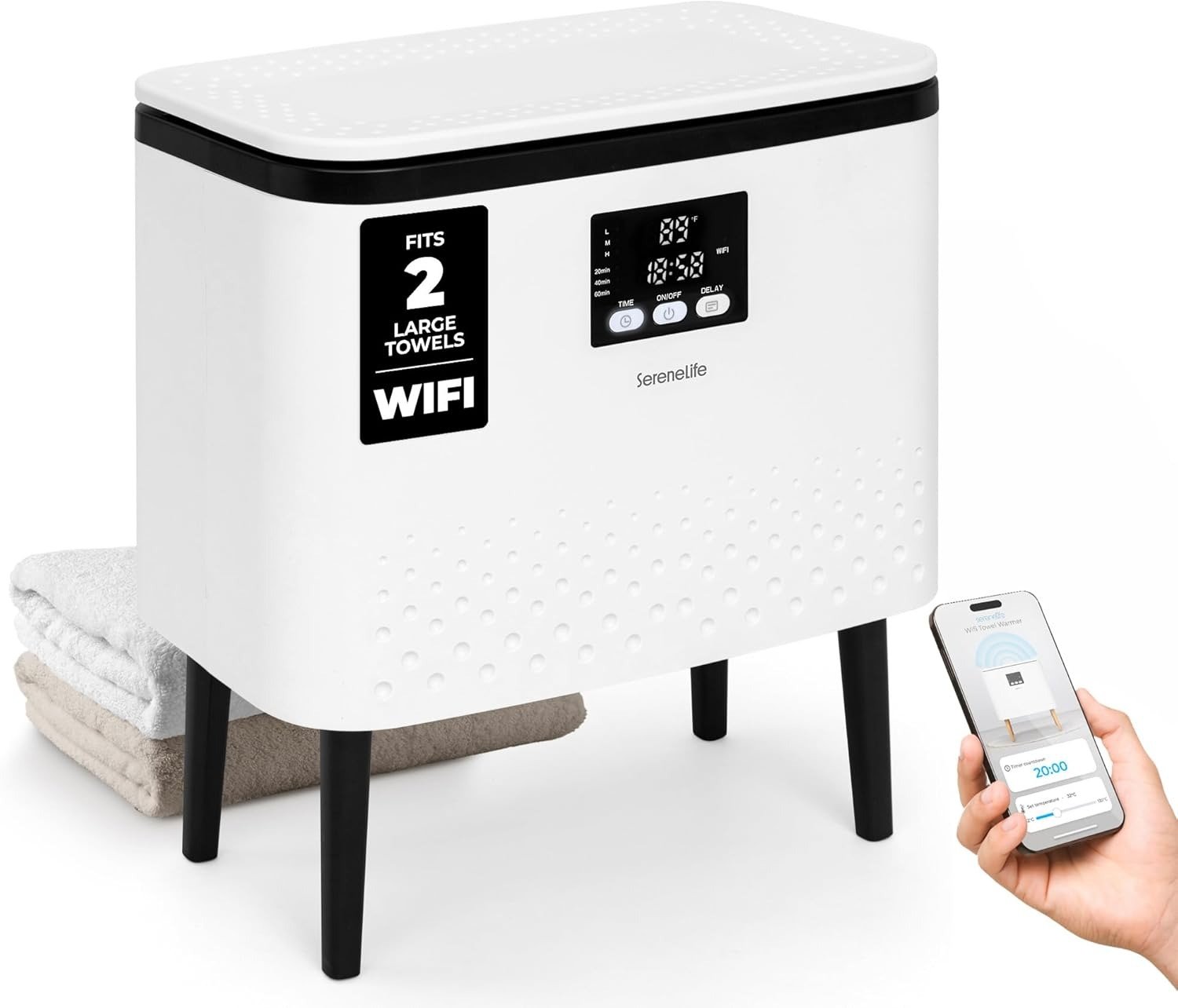
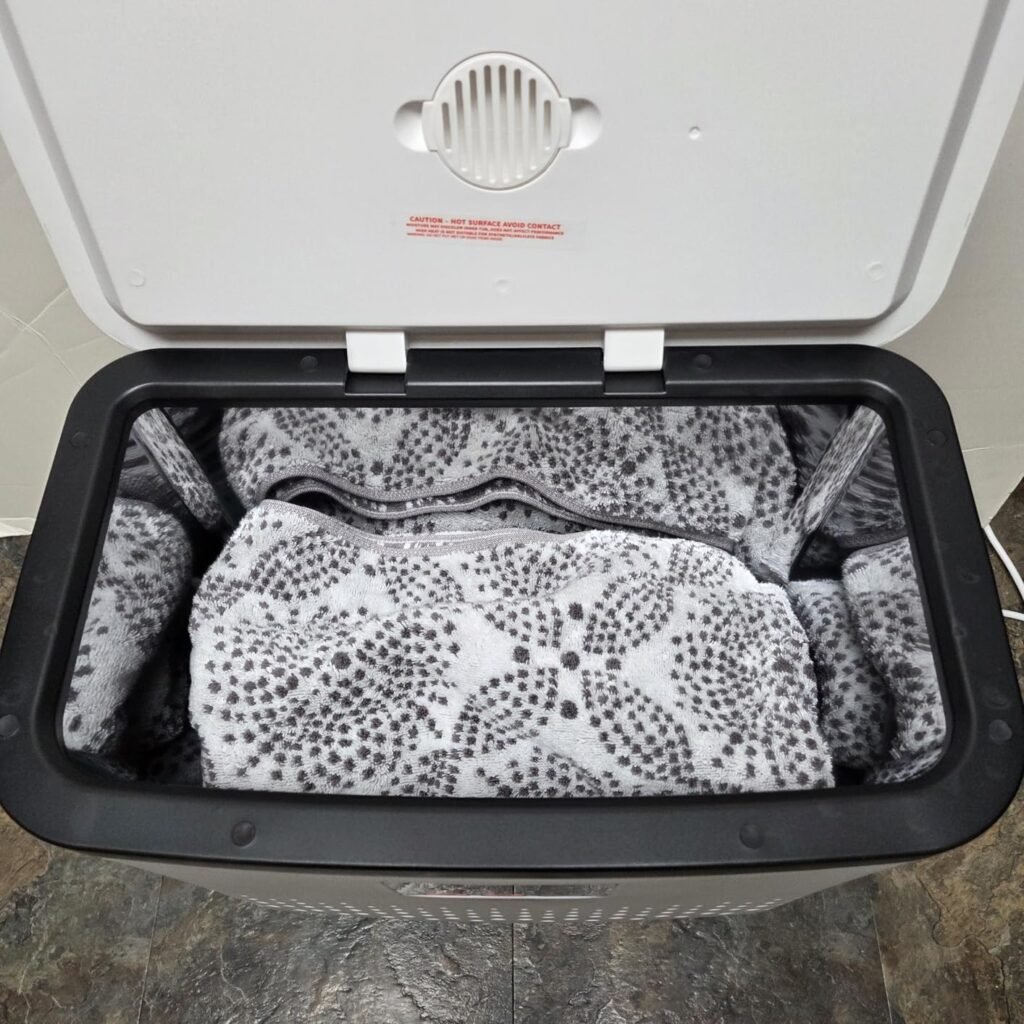
The SereneLife WiFi towel warmer is a 20L rectangular bucket-style unit with 450W power, 120V input, adjustable temperature from 90°F to 140°F, 20/40/60-minute timing, app control, a double-walled insulated lid, overheat protection, and capacity claims for two large bath towels or a throw blanket.
SereneLife’s own product page lists dimensions of 15.35 x 8.86 x 18.31 inches and an item weight of 11.48 pounds, while marketplace listings echo the same core feature set with slight measurement differences that likely reflect listing conventions rather than a different operating class.
What This Product Is Really Good At
The obvious answer is “warming towels,” but that is too shallow.
What this model is really good at is reducing missed timing. That is the part I trust most in its design logic. Bucket warmers already work best when the towel is loaded in advance. The problem is that human routines are imperfect. We forget. We shower later than planned. We turn the warmer on too late.
That is exactly where this SereneLife unit earns its existence. The WiFi layer plus selectable timer windows create a bridge between intention and execution. It does not make the category smarter in theory. It makes it less fragile in real life.
The Counter-Intuitive Truth Most Buyers Miss
Its biggest strength is not heat output. It is behavioral forgiveness.
That is what makes this model stronger than a basic bucket warmer for the right buyer. The 450W output and 90°F–140°F range are solid category signals, but many warmers can produce a pleasant towel under the right conditions.
What fewer models do is reduce the odds that the whole experience collapses because the owner forgot one simple step. In other words, the SereneLife is not just a heating product. It is a routine stabilizer.
That is a more important advantage than it sounds, because category testing and user behavior both show that towel warmers become disappointing when they demand more attention than they save.
Where the Threshold Breaks
Now the uncomfortable part.
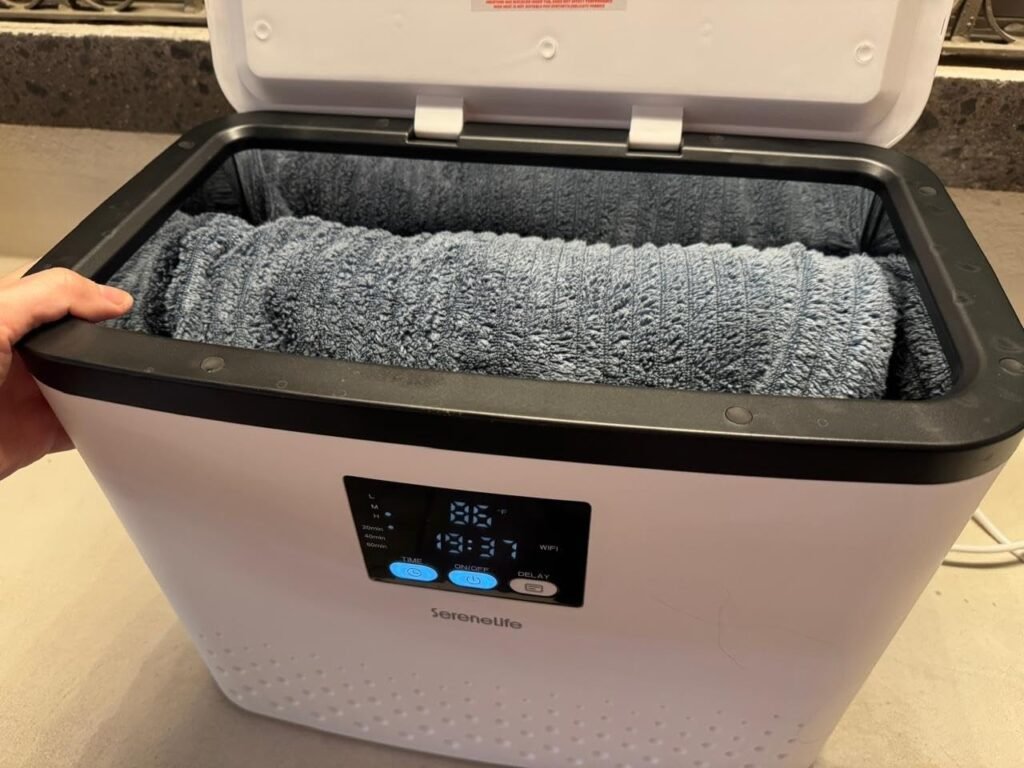
Nothing in this spec sheet cancels the physics of bucket warmers. If you pack the chamber tightly, fold carelessly, or treat two-towel capacity like a performance guarantee, you are increasing the odds of uneven heating.
Independent testing on bucket-style designs has already shown that load arrangement and time matter, and WIRED’s hands-on notes on canister-style warming reinforce the broader category point: warmth can arrive unevenly before the whole towel catches up.
That means the SereneLife should be read as a flexible comfort tool, not as a magic chamber that defeats overstuffing.
The people most disappointed by this product will usually be the people expecting the category to behave like something it is not.
The Expert-Friend Read on Daily Use
If I picture this in an actual bathroom, I do not picture a luxury gadget. I picture a machine that either disappears into the rhythm of the morning or becomes a polite obstacle in the corner.
That difference is everything.
If my shower time is regular, the app control matters. If my towel use is usually one at a time, the 20L volume feels generous. If I occasionally want a robe or throw warmed, the flexibility becomes a real perk.
But if I am chaotic with timing, impatient with preheat, or obsessed with perfectly even full-load warmth, I am going to blame the product for a mismatch that started with my expectations.
That is why I would never sell this as universally impressive. I would call it highly coherent for one kind of user and merely acceptable for another.
Trade-Off Table
| What You Gain | What You Trade Off |
|---|---|
| App-based preheat control | More value if your routine is scheduled |
| 20L flexibility | Less predictable results when overpacked |
| Adjustable 90°F–140°F warmth | Still requires lead time |
| No installation burden | Takes up physical space |
| Better routine consistency | Not a substitute for a drying rack |
Compatibility Split
| Buyer Type | Fit |
|---|---|
| Scheduled shower routine, wants warm towel ready on time | Excellent fit |
| Renter who wants comfort without wall installation | Excellent fit |
| Mostly warms one towel, occasionally a robe or throw | Good fit |
| Wants two oversized towels heated evenly every time | Borderline fit |
| Wants instant heat with no planning | Poor fit |
| Wants to dry damp towels after use | Wrong fit |
The Aha Moment That Clarifies the Whole Product
Once I stop asking, “Is it warm enough?” and start asking, “Does it remove the annoying part of the routine?”, the product becomes much easier to judge.
That is the golden rule here:
Buy this only if timing is your real problem.
If the frustration is that you forget to preheat, that your post-shower comfort arrives late, or that you want a warmer that can be ready before you step in, this model is well aimed.
If the frustration is uneven full-load heat, drying performance, or lack of patience for preheat windows, this product will not save you from the category itself.
That distinction is what separates a smart buy from a hopeful one.
The Quiet Decision
I would not recommend the SereneLife WiFi towel warmer as a blanket solution for everyone who likes the idea of warm towels.
I would recommend it more narrowly than that.
I would recommend it for the buyer who feels the same irritation often enough that solving it has real value, whose routine is stable enough for scheduling to matter, and who understands that two-towel capacity is flexibility, not a promise of perfect distribution.
In that lane, the product makes sense. Outside that lane, the category’s limits start showing through. That is why this is not a “buy because it sounds nice” product. It is a “buy because it fixes this exact recurring annoyance” product.
The Retention Loop
One threshold solved usually exposes the next one.
Once the towel is warm on time, the next question is no longer comfort. It becomes efficiency: how much warmth you really need, how much load you can use before consistency drops, and when convenience quietly turns into maintenance or wasted space.
That next layer is where most buyers either optimize the product or start misusing it.
The next piece should not be another generic roundup. It should be the operating boundary article that shows exactly where load, timing, and expectation begin to work against each other.
If this product matches your friction pattern, that is the logical next step—not because of pressure, but because it is the missing half of the decision.
Transparency Note:
This analysis is not based on quick personal impressions.
It is derived from documented system behavior, verified user patterns, and the physical constraints of storage capacity.
The goal is to translate complex technical behavior into a realistic performance model that helps you make a clear decision